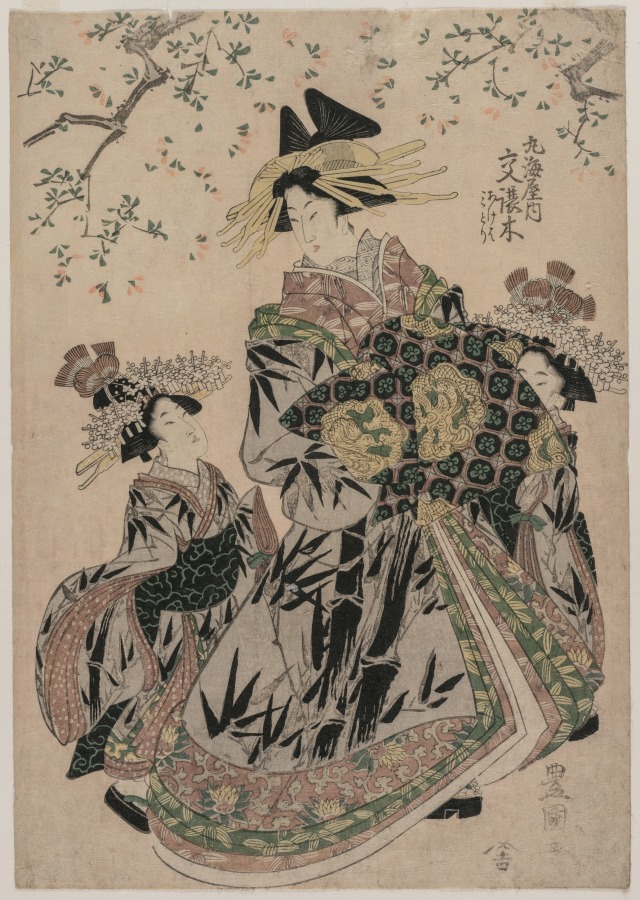
The Courtesan Katakoshigi (?) of Maruebiya with her Kamuro Ageha and Midori
- Date:
- c. 1805
- Medium:
- color woodblock print
- Source:
- Cleveland Museum of Art
Description
Utagawa Toyokuni I's "The Courtesan Katakoshigi (?) of Maruebiya with her Kamuro Ageha and Midori" places its subject in the Yoshiwara's signature configuration: a high-ranking oiran flanked by two child attendants, the small kamuro who accompanied a courtesan during her formative years in the licensed quarter. The Cleveland Museum of Art holds the impression and notes the tentative reading of the courtesan's name; Toyokuni's signature attention to the embroidered obi tied in front, the elaborate hair ornaments, and the calculated weight of layered robes makes the image legible to anyone familiar with late-eighteenth-century Edo bijinga. Although Utagawa Toyokuni built his reputation on kabuki actor prints — the yakusha-e that defined the Utagawa school within Edo ukiyo-e — his courtesan portraits are no less precise. They functioned as a kind of fashion press for the licensed quarter, naming the house (Maruebiya), the woman, and her attendants, and showcasing the season's textile patterns and hair styles for buyers who treated the Yoshiwara as a center of taste-making. Toyokuni handles the size disparity between Katakoshigi and her kamuro with care, letting the children's bright kimono provide a counter-rhythm to the courtesan's stately verticality. The Cleveland Museum's online entry catalogues the print without elaborating beyond what its inscriptions support. For collectors of Edo ukiyo-e, the work stands as a particularly clear example of Toyokuni's Yoshiwara portraiture and as a reminder that his audience expected such bijinga alongside his kabuki actor prints.
More Prints by Utagawa Toyokuni I

Segawa Kikunojō III as the Shop Boy Chōkichi
1796
Woodblock print (nishiki-e), ink and color on paper
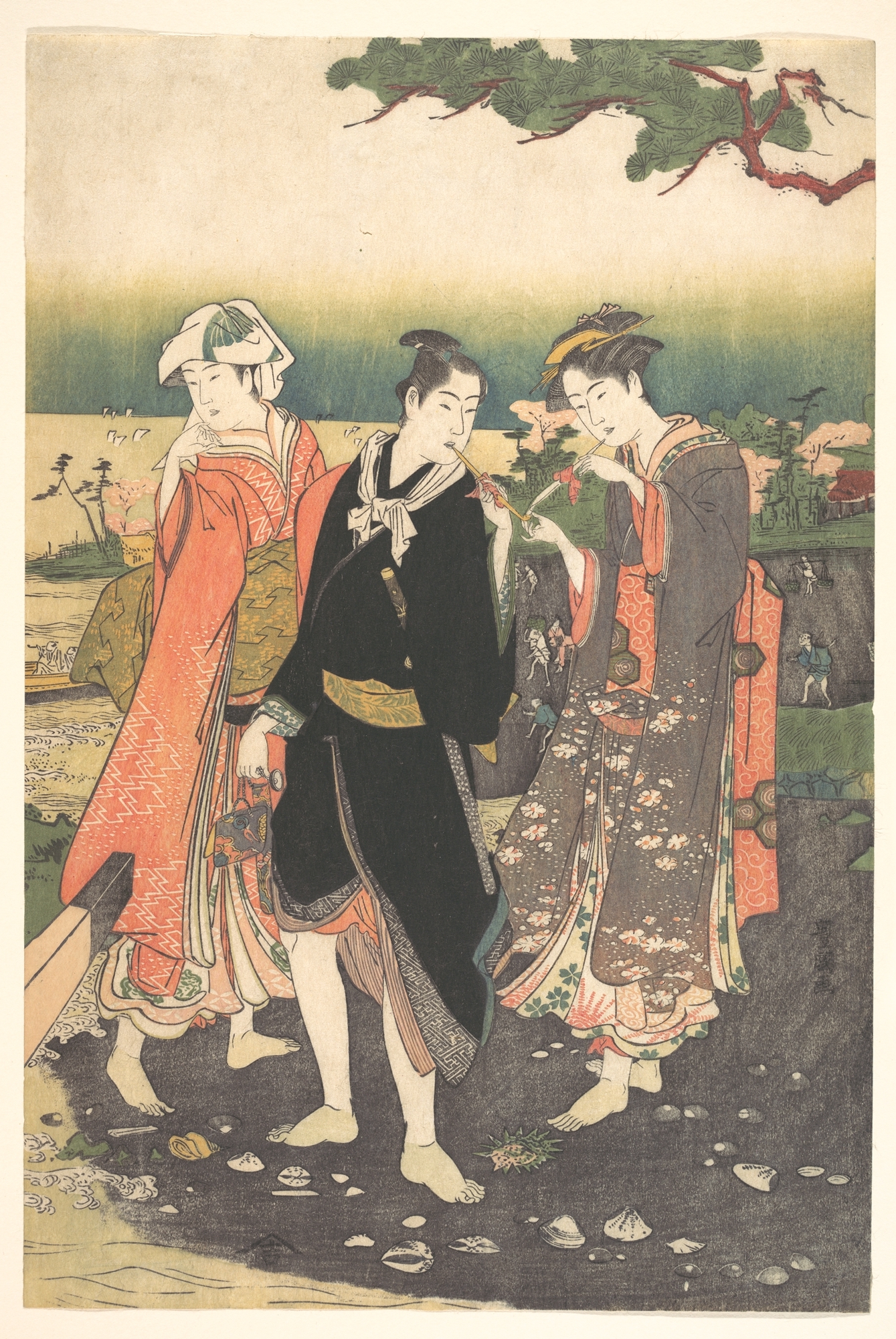
On Shinagawa Beach at Ebb-Tide
1769–1825
Woodblock print; ink and color on paper
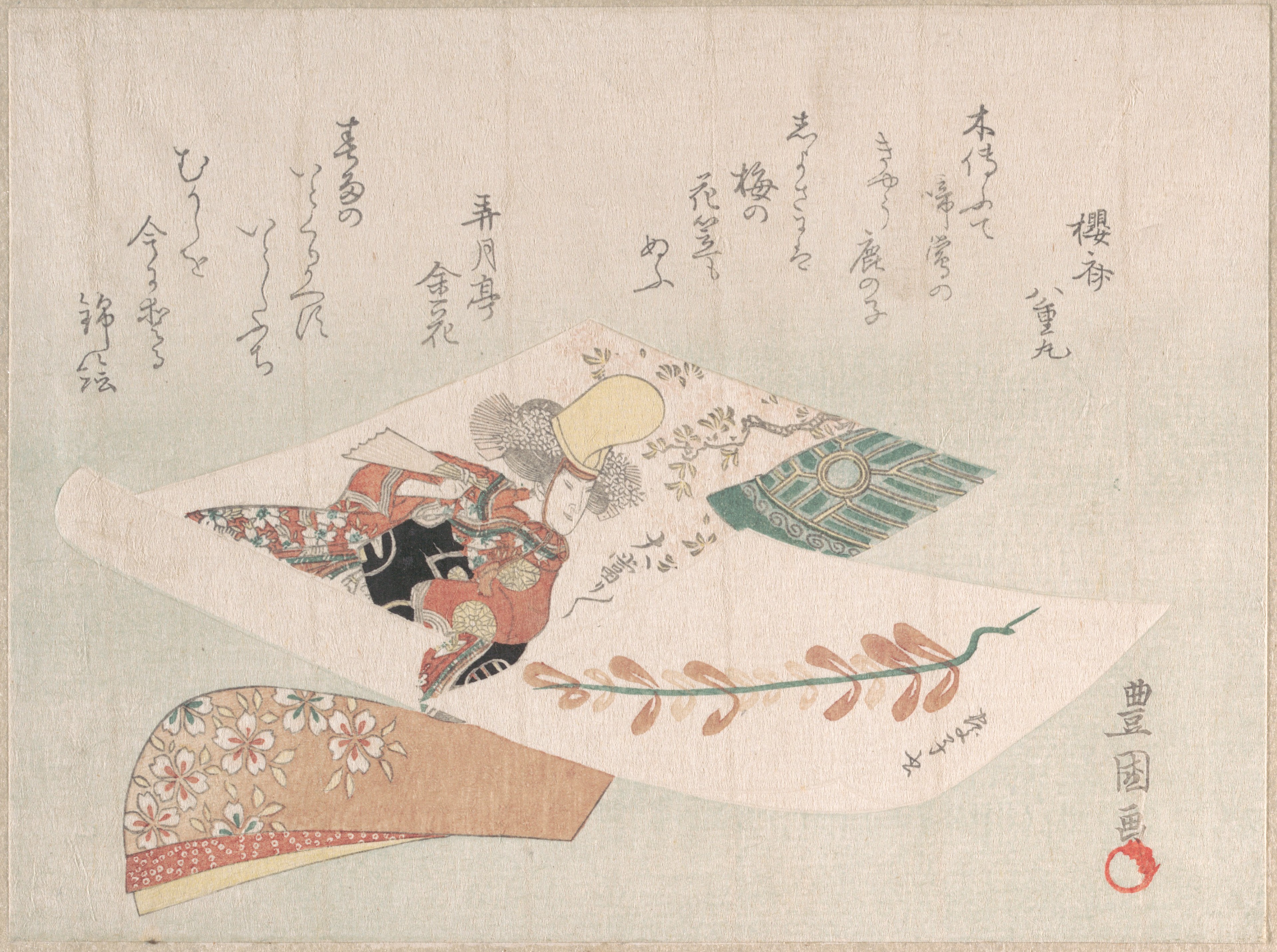
Representation of the Dance-Play "Dōjōji"
Woodblock print (surimono); ink and color on paper

The actors Sawamura Sojuro II as Satsuma Gengobei and Arashi Ryuzo II as Mawashi-otoko Yasuke in the play "Edo Sunago Kichirei Soga," performed at the Miyako Theater on the first month, 1795
c. 1795
Color woodblock print; oban
Frequently Asked Questions
The Courtesan Katakoshigi (?) of Maruebiya with her Kamuro Ageha and Midori was created by Utagawa Toyokuni I (歌川豊国) in c. 1805.