
The Courtesan Takikawa of Ogiya, from the series Seven Beautiful Komachi (Bijin nana Komachi)
- Date:
- Edo period (1615–1868), about 1794
- Medium:
- Color woodblock print; oban
- Source:
- Art Institute of Chicago
Description
Utagawa Toyokuni I's "The Courtesan Takikawa of Ogiya, from the series Seven Beautiful Komachi (Bijin Nana Komachi)" maps the seven classical Komachi episodes — the legendary stages of the poet Ono no Komachi's life — onto seven Yoshiwara courtesans of Toyokuni's own day. Held by the Art Institute of Chicago, the print places Takikawa, a leading oiran of the Ōgiya house, in the role of one Komachi tableau, the specific scene legible to viewers familiar with the classical cycle. Although Utagawa Toyokuni built his career on kabuki actor prints — the yakusha-e in which the Utagawa school dominated Edo ukiyo-e — his courtesan portraits are integral to his output, and the Nana Komachi series stands among his most ambitious literary mitate. The conceit requires Toyokuni to suggest both the present-day woman and the classical scene without forcing either into caricature, and his solution is the same careful figural balance that distinguishes his work across genre: a recognizable face, a precise costume, and a small attribute that signals the literary subtext. The Ōgiya was one of the most prestigious houses of the Yoshiwara, and Takikawa's appearance here doubled as advertisement and homage. The Art Institute of Chicago's online entry documents the print without overreach. For collectors of Edo ukiyo-e, the Nana Komachi sheets remain a key example of how Utagawa Toyokuni's bijinga moved between the licensed quarter and the classical canon with practiced ease.
More Prints by Utagawa Toyokuni I

Kabuki Actor Iwai Kumesaburo with abacus

Segawa Kikunojō III as the Shop Boy Chōkichi
1796
Woodblock print (nishiki-e), ink and color on paper
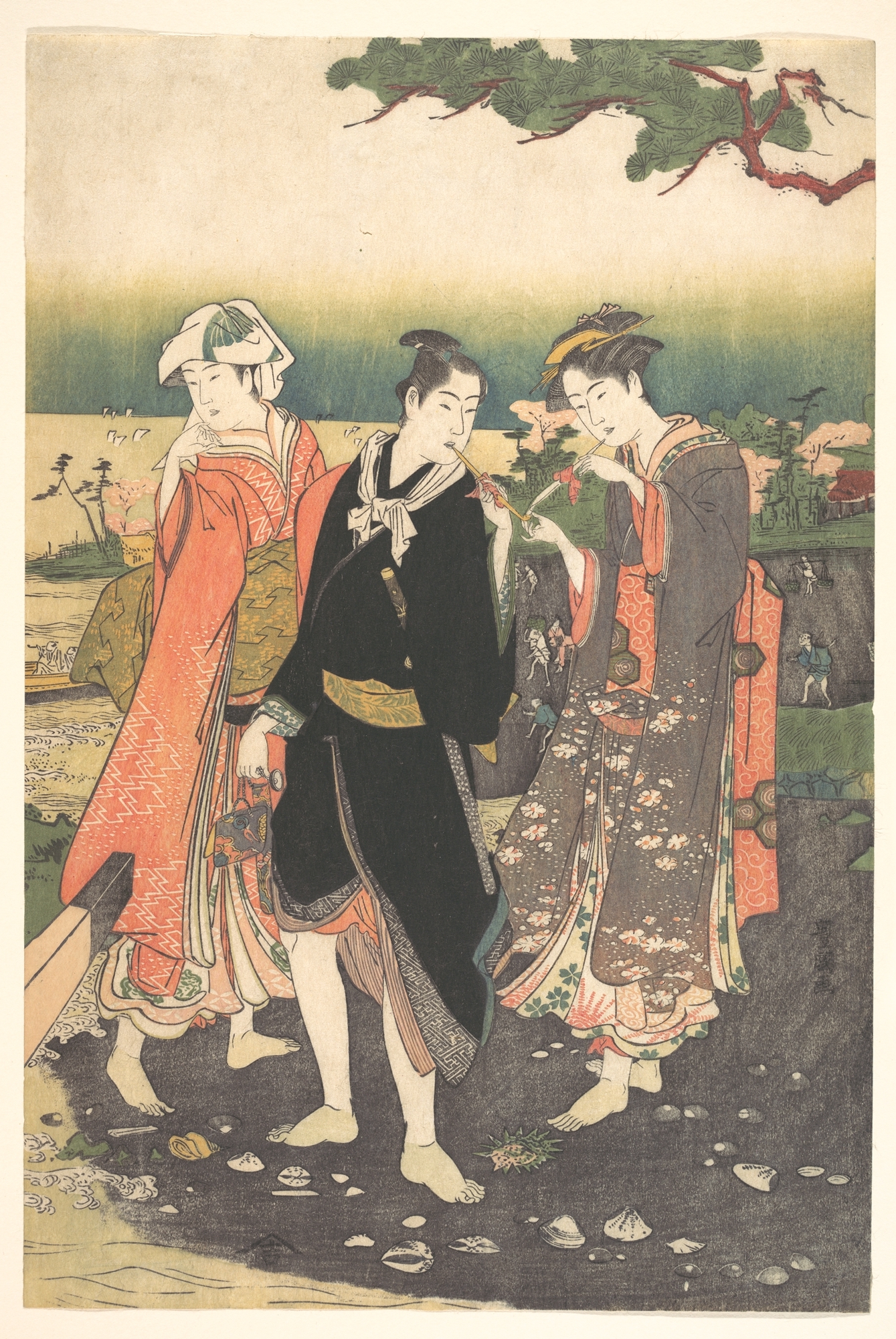
On Shinagawa Beach at Ebb-Tide
1769–1825
Woodblock print; ink and color on paper
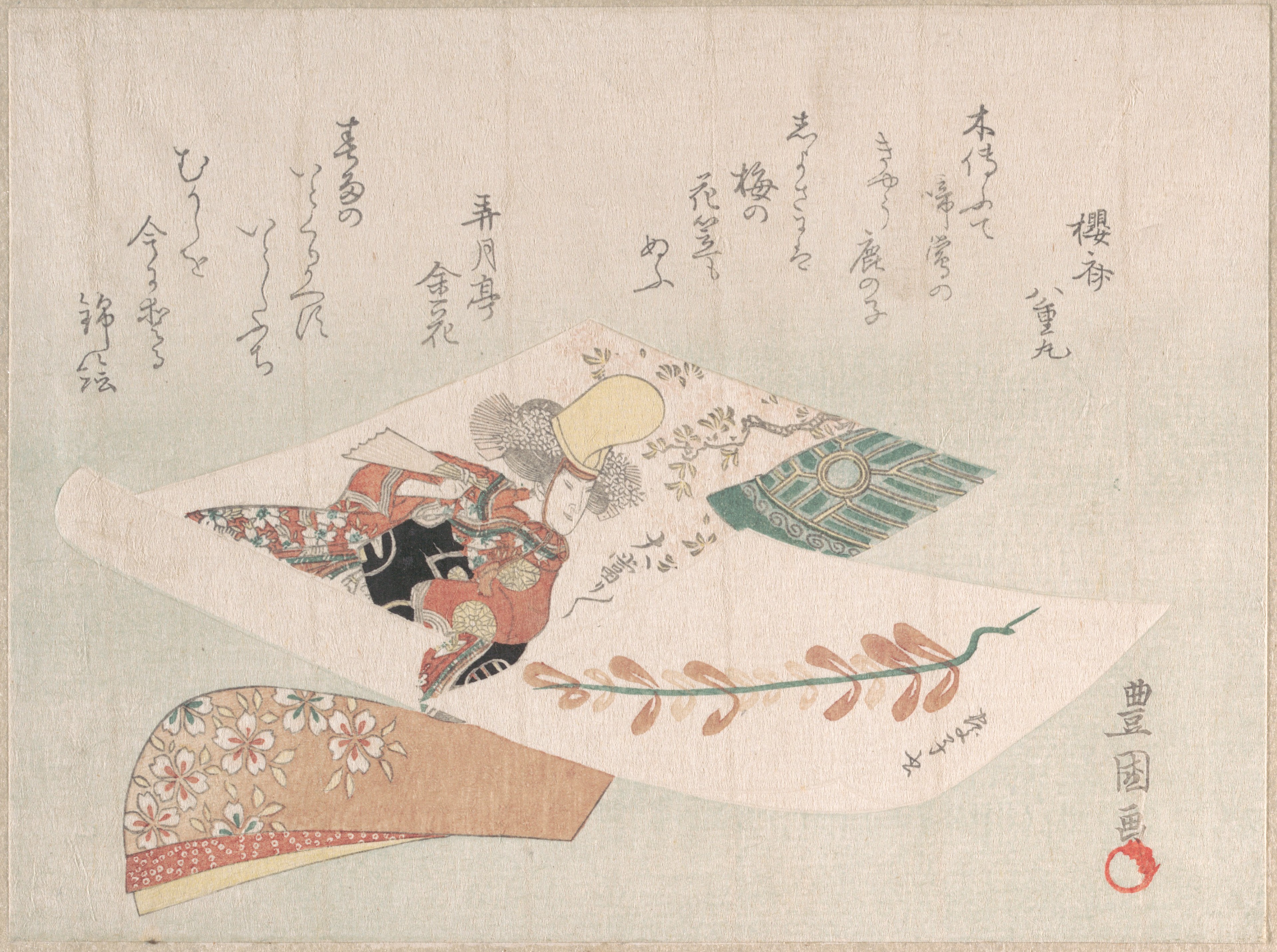
Representation of the Dance-Play "Dōjōji"
Woodblock print (surimono); ink and color on paper
Frequently Asked Questions
The Courtesan Takikawa of Ogiya, from the series Seven Beautiful Komachi (Bijin nana Komachi) was created by Utagawa Toyokuni I (歌川豊国) in Edo period (1615–1868), about 1794.