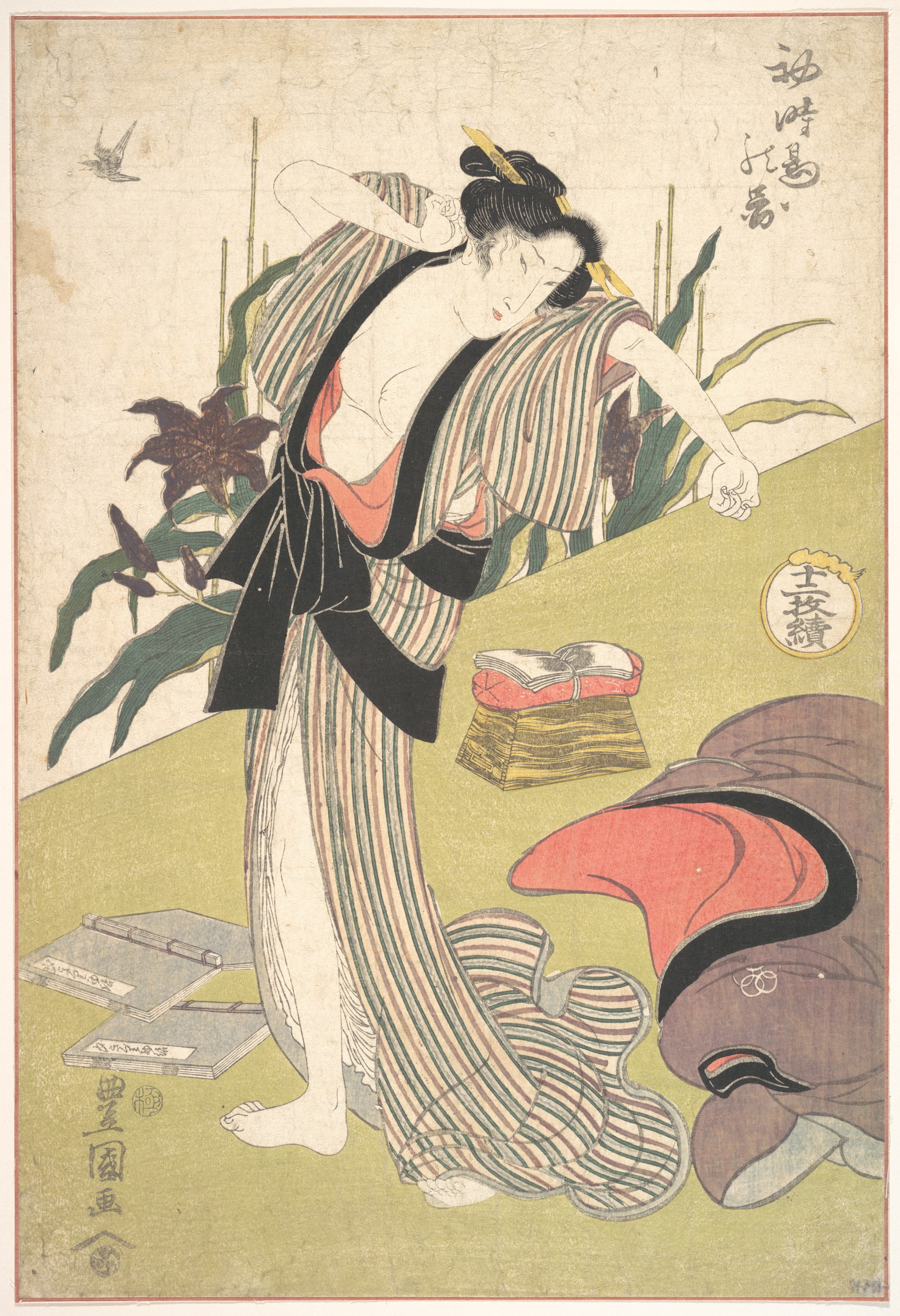
The First Visit of the Cuckoo
- Medium:
- Woodblock print; ink and color on paper
- Source:
- Metropolitan Museum of Art
Description
Held by the Metropolitan Museum of Art, "The First Visit of the Cuckoo" by Utagawa Toyokuni belongs to the seasonal-imagery strand of Edo ukiyo-e in which a specific natural event, here the first cry of the hototogisu (cuckoo) in early summer, organizes the picture's emotional register. The cuckoo's first call was a long-standing poetic motif in Japanese classical literature, associated with the transition from late spring to summer, the brevity of life, and refined attentiveness to natural phenomena. By the time Toyokuni was working, the motif had been thoroughly absorbed into the visual repertoire of Edo ukiyo-e and could be used to give a figural composition a particular seasonal and literary aura. Toyokuni's design likely places one or more figures in postures suggesting that they are listening for or responding to the bird call, allowing the workshop's expertise in figure drawing to express an essentially auditory experience. The Utagawa school's commercial dominance of late Edo print production rested in part on its ability to fuse yakusha-e fluency with the poetic conventions of bijin-ga and seasonal imagery, producing prints that worked on multiple registers simultaneously. The composition's relationship to the cuckoo motif connects it to a long tradition stretching back through classical waka poetry and forward through the haiku of Toyokuni's own contemporaries. For researchers studying Utagawa Toyokuni's range beyond strict actor portraiture, the print is a clear example of how Edo ukiyo-e absorbed and refashioned the classical poetic calendar.
More Prints by Utagawa Toyokuni I

Segawa Kikunojō III as the Shop Boy Chōkichi
1796
Woodblock print (nishiki-e), ink and color on paper
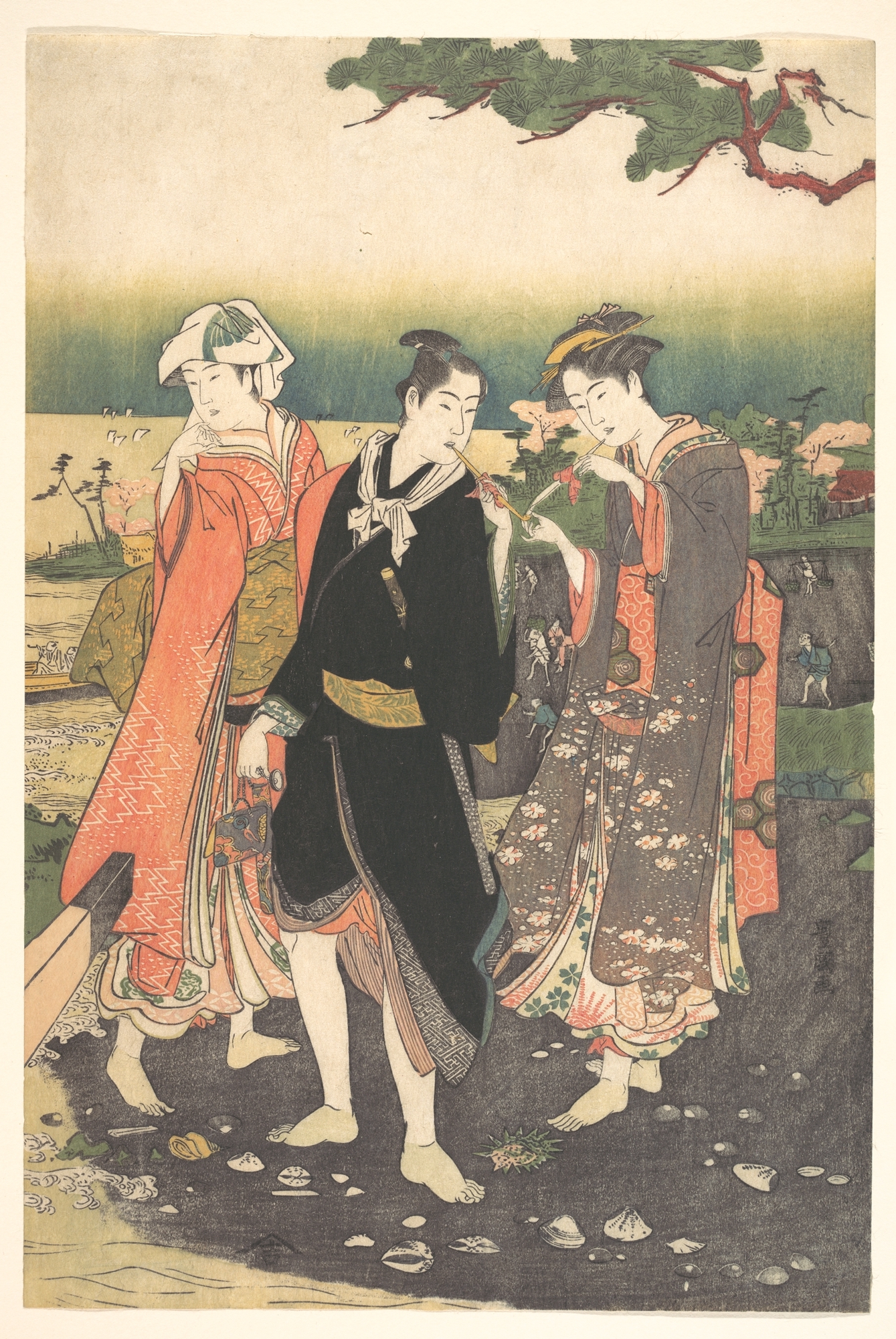
On Shinagawa Beach at Ebb-Tide
1769–1825
Woodblock print; ink and color on paper
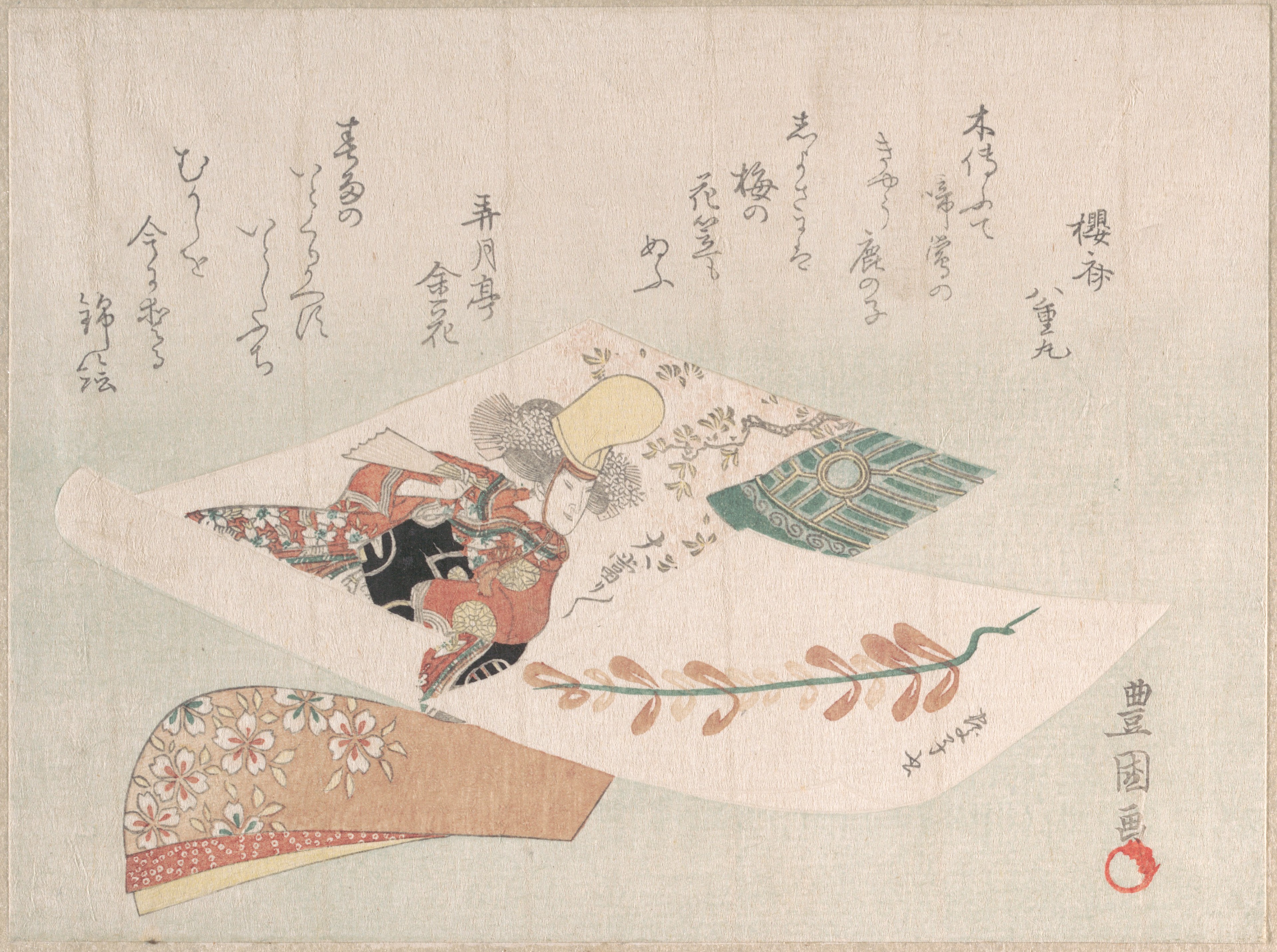
Representation of the Dance-Play "Dōjōji"
Woodblock print (surimono); ink and color on paper

The actors Sawamura Sojuro II as Satsuma Gengobei and Arashi Ryuzo II as Mawashi-otoko Yasuke in the play "Edo Sunago Kichirei Soga," performed at the Miyako Theater on the first month, 1795
c. 1795
Color woodblock print; oban
Frequently Asked Questions
The First Visit of the Cuckoo was created by Utagawa Toyokuni I (歌川豊国).