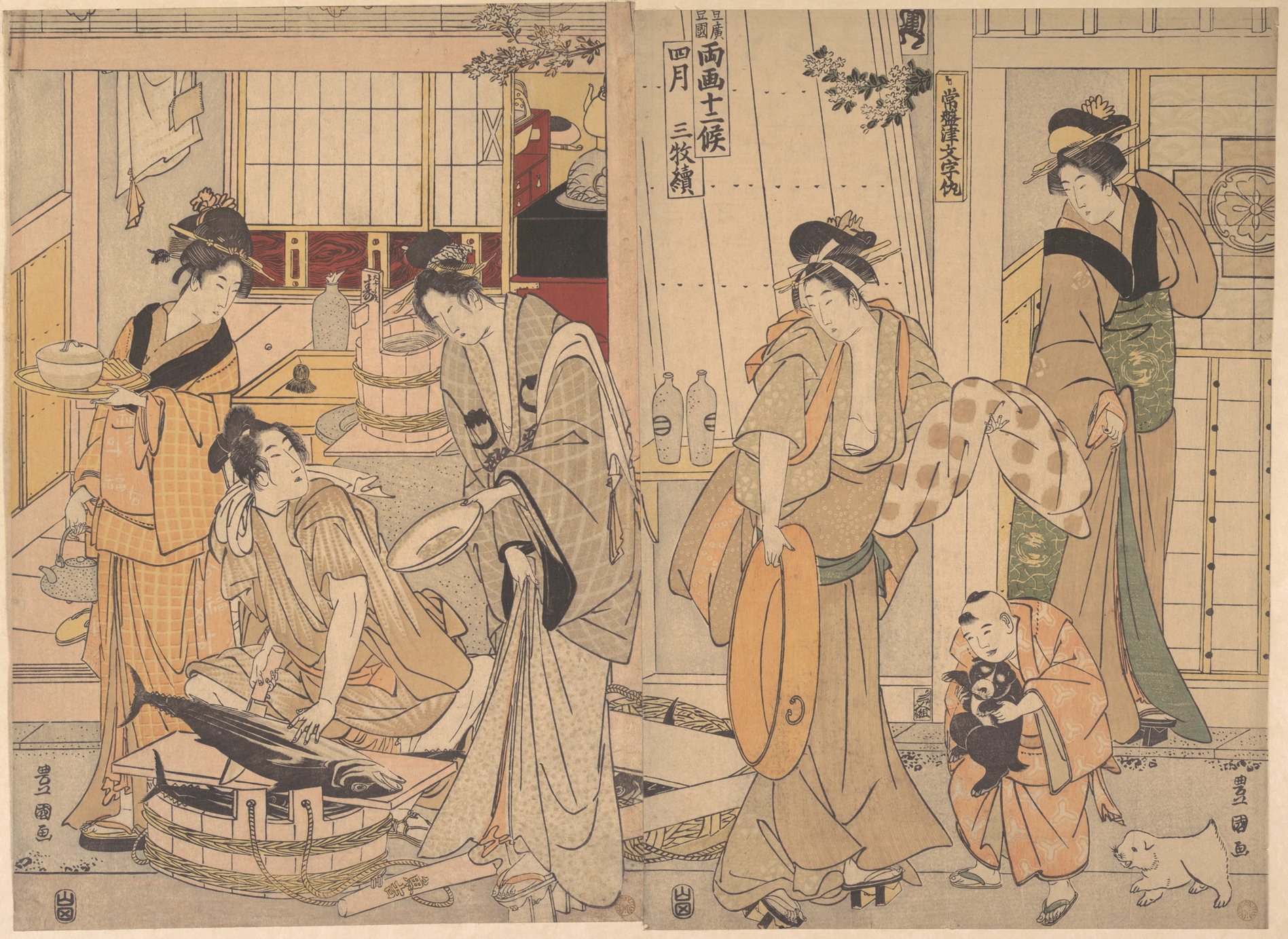
The Fourth Month
- Date:
- ca. 1801
- Medium:
- Two sheets of a triptych of woodblock prints; ink and color on paper
- Source:
- Metropolitan Museum of Art
Description
From a series treating the twelve lunar months, Utagawa Toyokuni I (1769-1825) here depicts the fourth month, traditionally the height of late spring and early summer in the Japanese calendar, associated with cherry blossoms past, fresh greenery, and the seasonal observances connected with the Kamo festival in Kyoto and equivalent festivities in Edo. Twelve-month series were a venerable framework descending from court poetic calendars (tsukinami) into ukiyo-e, where they offered designers a structured way to combine bijinga subject matter with seasonal motifs—each month carrying a distinct iconography that the audience would recognize instantly. Toyokuni's handling typically combines figures, almost always elegantly dressed women, with subtle setting elements that anchor the month: fans, particular flowers, festival props, or atmospheric weather cues. The series circulated alongside the surge of his yakusha-e production through the 1790s and demonstrates his command of bijinga as well as actor portraiture. The Utagawa school's commercial reach depended on this versatility; a single designer's output across yakusha-e, bijinga, mitate, and seasonal subjects allowed him to command a steady share of the publishing market. The Metropolitan Museum of Art's recorded date of 1791 places this impression near the beginning of Toyokuni's mature decade, just before the breakthrough Yakusha butai no sugata-e actor series of 1794-96 secured his dominant position in Edo ukiyo-e production. The print is held in the Metropolitan Museum of Art, whose Japanese print collection numbers among the foremost worldwide for the Edo period.
More Prints by Utagawa Toyokuni I

Kabuki Actor Iwai Kumesaburo with abacus

Segawa Kikunojō III as the Shop Boy Chōkichi
1796
Woodblock print (nishiki-e), ink and color on paper
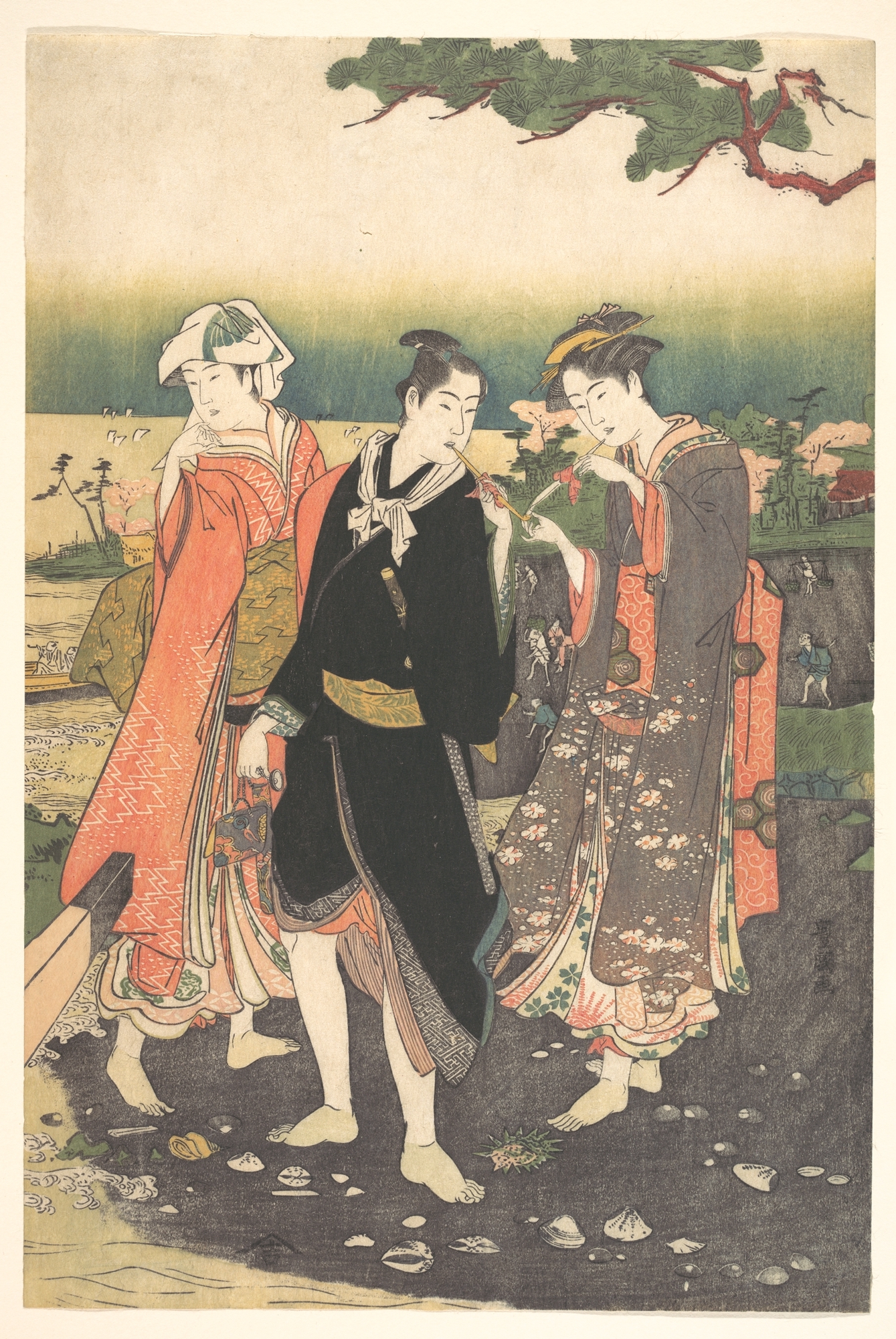
On Shinagawa Beach at Ebb-Tide
1769–1825
Woodblock print; ink and color on paper
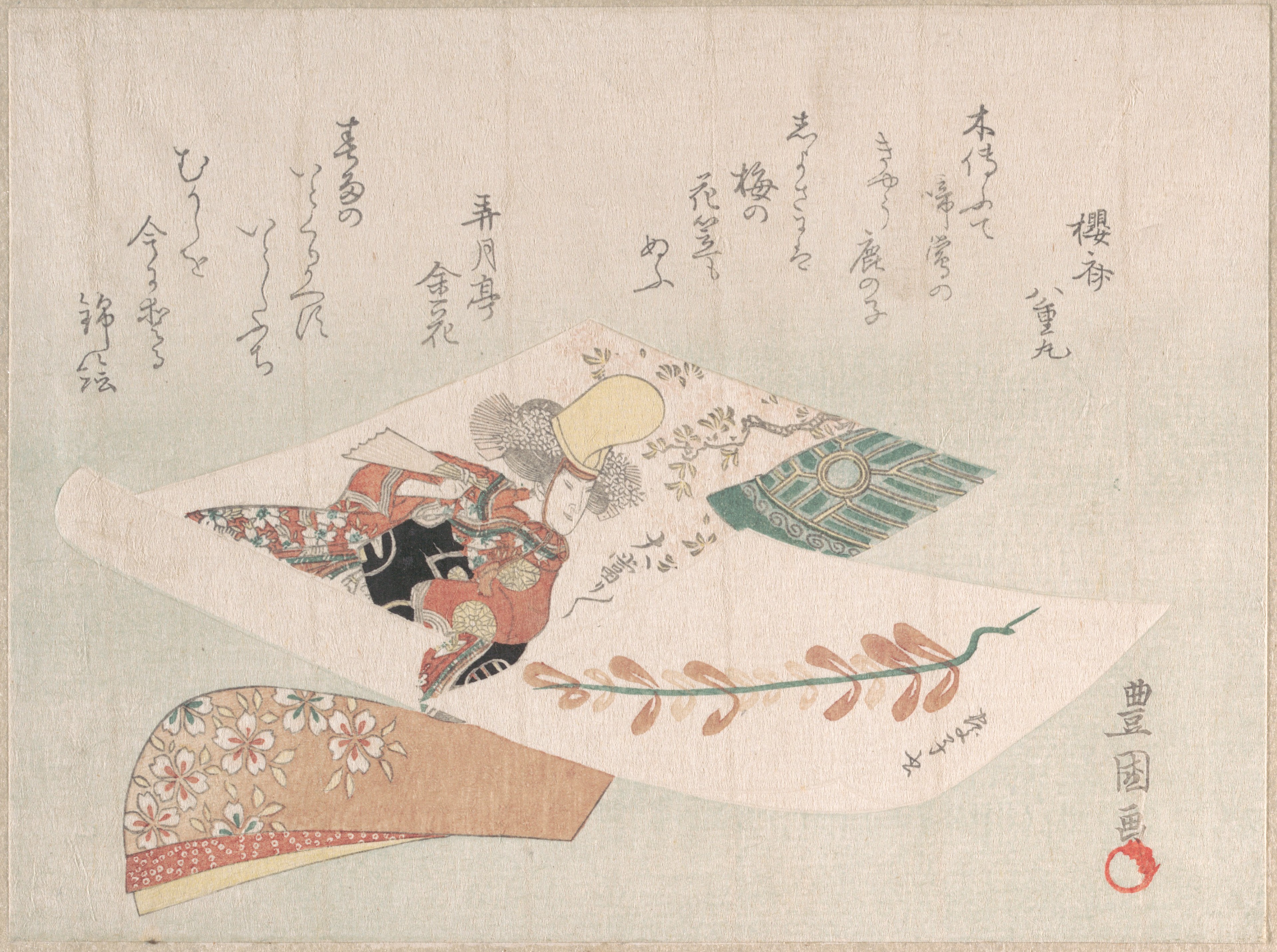
Representation of the Dance-Play "Dōjōji"
Woodblock print (surimono); ink and color on paper
Frequently Asked Questions
The Fourth Month was created by Utagawa Toyokuni I (歌川豊国) in ca. 1801.