
The parlor of a brothel in the pleasure quarters
- Date:
- c. 1789/1801
- Medium:
- Color woodblock print; oban triptych
- Source:
- Art Institute of Chicago
Description
The parlor of a brothel in the pleasure quarters, dated 1784 in Art Institute of Chicago records, belongs to the early phase of Utagawa Toyokuni's career, when the young Edo ukiyo-e designer was still defining the bijin-ga and genre vocabulary he would later combine with his celebrated yakusha-e. The composition lifts the viewer into an interior of the licensed quarters, where courtesans, attendants, and male visitors gather in a parlor whose tatami floor, fusuma screens, and lacquered furnishings frame the figures. Toyokuni arranges the group in the elongated formats favored by the Utagawa school, allowing kimono patterns, sashes, and hair ornaments to unfold across the sheet as a continuous decorative band rather than as isolated portraits. Although Toyokuni would become best known for actor prints, this scene shows how thoroughly his work was rooted in the wider visual culture of Edo, where brothel houses doubled as fashion stages and informal salons for music, conversation, and social display. As Edo ukiyo-e, the print speaks to a metropolitan audience eager for images of the demi-monde produced in affordable woodblock editions. Within the broader arc of Toyokuni's output, works of this kind also reveal the observational habits that would sharpen his later yakusha-e: a feel for posture, gaze, and the choreography of bodies in a confined room. The Art Institute of Chicago, which records the work as a Toyokuni I composition, preserves it as a document of late eighteenth-century ukiyo-e practice and of Toyokuni's early engagement with one of the genre's signature subjects, the inner life of the pleasure quarters.
More Prints by Utagawa Toyokuni I

Kabuki Actor Iwai Kumesaburo with abacus

Segawa Kikunojō III as the Shop Boy Chōkichi
1796
Woodblock print (nishiki-e), ink and color on paper
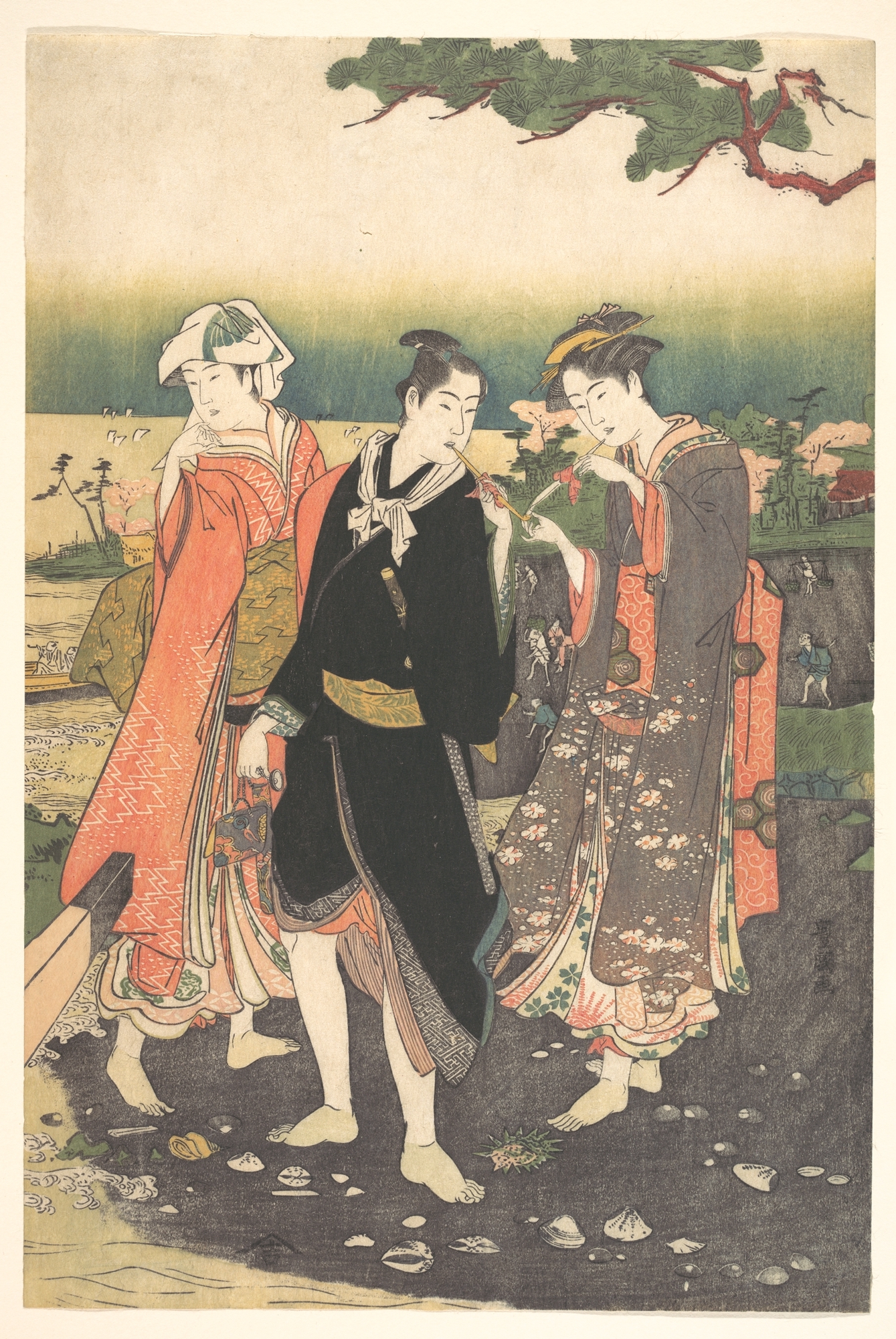
On Shinagawa Beach at Ebb-Tide
1769–1825
Woodblock print; ink and color on paper
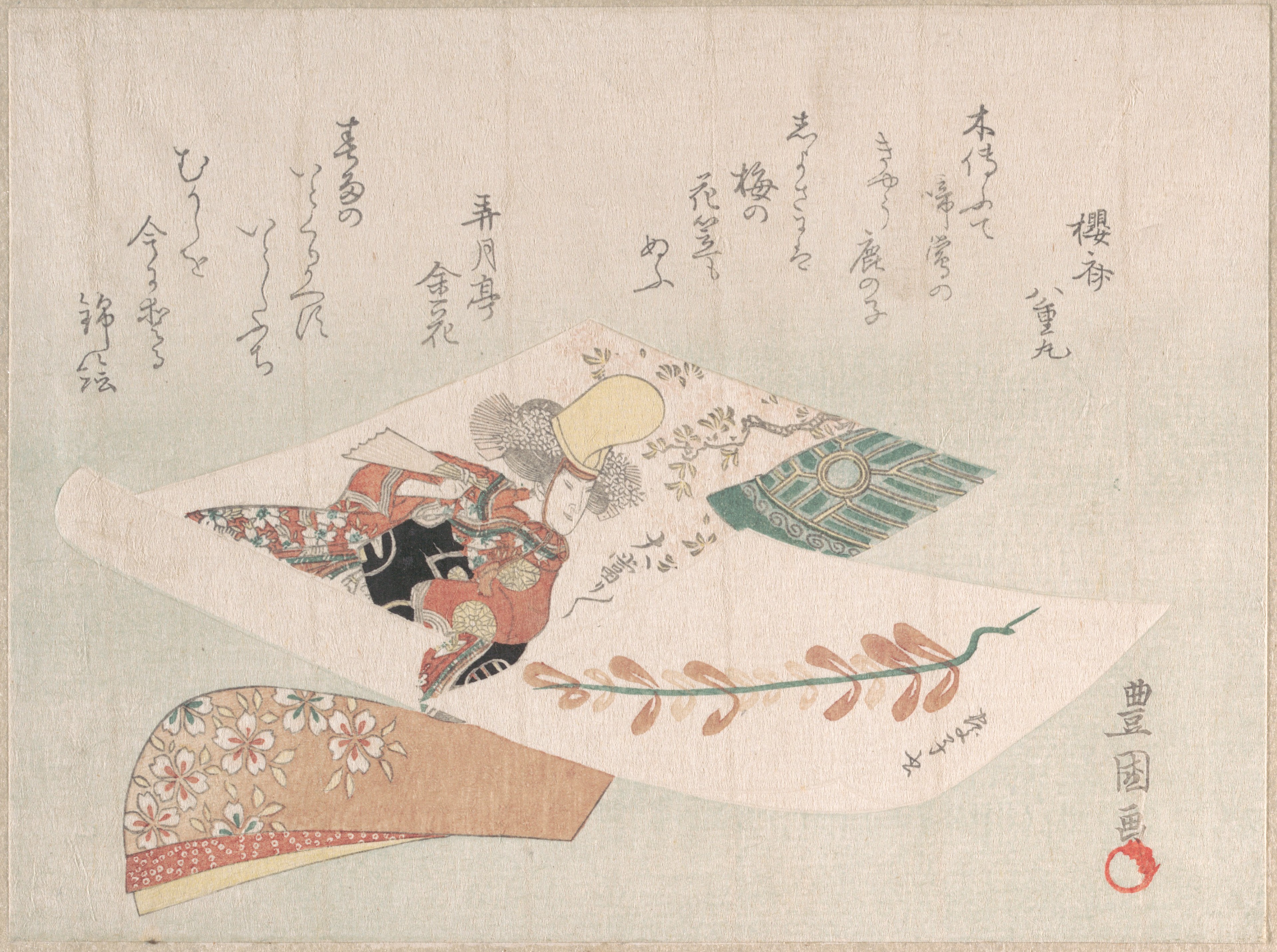
Representation of the Dance-Play "Dōjōji"
Woodblock print (surimono); ink and color on paper
Frequently Asked Questions
The parlor of a brothel in the pleasure quarters was created by Utagawa Toyokuni I (歌川豊国) in c. 1789/1801.