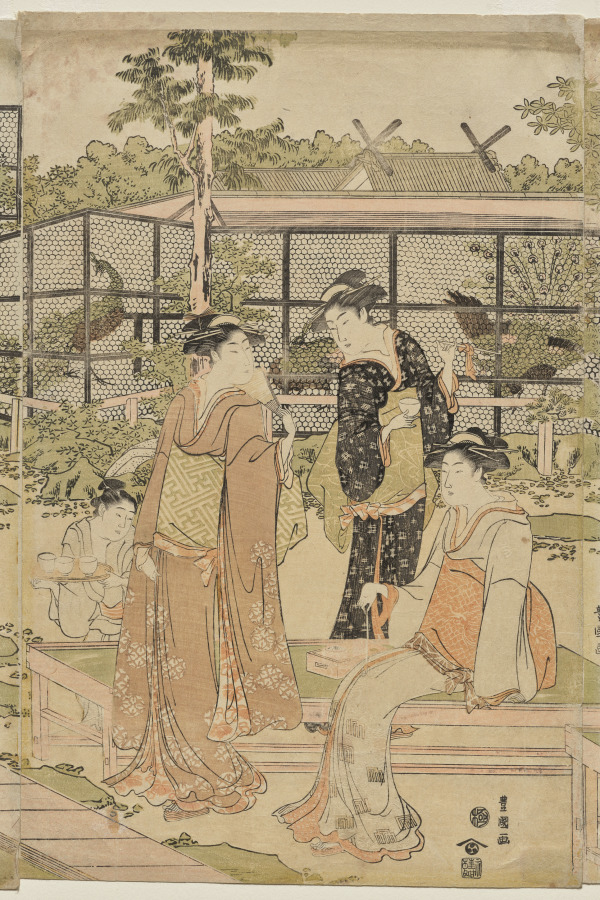
The Shika Teahouse
- Date:
- early 1790s
- Medium:
- One of a triptych of color woodblock prints
- Source:
- Cleveland Museum of Art
Description
The Shika Teahouse, dated 1790 and preserved in the Cleveland Museum of Art (accession 1916.1113.b), is a bijinga sheet by Utagawa Toyokuni depicting a working teahouse of Edo. Mizuchaya (water teahouses) lined the approaches to temples, festival grounds, and pleasure quarters, providing rest and refreshment to travellers while their proprietress-waitresses became local celebrities in their own right. Toyokuni, working in the late Tenmei to early Kansei period, joined senior bijinga designers — Kitagawa Utamaro, Torii Kiyonaga, Chōbunsai Eishi — in turning these establishments into print subjects, with named beauties at famous teahouses functioning as the proto-celebrities of urban Edo. The Shika teahouse is identified in the print's title and inscriptions, anchoring the design in a specific commercial location of the period. Toyokuni's composition focuses on a single figure or small group, with the teahouse setting suggested through tea wares, a curtain, or a glimpse of a low shop bench. As founder of the Utagawa school, he was establishing the visual vocabulary that his pupils would extend through the nineteenth century, and prints like this one document the broader sociology of Edo leisure as much as they perform aesthetic celebration. The Cleveland impression preserves the soft palette and clean line characteristic of Toyokuni's early bijinga before his yakusha-e fame eclipsed his work in the beauty genre.
More Prints by Utagawa Toyokuni I

Kabuki Actor Iwai Kumesaburo with abacus

Segawa Kikunojō III as the Shop Boy Chōkichi
1796
Woodblock print (nishiki-e), ink and color on paper
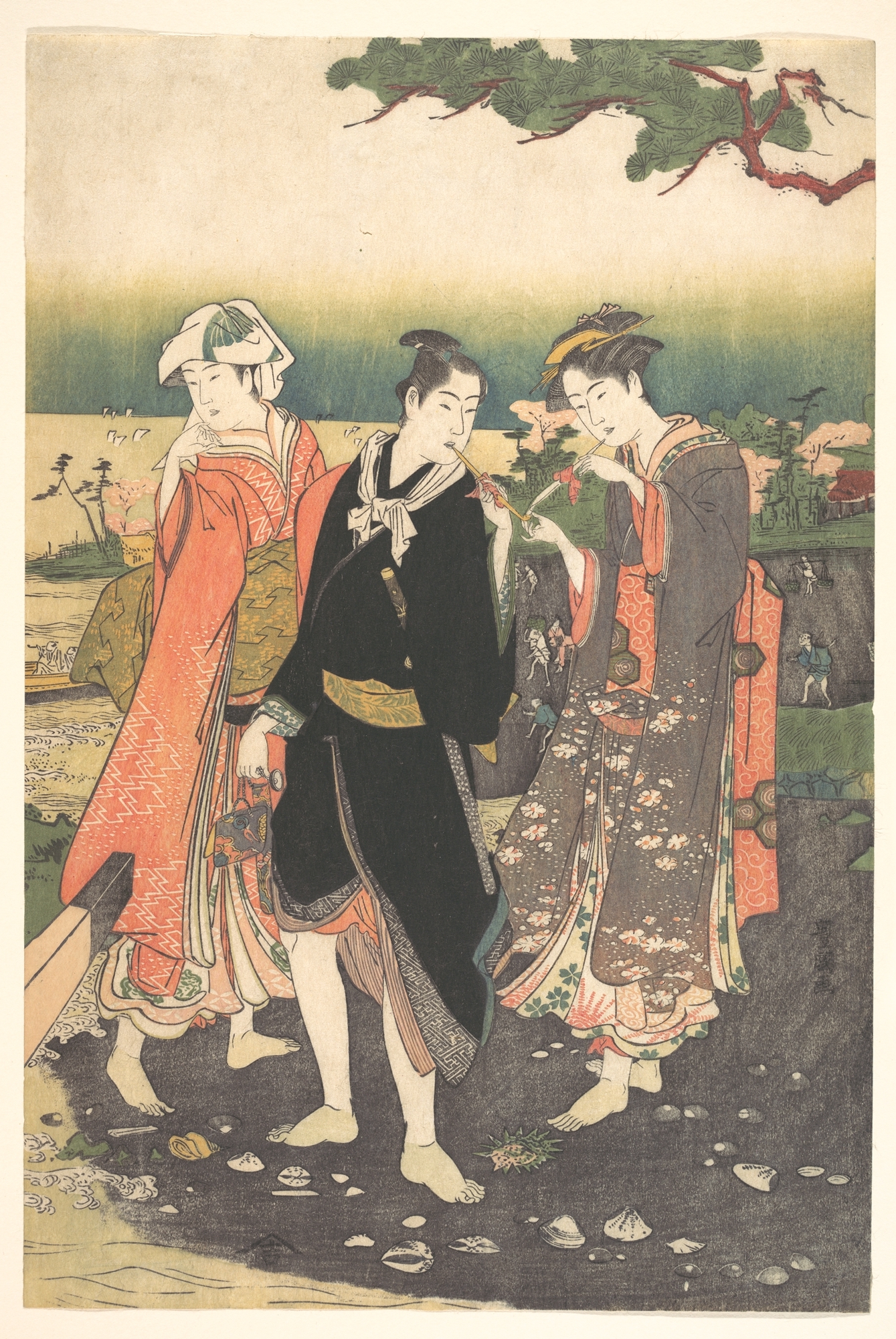
On Shinagawa Beach at Ebb-Tide
1769–1825
Woodblock print; ink and color on paper
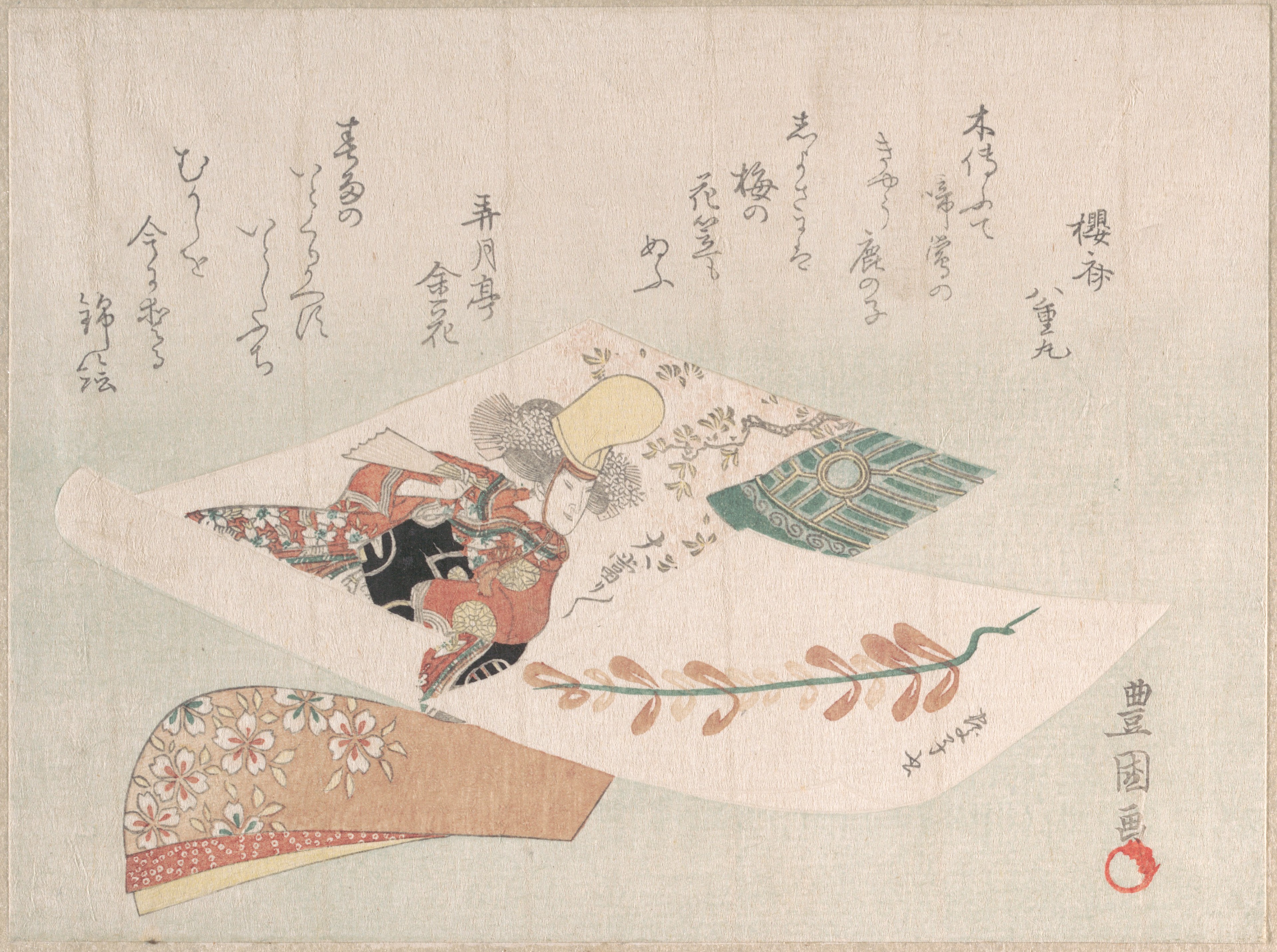
Representation of the Dance-Play "Dōjōji"
Woodblock print (surimono); ink and color on paper
Frequently Asked Questions
The Shika Teahouse was created by Utagawa Toyokuni I (歌川豊国) in early 1790s.