
The sisters Matsukaze and Murasame on the shores of Suma
- Date:
- c. 1790/1810
- Medium:
- Color woodblock print; hashira-e
- Source:
- Art Institute of Chicago
Description
The sisters Matsukaze and Murasame on the shores of Suma, listed by the Art Institute of Chicago with a date of 1785, takes up a beloved classical subject already familiar to Edo viewers from no theatre and waka poetry. Matsukaze and Murasame are the two saltmaker sisters of Suma Bay who, in the play that bears their names, mourn the exiled courtier Ariwara no Yukihira; their story became a stock reference point for evocations of longing, the sea coast, and feminine grief. Utagawa Toyokuni handles the theme in the manner typical of Edo ukiyo-e mitate, dressing the sisters in contemporary kimono and placing them in poses that contemporary viewers could read both as classical reference and as fashionable bijin imagery. The seascape behind them, with its low horizon and indication of pines, signals Suma without overwhelming the figures. The print thus performs the double work that Edo ukiyo-e excelled at: bringing classical narrative into the visual language of the urban present and giving it the immediacy of woodblock impression. Although Toyokuni is best known for yakusha-e, his engagement with no and kabuki narratives across genre, history, and theatre shows how thoroughly his work was rooted in the wider literary culture of the period. The Art Institute of Chicago records the design as a Toyokuni I composition, preserving it as an example of the artist's classical literacy and of the mitate strategies that helped to keep older stories alive in everyday Edo image-making.
More Prints by Utagawa Toyokuni I

Kabuki Actor Iwai Kumesaburo with abacus

Segawa Kikunojō III as the Shop Boy Chōkichi
1796
Woodblock print (nishiki-e), ink and color on paper
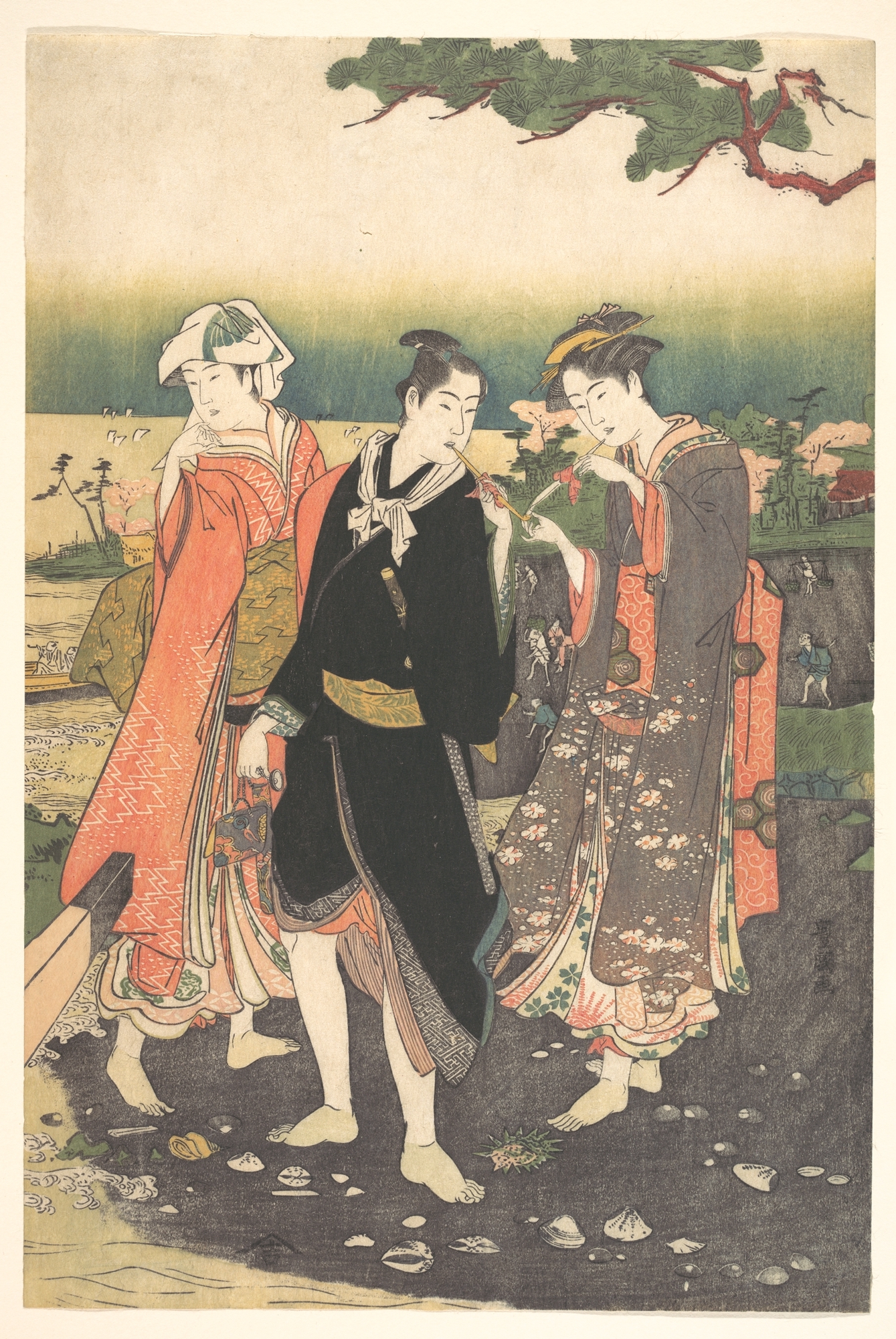
On Shinagawa Beach at Ebb-Tide
1769–1825
Woodblock print; ink and color on paper
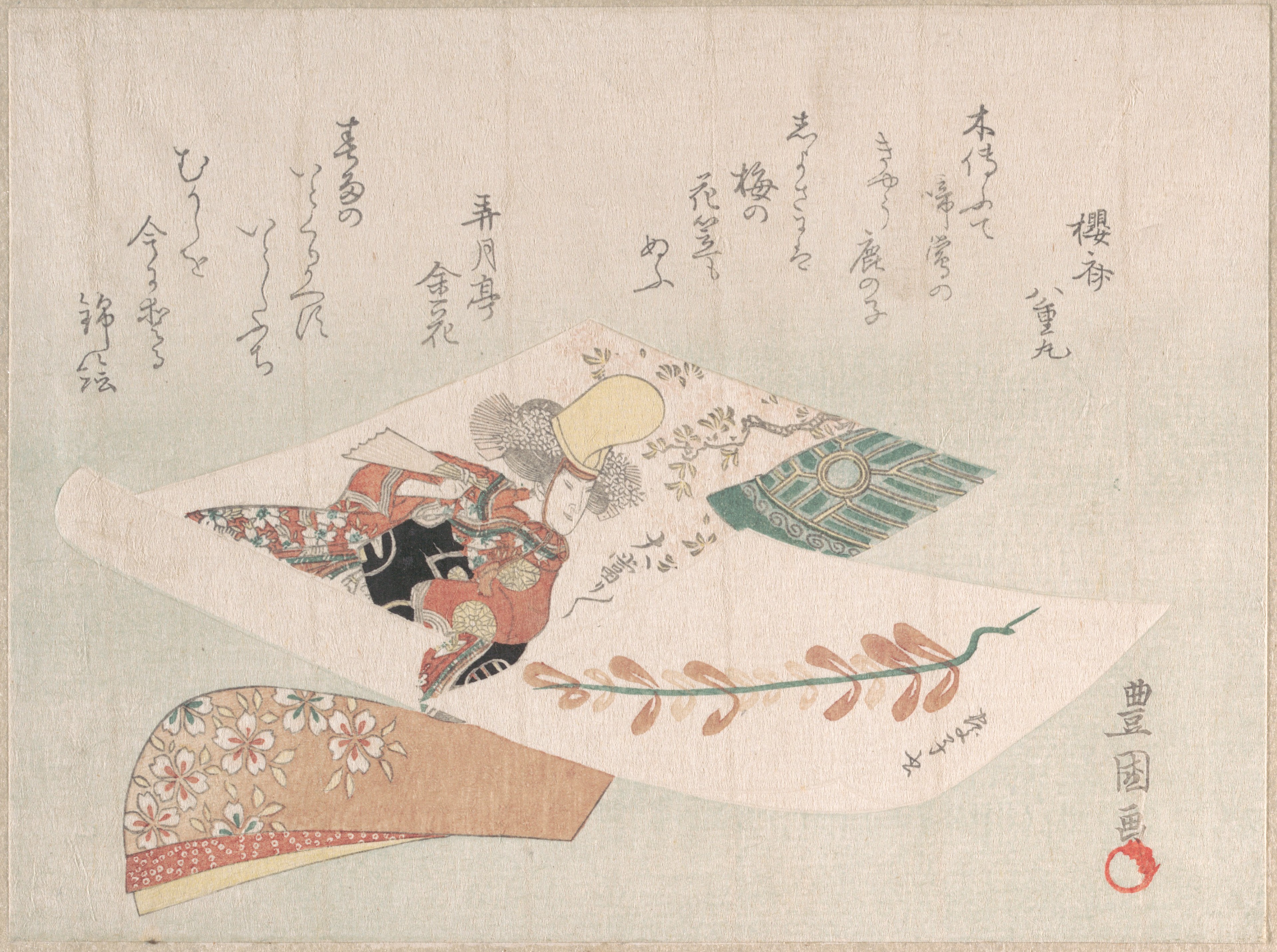
Representation of the Dance-Play "Dōjōji"
Woodblock print (surimono); ink and color on paper
Frequently Asked Questions
The sisters Matsukaze and Murasame on the shores of Suma was created by Utagawa Toyokuni I (歌川豊国) in c. 1790/1810.