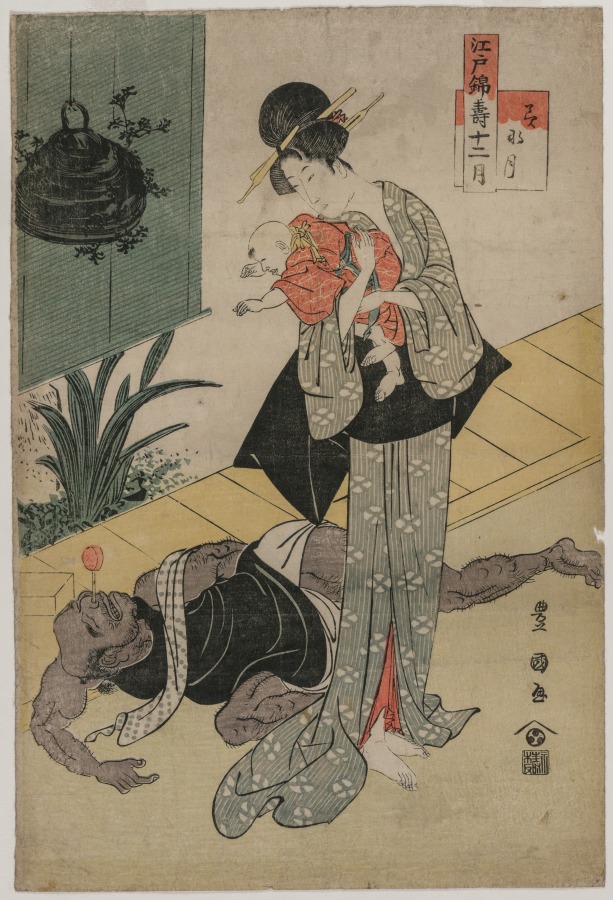
The Sixth Month (from the series The Twelve Felicitous Months in Edo Brocades)
- Date:
- c. late 1790s
- Medium:
- color woodblock print
- Source:
- Cleveland Museum of Art
Description
From his series Edo nishiki juni-ka-getsu (Twelve Felicitous Months in Edo Brocades), Utagawa Toyokuni I (1769-1825) here depicts the sixth lunar month, traditionally the height of summer and associated in Edo with festivals, river coolness, and the Tanabata star festival celebrated in the seventh night of the seventh month but anticipated through the preceding weeks. Twelve-month series were a venerable genre in Japanese visual culture, descending from courtly poetic calendars (tsukinami-e) into the popular ukiyo-e marketplace, where they offered designers a structured framework for depicting beauties and townspeople against seasonal motifs. Toyokuni's contribution to the genre allows him to combine the bijinga subject—elegantly dressed women in seasonal kimono—with the architectural and atmospheric vocabulary of Edo summer: light cotton garments, fans, perhaps a glimpse of the Sumida River or a temple festival in the background. The series title invokes 'brocades' (nishiki), a play on the term nishiki-e used for full-color woodblock prints, and an advertisement of the technical accomplishment of the impressions themselves. The Cleveland Museum of Art's recorded date of 1797 places the work in the middle of Toyokuni's most celebrated decade, contemporaneous with the great Yakusha butai no sugata-e actor series. Together such works show the breadth of his output as the dominant Edo ukiyo-e designer of his generation. The impression is preserved in the Cleveland Museum of Art, one of the major repositories of Japanese woodblock prints in the United States.
More Prints by Utagawa Toyokuni I

Segawa Kikunojō III as the Shop Boy Chōkichi
1796
Woodblock print (nishiki-e), ink and color on paper
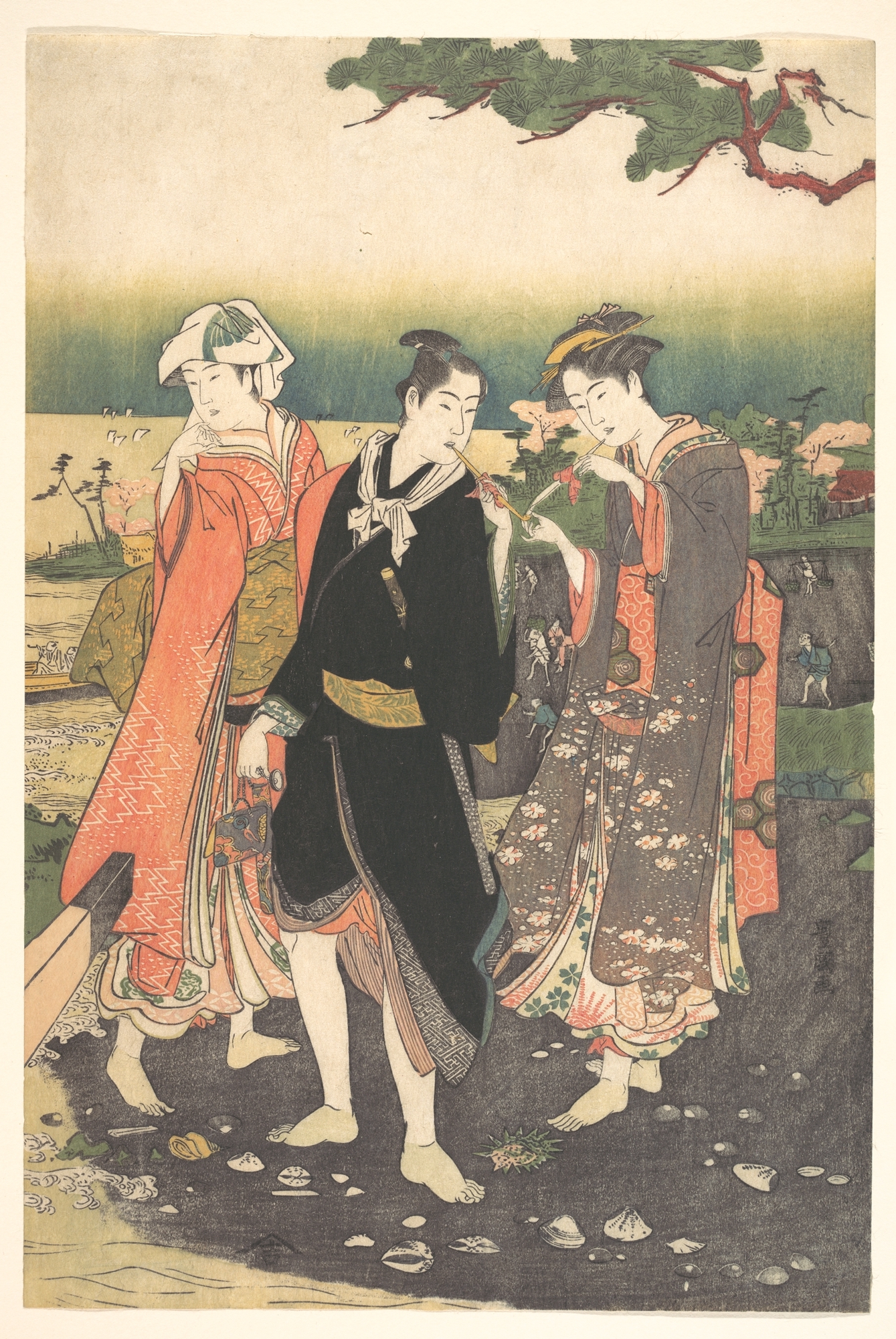
On Shinagawa Beach at Ebb-Tide
1769–1825
Woodblock print; ink and color on paper
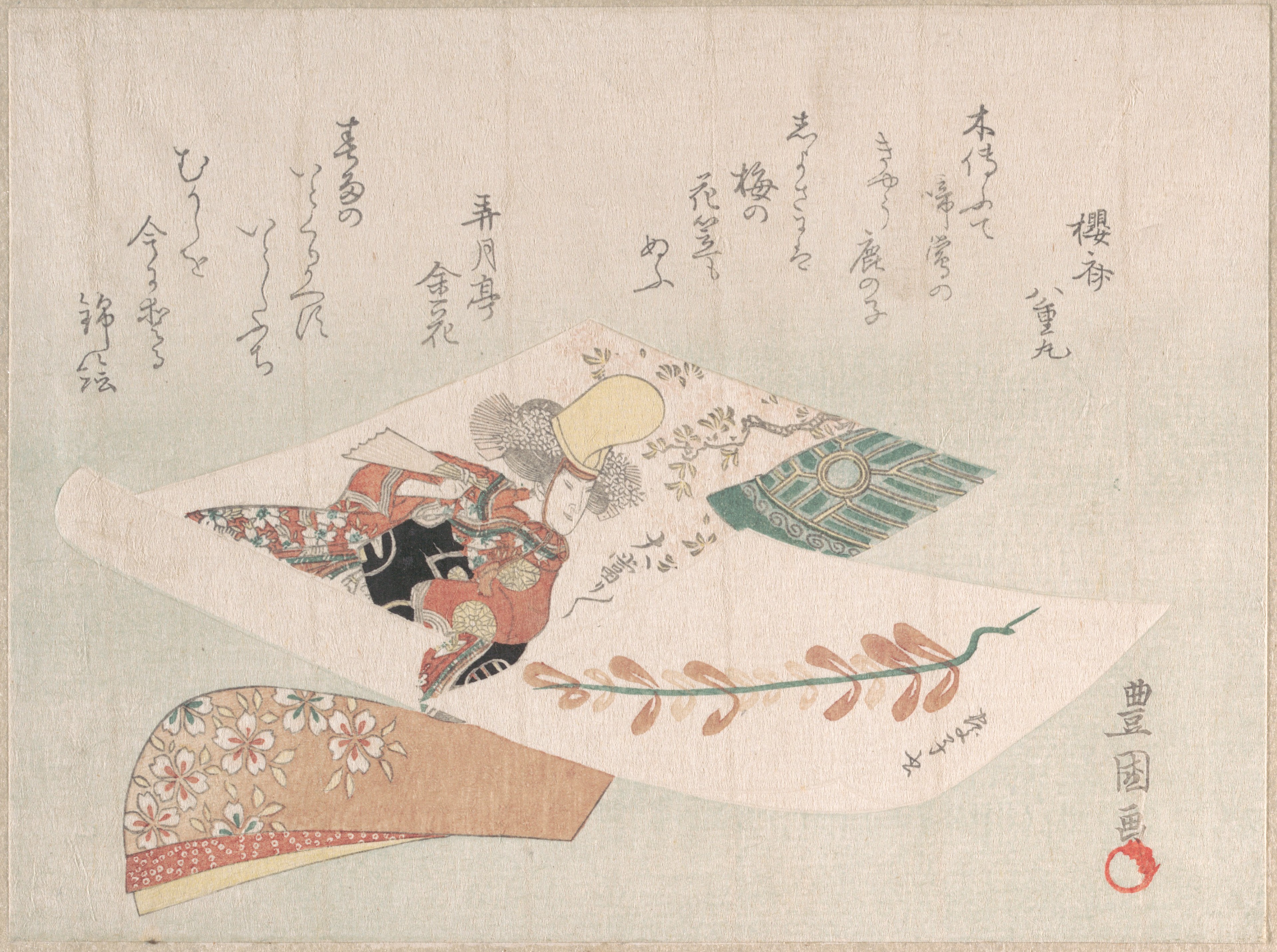
Representation of the Dance-Play "Dōjōji"
Woodblock print (surimono); ink and color on paper

The actors Sawamura Sojuro II as Satsuma Gengobei and Arashi Ryuzo II as Mawashi-otoko Yasuke in the play "Edo Sunago Kichirei Soga," performed at the Miyako Theater on the first month, 1795
c. 1795
Color woodblock print; oban
Frequently Asked Questions
The Sixth Month (from the series The Twelve Felicitous Months in Edo Brocades) was created by Utagawa Toyokuni I (歌川豊国) in c. late 1790s.