
Toraya: Arashi Ryuzo II as the monk Tojibo in the play "Hatsu Akebono Kaomise Soga," from the series "Portraits of Actors on Stage (Yakusha butai no sugata-e)"
- Date:
- 1794
- Medium:
- Color woodblock print; oban
- Source:
- Art Institute of Chicago
Description
In this Utagawa Toyokuni I print from Portraits of Actors on Stage (Yakusha butai no sugata-e), Arashi Ryuzo II of the Toraya house performs the monk Tojibo in the kabuki play Hatsu Akebono Kaomise Soga, part of the annual Soga-related repertoire so important to the Edo theatrical calendar. Toyokuni emphasizes the dramatic interplay between Tojibo's clerical garments, his shaven head, and the inward intensity expected of a stage monk who hides secular passions beneath religious robes. The figure stands as a fine instance of Edo ukiyo-e yakusha-e: an individualized actor likeness merged with the iconography of a specific role. Arashi Ryuzo II was a respected supporting actor whose career flourished alongside the great onnagata and tachiyaku of his era, and Toyokuni honors his particular features rather than reducing him to a generic type. The Art Institute of Chicago preserves the impression, whose carefully aligned color blocks and confident keylines convey the technical accomplishment of the publisher and carvers behind Toyokuni's series. Yakusha butai no sugata-e is widely credited with launching Toyokuni I as the most commercially successful actor-portrait designer of his generation, and this Arashi Ryuzo II sheet contributes to the larger argument that Utagawa Toyokuni's full-length, performance-anchored approach proved more durable in the Edo market than the radical bust-length experiments of Toshusai Sharaku.
More Prints by Utagawa Toyokuni I

Kabuki Actor Iwai Kumesaburo with abacus

Segawa Kikunojō III as the Shop Boy Chōkichi
1796
Woodblock print (nishiki-e), ink and color on paper
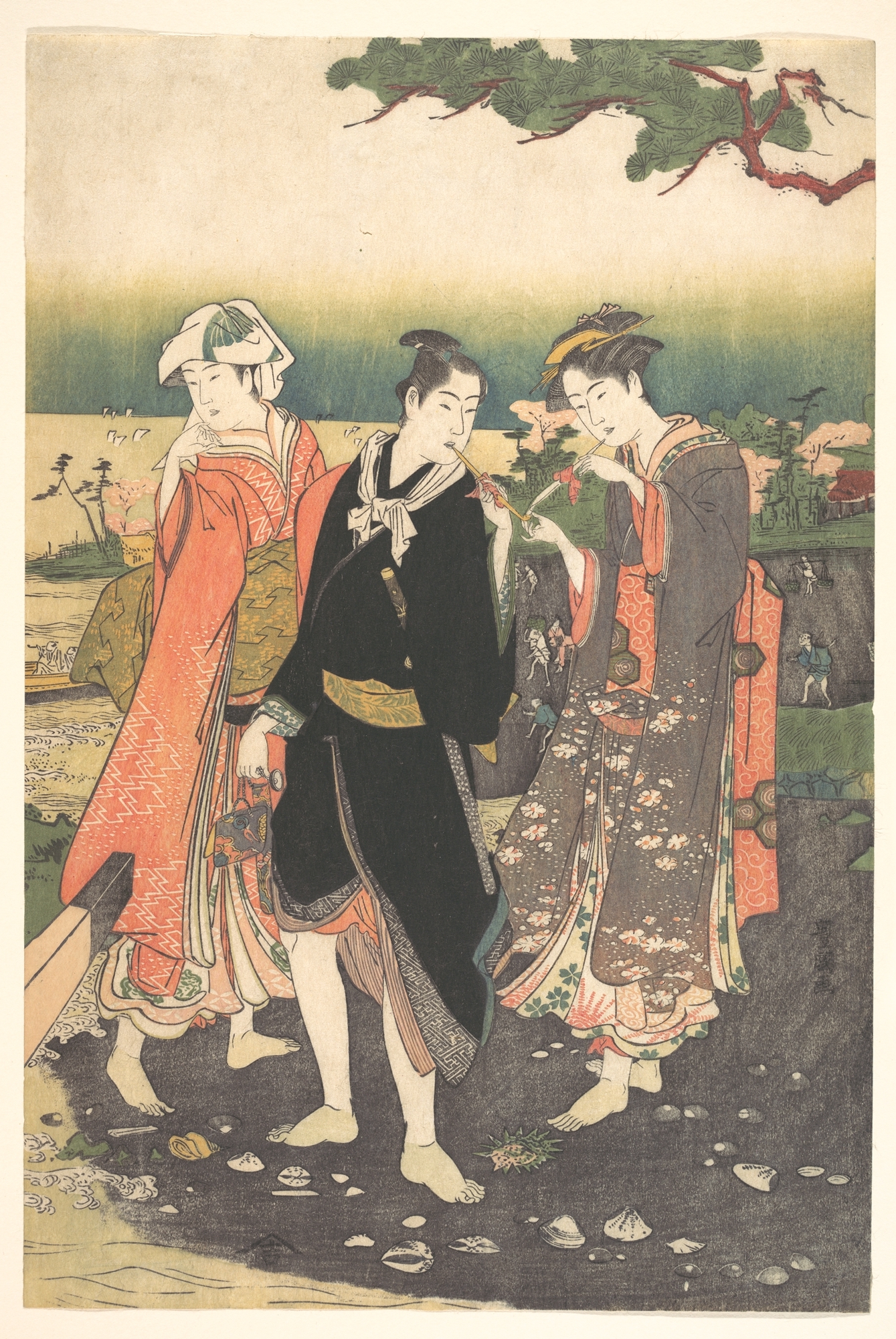
On Shinagawa Beach at Ebb-Tide
1769–1825
Woodblock print; ink and color on paper
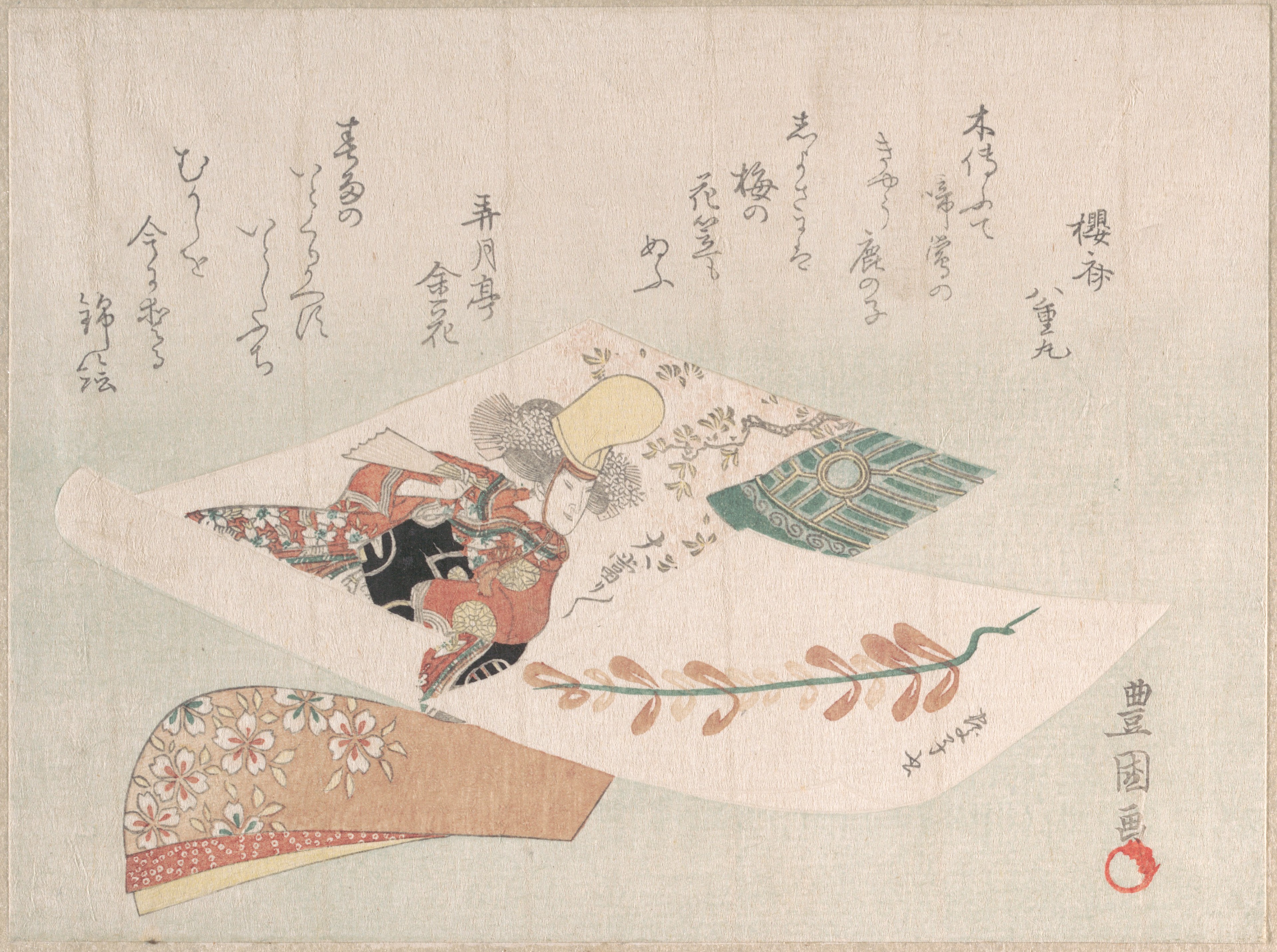
Representation of the Dance-Play "Dōjōji"
Woodblock print (surimono); ink and color on paper
Frequently Asked Questions
Toraya: Arashi Ryuzo II as the monk Tojibo in the play "Hatsu Akebono Kaomise Soga," from the series "Portraits of Actors on Stage (Yakusha butai no sugata-e)" was created by Utagawa Toyokuni I (歌川豊国) in 1794.