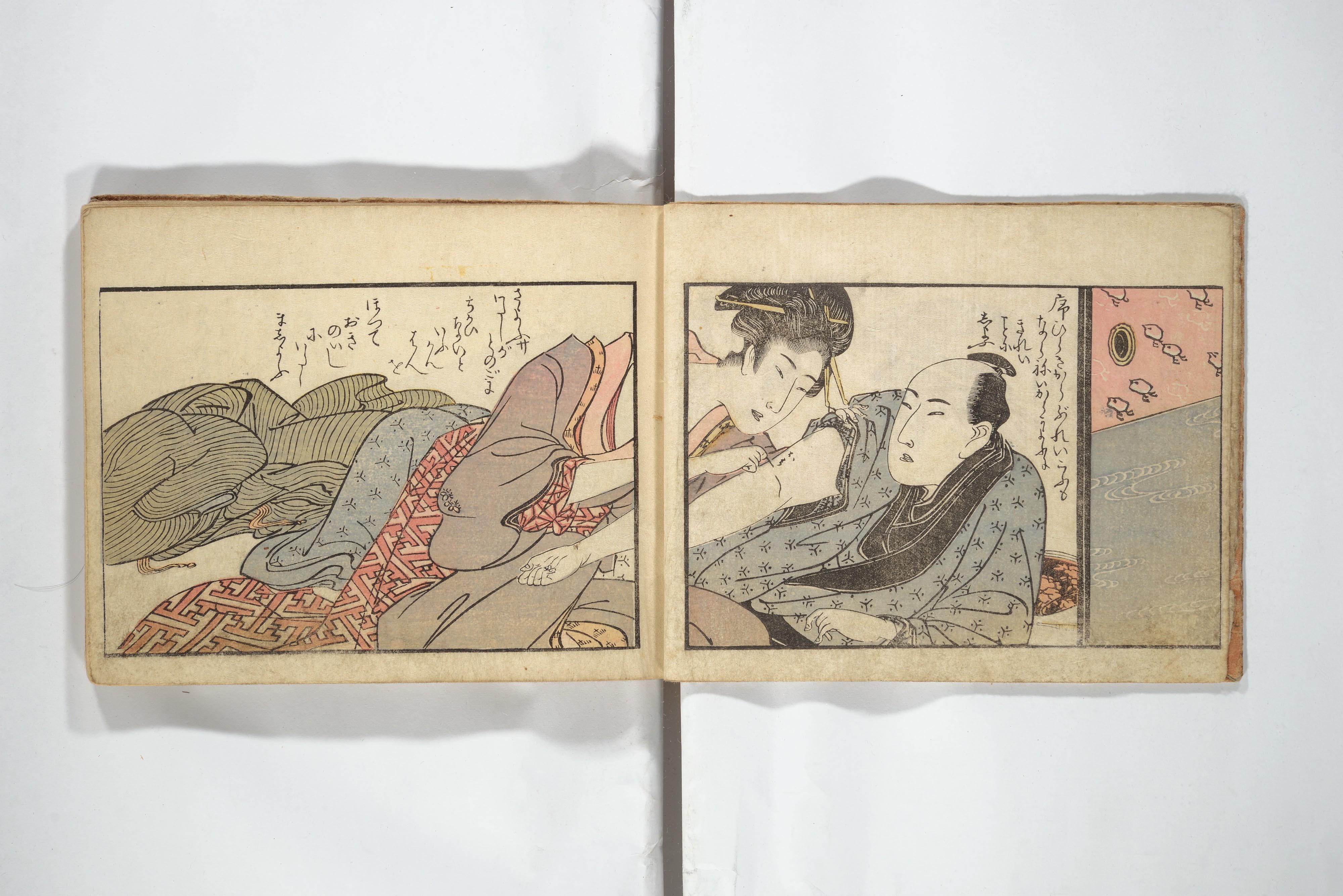
Untitled Book of Erotica (Shunga) 春画
- Date:
- 1798
- Medium:
- Woodblock printed book; ink and color on paper
- Source:
- Metropolitan Museum of Art
Description
Utagawa Toyokuni I's untitled book of erotica (shunga, 春画) participates in a current that ran through almost every major Edo ukiyo-e career — the production of privately circulated, technically virtuosic prints and printed books showing lovers in intimate scenes. The Metropolitan Museum of Art's example is part of its broader holdings of Toyokuni and of Japanese shunga, and curators have catalogued the work without fabricating circumstances of commission. Although Utagawa Toyokuni is most often discussed in relation to kabuki actor prints — the yakusha-e on which his fame rests — his shunga draws on the same descriptive capacity for fabric, hairstyle, and skin that drove his bijinga. Shunga buyers in Edo ukiyo-e markets prized exactly this technical fluency: the close depiction of patterned robes pushed aside, of folded screens and lacquered furniture pushed into the background, of expressions calibrated between intensity and humor. Toyokuni's books on this subject, like those of his Utagawa-school colleagues, were not produced as illicit work but as part of a recognized publishing genre, often printed with unusual care and lavish color. The Met's cataloguing situates the volume within Edo ukiyo-e without overclaiming its narrative or attempting to identify specific scenes with stage roles. For scholars and collectors, Toyokuni's shunga remains a reminder that the same hand that designed kabuki actor prints also satisfied an entirely different appetite, and that the line between public theater and private bedroom in Edo print culture was always more porous than later museum categorization suggests.
More Prints by Utagawa Toyokuni I

Segawa Kikunojō III as the Shop Boy Chōkichi
1796
Woodblock print (nishiki-e), ink and color on paper
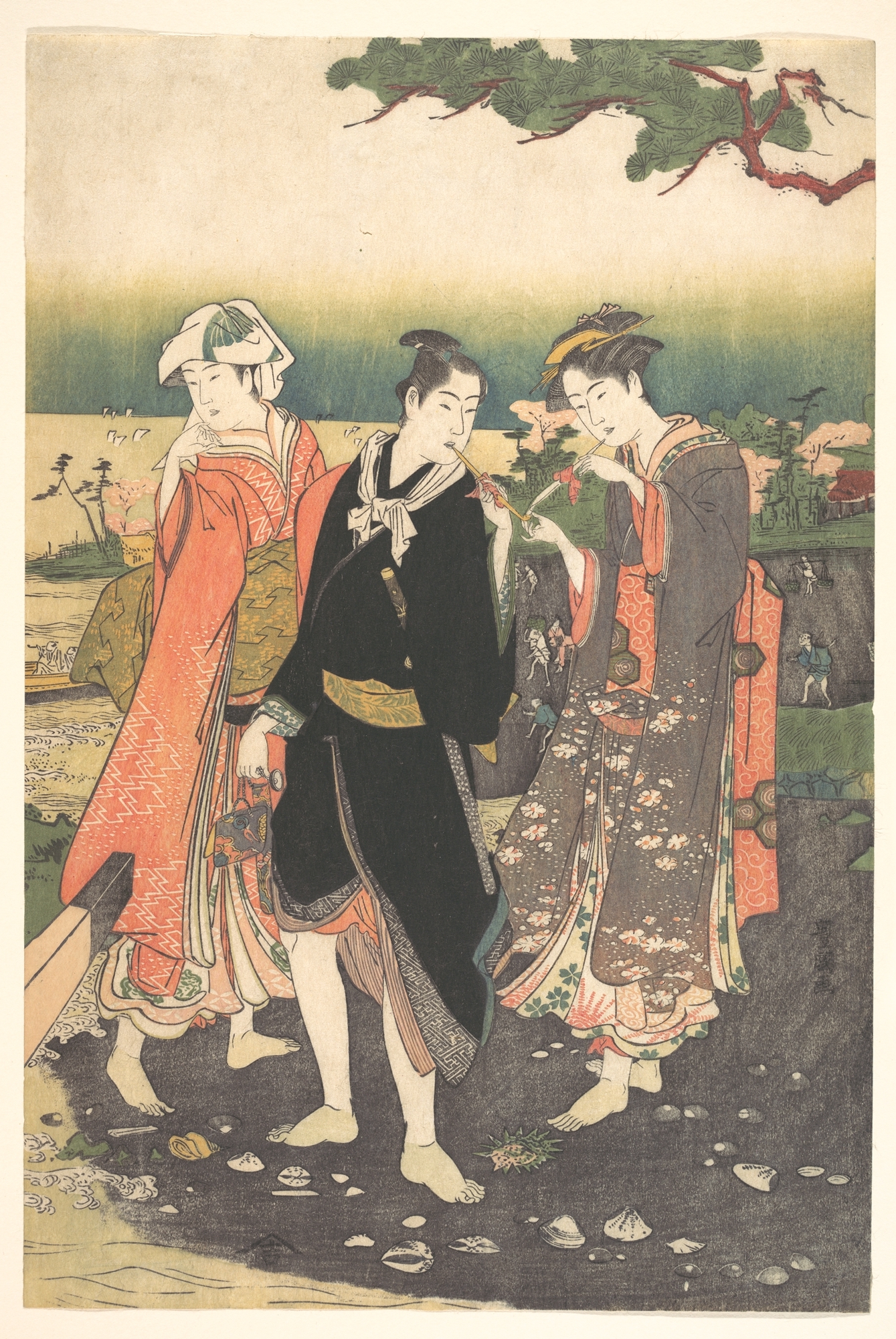
On Shinagawa Beach at Ebb-Tide
1769–1825
Woodblock print; ink and color on paper
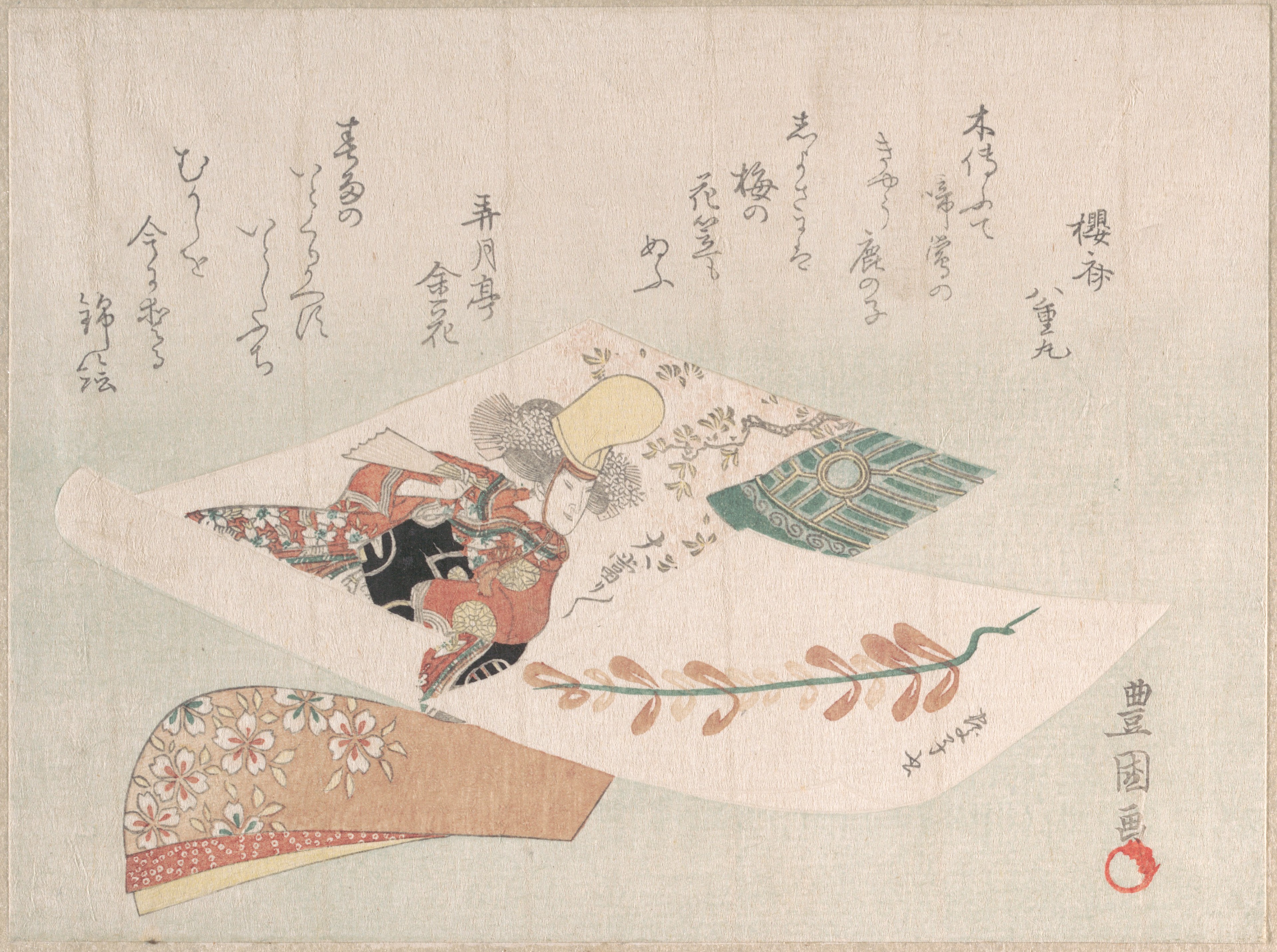
Representation of the Dance-Play "Dōjōji"
Woodblock print (surimono); ink and color on paper

The actors Sawamura Sojuro II as Satsuma Gengobei and Arashi Ryuzo II as Mawashi-otoko Yasuke in the play "Edo Sunago Kichirei Soga," performed at the Miyako Theater on the first month, 1795
c. 1795
Color woodblock print; oban
Frequently Asked Questions
Untitled Book of Erotica (Shunga) 春画 was created by Utagawa Toyokuni I (歌川豊国) in 1798.