
Wandering Buddhist: Beads & Tobacco Pipe
- Source:
- ukiyo-e.org
Description
This Edo ukiyo-e print by Utagawa Toyokuni I (1769-1825) depicts a wandering Buddhist figure carrying prayer beads and a tobacco pipe, an unusual combination that exemplifies the worldly side of Japanese Buddhism as it was understood and depicted in the popular print culture of Edo. Itinerant monks of various sects, including the komusō flute-playing pilgrims and unaffiliated ascetics, were a familiar sight in the city, and their picturesque presence offered designers a ready subject for genre prints. The juxtaposition of religious paraphernalia (prayer beads, juzu) with the very secular tobacco pipe (kiseru) gestures toward kabuki's frequent character type of the corrupt or worldly priest, a recurring figure of comic or villainous resonance on the stage. Whether this print directly depicts a kabuki role or a more general genre type, the visual vocabulary draws on Toyokuni's deep experience with theatrical iconography. Tobacco itself, introduced to Japan by Portuguese traders in the sixteenth century, had become so thoroughly integrated into Edo life by Toyokuni's era that it figured prominently in prints, with elegant kiseru and brocaded tobacco pouches signaling the sitter's taste and status. Toyokuni's handling shows the disciplined contour drawing and economical color blocking that defined the Utagawa school's house manner. The impression is documented through ukiyo-e.org from a holding at the Art Gallery of Greater Victoria, a Canadian institution with a substantial Japanese print collection assembled to support both regional audiences and the broader scholarly study of ukiyo-e.
More Prints by Utagawa Toyokuni I

Segawa Kikunojō III as the Shop Boy Chōkichi
1796
Woodblock print (nishiki-e), ink and color on paper
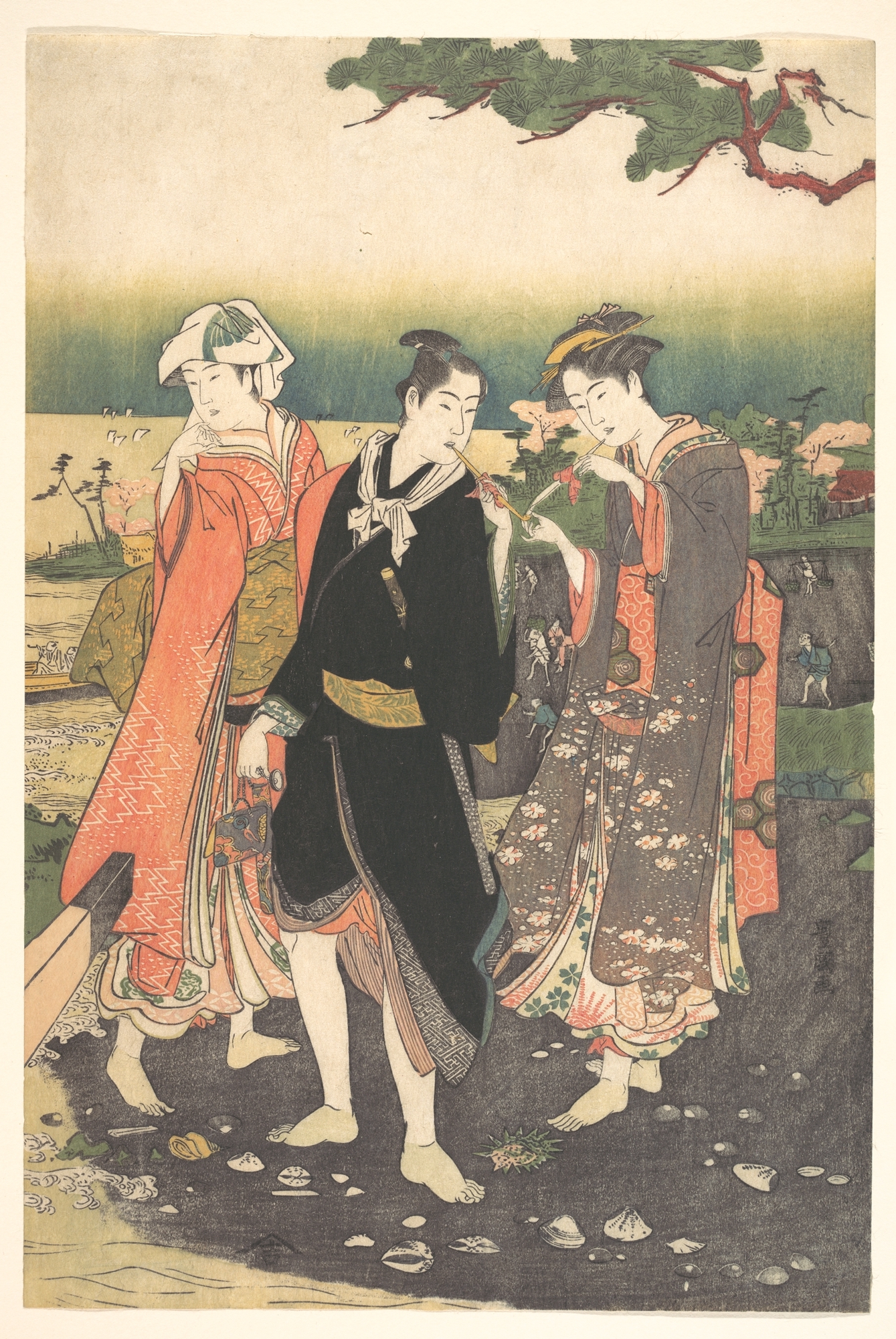
On Shinagawa Beach at Ebb-Tide
1769–1825
Woodblock print; ink and color on paper
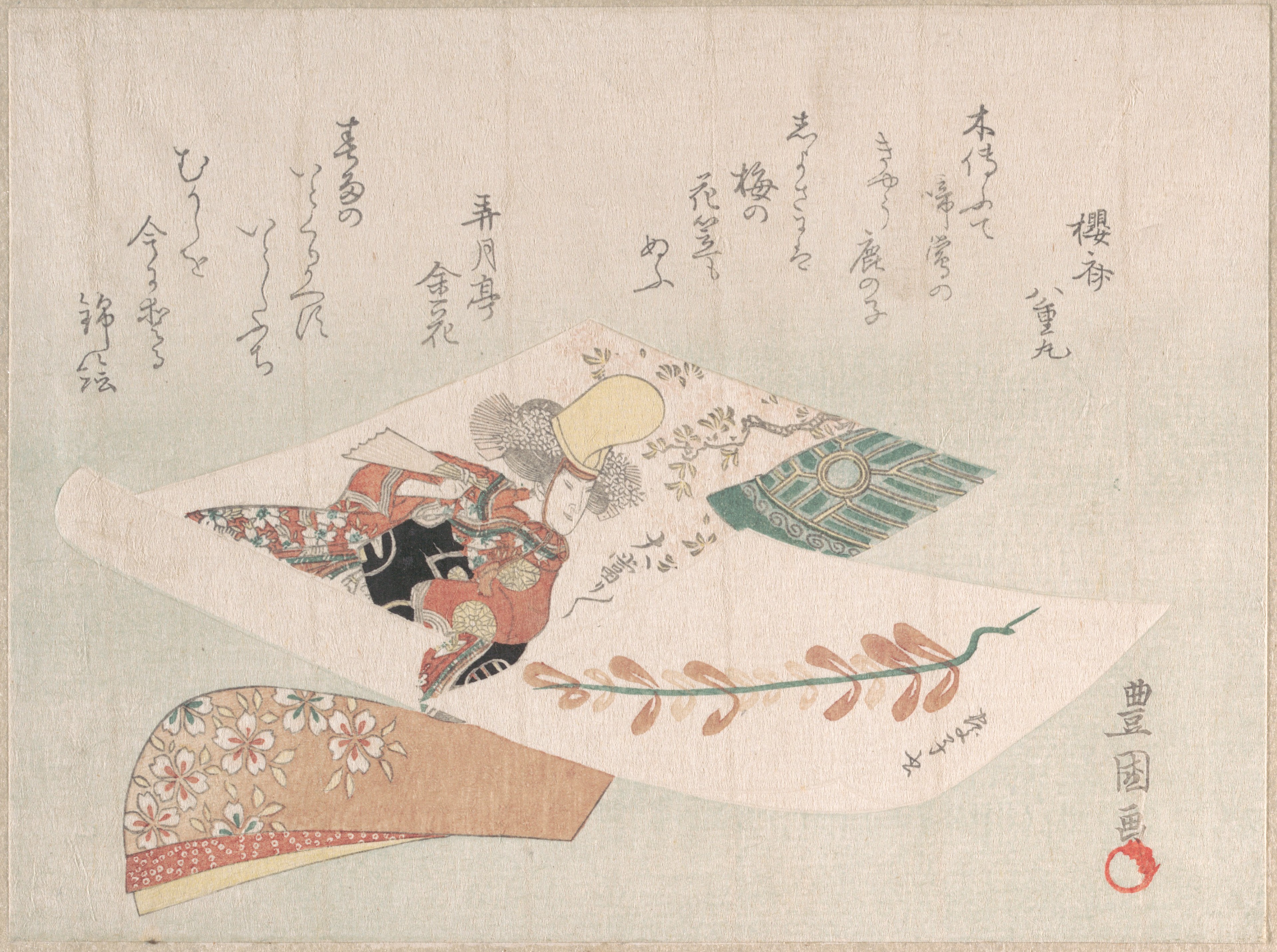
Representation of the Dance-Play "Dōjōji"
Woodblock print (surimono); ink and color on paper

The actors Sawamura Sojuro II as Satsuma Gengobei and Arashi Ryuzo II as Mawashi-otoko Yasuke in the play "Edo Sunago Kichirei Soga," performed at the Miyako Theater on the first month, 1795
c. 1795
Color woodblock print; oban
Frequently Asked Questions
Wandering Buddhist: Beads & Tobacco Pipe was created by Utagawa Toyokuni I (歌川豊国).