
Washing Cloth in a Stream
- Date:
- c. 1797
- Medium:
- Color woodblock prints; oban triptych
- Source:
- Art Institute of Chicago
Description
Utagawa Toyokuni I's "Washing Cloth in a Stream" returns to a favored bijinga subject of late Edo ukiyo-e — women stretching long bolts of kimono fabric in a running stream as part of the araihari cleaning process. The Art Institute of Chicago holds the print as part of its Toyokuni collection. The composition gives Utagawa Toyokuni his ideal armature: the elongated cloth crosses the picture as a strong horizontal, the women's bent and standing postures provide vertical variety, and the implied current of the stream supplies a rhythmic background. Although Utagawa Toyokuni's career was built on kabuki actor prints — the yakusha-e that made the Utagawa school synonymous with Edo ukiyo-e theater — his domestic scenes show the same draftsman's instincts: where to weight a figure, how to articulate fabric, how to position a head so the eye moves through the composition. The araihari subject also let Toyokuni participate in a long-standing iconography that linked women, water, and textile in a triangulation Japanese poetry and painting had honored for centuries. The Art Institute of Chicago's catalogue documents the print without speculation. For collectors of Edo ukiyo-e and Utagawa school bijinga, the sheet sits comfortably alongside Toyokuni's bathhouse and well-curb scenes as evidence of his command over the labor-scene branch of late-eighteenth-century print culture.
More Prints by Utagawa Toyokuni I

Segawa Kikunojō III as the Shop Boy Chōkichi
1796
Woodblock print (nishiki-e), ink and color on paper
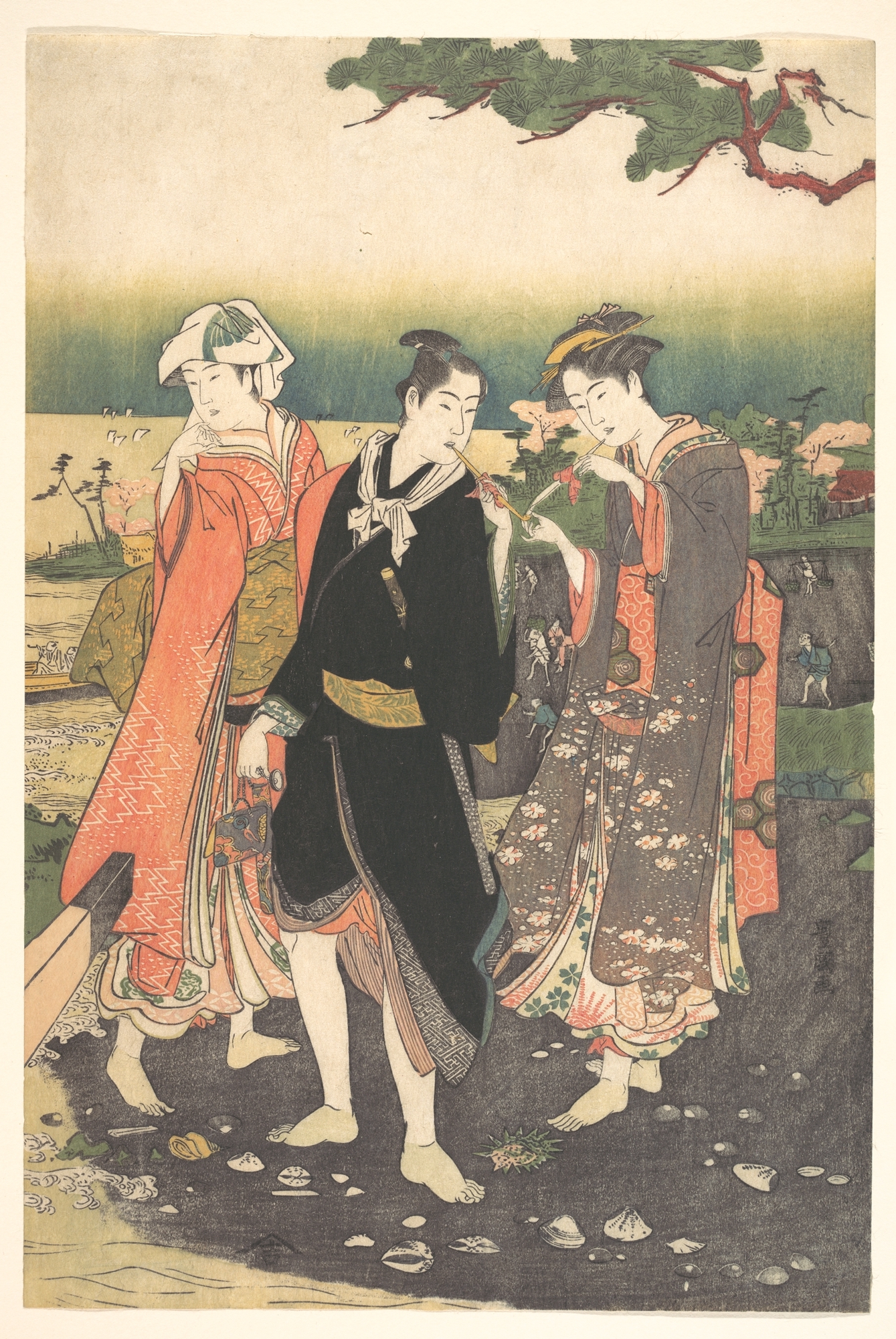
On Shinagawa Beach at Ebb-Tide
1769–1825
Woodblock print; ink and color on paper
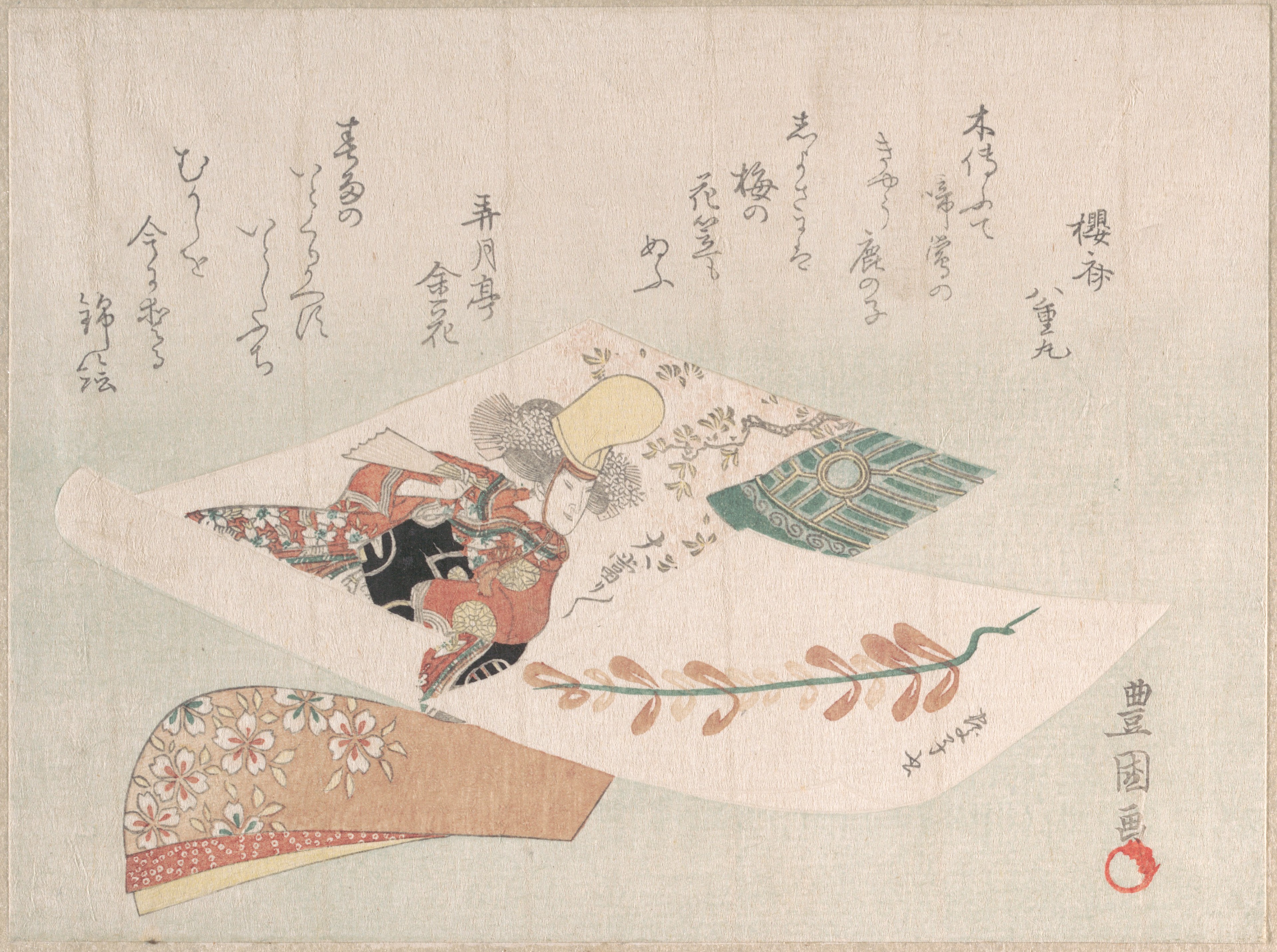
Representation of the Dance-Play "Dōjōji"
Woodblock print (surimono); ink and color on paper

The actors Sawamura Sojuro II as Satsuma Gengobei and Arashi Ryuzo II as Mawashi-otoko Yasuke in the play "Edo Sunago Kichirei Soga," performed at the Miyako Theater on the first month, 1795
c. 1795
Color woodblock print; oban
Frequently Asked Questions
Washing Cloth in a Stream was created by Utagawa Toyokuni I (歌川豊国) in c. 1797.