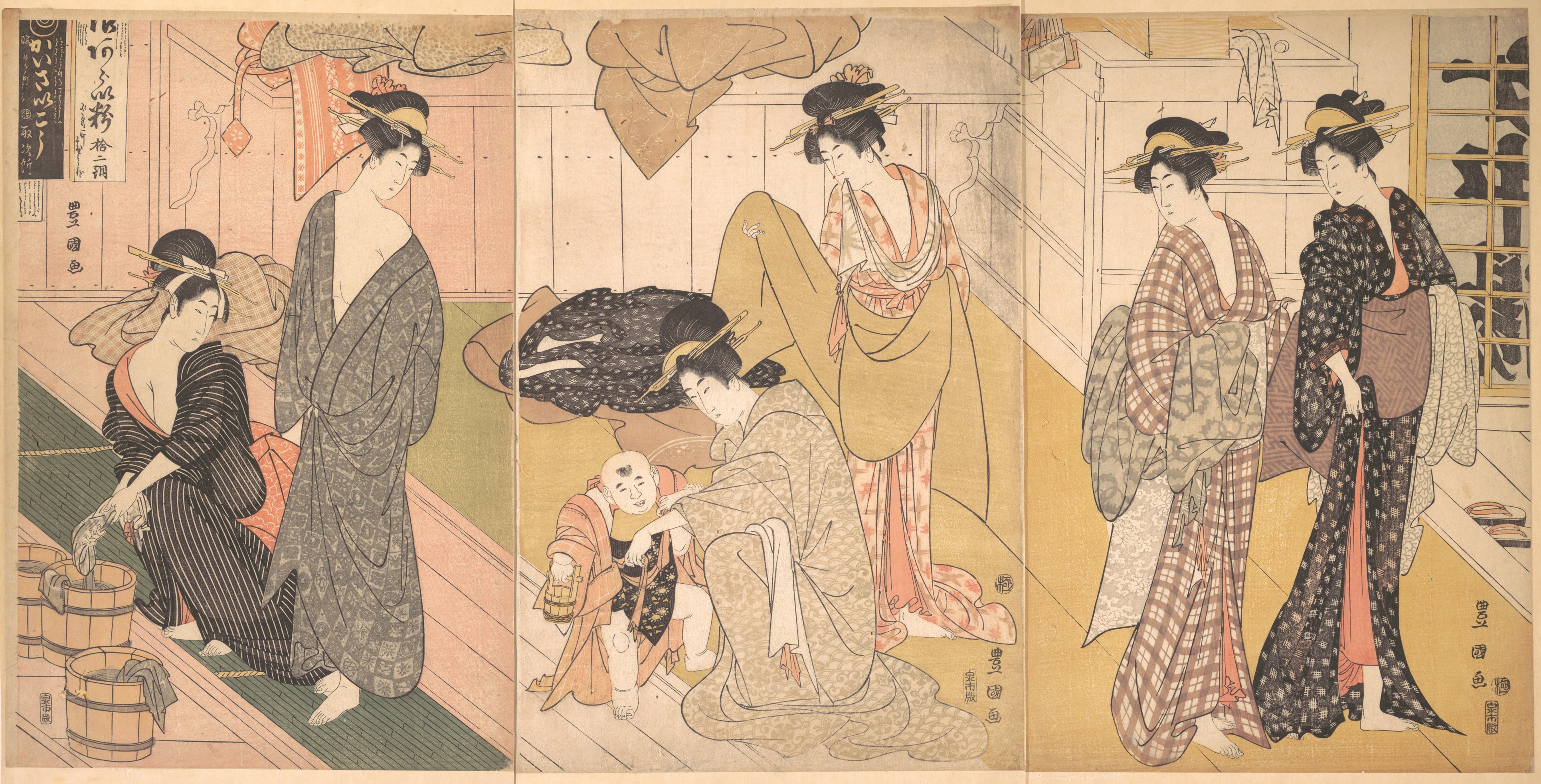
Women and an Infant Boy in a Public Bath House
- Date:
- ca. 1799
- Medium:
- Triptych of woodblock prints; ink and color on paper
- Source:
- Metropolitan Museum of Art
Description
Women and an Infant Boy in a Public Bath House is a genre scene by Utagawa Toyokuni preserved in the Metropolitan Museum of Art. While Toyokuni is most famous for the yakusha-e that defined his career in Edo ukiyo-e, his practice extended into scenes of ordinary urban life. The public bathhouse, or sentō, was a defining institution of Edo, a place where neighborhoods gathered and where the social mixing of the city was on daily display. In this composition Toyokuni focuses on women and a small boy, an everyday tableau that allowed designer and viewer to share an unguarded glimpse of customary routine. The print's interest lies less in narrative incident than in the calibrated choreography of figures occupying a tightly framed interior, the patterned cloth bundles and water pails, and the gestures of bathing, dressing, and tending children that made the sentō a setting of constant small activity. Toyokuni's clean line and confident grouping translate the noise of the bathhouse into a serenely organized woodblock image. The Met assigns this print the date 1789, taken here from the museum record. Within the broader history of Edo ukiyo-e the work is valuable both as a document of social practice and as evidence of how an artist primarily known for theater could turn his observational skills to the rhythms of domestic and neighborhood life, a tradition Toyokuni shared with many of his Utagawa-school contemporaries.
More Prints by Utagawa Toyokuni I

Kabuki Actor Iwai Kumesaburo with abacus

Segawa Kikunojō III as the Shop Boy Chōkichi
1796
Woodblock print (nishiki-e), ink and color on paper
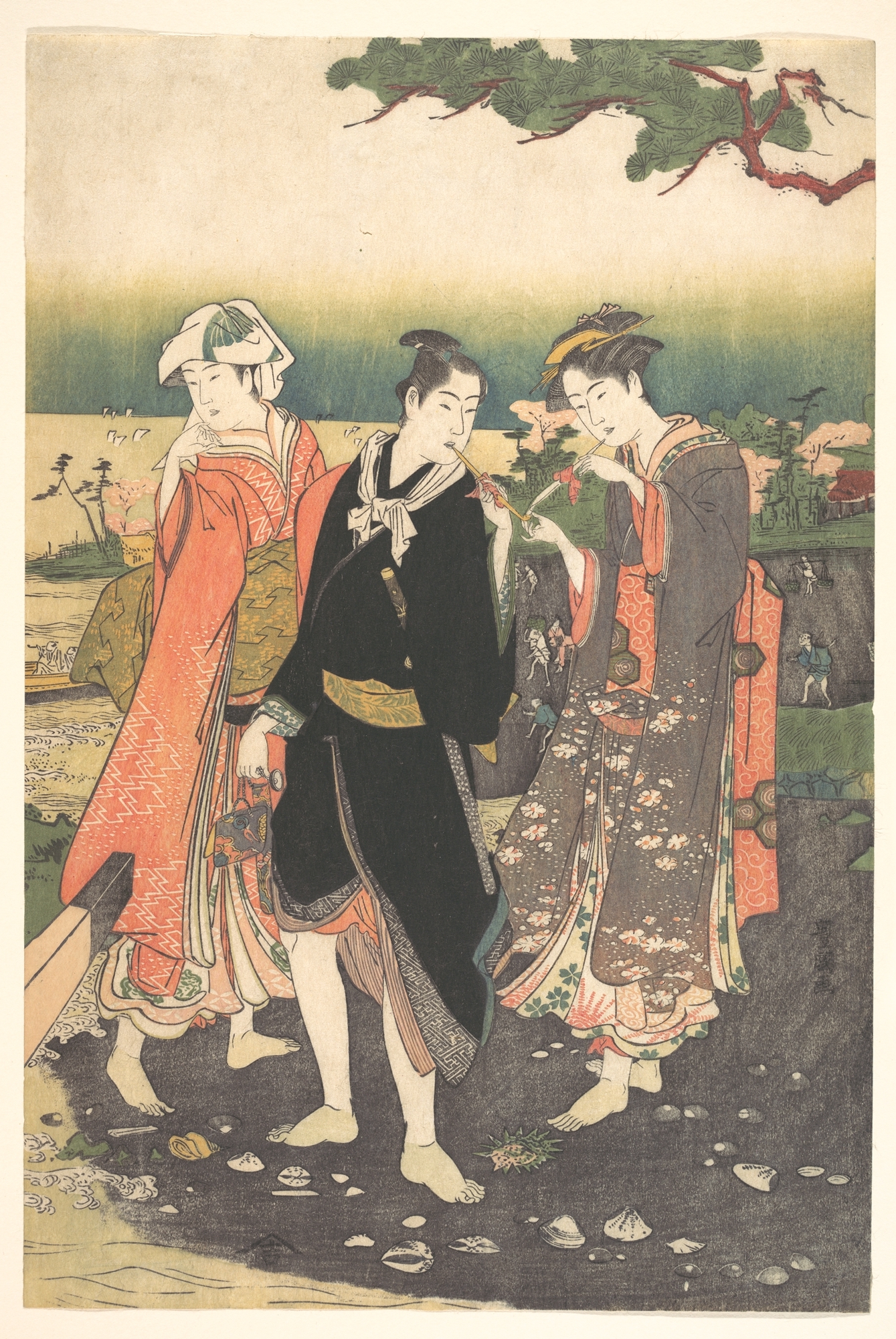
On Shinagawa Beach at Ebb-Tide
1769–1825
Woodblock print; ink and color on paper
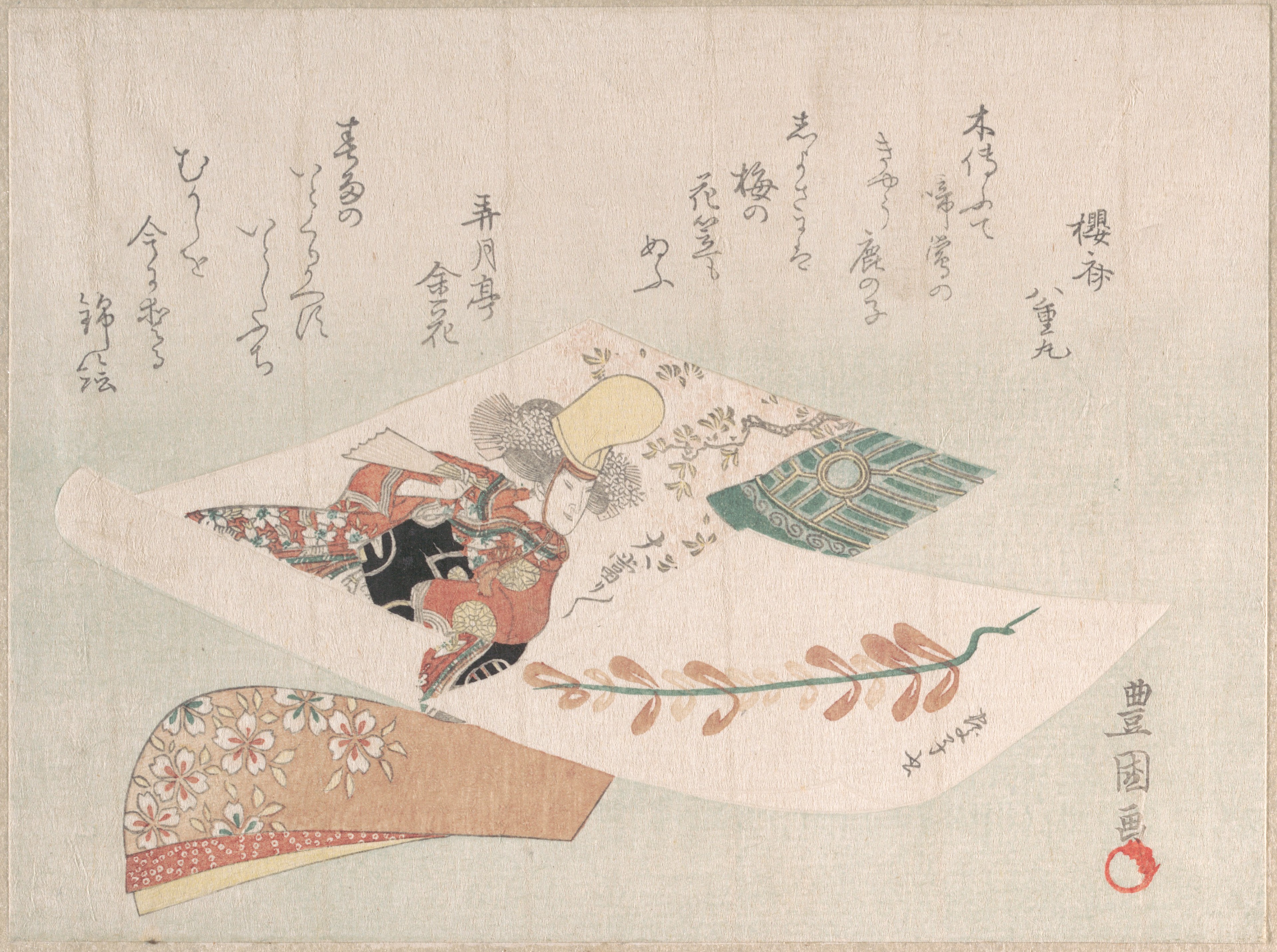
Representation of the Dance-Play "Dōjōji"
Woodblock print (surimono); ink and color on paper
More Children Prints
Frequently Asked Questions
Women and an Infant Boy in a Public Bath House was created by Utagawa Toyokuni I (歌川豊国) in ca. 1799.
Women and an Infant Boy in a Public Bath House depicts children.