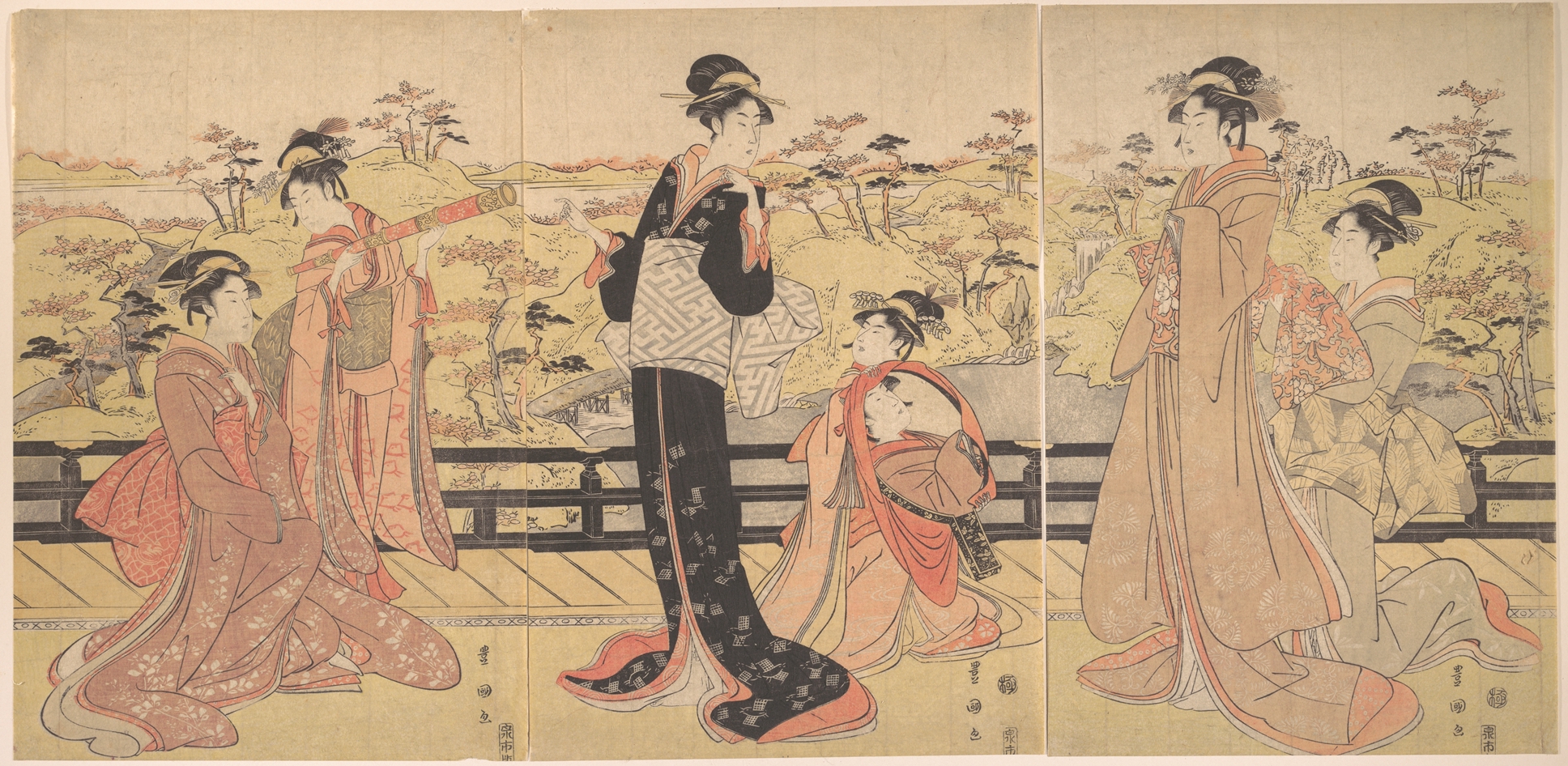
Women on a Veranda
- Date:
- ca. 1797
- Medium:
- Triptych of woodblock prints; ink and color on paper
- Source:
- Metropolitan Museum of Art
Description
Women on a Veranda is a bijin-ga print by Utagawa Toyokuni held in the Metropolitan Museum of Art. The veranda, or engawa, served in Edo architecture as a liminal zone between interior and garden, and ukiyo-e designers often used it to stage scenes of casual ease. In Toyokuni's composition women gather on the wooden planks of such a veranda, their robes spread around them and their attention focused on a small shared task or moment. The setting allows the artist to combine the geometric clarity of the architecture with the softer lines of figures and fabric, producing a quiet study in domestic leisure. The robes in particular reflect Toyokuni's command of late-eighteenth-century Edo fashion, with carefully observed patterns and accessories that distinguished his women within the larger field of Edo ukiyo-e bijin-ga. The Met assigns the print the date 1787, used here from the museum record. The composition belongs to a moment when Toyokuni's pictures of women began to acquire the assured, slightly idealized presence that would mark his mature output, and when bijin-ga as a genre was approaching its high classical stage in the hands of Toyokuni, Utamaro, and their contemporaries. The print stands as a representative example of the calm, observed elegance that complemented Toyokuni's better-known yakusha-e production for the Edo print market.
More Prints by Utagawa Toyokuni I

Kabuki Actor Iwai Kumesaburo with abacus

Segawa Kikunojō III as the Shop Boy Chōkichi
1796
Woodblock print (nishiki-e), ink and color on paper
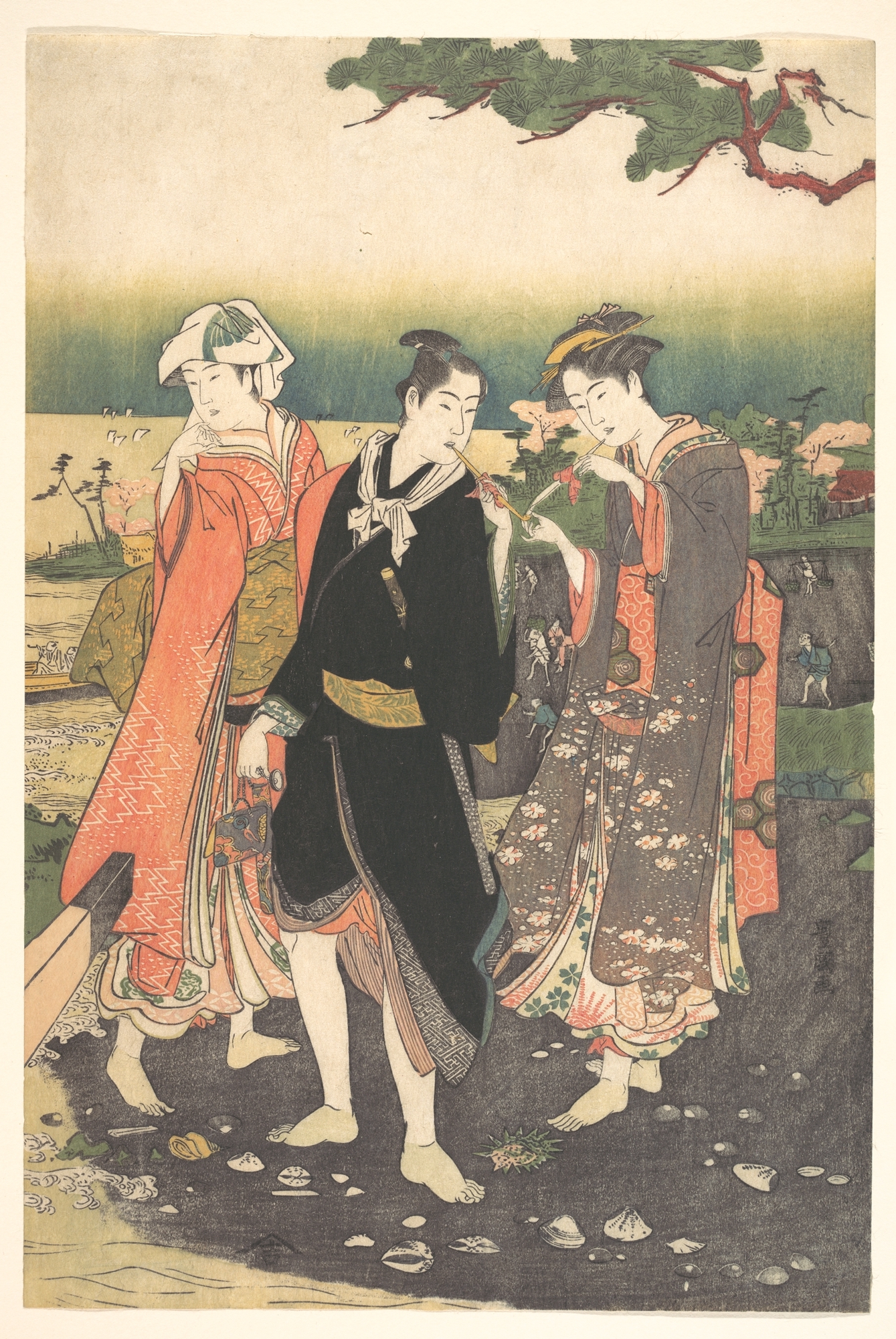
On Shinagawa Beach at Ebb-Tide
1769–1825
Woodblock print; ink and color on paper
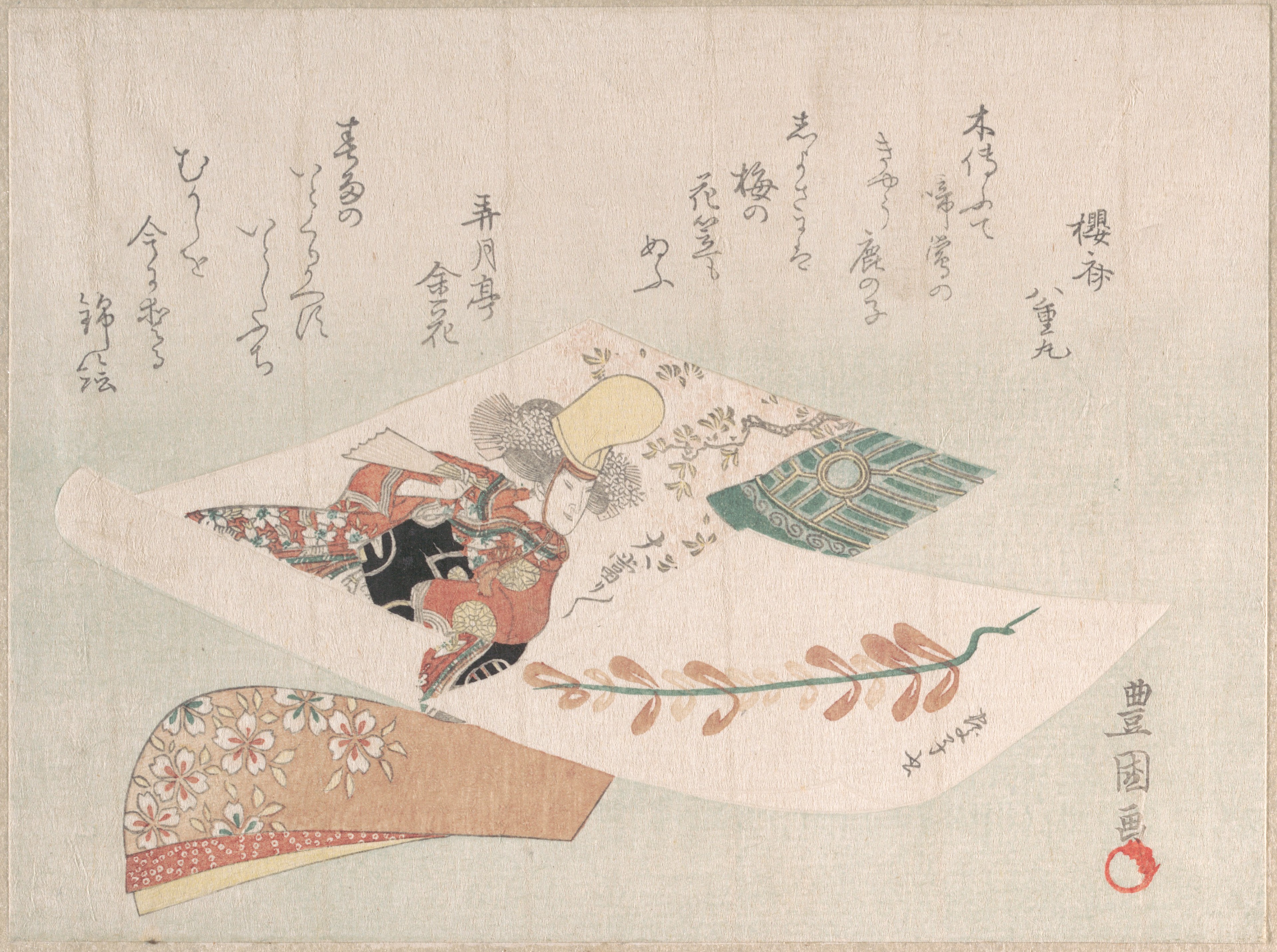
Representation of the Dance-Play "Dōjōji"
Woodblock print (surimono); ink and color on paper
Frequently Asked Questions
Women on a Veranda was created by Utagawa Toyokuni I (歌川豊国) in ca. 1797.