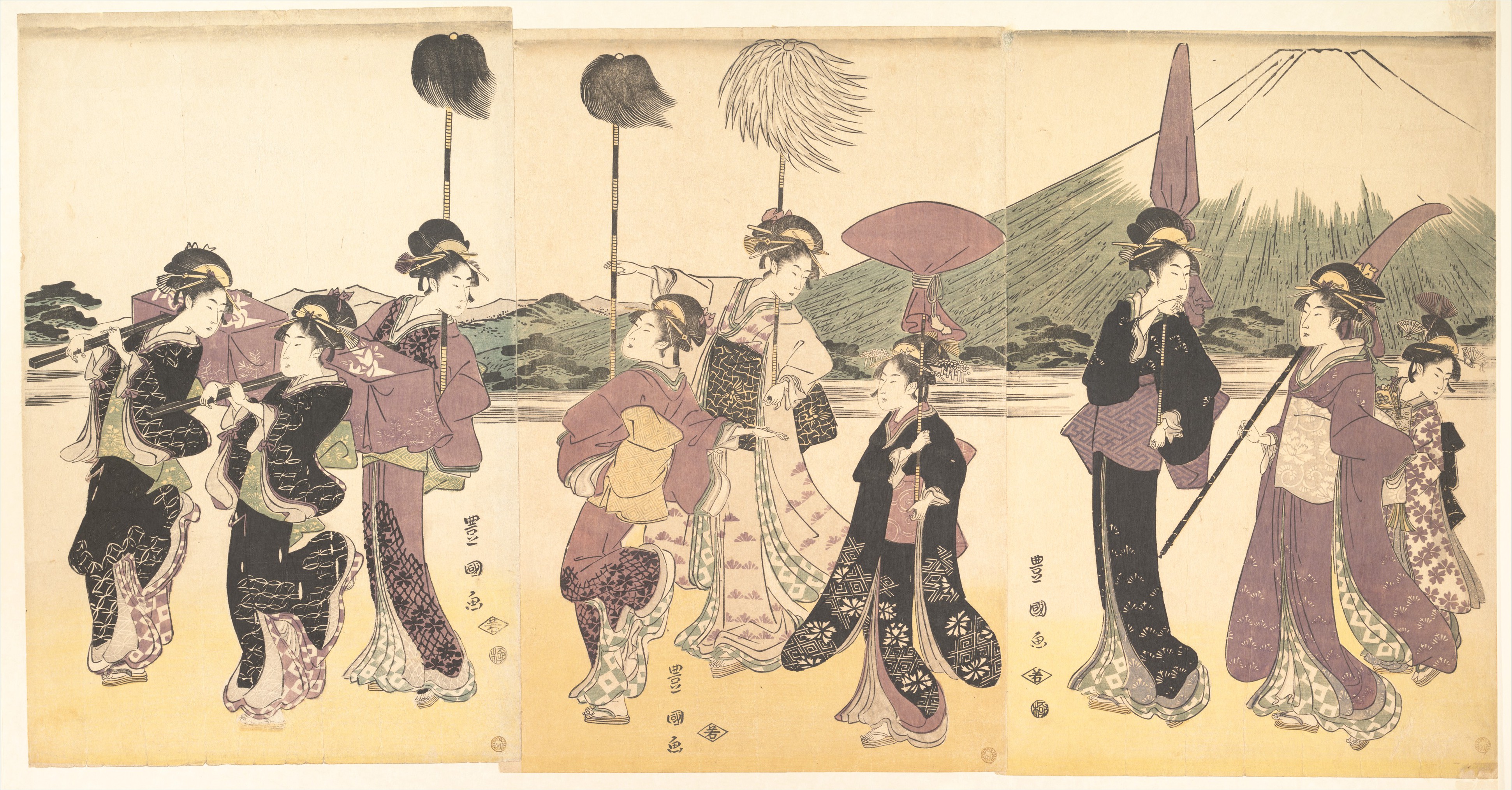
Women Parading in an Imitation of the Cortege of a Daimyo
- Date:
- ca. 1797
- Medium:
- Pentaptych of woodblock prints; ink and color on paper
- Source:
- Metropolitan Museum of Art
Description
Utagawa Toyokuni I's "Women Parading in an Imitation of the Cortege of a Daimyo" delivers one of Edo ukiyo-e's most pointed pieces of social satire — a mock daimyō procession (mitate gyōretsu) staffed entirely by women. The conceit, popular in late-eighteenth-century Edo, allowed prints to play with the visual rituals of feudal authority by recasting samurai retainers, spear-bearers, and palanquin attendants as fashionable townswomen and courtesans. The Metropolitan Museum of Art preserves this Toyokuni design as part of its Edo ukiyo-e collection, and the print's lively procession can be read against the longer history of mitate prints that hinged on substitution and parody. Although Utagawa Toyokuni is best known for kabuki actor prints, the mitate gyōretsu format demanded the same skills: figural variety, decisive grouping, and a feel for how the eye should travel along an extended composition. Each figure here carries a recognizable accessory from the daimyō entourage, yet none compromises the femininity of dress and gesture. The Met's example offers an unusually clear impression of the kind of work that built Toyokuni's reputation in the 1780s and 1790s, before his consolidation as the leading designer of yakusha-e. For collectors and students of Edo ukiyo-e, the print is an essential reference for the playful end of the genre — a procession that observed feudal pomp from the angle of the entertainment districts, with the same wit and economy of line that defined the Utagawa school under Toyokuni's leadership.
More Prints by Utagawa Toyokuni I

Kabuki Actor Iwai Kumesaburo with abacus

Segawa Kikunojō III as the Shop Boy Chōkichi
1796
Woodblock print (nishiki-e), ink and color on paper
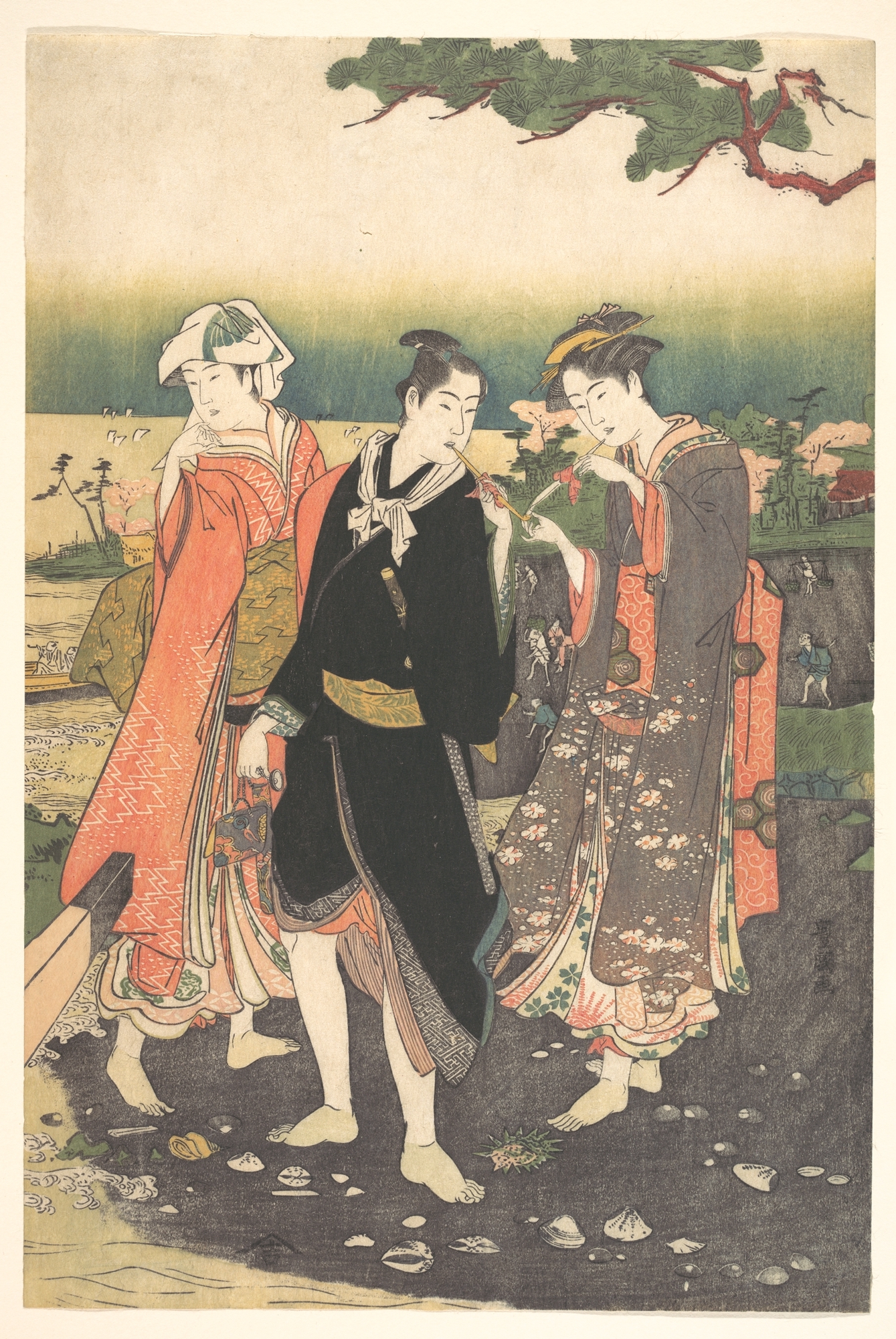
On Shinagawa Beach at Ebb-Tide
1769–1825
Woodblock print; ink and color on paper
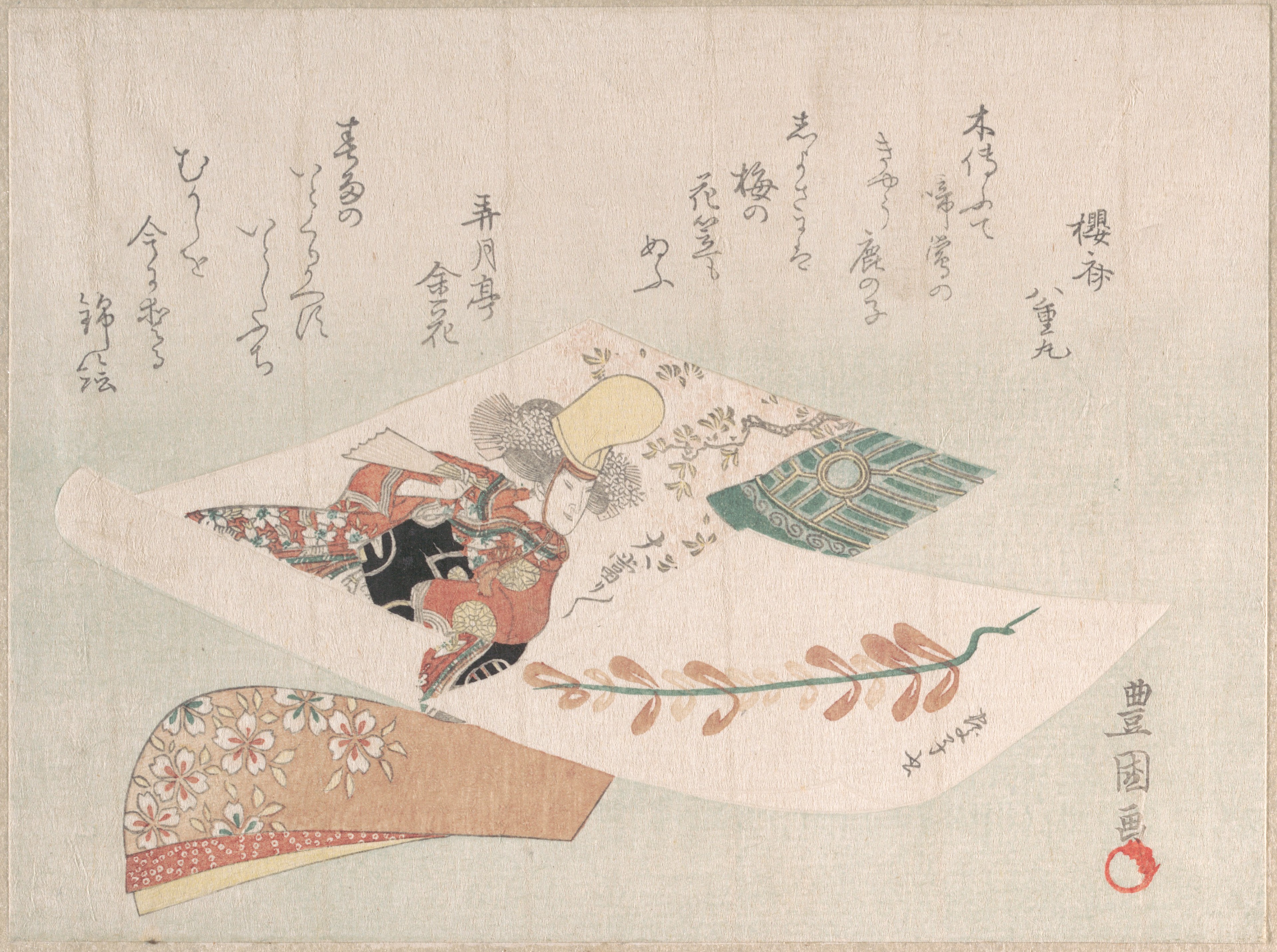
Representation of the Dance-Play "Dōjōji"
Woodblock print (surimono); ink and color on paper
Frequently Asked Questions
Women Parading in an Imitation of the Cortege of a Daimyo was created by Utagawa Toyokuni I (歌川豊国) in ca. 1797.