
Women viewing miniature landscape, from the series "Furyu moro hanami uwari"
- Date:
- n.d.
- Medium:
- Color woodblock print; chuban
- Source:
- Art Institute of Chicago
Description
Women viewing miniature landscape, from the series Furyu moro hanami uwari, is an undated woodblock print by Utagawa Toyokuni in the Art Institute of Chicago. The series title evokes the elegant, fashionable amusements of Edo townspeople, with hanami referencing the spring tradition of flower viewing and the broader furyu sensibility connecting refinement, leisure, and play. The image depicts women gathered around a miniature landscape, a hakoniwa or bonkei, a tabletop garden composed of stones, sand, plants, and tiny figures that miniaturized the conventions of formal landscape painting for parlor enjoyment. Toyokuni, the founding architect of the Utagawa school's market dominance, was equally celebrated for yakusha-e and for bijin-ga, and this design belongs to the latter strain of his Edo ukiyo-e output. The composition shows the elongated proportions, supple drapery rendering, and patterned-textile foreground figures that came to define the Utagawa beauty type in the early nineteenth century. Edo's print culture often paired women with cultivated pursuits such as calligraphy, music, poetry composition, and miniature gardens, both to depict a leisured class ideal and to flatter the urban townswomen who bought the prints. The Art Institute of Chicago documents the design without a firm date, placing the work within Toyokuni's broader career rather than a single year. The sheet survives as a representative example of how Toyokuni adapted his theatrical eye to the quieter pleasures of Edo's domestic interiors.
More Prints by Utagawa Toyokuni I

Segawa Kikunojō III as the Shop Boy Chōkichi
1796
Woodblock print (nishiki-e), ink and color on paper
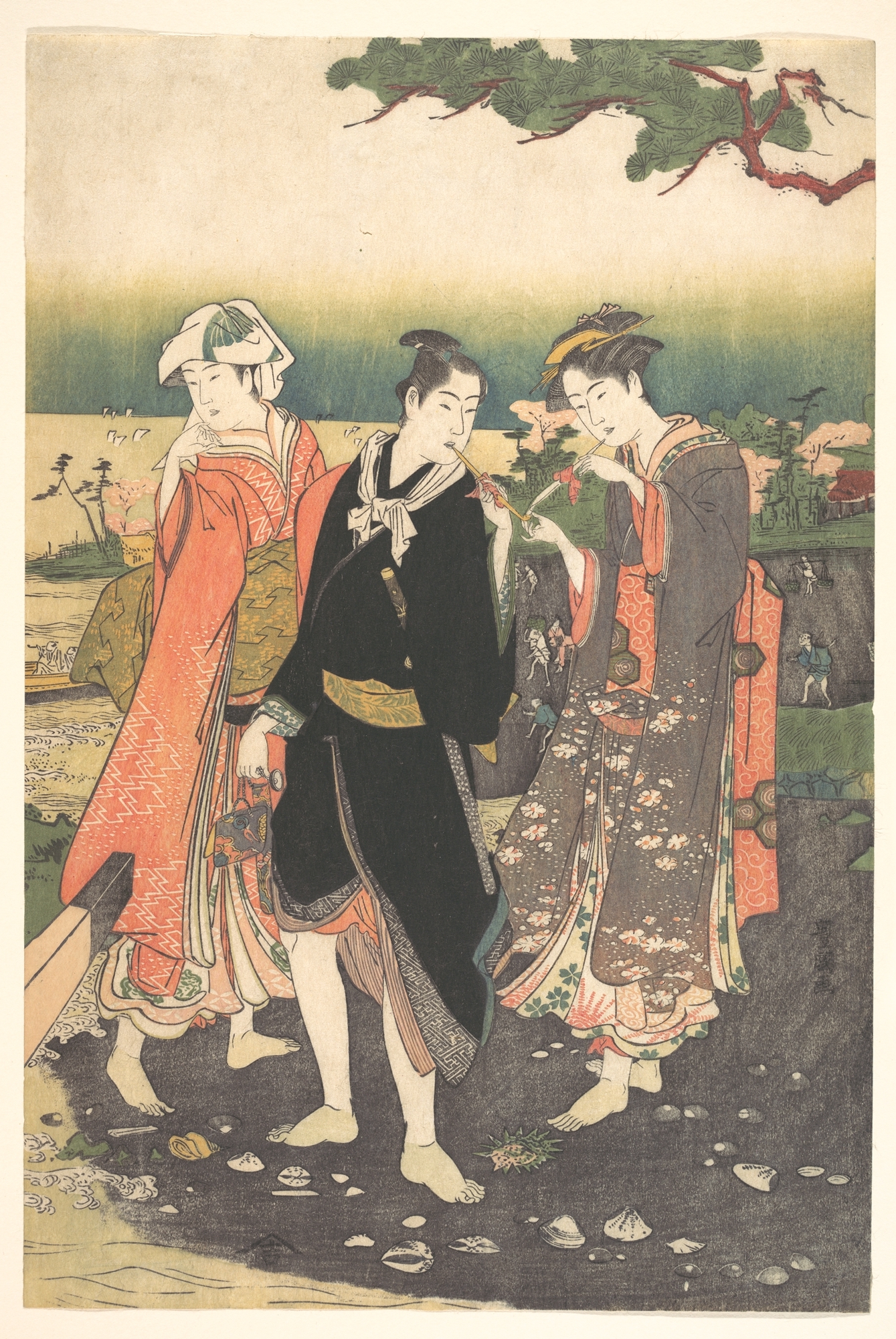
On Shinagawa Beach at Ebb-Tide
1769–1825
Woodblock print; ink and color on paper
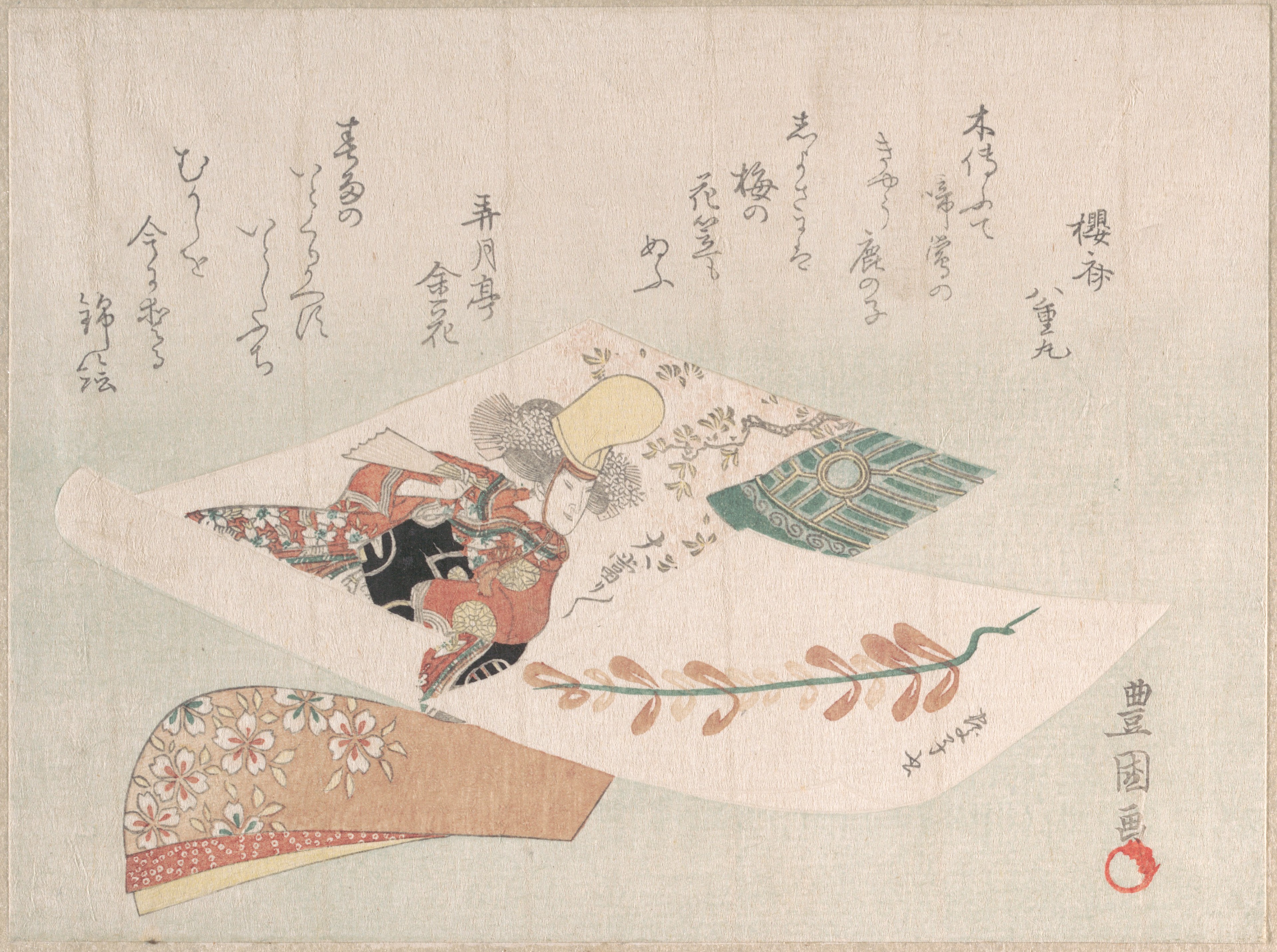
Representation of the Dance-Play "Dōjōji"
Woodblock print (surimono); ink and color on paper

The actors Sawamura Sojuro II as Satsuma Gengobei and Arashi Ryuzo II as Mawashi-otoko Yasuke in the play "Edo Sunago Kichirei Soga," performed at the Miyako Theater on the first month, 1795
c. 1795
Color woodblock print; oban
Frequently Asked Questions
Women viewing miniature landscape, from the series "Furyu moro hanami uwari" was created by Utagawa Toyokuni I (歌川豊国) in n.d..