
Yakusha Awase kagami
- Date:
- c. 1769-1825
- Medium:
- Woodblock- printed book; 2 vols.
- Source:
- Art Institute of Chicago
Description
Yakusha Awase Kagami is a yakusha-e print by Utagawa Toyokuni, the Edo ukiyo-e master whose actor portraits dominated the Kabuki print market at the turn of the nineteenth century. Held in the collection of the Art Institute of Chicago, this work belongs to the rich tradition of mitate compositions in which performers of the stage are paired, juxtaposed, or compared through visual conceit. The title, which translates loosely as a comparing mirror of actors, signals Toyokuni's longstanding interest in cataloguing the leading talents of his time and presenting them to a knowing Edo audience already attuned to backstage gossip, debut anniversaries, and onstage rivalries. Toyokuni trained under Utagawa Toyoharu and emerged in the 1790s with the celebrated Yakusha Butai no Sugata-e series, which established his reputation for stage realism and idealized actor likenesses. Prints in the broader Yakusha Awase tradition extended that authority into the early nineteenth century, offering connoisseurs and theater enthusiasts a means of holding favored performers side by side. As with most Toyokuni yakusha-e, the print rewards close looking at crests on robes, the cut of patterned kimono, and the subtle tilt of head and gaze that signaled a particular role or temperament. The sheet stands as a representative example of how Edo ukiyo-e publishers and designers turned the world of Kabuki into a portable, collectible visual library. Documentation for this impression is preserved by the Art Institute of Chicago, which lists Toyokuni I as the designer and catalogues the print among the museum's substantial holdings of Edo-period woodblock prints; the museum's record is the primary source for the attribution provided here.
More Prints by Utagawa Toyokuni I

Segawa Kikunojō III as the Shop Boy Chōkichi
1796
Woodblock print (nishiki-e), ink and color on paper
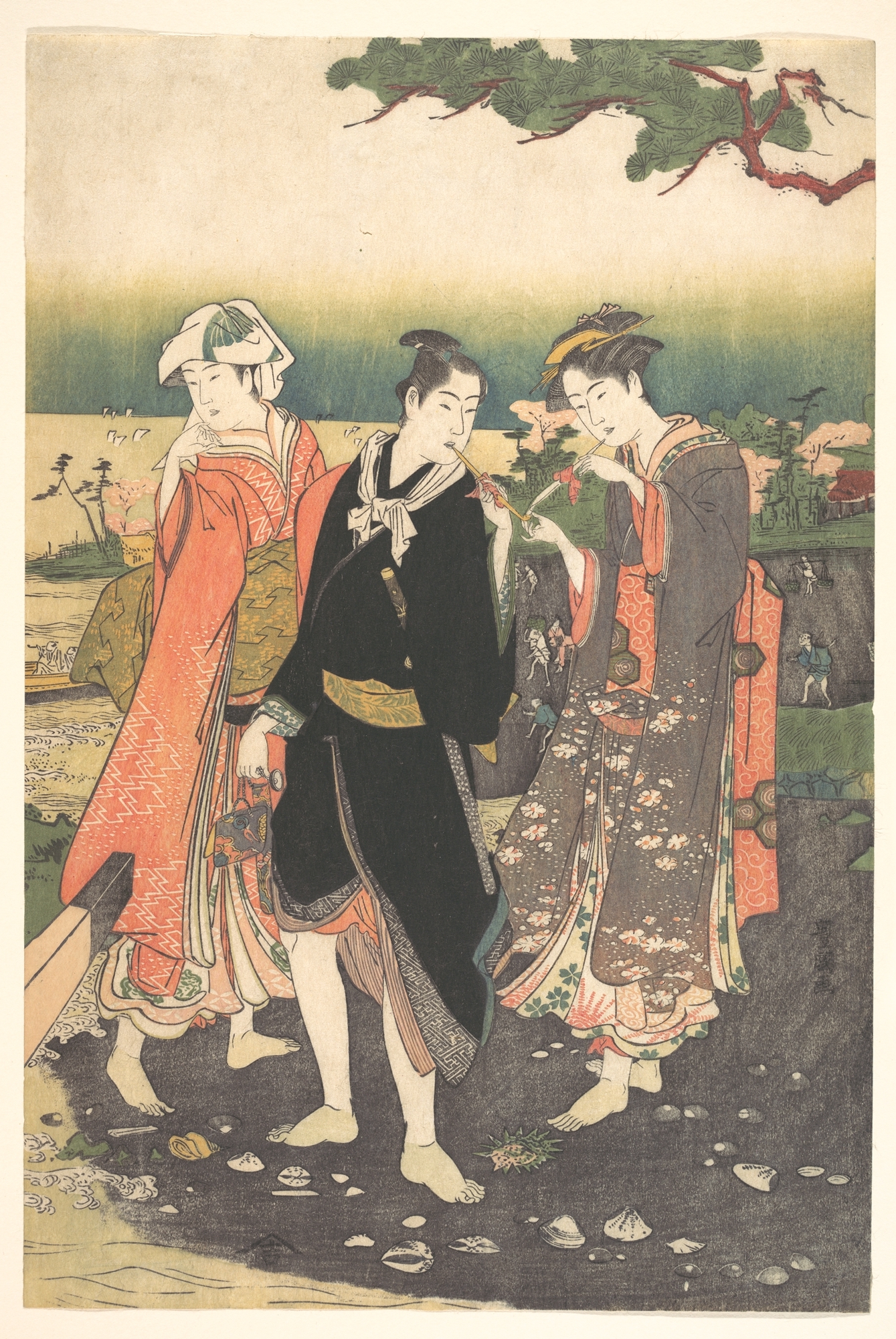
On Shinagawa Beach at Ebb-Tide
1769–1825
Woodblock print; ink and color on paper
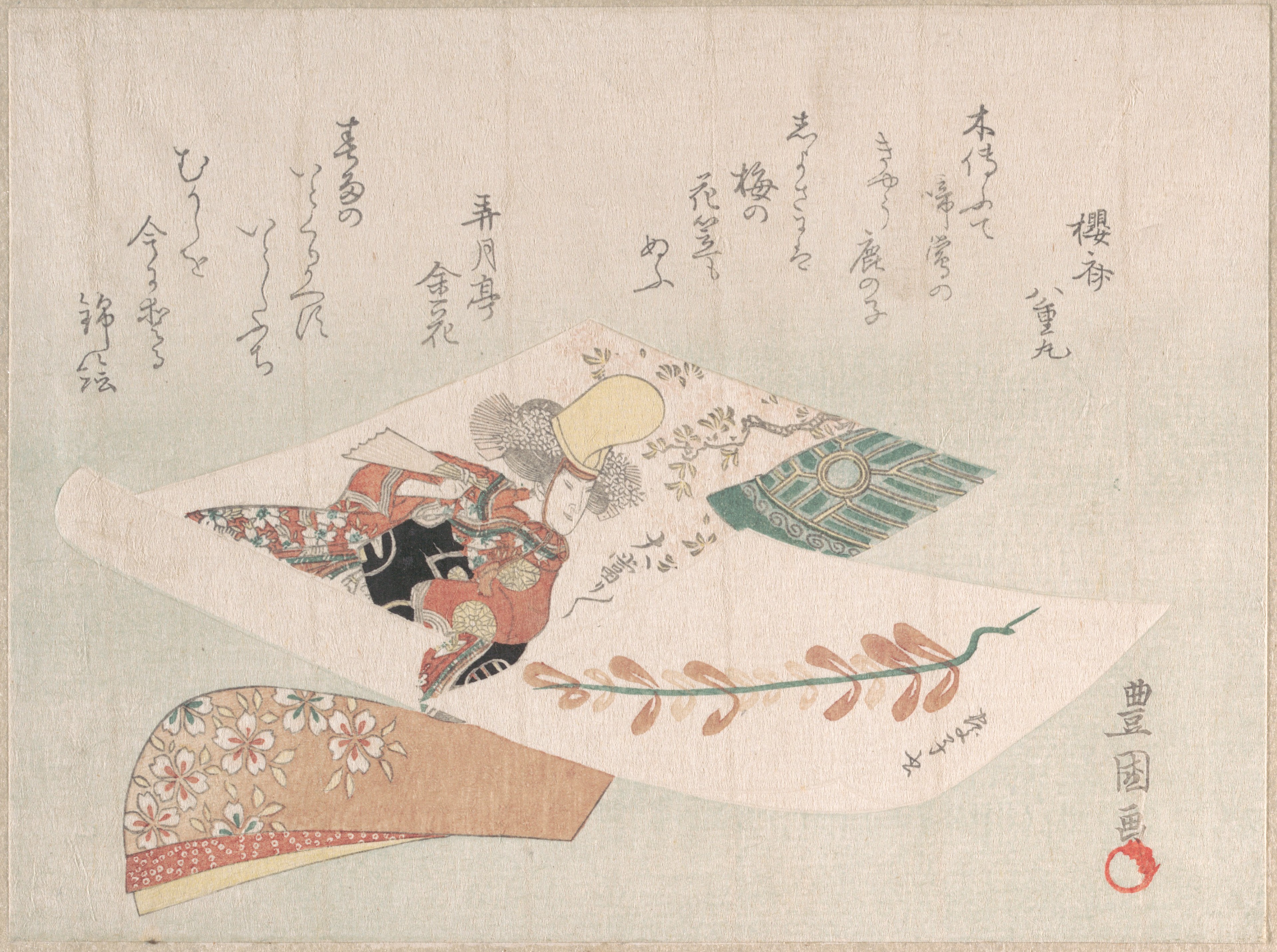
Representation of the Dance-Play "Dōjōji"
Woodblock print (surimono); ink and color on paper

The actors Sawamura Sojuro II as Satsuma Gengobei and Arashi Ryuzo II as Mawashi-otoko Yasuke in the play "Edo Sunago Kichirei Soga," performed at the Miyako Theater on the first month, 1795
c. 1795
Color woodblock print; oban
Frequently Asked Questions
Yakusha Awase kagami was created by Utagawa Toyokuni I (歌川豊国) in c. 1769-1825.