
Yakusha gakuya tsū
- Date:
- 1799
- Medium:
- Woodblock- printed book; 1 vol.
- Source:
- Art Institute of Chicago
Description
Yakusha gakuya tsū, an Edo ukiyo-e woodblock print held by the Art Institute of Chicago, is a yakusha-e design from the Utagawa Toyokuni circle that takes as its subject the backstage life of kabuki actors. The title - literally something close to a connoisseur's view of the actors' dressing rooms - signals a genre Edo audiences prized: behind-the-curtain glimpses of stars in informal moments, applying makeup, adjusting wigs, or attended by dressers and apprentices. Where conventional yakusha-e present actors fully costumed in mie poses on the kabuki stage, gakuya prints invert that framing, showing the labor and ritual that produced the on-stage spectacle. Toyokuni's design exploits this inversion: faces are recognizable as specific actors through the Utagawa-school likeness conventions, but the bodies are shown in undress or partial dress, with mirrors, makeup stands, and folded costumes giving the image its setting. The composition relies on the firm contour drawing and patterned textiles characteristic of the Utagawa lineage, with the printers using bold dark blacks for the hair and outline blocks and reserving the polychrome palette for the layered cloth around the figures. The Art Institute's record catalogs the work under Utagawa Toyokuni and supplies its romanized title; the museum does not assign a specific year. As an example of the gakuya subgenre, the print is most valuable for what it reveals about how Edo collectors thought about celebrity: their fascination did not stop at the proscenium, and Utagawa Toyokuni's workshop fed that appetite with prints that read backstage as a stage of its own.
More Prints by Utagawa Toyokuni I

Segawa Kikunojō III as the Shop Boy Chōkichi
1796
Woodblock print (nishiki-e), ink and color on paper
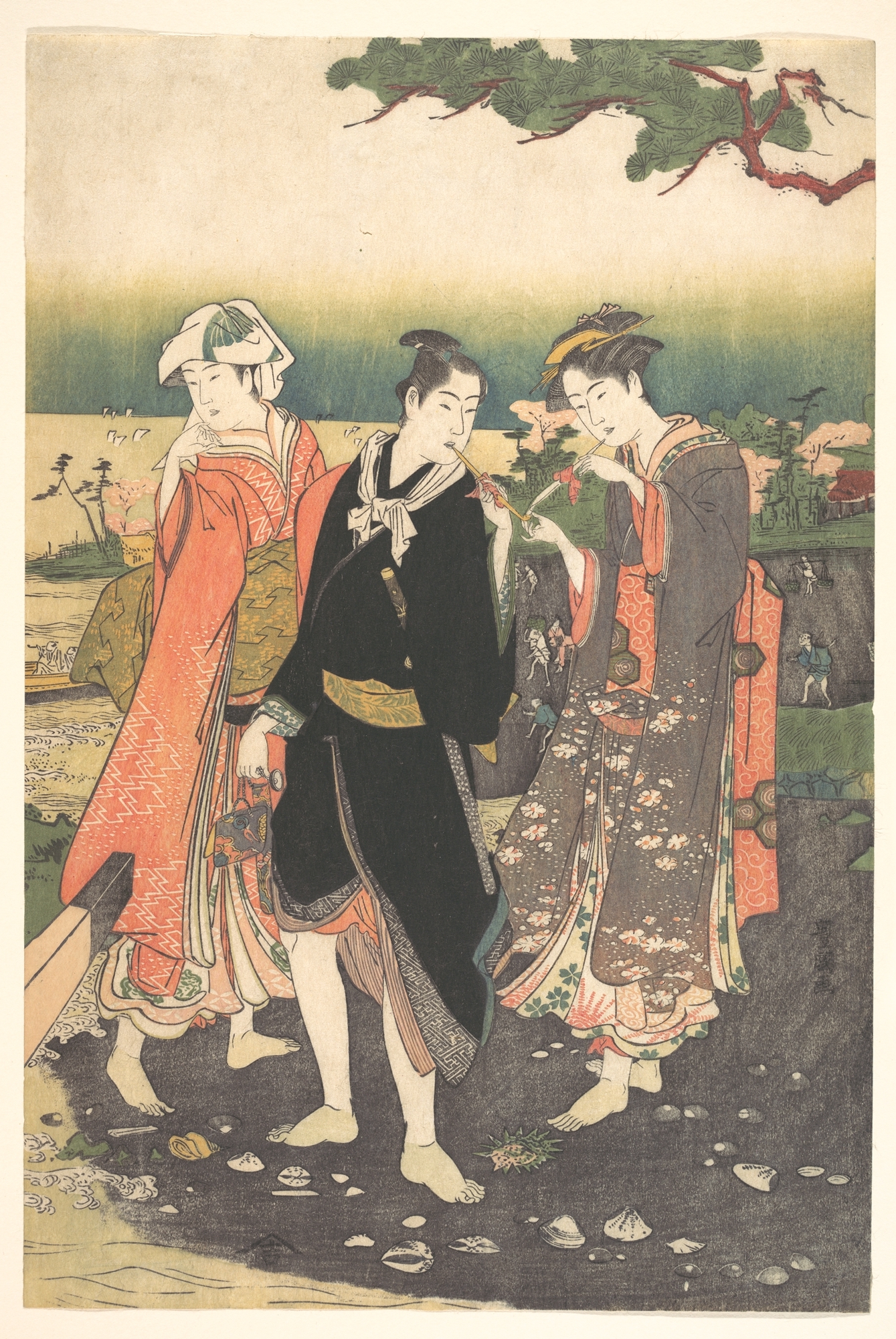
On Shinagawa Beach at Ebb-Tide
1769–1825
Woodblock print; ink and color on paper
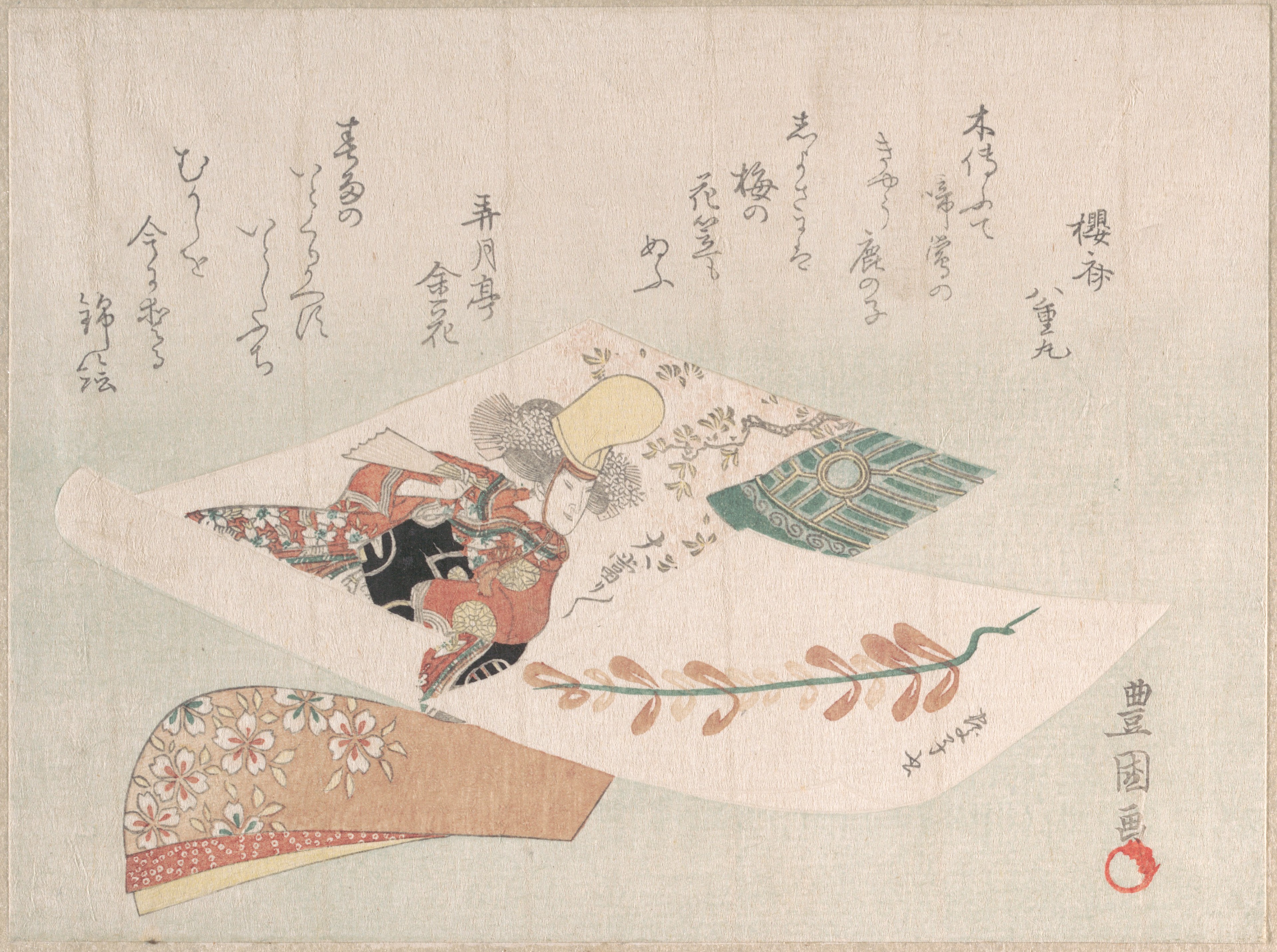
Representation of the Dance-Play "Dōjōji"
Woodblock print (surimono); ink and color on paper

The actors Sawamura Sojuro II as Satsuma Gengobei and Arashi Ryuzo II as Mawashi-otoko Yasuke in the play "Edo Sunago Kichirei Soga," performed at the Miyako Theater on the first month, 1795
c. 1795
Color woodblock print; oban
Frequently Asked Questions
Yakusha gakuya tsū was created by Utagawa Toyokuni I (歌川豊国) in 1799.