
Yakusha Sangai Kyō
- Date:
- c. 1769 - 1825
- Medium:
- Woodblock- printed book; 2 vols.
- Source:
- Art Institute of Chicago
Description
"Yakusha Sangai Kyo" in the Art Institute of Chicago is an undated Utagawa Toyokuni print whose title (literally "Mirror of Actors of the Three Realms") signals a yakusha-e work organized around the conceit of viewing kabuki performers through the metaphorical structure of the Buddhist three realms (sangai) of existence. The title alone places the print at the productive intersection of Edo ukiyo-e celebrity culture and the religious and philosophical frameworks that gave nineteenth-century Japanese popular print imagery much of its conceptual depth. The Utagawa school, which Toyokuni led to commercial dominance, frequently designed prints whose titles invited viewers to read kabuki celebrity through classical or religious lenses, simultaneously elevating the actors and demonstrating the workshop's literary ambitions. Toyokuni's actor portraiture in this print follows the Utagawa formula at its best: individualized facial features that register specific likeness, costume patterning that signals character and role, and a posing strategy that retains the gestural energy of stage performance. As an example of yakusha-e operating in the more elaborate conceptual register, the work demonstrates how Edo ukiyo-e could function as both popular entertainment and intellectual play. The Art Institute of Chicago's preservation of the print supports continued research into Utagawa Toyokuni's range. For collectors interested in titles that link kabuki imagery to broader Japanese cultural traditions, the sheet offers a useful case study in the depth of reference characteristic of mature Utagawa school production.
More Prints by Utagawa Toyokuni I

Segawa Kikunojō III as the Shop Boy Chōkichi
1796
Woodblock print (nishiki-e), ink and color on paper
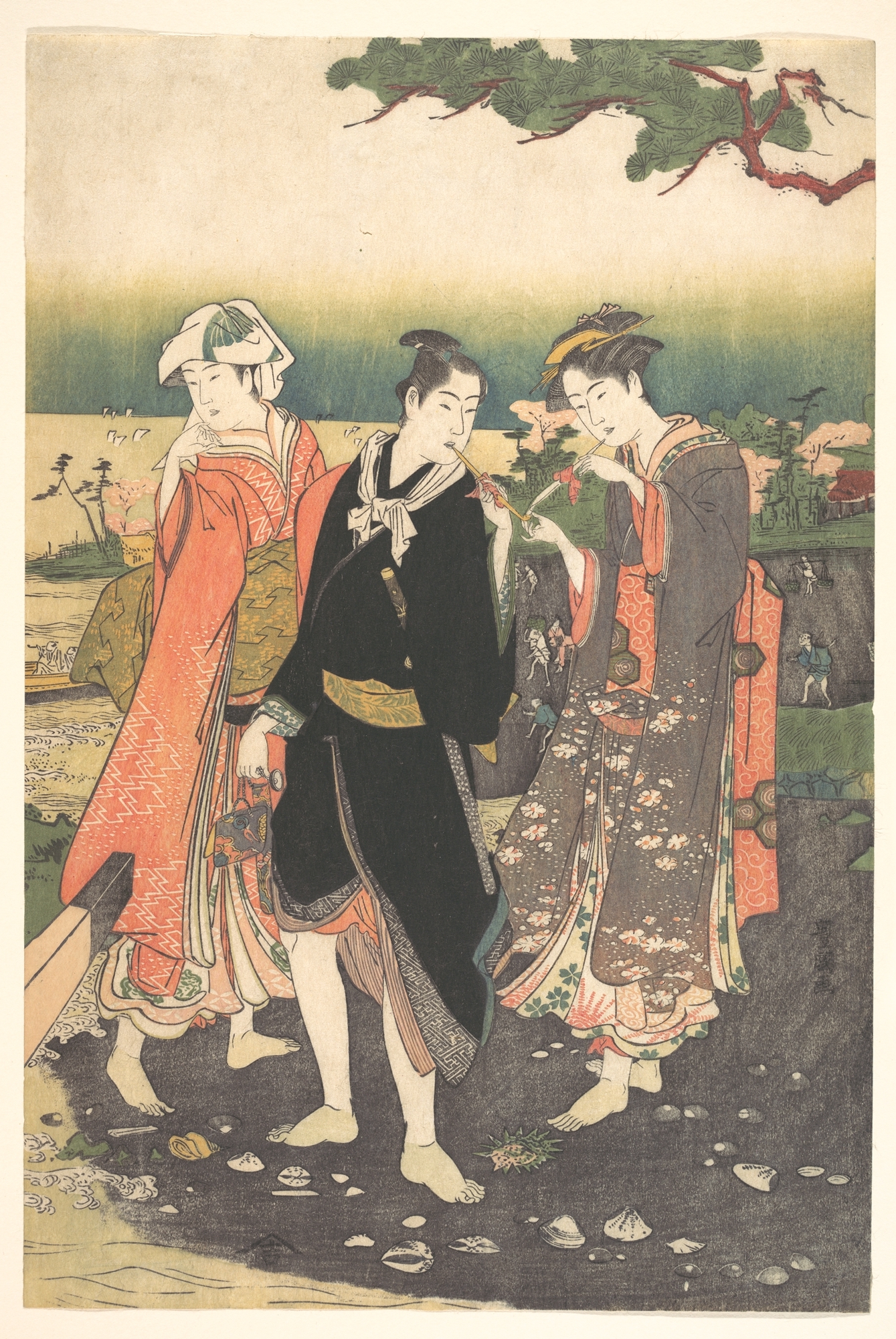
On Shinagawa Beach at Ebb-Tide
1769–1825
Woodblock print; ink and color on paper
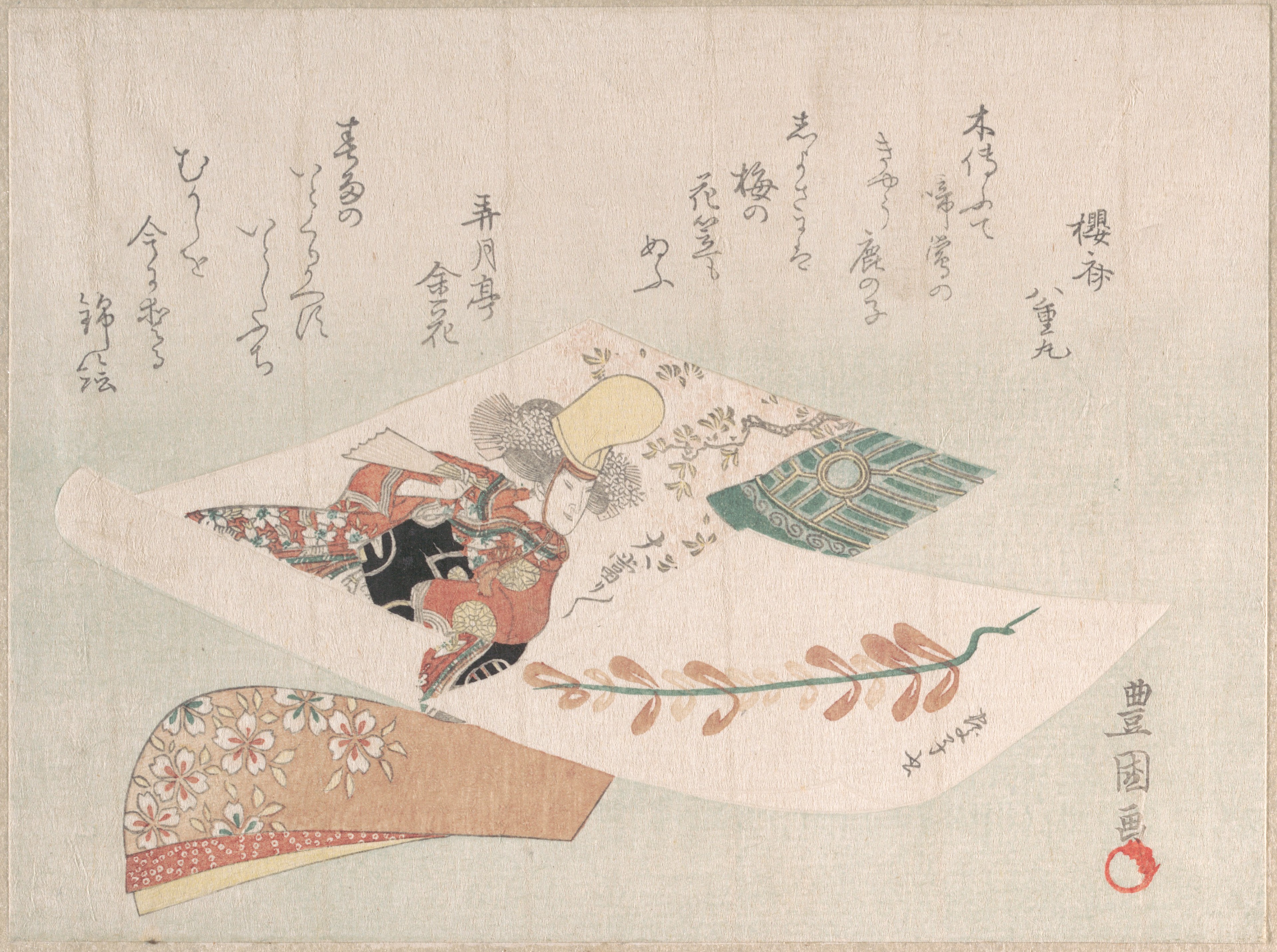
Representation of the Dance-Play "Dōjōji"
Woodblock print (surimono); ink and color on paper

The actors Sawamura Sojuro II as Satsuma Gengobei and Arashi Ryuzo II as Mawashi-otoko Yasuke in the play "Edo Sunago Kichirei Soga," performed at the Miyako Theater on the first month, 1795
c. 1795
Color woodblock print; oban
Frequently Asked Questions
Yakusha Sangai Kyō was created by Utagawa Toyokuni I (歌川豊国) in c. 1769 - 1825.