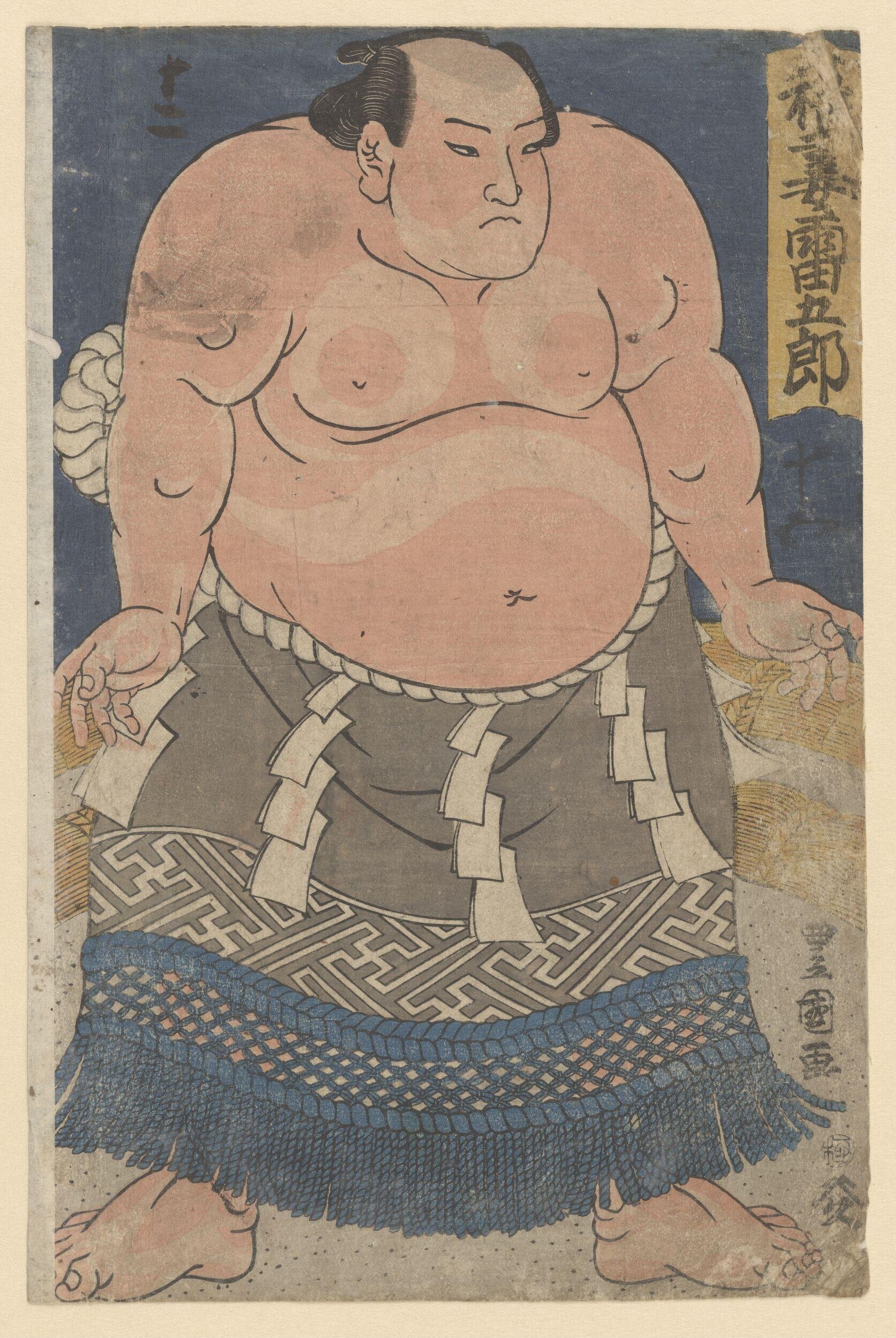
Yokozuna Inazuma Raigorō
- Date:
- 1828–35
- Medium:
- Source:
- Victoria and Albert Museum
Description
This Edo ukiyo-e print by Utagawa Toyokuni I (1769-1825) departs from yakusha-e to depict the celebrated sumo wrestler Inazuma Raigorō (1795-1877), one of the great yokozuna (grand champions) of the late Edo period. Sumo prints (sumō-e) formed a recognized subgenre of ukiyo-e alongside actor and beauty prints, and the same publishing networks that distributed kabuki prints supplied the public appetite for portraits of the great wrestlers, whose massive bodies, distinctive topknots, and ornate ceremonial aprons (kesho-mawashi) provided spectacular subject matter. Inazuma Raigorō was promoted to yokozuna in 1829 and is recognized as the seventh yokozuna in the historical lineage; his career spanned the 1820s and 1830s, with retirement in 1839. The Victoria and Albert Museum's recorded date of 1828 falls just before his formal yokozuna promotion and corresponds to the period of his rising fame as ōzeki, the second-highest rank. Toyokuni's treatment combines the scale of the wrestler's body with detailed rendering of the ceremonial apron's embroidered design, demonstrating the same patterning discipline that distinguishes his yakusha-e production. The print is a late work in Toyokuni's career—he died in 1825—or possibly a posthumous publication using designs prepared shortly before his death, a common practice in Edo publishing. The V&A holds a major European collection of Japanese woodblock prints, and this impression contributes to that collection's documentation of late-Edo sporting and ceremonial subjects alongside the more familiar yakusha-e and bijinga genres.
More Prints by Utagawa Toyokuni I

Segawa Kikunojō III as the Shop Boy Chōkichi
1796
Woodblock print (nishiki-e), ink and color on paper
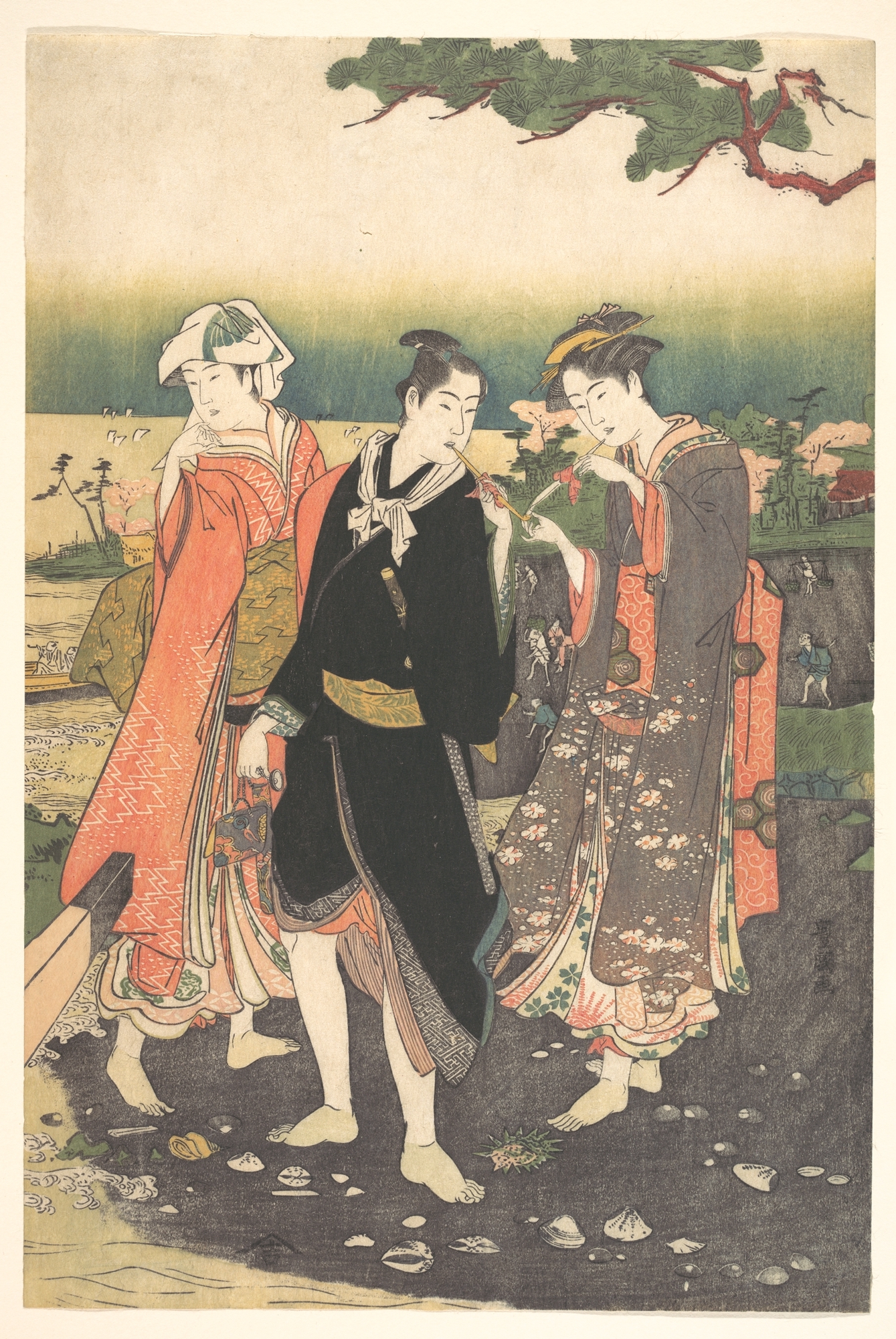
On Shinagawa Beach at Ebb-Tide
1769–1825
Woodblock print; ink and color on paper
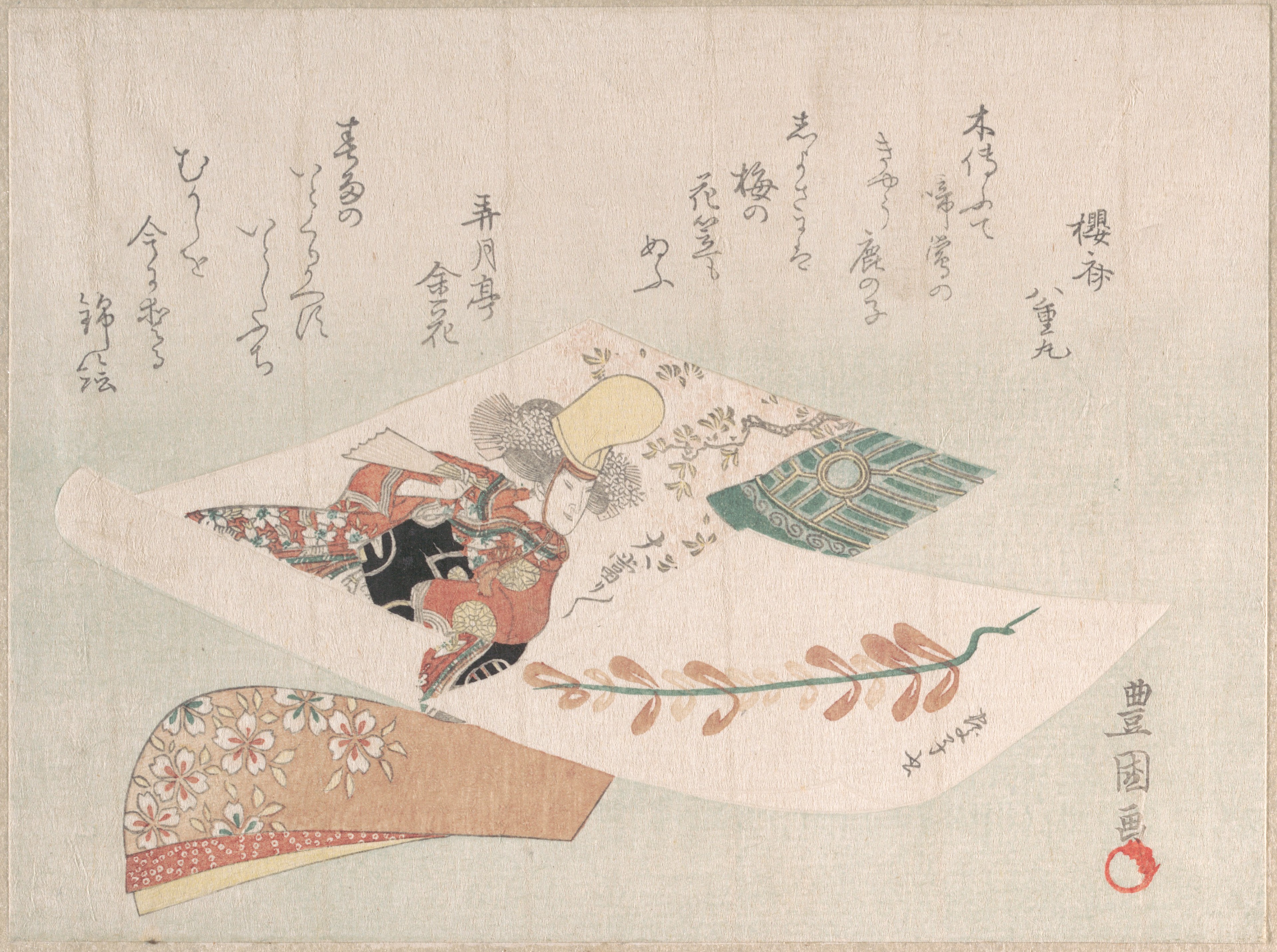
Representation of the Dance-Play "Dōjōji"
Woodblock print (surimono); ink and color on paper

The actors Sawamura Sojuro II as Satsuma Gengobei and Arashi Ryuzo II as Mawashi-otoko Yasuke in the play "Edo Sunago Kichirei Soga," performed at the Miyako Theater on the first month, 1795
c. 1795
Color woodblock print; oban
Frequently Asked Questions
Yokozuna Inazuma Raigorō was created by Utagawa Toyokuni I (歌川豊国) in 1828–35.