
Young couple as Kanzan and Jittoku
- Date:
- early 19th century
- Medium:
- Color woodblock print; hashira-e
- Source:
- Art Institute of Chicago
Description
Utagawa Toyokuni I designed Young Couple as Kanzan and Jittoku in a playful mitate, or parody, mode that became a hallmark of late Edo ukiyo-e. Kanzan and Jittoku are two famously eccentric Tang-dynasty Zen recluses, traditionally depicted as raffish poet-monks holding a scroll and a broom, and Toyokuni transforms them into a fashionable young couple of the contemporary Edo world. The contrast between sacred subject and secular reinterpretation produces the kind of layered visual joke that Edo audiences cherished, particularly in works by designers steeped in the kabuki and pleasure-quarter milieu. Although Toyokuni I is most celebrated for yakusha-e, his actor prints, this mitate composition reveals his broader fluency in classical iconography, urban fashion, and parody convention. The Art Institute of Chicago preserves this impression, whose disciplined keylines, balanced color planes, and individualized figures reflect the high standards of Edo woodblock printing in the years around 1800. As founder of the Utagawa school, Utagawa Toyokuni I established a willingness to mix high and low, classical and contemporary, sacred and secular within a single sheet that his successors would carry forward across the nineteenth century. The result is a print that operates simultaneously as a fashion plate, a literary in-joke, and a portrait of urban Edo sociability, embodying the wit and visual sophistication that have kept Toyokuni's work in continuous demand among museum curators and collectors.
More Prints by Utagawa Toyokuni I

Segawa Kikunojō III as the Shop Boy Chōkichi
1796
Woodblock print (nishiki-e), ink and color on paper
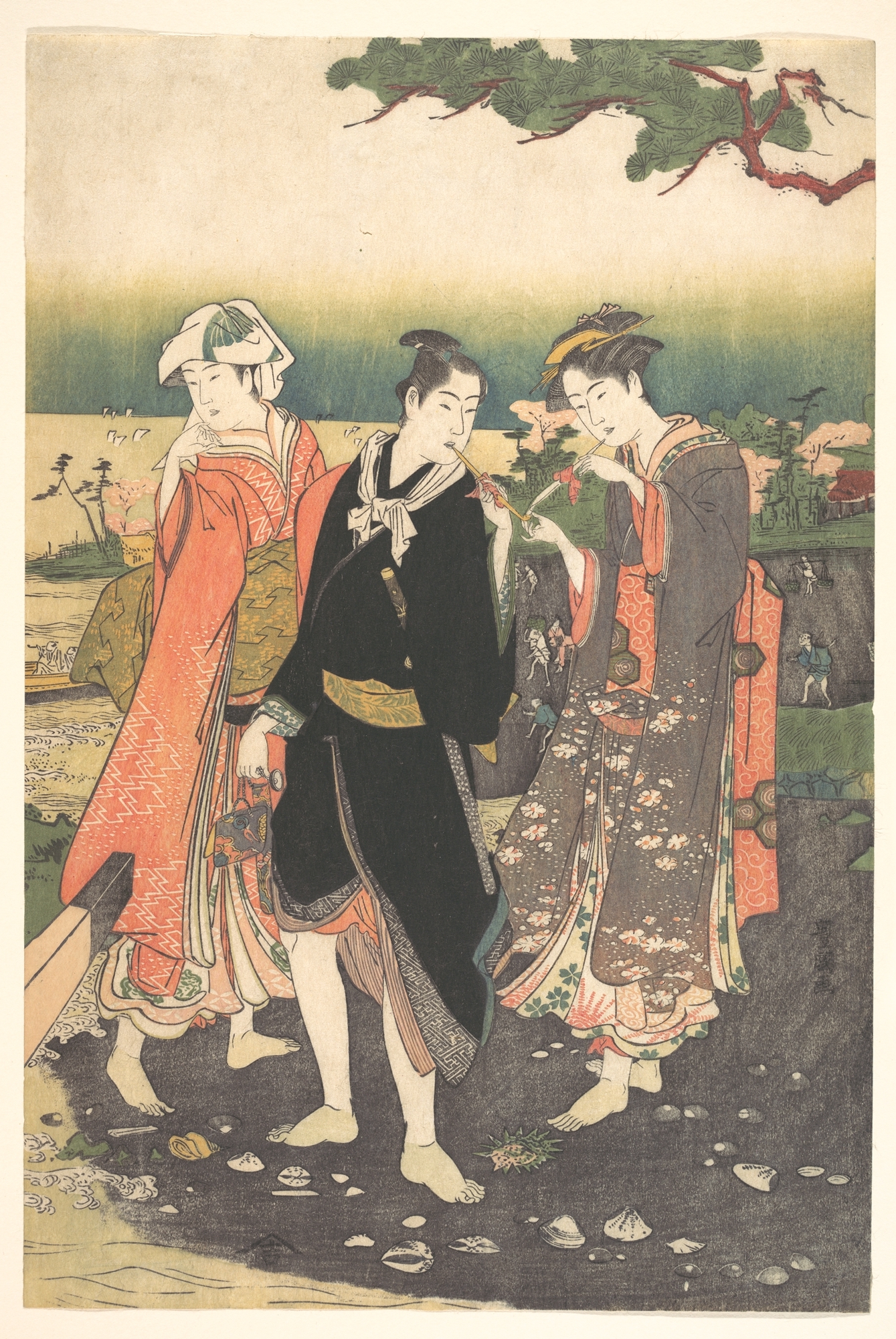
On Shinagawa Beach at Ebb-Tide
1769–1825
Woodblock print; ink and color on paper
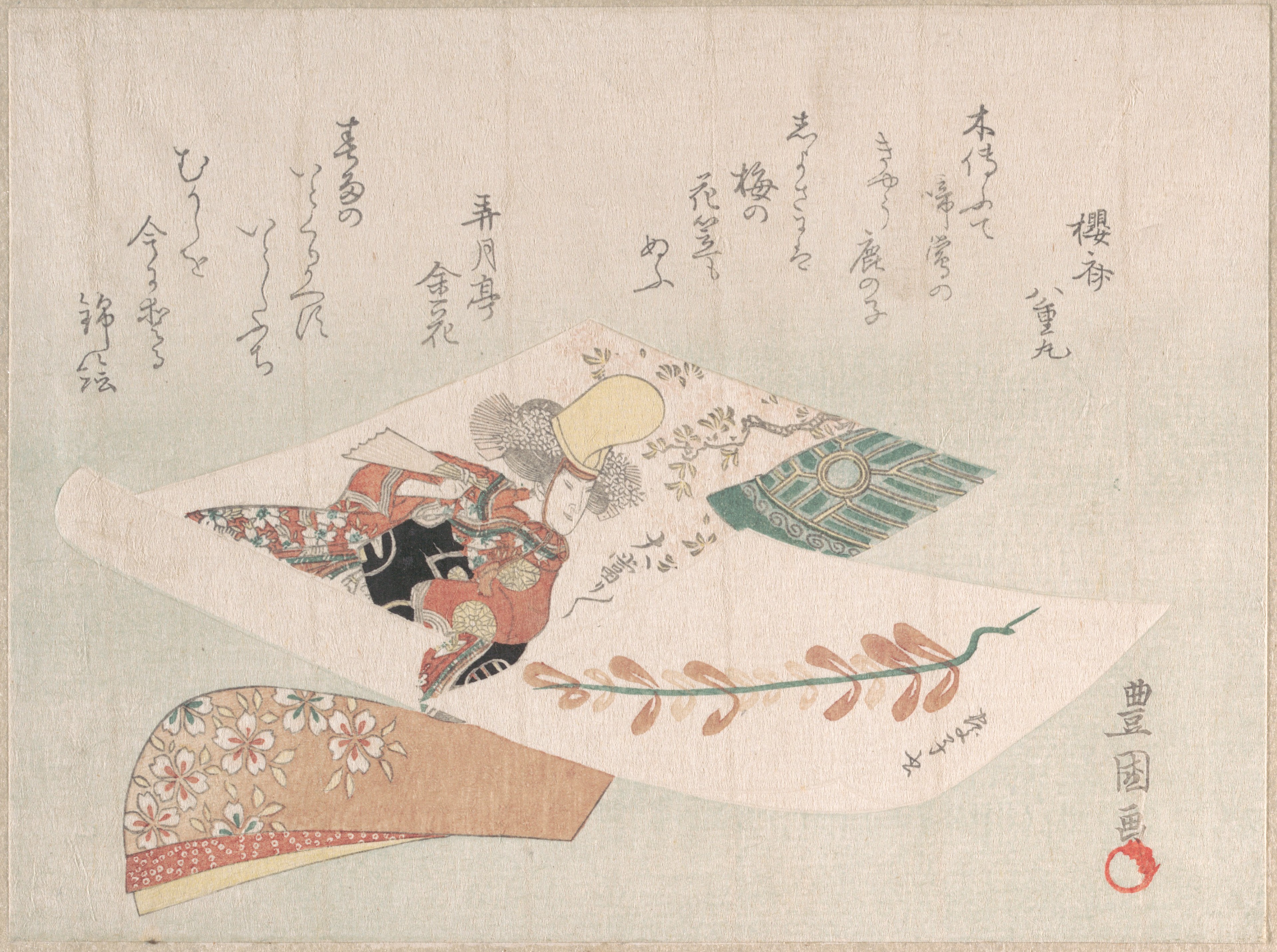
Representation of the Dance-Play "Dōjōji"
Woodblock print (surimono); ink and color on paper

The actors Sawamura Sojuro II as Satsuma Gengobei and Arashi Ryuzo II as Mawashi-otoko Yasuke in the play "Edo Sunago Kichirei Soga," performed at the Miyako Theater on the first month, 1795
c. 1795
Color woodblock print; oban
Frequently Asked Questions
Young couple as Kanzan and Jittoku was created by Utagawa Toyokuni I (歌川豊国) in early 19th century.