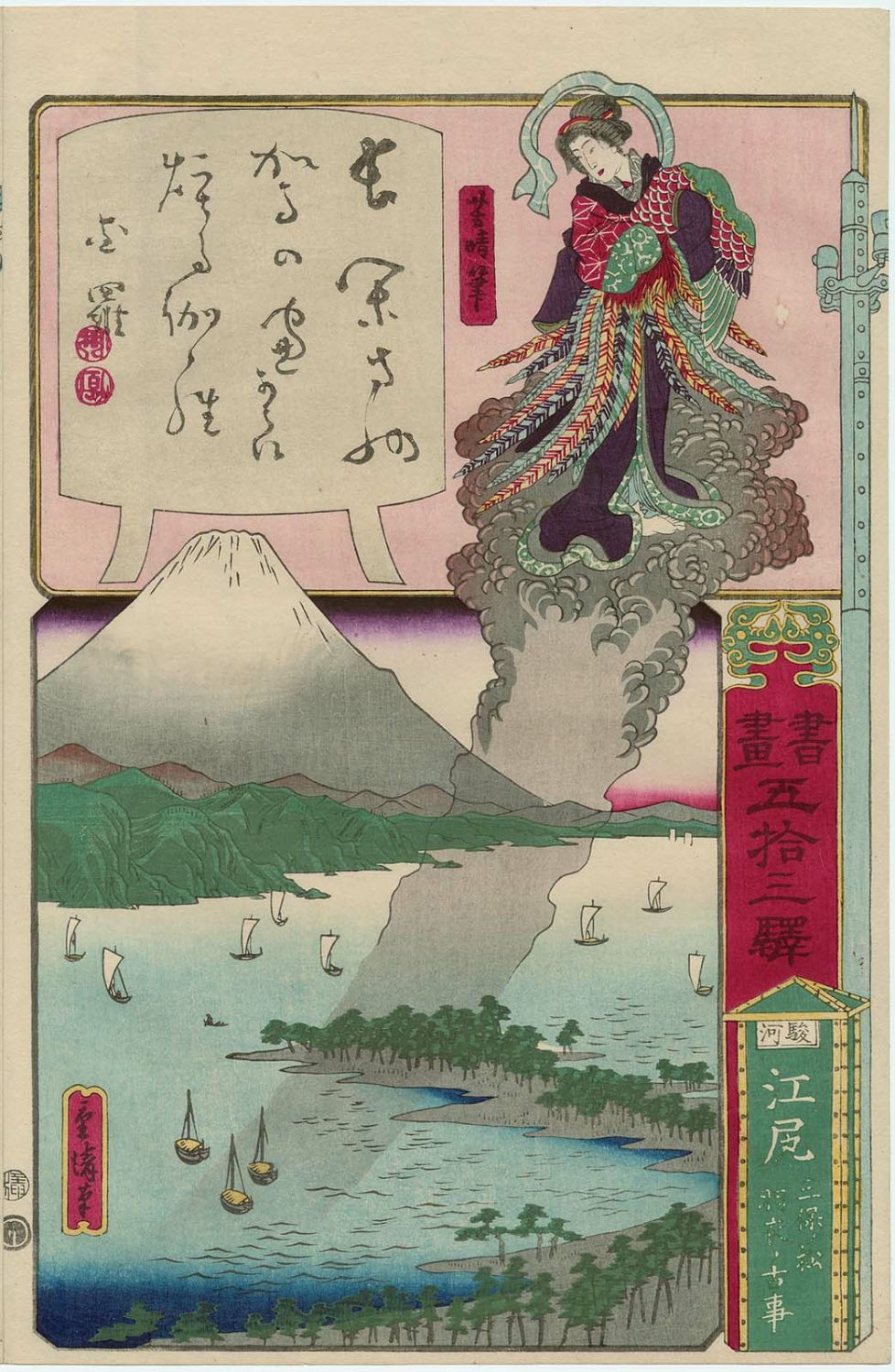
Ejiri in Suruga Province: The Old Story of the Pine of Miho and the Feather Robe
- Date:
- 1872
- Medium:
- Woodblock print (nishiki-e); ink and color on paper
- Source:
- Museum of Fine Arts, Boston
Description
This 1872 woodblock print, titled "Ejiri in Suruga Province: The Old Story of the Pine of Miho and the Feather Robe (Miho no matsu hagoromo no koji)," comes from the series "Calligraphy and Pictures for the Fifty-three Stations of the Tōkaidō" (Shoga gojūsan eki) and is held by the Museum of Fine Arts, Boston (ukiyo-e.org accession sc166854, MFA object 472429). The print belongs to the broad tradition of Tōkaidō series that flourished in Japanese print culture from the 1830s onward, but the early Meiji "Calligraphy and Pictures" series in which it appears was a collaborative project combining poetic calligraphy with topographical and legendary imagery, with multiple Utagawa-school designers contributing individual stations. The subject of Yoshiharu's station, Ejiri in Suruga Province (modern-day Shizuoka), is associated with the celebrated Pine of Miho on Miho Peninsula, the legendary site of the noh play Hagoromo (The Feather Robe), in which a fisherman discovers a tennin (celestial maiden)'s feathered robe hanging in a pine tree. The choice of station and legend connects the print to the cultural landscape of pre-modern Japan even as it appeared in 1872, the early years of Meiji, when topographical and legendary subjects were continuing to anchor the woodblock print medium against the disruptions of modernization. The print is part of the Museum of Fine Arts Boston's collection of Meiji Japanese prints.
More Prints by Utagawa Yoshiharu

The Plum Blossom that Flew on Lightning from Chikushino
1857
Woodblock print (nishiki-e); ink and color on paper
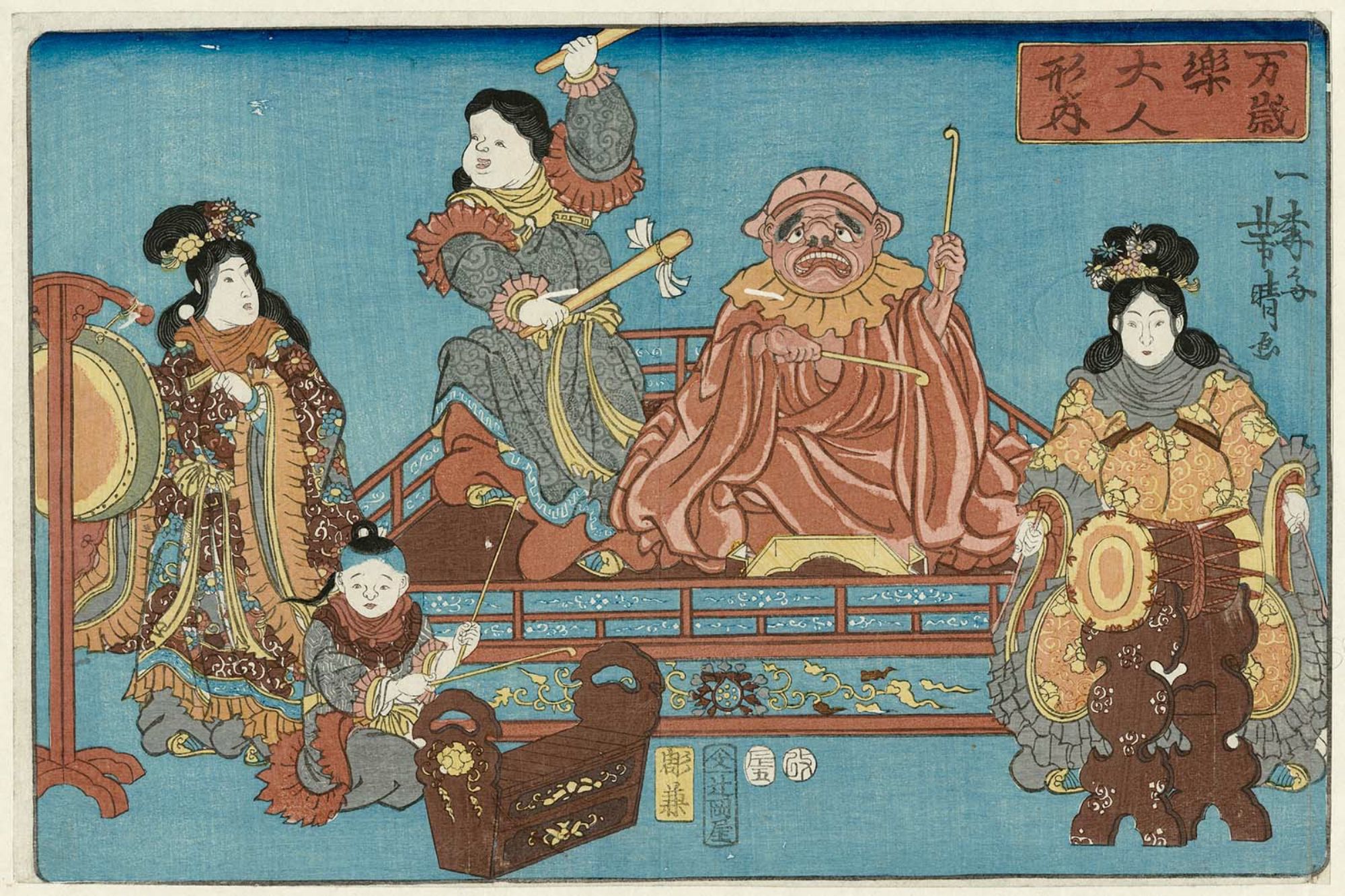
Comic Music (Manzaigaku), from the series Large Dolls
1856
Woodblock print (nishiki-e); ink and color on paper

The Brave Woman Tomoe Gozen and Takezo Saburoemon, from the series Famous Warriors in Combat
1856
Woodblock print (nishiki-e); ink and color on paper
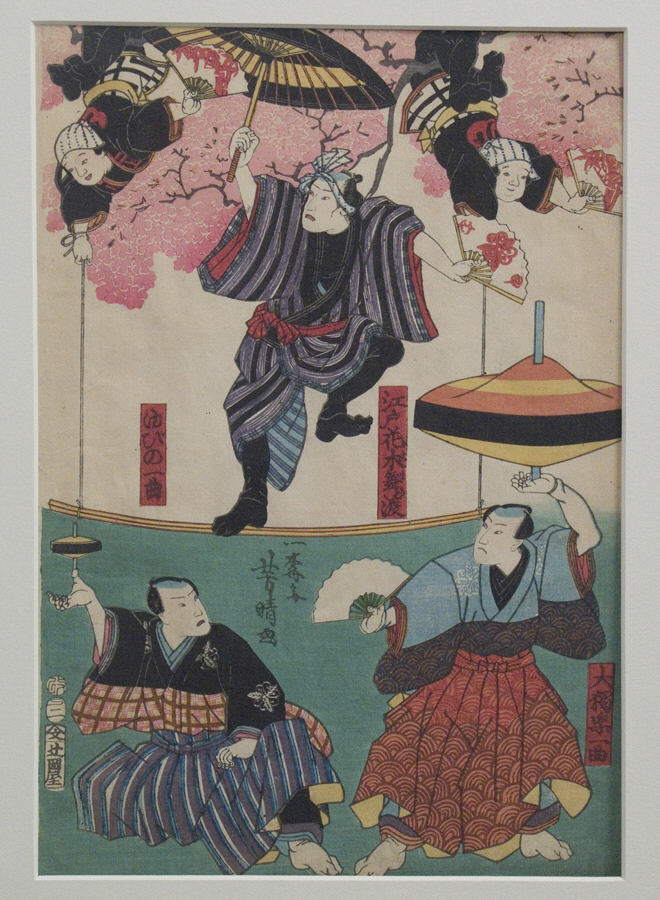
Acrobats Beneath Cherry Trees: Spinning Tops and Balancing
1857
Woodblock print (nishiki-e); ink and color on paper
Frequently Asked Questions
Ejiri in Suruga Province: The Old Story of the Pine of Miho and the Feather Robe was created by Utagawa Yoshiharu (歌川芳春) in 1872.