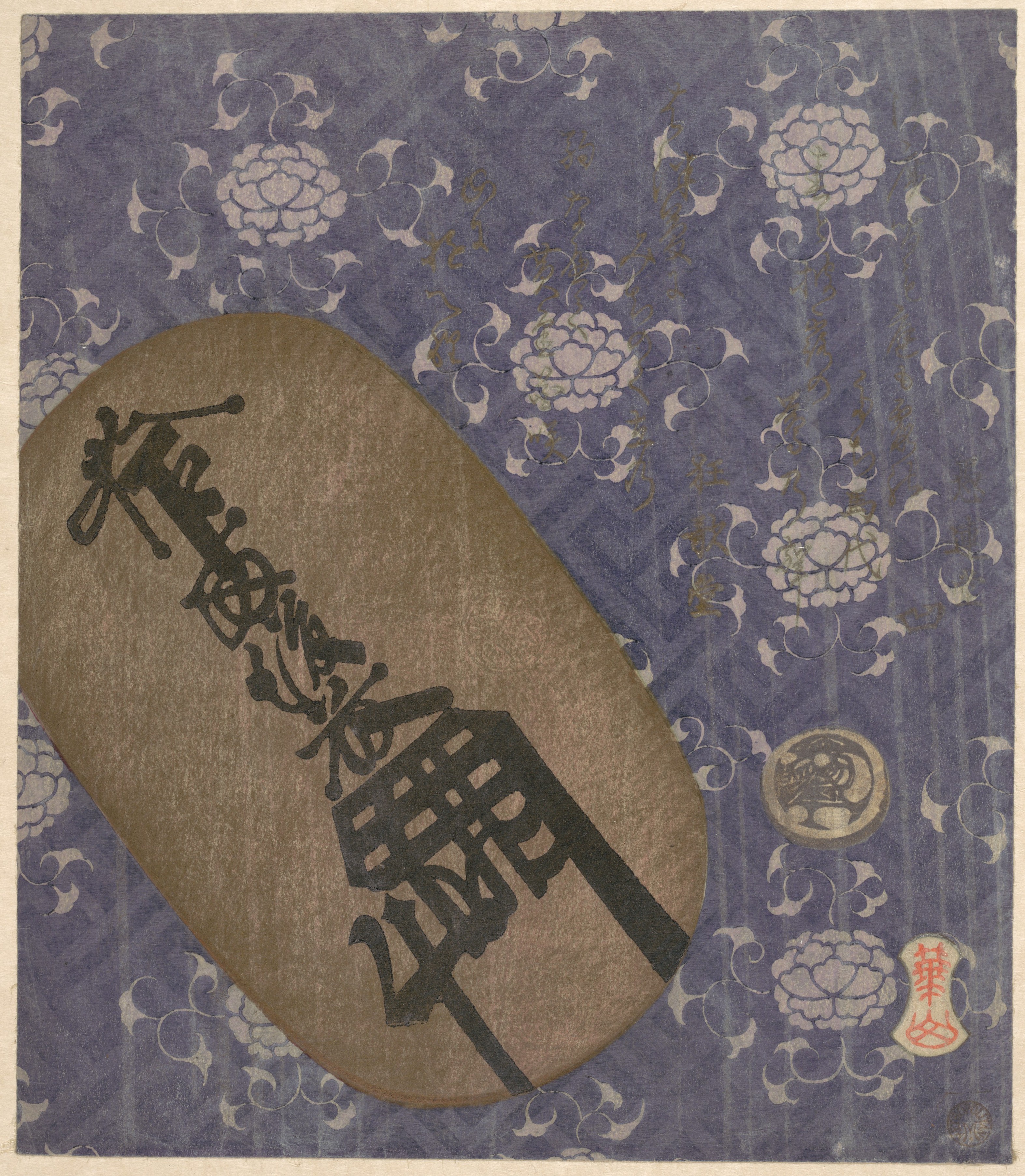
Ōban gold coin and mameita-gin silver "bean coin" against peony-motif decorated paper
- Date:
- 1822, year of the horse
- Medium:
- Woodblock print (surimono); ink and color on paper
- Source:
- The Metropolitan Museum of Art
Description
Ōban gold coin and mameita-gin silver 'bean coin' against peony-motif decorated paper is a surimono of 1822, the year of the horse, by Watanabe Kazan (渡辺崋山, 1793-1841), held in the Metropolitan Museum of Art (accession JP1041). Printed in ink and color on paper, the sheet is a luxurious New Year greeting card produced for a private poetry circle: an ōban gold coin and a mameita-gin silver 'bean coin', the two most prestigious denominations of Edo currency, are arranged across a sheet whose ground is printed to imitate paper decorated with a stylized peony motif. The combination of auspicious coinage, peony (an emblem of wealth and prosperity), and the horse-year date condenses an entire New Year's wish into a single small design. As an early surimono by Kazan it documents his participation in the privately commissioned print culture of 1820s Edo before his career as a bureaucrat-painter had reached its peak, and it shows the technical sophistication — metallic ink, embossing, fine color register — that distinguished surimono from the commercial ukiyo-e of the same decade. The Met sheet is one of a small number of Kazan surimono surviving in Western collections.
More Prints by Watanabe Kazan
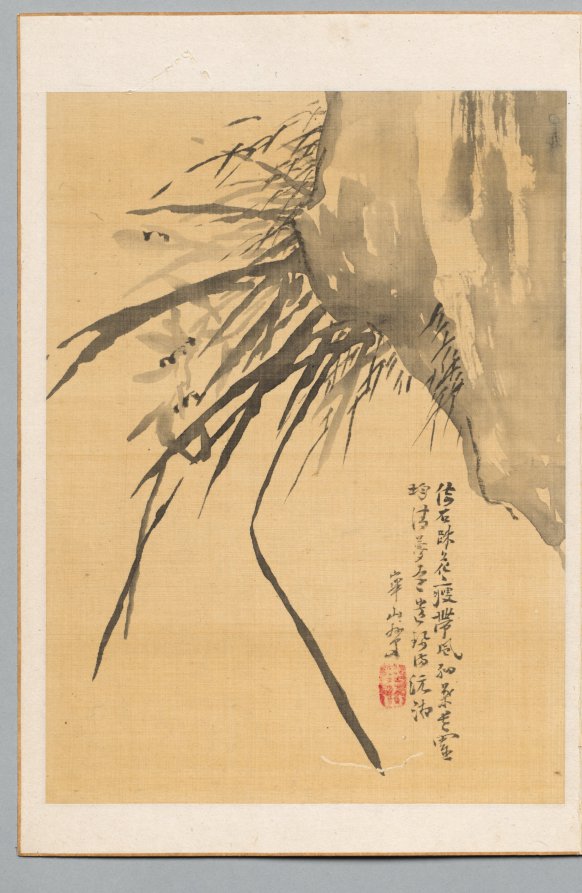
Orchid
early to mid-1800s
Leaf from folding album; ink and light color on paper
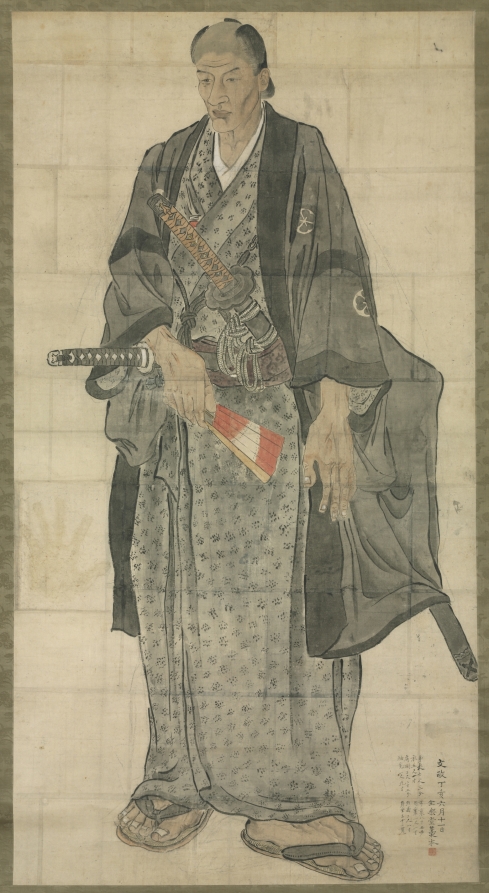
Portrait of Ōzora Buzaemon
1827
Hanging scroll; ink and color on paper
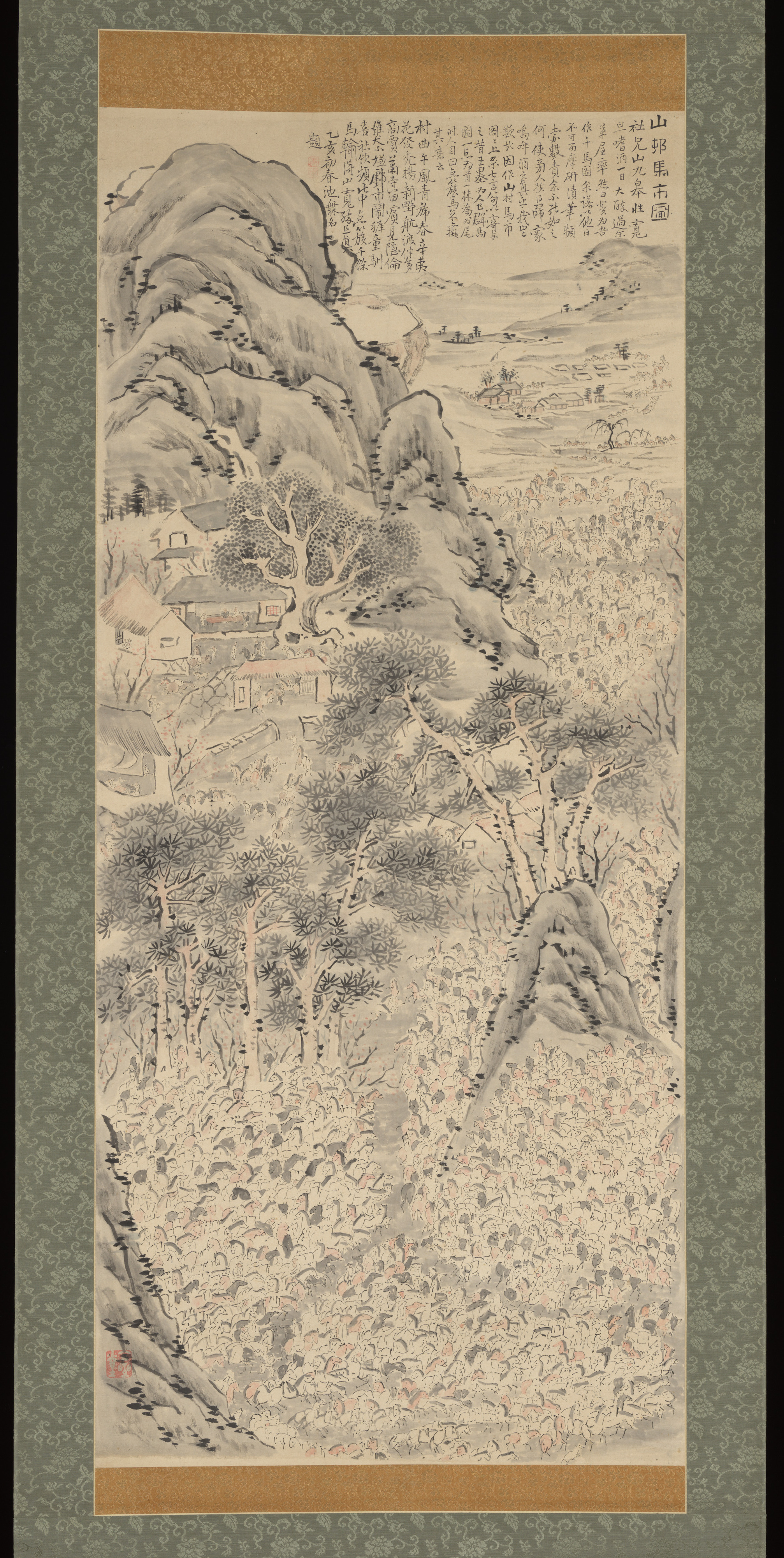
After Ike no Taiga's "Horse Market in a Mountain Village"
1820s
Hanging scroll; ink and color on paper
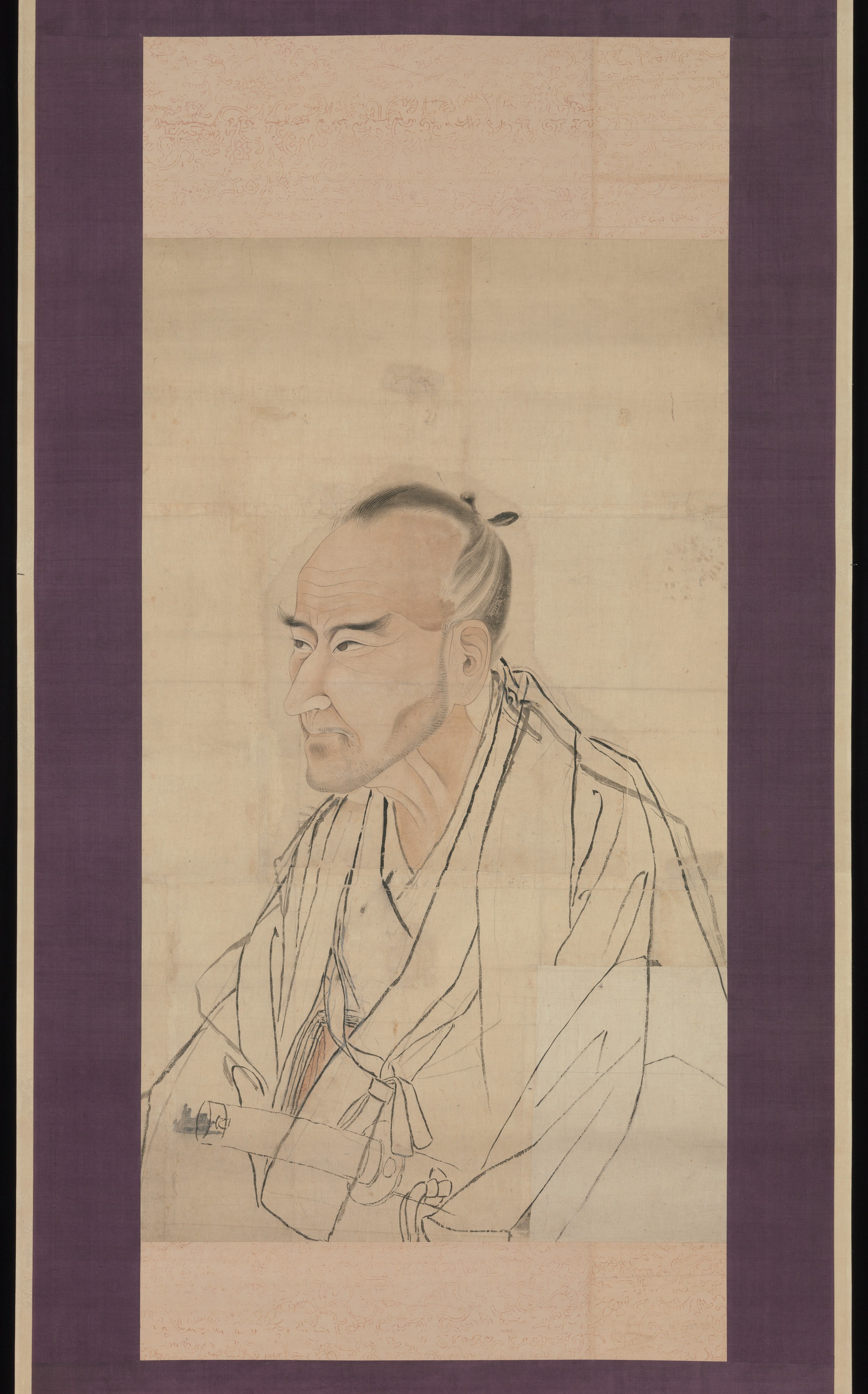
Sketch for the Portrait of Tachihara Suiken
ca. 1823
Hanging scroll; ink and color on paper
Frequently Asked Questions
Ōban gold coin and mameita-gin silver "bean coin" against peony-motif decorated paper was created by Watanabe Kazan (渡辺崋山) in 1822, year of the horse.