
Flower Seller
花売り
- Date:
- before 1935
- Medium:
- Painting reproduction; ink and color on silk or paper
Description
A flower seller wearing a wide woven hat and a blue robe stands amid tall woven baskets brimming with red berry sprigs, chrysanthemums, and other autumn blooms in red, orange, pink, and white. Rendered in muted ink and color against a pale, undefined ground, the figure is seen from behind in three-quarter view, one arm reaching up into the foliage. Yamada Keichū's composition centers entirely on the massed flowers, which crowd the frame while the seller remains a quiet, partly obscured presence at its middle.
More Prints by Yamada Keichū

Landscape III
風景 三
before 1935
Painting reproduction; ink and color on silk or paper
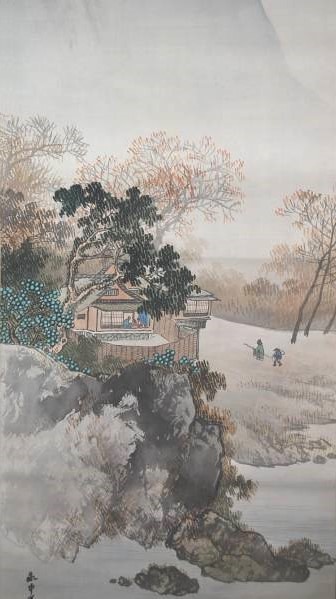
Snowy Landscape
雪景色
before 1935
Painting reproduction; ink and color on silk or paper

Mountain Landscape
山岳風景
before 1935
Painting reproduction; ink and color on silk or paper

Mountain Landscape II
山岳風景 二
before 1935
Painting reproduction; ink and color on silk or paper
More Birds & Flowers Prints
Frequently Asked Questions
Flower Seller (花売り) was created by Yamada Keichū (山田敬中) in before 1935.
Flower Seller depicts birds & flowers.