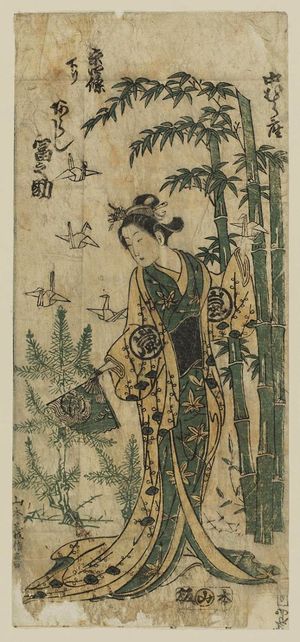
Actor
- Date:
- Edo period, mid-18th century
- Medium:
- Hand-colored woodblock print
- Source:
- Museum of Fine Arts, Boston
Description
Held in the Museum of Fine Arts, Boston, this Edo-period actor portrait by Yamamoto Yoshinobu exemplifies the mid-eighteenth-century single-figure yakusha-e (actor picture) format that constituted the commercial heart of Edo's print trade during the artist's active decades of the 1740s and 1750s. The print presents a Kabuki performer in the standard hosoban vertical format favored for individual actor portraits, with the actor's specific role identity conveyed through costume, hairstyle, gesture, and the distinctive facial features by which Edo theatergoers recognized their favorite performers beneath the demands of the role. Printed in the hand-colored mode that combined block-printed black outlines with hand-applied pigments, the work demonstrates Yoshinobu's command of the prevailing mid-Edo print technology and his consistent engagement with the actor portrait as his principal commercial subject. The persistence of such prints across the active careers of multiple Nishimura-school artists testifies to the deep, sustained demand for actor imagery within Edo's theatrical culture, where Kabuki performers occupied a celebrity status equivalent to that of modern film stars and where single-sheet portraits of leading actors served as collectibles, fan keepsakes, and commemorations of celebrated performances. The MFA Boston example contributes to the surviving documentary record of Yoshinobu's actor specialization and the mid-eighteenth-century yakusha-e tradition more broadly.
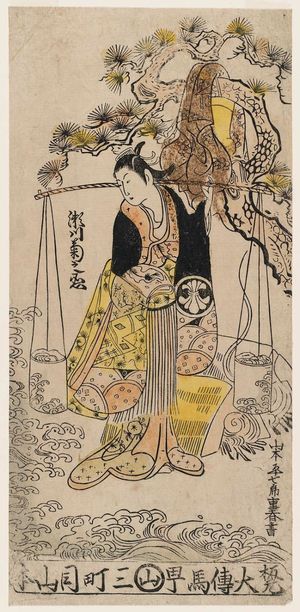
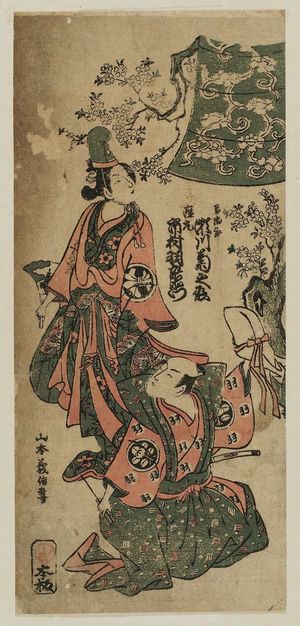
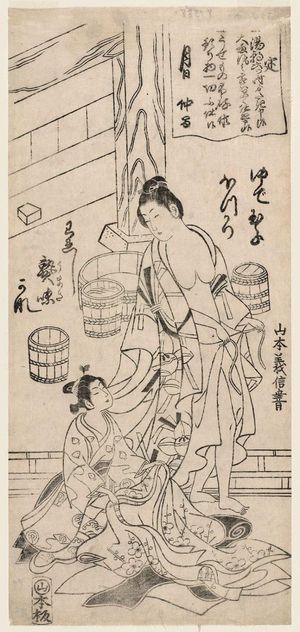
More Prints by Yamamoto Yoshinobu
Frequently Asked Questions
Actor was created by Yamamoto Yoshinobu (山本義信) in Edo period, mid-18th century.