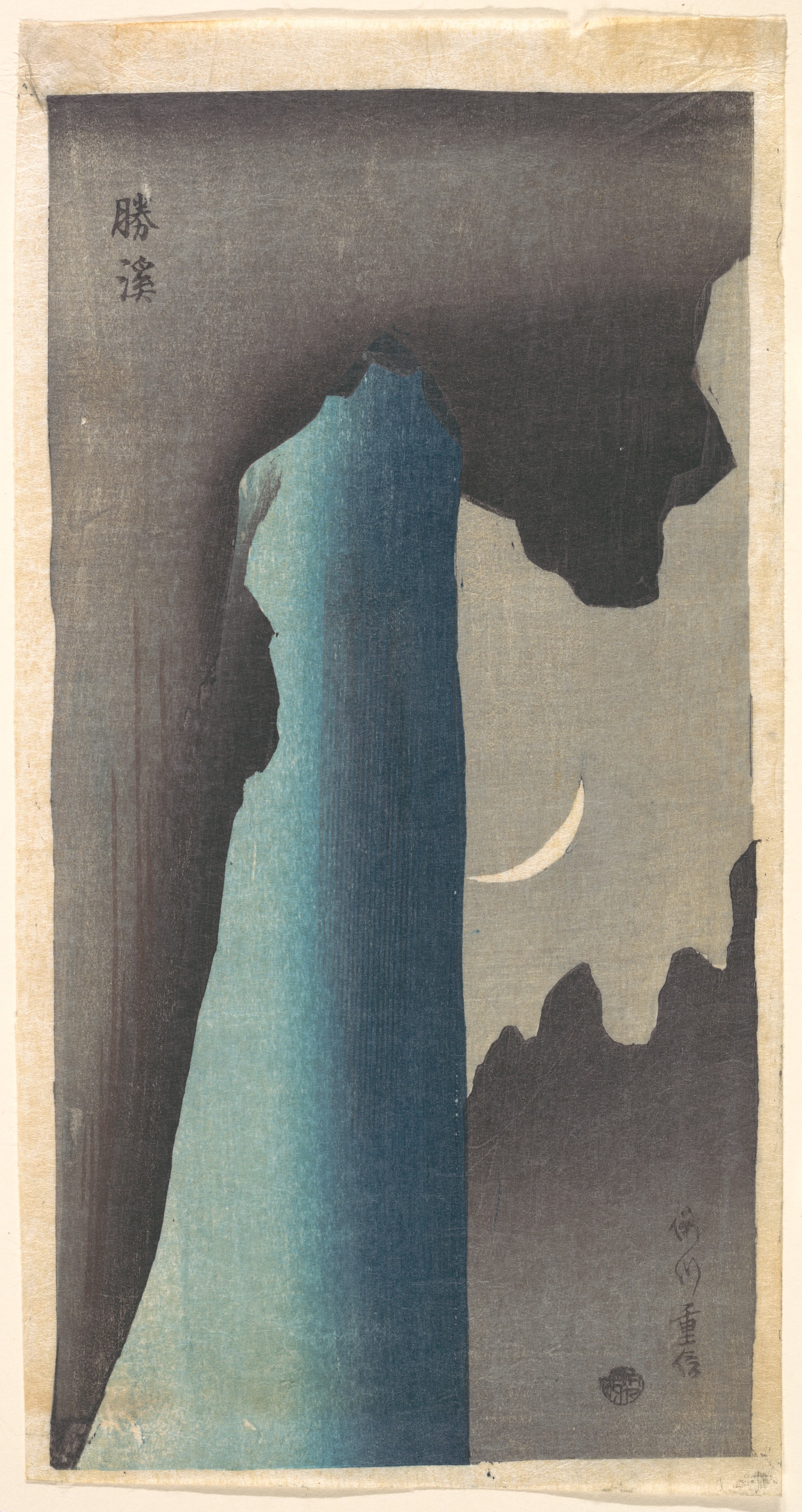
Celebrated Waterfall
- Date:
- 1820–1830
- Medium:
- Woodblock print; ink and color on paper
- Source:
- Metropolitan Museum of Art
Description
A surimono of 1820–1830 in the Metropolitan Museum of Art's collection, this print depicts a celebrated waterfall — a subject category (taki-meguri or 'waterfall tour') that became a popular theme of nineteenth-century landscape prints in parallel with the more famous landscape series of Hokusai and Hiroshige. Hokusai's own Tour of Waterfalls of Various Provinces (Shokoku taki meguri) of circa 1832 is the canonical landscape treatment of the subject and overlaps almost exactly with the final years of Shigenobu's life; Shigenobu's surimono version belongs to the small-format poetic mode of waterfall imagery, designed to carry kyōka verse alongside an emblematic image rather than to function as topographic record. Waterfalls were associated in Japanese religious and literary tradition with sacred mountain sites and with the practice of takigyō (waterfall ascetic discipline), and they carried symbolic weight beyond their picturesque value. The Met's catalogue dates the print to the broad span 1820–1830, a window that brackets Shigenobu's most productive years. The design demonstrates his comfort with landscape elements as well as the figurative subjects on which his reputation primarily rests.
More Prints by Yanagawa Shigenobu

Court lady admiring plum blossoms
late 1820s
Color woodblock print; shikishiban, surimono

Courtesan with Flower Cart, from the series "Famous Flowers in Three Capitals (Santo meisho no hana)"
early 19th century
Color woodblock print; surimono
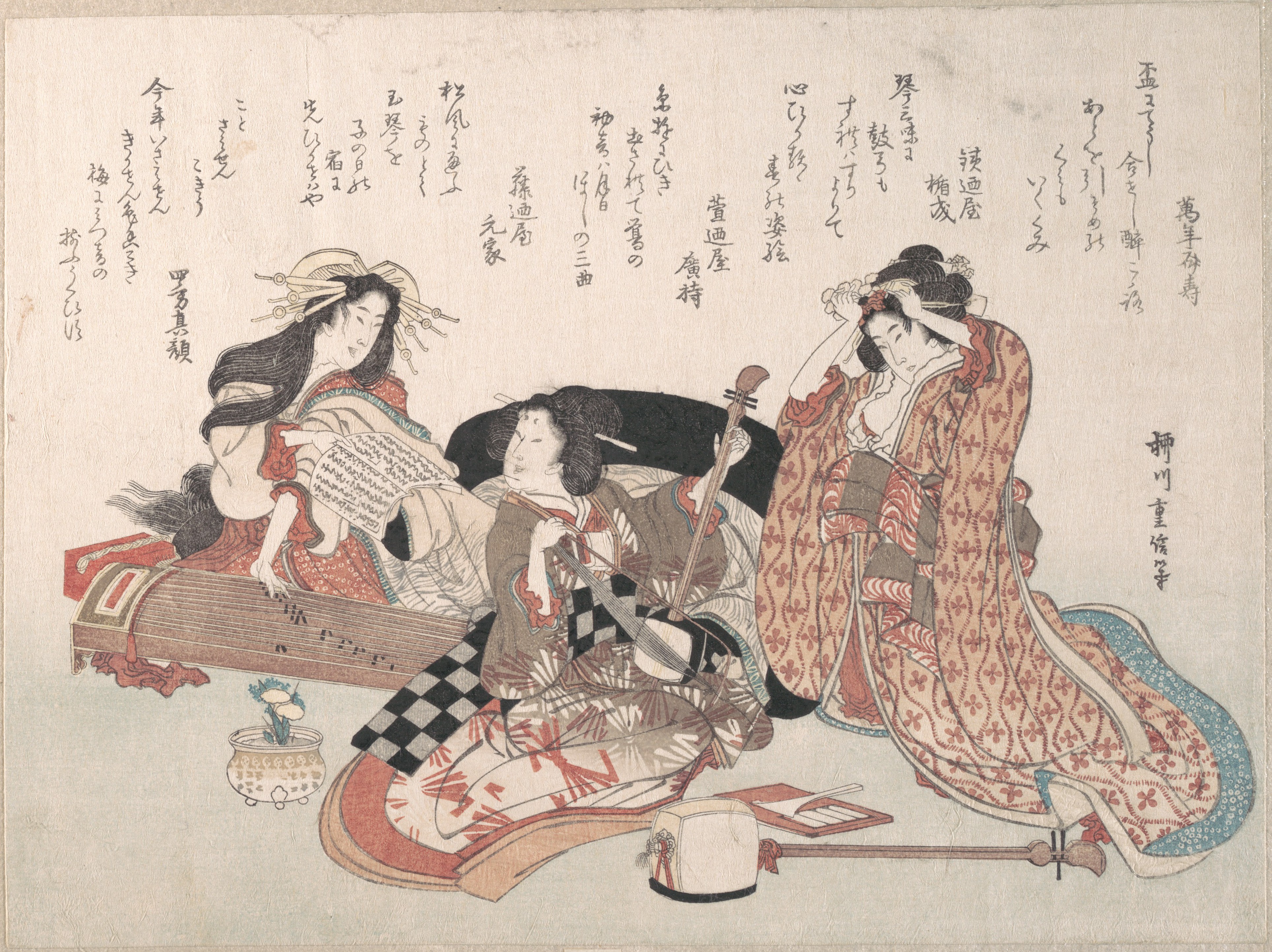
Women Playing Music
19th century
Woodblock print (surimono); ink and color on paper

Dancer in Momijigari, from an untitled series of nerimono festival dancers
c. 1823
Color woodblock print; shikishiban, surimono
More Waterfalls Prints


Frequently Asked Questions
Celebrated Waterfall was created by Yanagawa Shigenobu (柳川重信) in 1820–1830.
Celebrated Waterfall depicts waterfalls and autumn foliage.