
Chrysanthemum Boy leaning on a rock, from the series "Five Prints on Longevity (Kotobuki goban no uchi)"
- Date:
- mid–1820s
- Medium:
- Color woodblock print; shikishiban, surimono
- Source:
- Art Institute of Chicago
Description
A shikishiban surimono of the mid-1820s in the Art Institute of Chicago, from Shigenobu's series Five Prints on Longevity (Kotobuki goban no uchi), this design depicts the Chrysanthemum Boy (Kikujidō) leaning on a rock. Kikujidō is a figure from Chinese legend transmitted to Japan — a youth granted immortality after dew from chrysanthemums he attended dripped into a stream he drank from — and his image was a standard motif of longevity-themed prints, paintings, and decorative objects in both China and Japan. The Kotobuki (auspicious longevity) series gave Shigenobu a programmatic frame for five such longevity emblems, of which the Kikujidō is one of the most enduringly popular and one of the most recognizable to kyōka-club patrons familiar with the standard auspicious iconography. The kyōka that the surimono would originally have carried likely played on the longevity theme through allusion or pun, exploiting the rich Sinitic and Japanese poetic vocabulary that the Kikujidō legend made available. The print is finely printed in restrained color with the metallic and embossing effects characteristic of the best surimono of the decade.
More Prints by Yanagawa Shigenobu

Court lady admiring plum blossoms
late 1820s
Color woodblock print; shikishiban, surimono

Courtesan with Flower Cart, from the series "Famous Flowers in Three Capitals (Santo meisho no hana)"
early 19th century
Color woodblock print; surimono
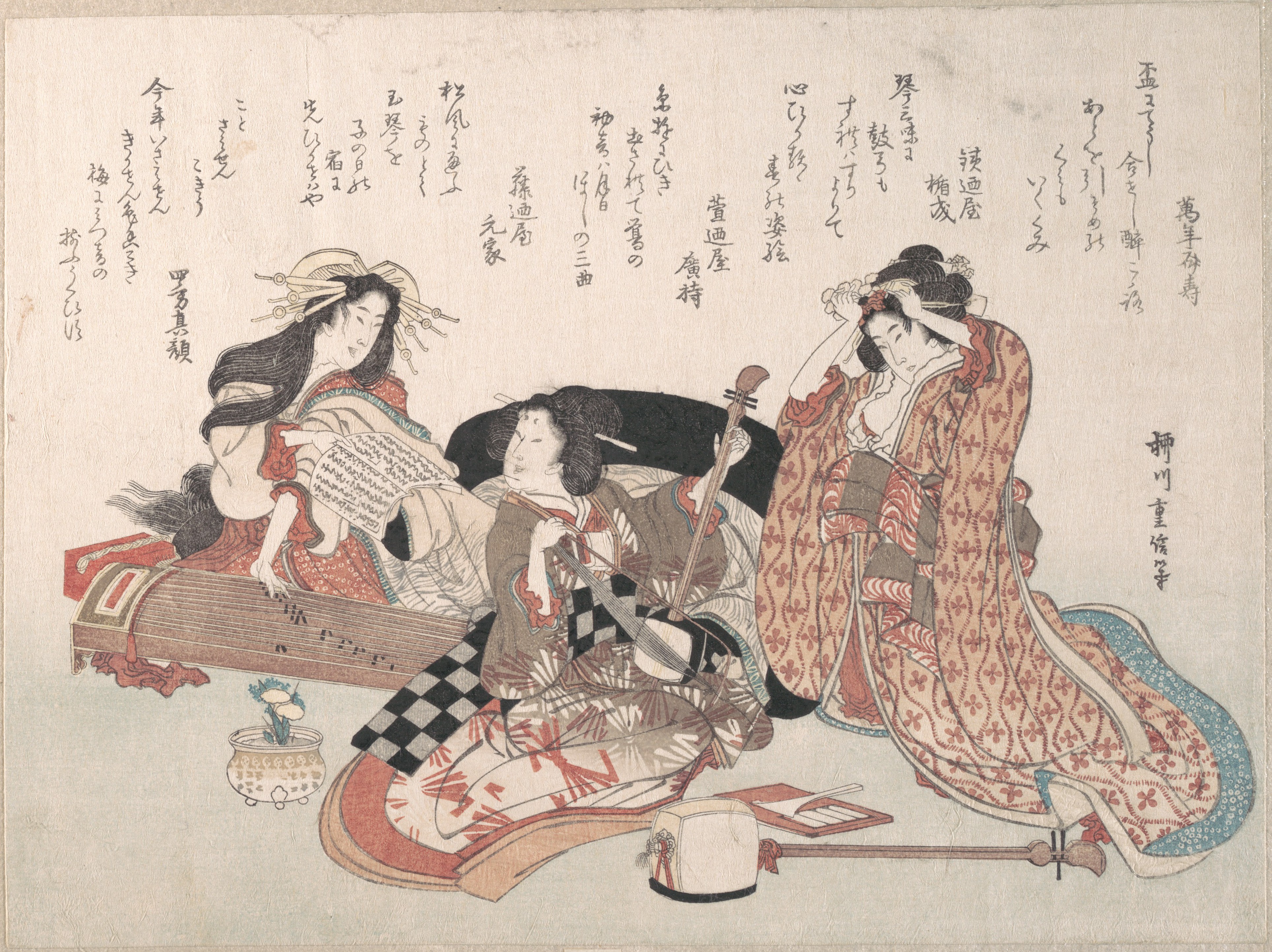
Women Playing Music
19th century
Woodblock print (surimono); ink and color on paper

Dancer in Momijigari, from an untitled series of nerimono festival dancers
c. 1823
Color woodblock print; shikishiban, surimono
More Children Prints
Frequently Asked Questions
Chrysanthemum Boy leaning on a rock, from the series "Five Prints on Longevity (Kotobuki goban no uchi)" was created by Yanagawa Shigenobu (柳川重信) in mid–1820s.
Chrysanthemum Boy leaning on a rock, from the series "Five Prints on Longevity (Kotobuki goban no uchi)" depicts children.