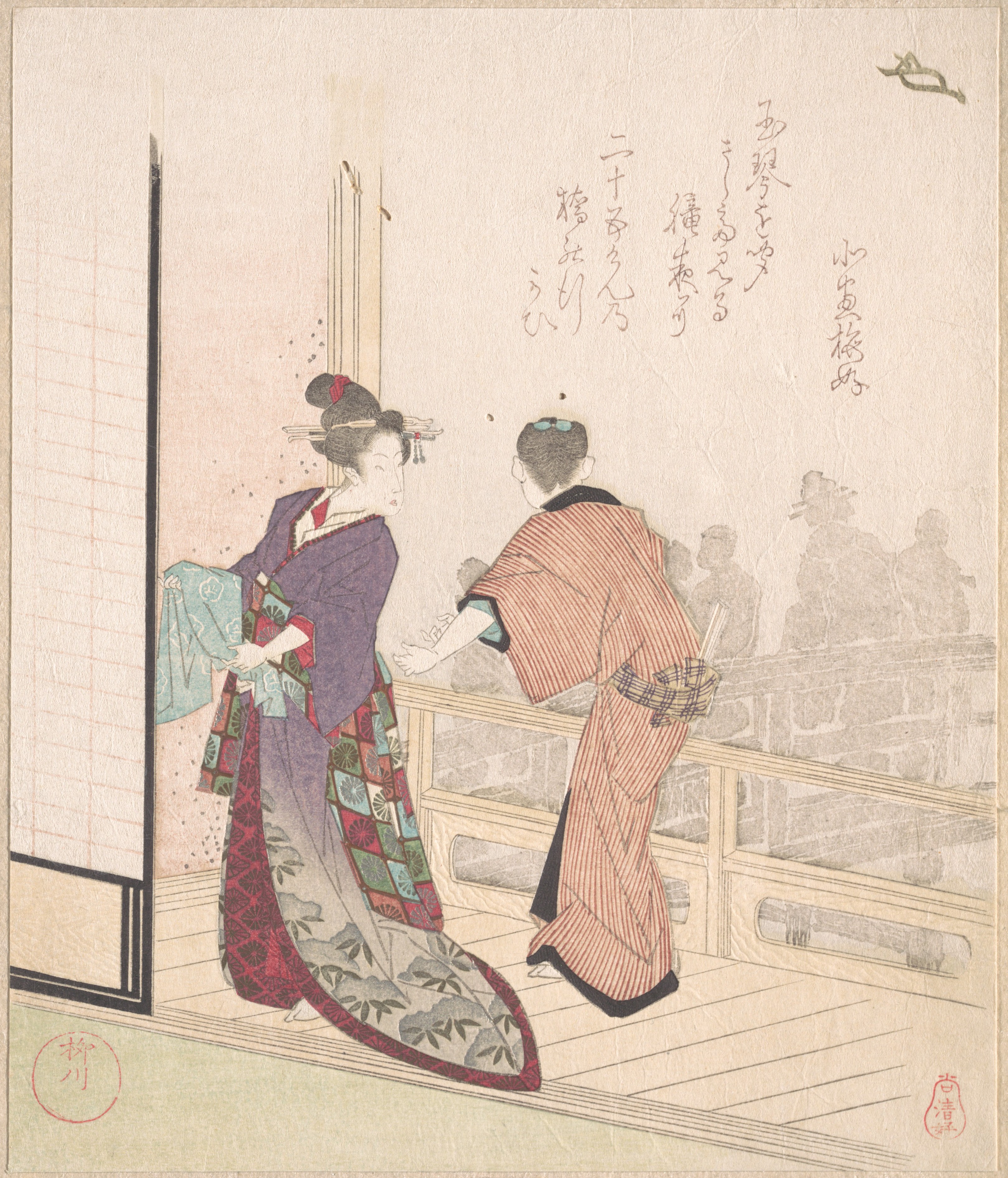
Scene on the Veranda of a Teahouse
- Date:
- 18th–19th century
- Medium:
- Woodblock print (surimono); ink and color on paper
- Source:
- Metropolitan Museum of Art
Description
An eighteenth- to nineteenth-century print in the Metropolitan Museum of Art's collection, this design depicts a scene on the veranda of a teahouse — a classic ukiyo-e setting in which waitresses, geisha, or patrons are arranged in a semi-architectural framework that combines the open veranda's verticals and horizontals with the curves of figure and kimono. The teahouse was a defining institution of Edo and Osaka floating-world life, a meeting place for the literary, theatrical, and pleasure-quarter clienteles that overlapped in the period, and prints picturing it accommodated both the genre-scene and bijin-ga registers. The Met dates the print broadly to the eighteenth-to-nineteenth-century span; the cataloguing reflects the difficulty of dating undated surimono and book-illustration prints precisely, although Shigenobu's documented career falls entirely within the early nineteenth century. The design is consistent with his interest in vertical compositions that combine multiple figures within an architectural frame, and exemplifies the genre-scene mode that runs alongside his more famous surimono and identifying-portrait series.
More Prints by Yanagawa Shigenobu

Court lady admiring plum blossoms
late 1820s
Color woodblock print; shikishiban, surimono

Courtesan with Flower Cart, from the series "Famous Flowers in Three Capitals (Santo meisho no hana)"
early 19th century
Color woodblock print; surimono
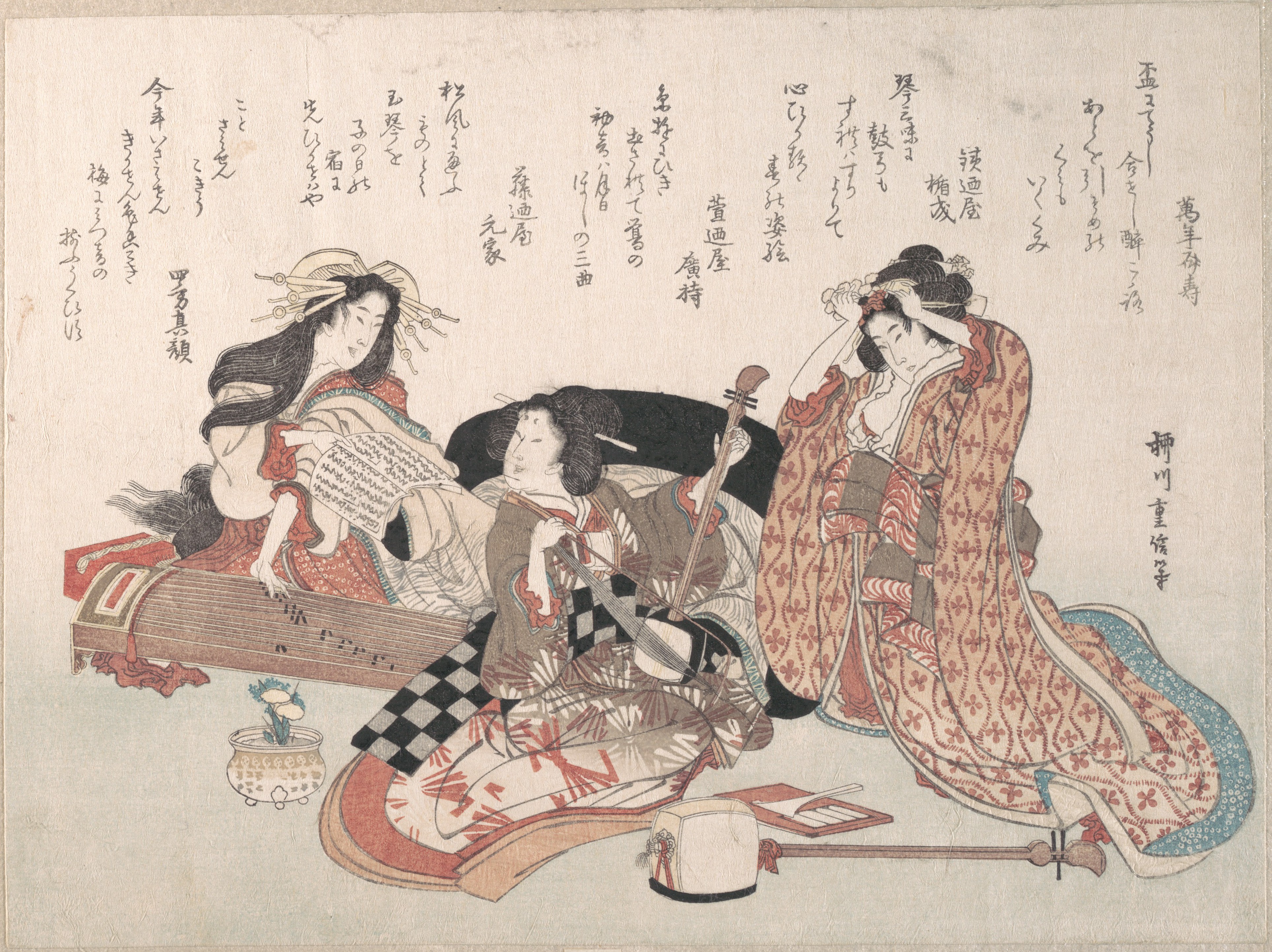
Women Playing Music
19th century
Woodblock print (surimono); ink and color on paper

Dancer in Momijigari, from an untitled series of nerimono festival dancers
c. 1823
Color woodblock print; shikishiban, surimono
Frequently Asked Questions
Scene on the Veranda of a Teahouse was created by Yanagawa Shigenobu (柳川重信) in 18th–19th century.