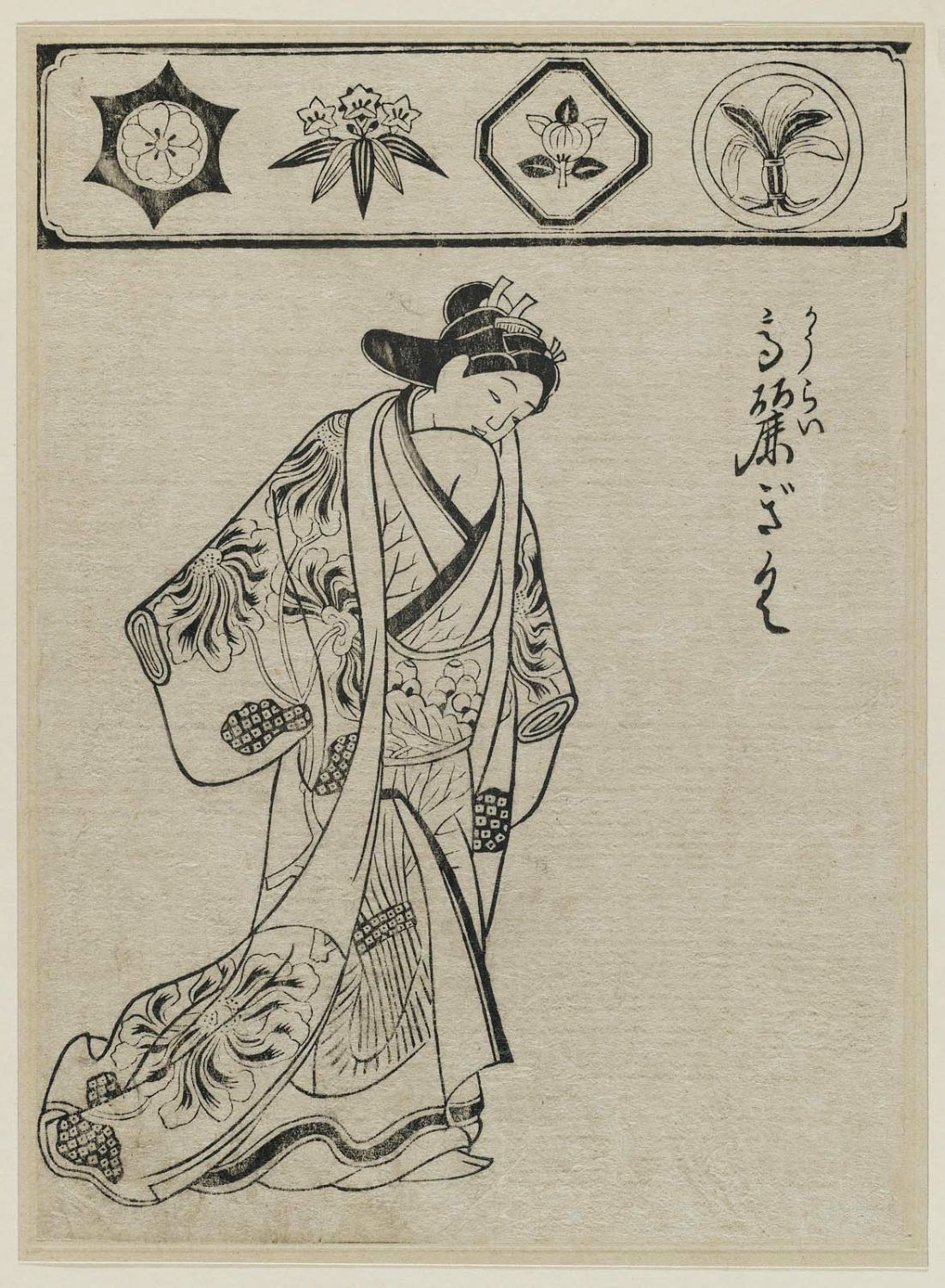
Korean Chrysanthemum Pattern (Koraigiku), from the book Illustrated Encyclopedia for Women (Joyo kinmo zui)
女用訓蒙図彙・高麗菊
- Date:
- 1687
- Medium:
- Woodblock-printed book; ink on paper
- Source:
- Museum of Fine Arts, Boston
Description
Another page from Yoshida Hambei's Joyō kinmō zui (Illustrated Encyclopedia for Women, 1687) showing the Korean chrysanthemum (koraigiku) pattern - a stylised floral motif that became one of the standard textile designs of late seventeenth-century Japanese dress. The koraigiku, derived from earlier Sino-Korean decorative conventions, was an idealised symmetrical chrysanthemum flower with petals arranged in radiating concentric rings; the pattern moved into Japanese textile design through the Korean and Chinese embassies received at the Tokugawa court and through the broader continental decorative vocabulary that supplied Edo merchant culture with much of its luxury repertoire. Hambei's encyclopaedia included extensive pattern reference for textile workshops and for women planning their own kimono purchases - a practical function that made the book a working manual as well as a literary one. Pattern books of this kind were among the most commercially successful publications of the late seventeenth-century Kamigata press, since they served simultaneously as design references for craft workshops and as fashion guides for the consuming public. The Museum of Fine Arts in Boston holds this sheet under accession number 256206, as part of its extensive Japanese book illustration collection. The composition exhibits the controlled monochrome sumi-zuri-e technique of late seventeenth-century Kyoto block-carving and printing, where the elaborate floral pattern was achieved through fine cutting of the single black-line key block.
More Prints by Yoshida Hambei

Mermaid Encounter at Sea, from Ihara Saikaku's Budō denraiki
武道伝来記・人魚
1687
Woodblock-printed book; ink on paper

Sōgenbi, the Fiery Ghost of an Oil-Stealing Monk, from Shin Otogi Bōko
新御伽婢子・宗玄火
1683
Woodblock-printed book; ink on paper
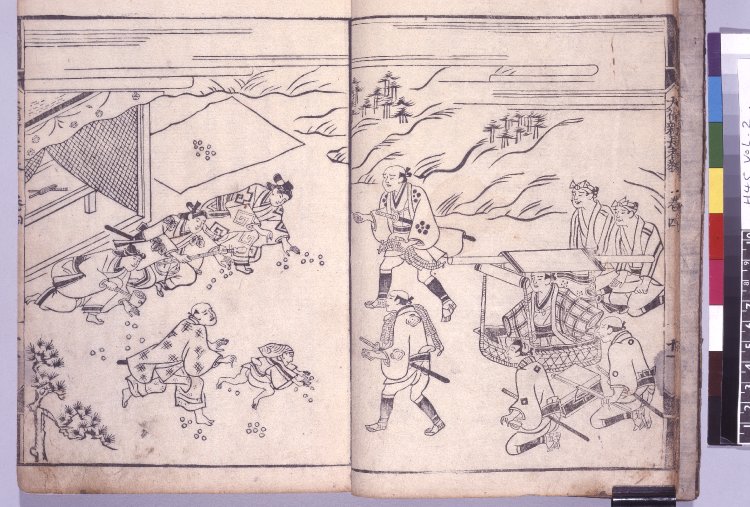
Nihon eitai-gura (Japan's Treasury for the Ages)
日本永代蔵
1688
Woodblock-printed book; ink on paper
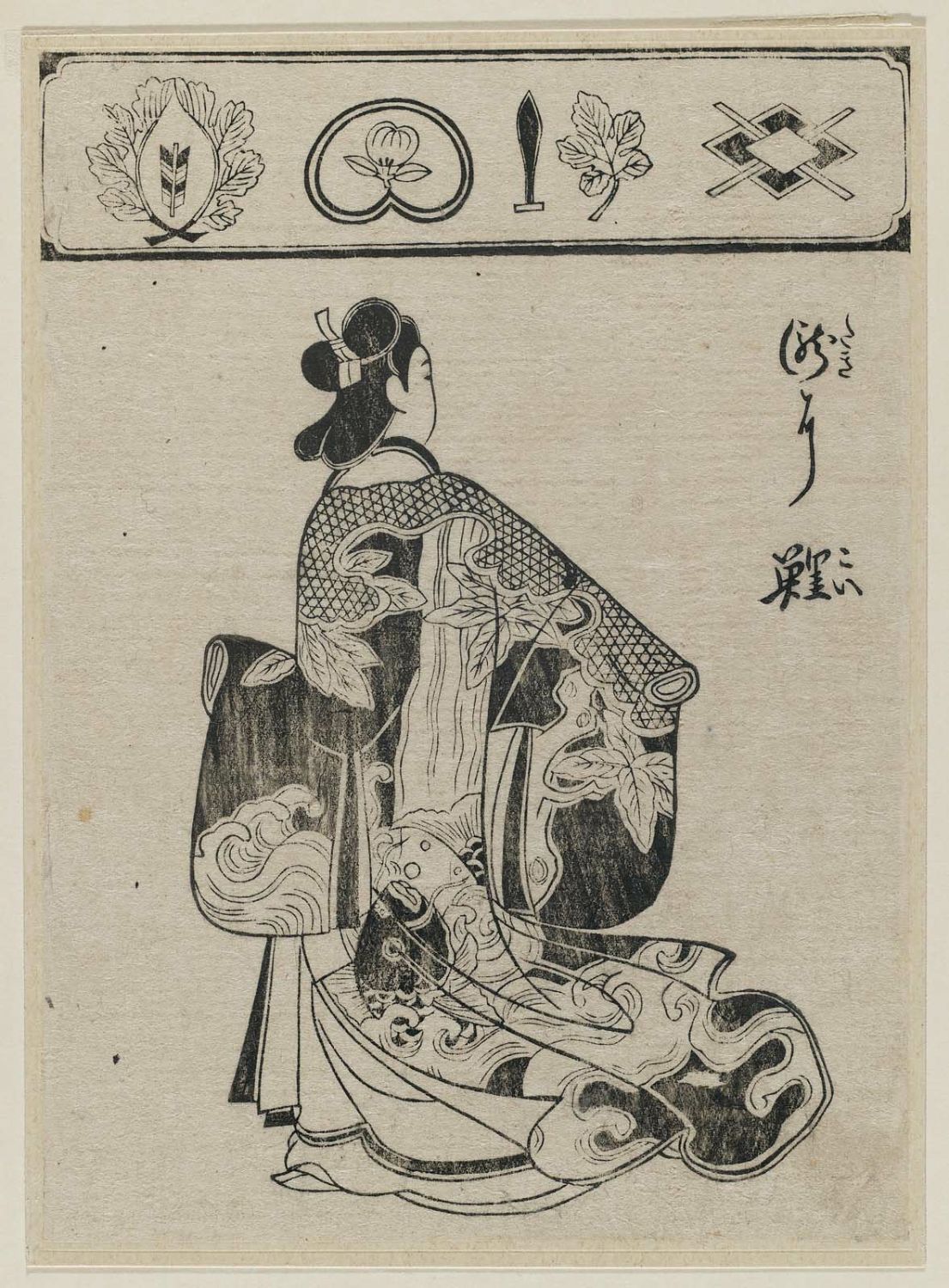
Carp in Waterfall Pattern (Taki ni koi), from the book Illustrated Encyclopedia for Women (Joyo kinmo zui)
女用訓蒙図彙・滝に鯉
1687
Woodblock-printed book; ink on paper
Frequently Asked Questions
Korean Chrysanthemum Pattern (Koraigiku), from the book Illustrated Encyclopedia for Women (Joyo kinmo zui) (女用訓蒙図彙・高麗菊) was created by Yoshida Hambei (吉田半兵衛) in 1687.