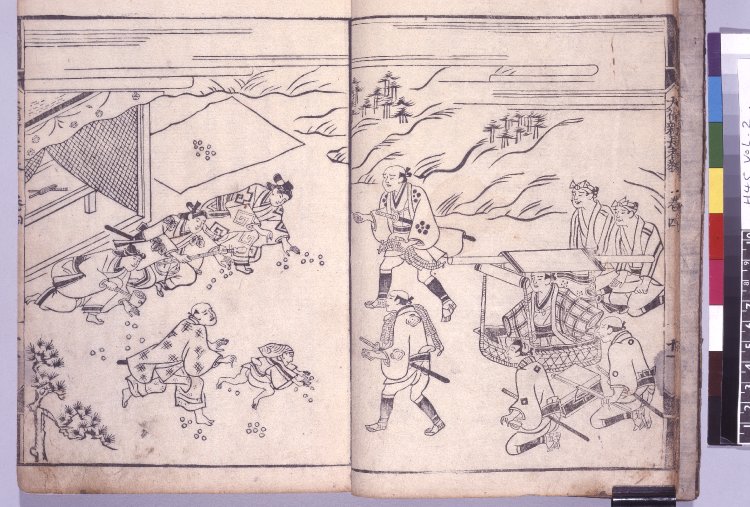
Nihon eitai-gura (Japan's Treasury for the Ages)
日本永代蔵
- Date:
- 1688
- Medium:
- Woodblock-printed book; ink on paper
- Source:
- British Museum
Description
Yoshida Hambei's illustrations for Ihara Saikaku's Nippon eitaigura (Japan's Treasury for the Ages), published in the first month of Jōkyō 5 (1688), are among the foundational visual documents of the seventeenth-century Kamigata commercial revolution. Saikaku's text - thirty short stories in six volumes - chronicles the rise and fall of merchant families in Kyoto, Osaka, and Edo, presenting in vivid narrative form the new social class whose economic ascent had begun to reshape Tokugawa Japan in the decades following the Meireki fire of 1657. The book became one of the most-read works of the chōnin (townsman) literary movement and is regarded today as a key document of early-modern Japanese economic and social history. Hambei's monochrome sumi-zuri-e illustrations - cut by Kyoto block-carvers and printed in the workshops of the publishers Sawada and Mori - place the reader inside the merchant houses and street scenes Saikaku describes: shopkeepers haggling over abacuses, women weaving textiles, families counting their account books, beggars and itinerant peddlers passing in the background. The illustrations supplied seventeenth-century readers with their first sustained visual portrait of the new urban merchant world, and they remain the primary pictorial source for that culture's material life - dress, interior arrangement, business implements, and social hierarchy. The British Museum holds this copy from a multi-volume set, accession number 1979-0305-0-45-1; the Smithsonian's Freer Study Collection holds another complete copy. The composition is typical of Hambei's mature style: a flexible springy contour line, an interest in textile pattern and surface ornament, and a dense pictorial field in which the protagonists share space with subsidiary figures observing the scene.
More Prints by Yoshida Hambei

Mermaid Encounter at Sea, from Ihara Saikaku's Budō denraiki
武道伝来記・人魚
1687
Woodblock-printed book; ink on paper

Sōgenbi, the Fiery Ghost of an Oil-Stealing Monk, from Shin Otogi Bōko
新御伽婢子・宗玄火
1683
Woodblock-printed book; ink on paper
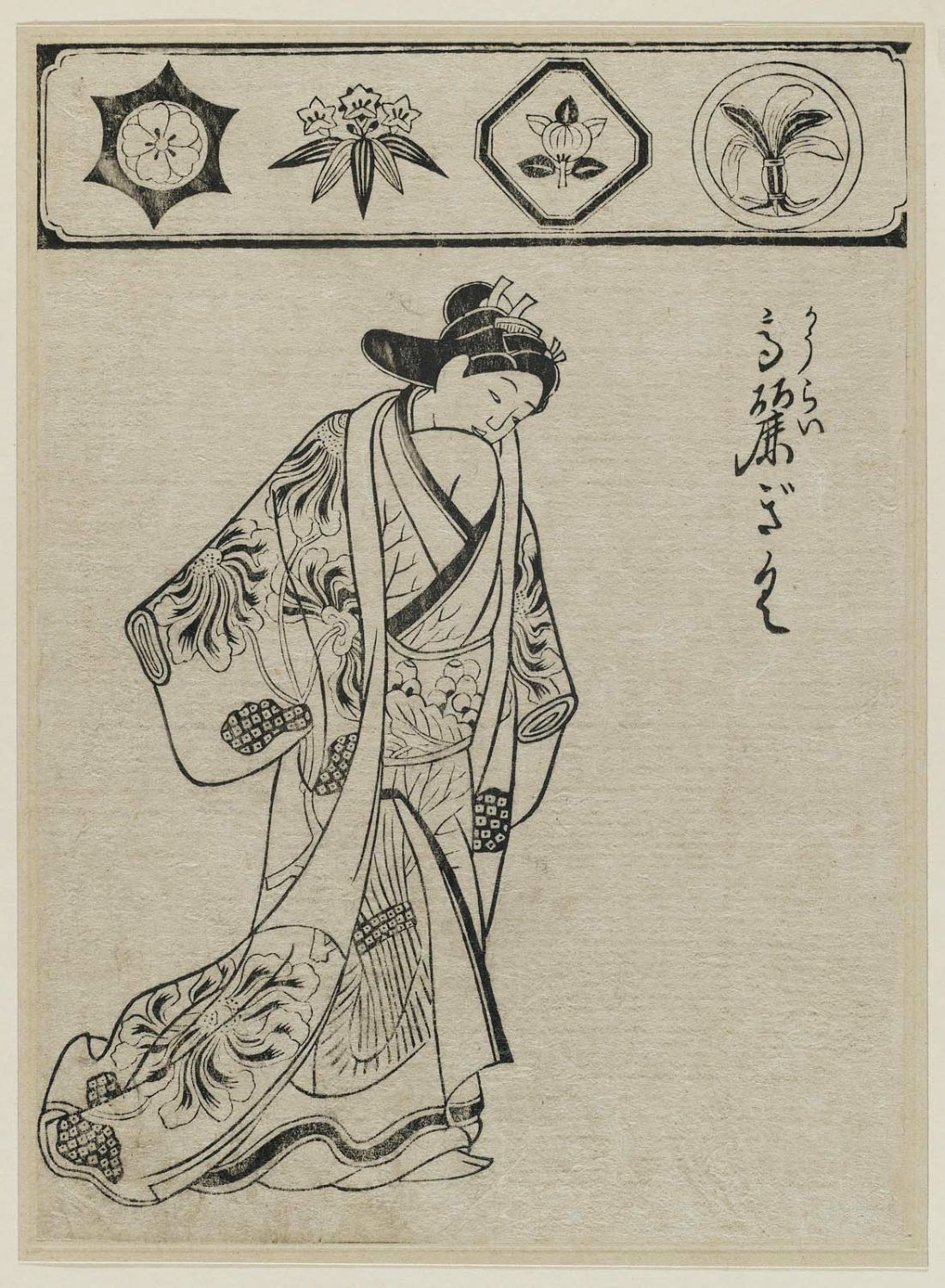
Korean Chrysanthemum Pattern (Koraigiku), from the book Illustrated Encyclopedia for Women (Joyo kinmo zui)
女用訓蒙図彙・高麗菊
1687
Woodblock-printed book; ink on paper
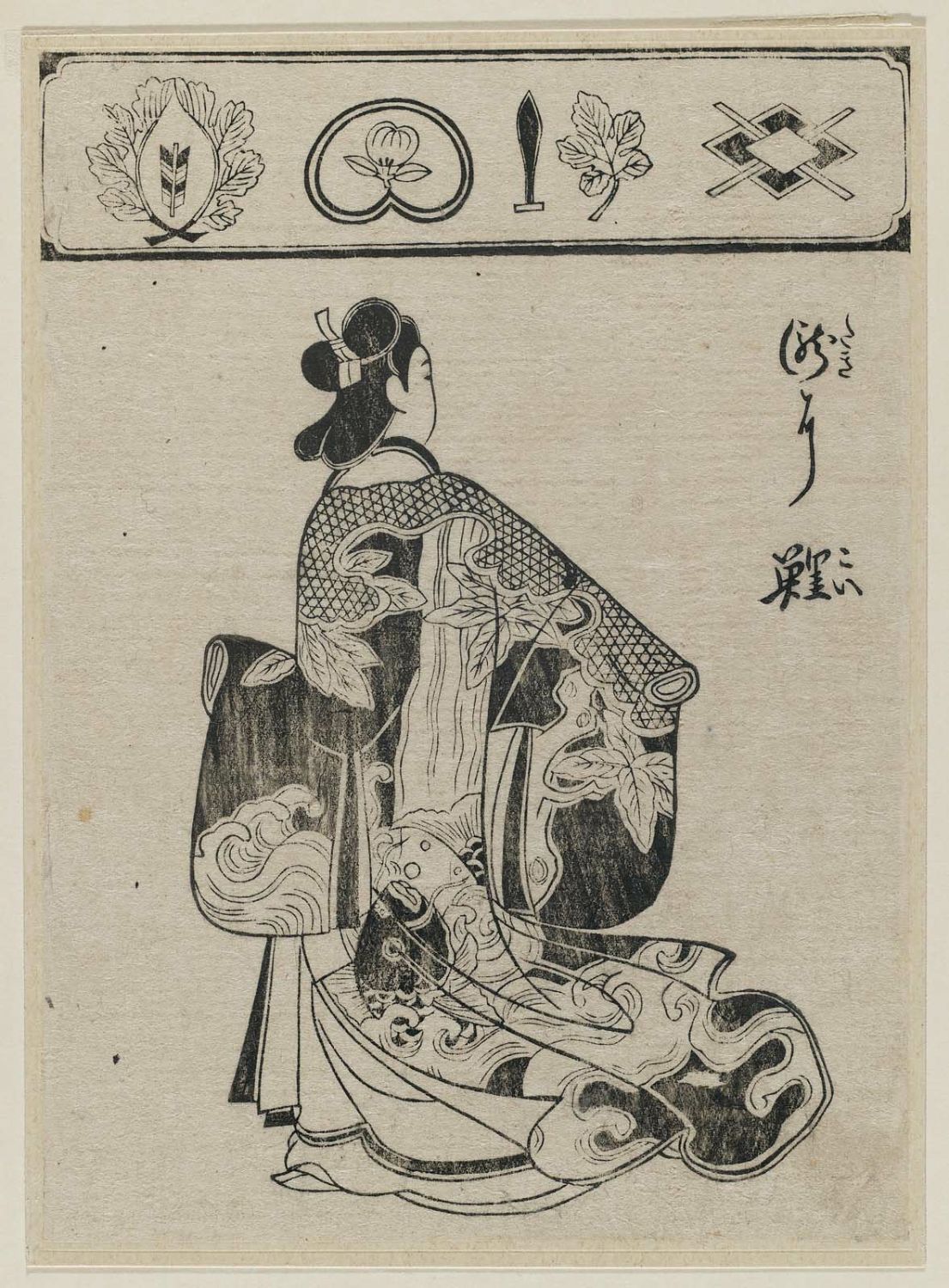
Carp in Waterfall Pattern (Taki ni koi), from the book Illustrated Encyclopedia for Women (Joyo kinmo zui)
女用訓蒙図彙・滝に鯉
1687
Woodblock-printed book; ink on paper
Frequently Asked Questions
Nihon eitai-gura (Japan's Treasury for the Ages) (日本永代蔵) was created by Yoshida Hambei (吉田半兵衛) in 1688.