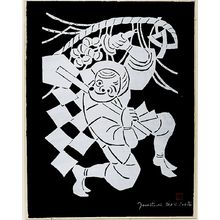
Clown Acrobat
- Medium:
- Woodblock print
- Source:
- Harvard Art Museum
- Image courtesy of
- Harvard Art Museum
Description
This print most likely depicts a Western-style circus or street performer, a subject that entered Japanese visual culture during the Meiji era as foreign entertainments arrived in the major cities. Mori's Nihonbashi upbringing exposed him to such novelties early, and clown and acrobat figures appear in his sosaku-hanga work as emblems of the cosmopolitan, carnivalesque energy of modern Tokyo. The figure is probably rendered with exaggerated costume details — oversized collar, patterned garment, painted features — using bold flat areas of color printed from multiple blocks on washi. As a self-sufficient printmaker who carved his own blocks and pulled his own impressions with a baren, Mori could exploit registration to layer bright, saturated pigments for theatrical effect. The isolated figure format focuses attention on pose and costume rather than narrative context.
More Prints by Yoshitoshi Mori

More Figures Prints
Featured in Collections
Curated cross-cuts that include this print.
Frequently Asked Questions
Clown Acrobat was created by Yoshitoshi Mori (森義利).
Clown Acrobat depicts figures.