Chion-in (知恩院)
4 prints by 4 artists
About Chion-in
Chion-in is a major Buddhist temple complex situated on the foothills of the eastern range of Kyoto in the Higashiyama district, just east of the Yasaka shrine and Maruyama Park, in present-day Higashiyama Ward. The temple was founded in 1234 on the site where the priest Honen (1133-1212) had lived and taught in the late twelfth century, and it serves as the head temple of the Jodo (Pure Land) sect of Japanese Buddhism, one of the largest Buddhist denominations in Japan with millions of adherents across the country. The principal buildings include the enormous Sanmon main gate constructed in 1621 by the second Tokugawa shogun Hidetada in commemoration of the temple's role in his family's religious devotion, standing approximately 24 meters tall and 50 meters wide and one of the largest wooden gates in Japan, the Mieido (Founder's Hall) housing an image of Honen and rebuilt in 1639, the great bell of 1633 weighing approximately seventy tons and one of the largest temple bells in Japan, the Hojo abbot's quarters, the Amida-do, and the smaller Yuzen-en and Hojo gardens. The complex was patronized intensively by the Tokugawa shogunate from the early seventeenth century, when the third shogun Iemitsu provided the resources for the great Sanmon and the renewed main hall, and the temple accumulated significant landholdings and architectural projects across the Edo period. The Mieido was undergoing major reconstruction from 2012 to 2020 and reopened to visitors in stages thereafter. For Japanese printmaking Chion-in appears as one of the canonical Kyoto meisho. Utagawa Hiroshige treated the Sanmon gate and the temple precincts within his Famous Views of Kyoto issued around 1834, including a composition of the gate viewed from the western avenue with figures of pilgrims at its base, and the temple figures in Edo-period guidebook illustrations and printed travel literature on the city. The shin-hanga revival brought renewed treatment, with Kawase Hasui, Tsuchiya Koitsu, and Asano Takeji producing snow, rain, and twilight views of the Sanmon and the approach to the main hall, including memorable Hasui evening compositions in which the great proportions of the gate dominate against a softly modulated sky. Tokuriki Tomikichiro included the temple in his Kyoto-centered creative-print series across several decades, and the postwar Kyoto sosaku-hanga circle treated the temple precincts in various seasonal compositions. The visual character of Chion-in in prints is anchored by the massive proportion of the Sanmon, the steep approach from the western avenue, the temple roofs rising into the wooded slope behind, the bell tower with its great bronze bell, the foreground figures of pilgrims, and the seasonal phenomena of cherry blossom, autumn maple, and snow that frame the structures. The temple is closely associated visually and processionally with the adjacent Maruyama Park and Yasaka Shrine, which form a continuous walking circuit along the Higashiyama base. Contemporary visitors find Chion-in along the standard Higashiyama walking circuit between Maruyama Park and the Heian Shrine, with the great bell still rung in the famous New Year's Eve ceremony of joya no kane in which seventeen monks pull the rope in sequence to strike the bell 108 times to remove worldly desires, an annual broadcast event in Japan that connects the contemporary observance to the long temple tradition.
Prints Depicting Chion-in (4)

Chion Temple, Kyoto, from the series "Collection of Scenic Views of Japan II, Kansai Edition" (Nihon fukei shu II Kansai hen, Kyoto Chionin)
August 1933
Color woodblock print

Chion-in Temple Gate (Romon), from the series Eight Scenes of Cherry Blossoms (Sakura hachidai)
Romon
1935
Color woodblock print

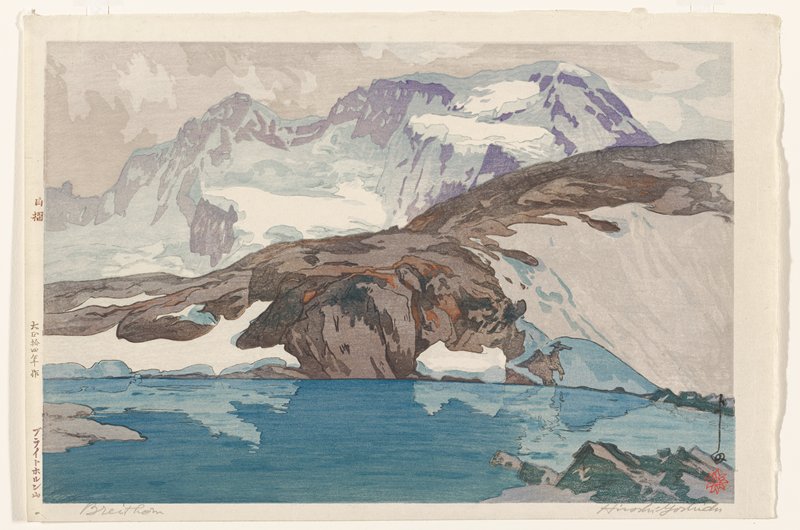
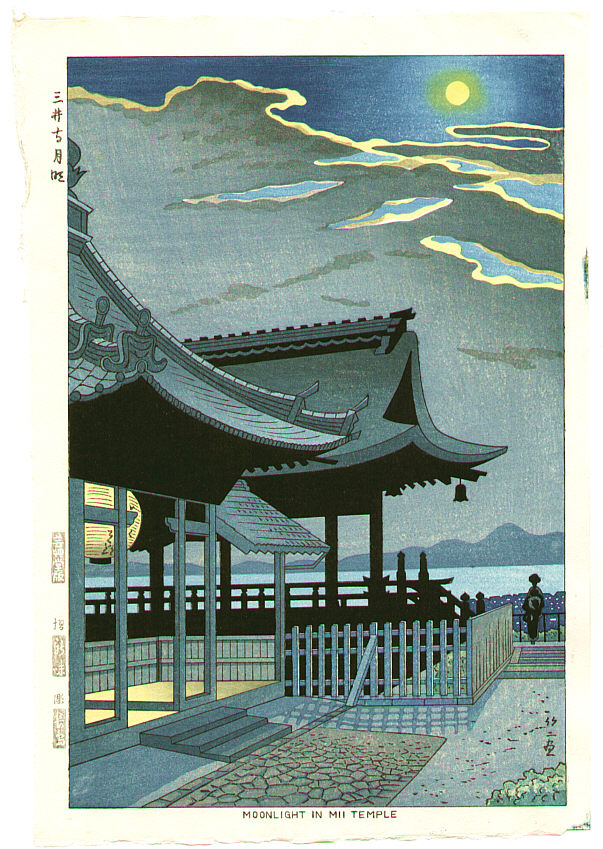
October (The Full-Moon Night at the Gate of the Chionin Monastery)
十月 (知恩院山門月夜)
second half 20th century
Woodblock print, ink and color on paper
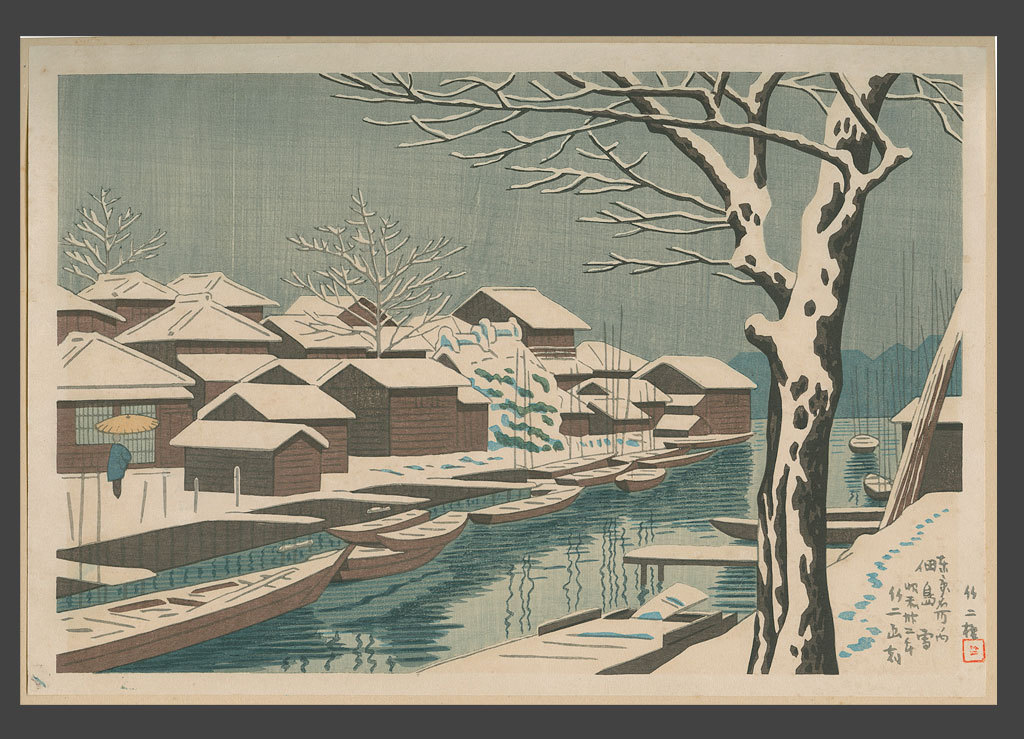
Snow at Chion-in Temple
知恩院雪
ca. 1950s
Woodblock print
Artists Who Depicted Chion-in (4)

Frequently Asked Questions
Chion-in is a major Buddhist temple complex situated on the foothills of the eastern range of Kyoto in the Higashiyama district, just east of the Yasaka shrine and Maruyama Park, in present-day Higashiyama Ward. The temple was founded in 1234 on the site where the priest Honen (1133-1212) had lived and taught in the late twelfth century, and it serves as the head temple of the Jodo (Pure Land) sect of Japanese Buddhism, one of the largest Buddhist denominations in Japan with millions of adherents across the country. The principal buildings include the enormous Sanmon main gate constructed in 1621 by the second Tokugawa shogun Hidetada in commemoration of the temple's role in his family's religious devotion, standing approximately 24 meters tall and 50 meters wide and one of the largest wooden gates in Japan, the Mieido (Founder's Hall) housing an image of Honen and rebuilt in 1639, the great bell of 1633 weighing approximately seventy tons and one of the largest temple bells in Japan, the Hojo abbot's quarters, the Amida-do, and the smaller Yuzen-en and Hojo gardens. The complex was patronized intensively by the Tokugawa shogunate from the early seventeenth century, when the third shogun Iemitsu provided the resources for the great Sanmon and the renewed main hall, and the temple accumulated significant landholdings and architectural projects across the Edo period. The Mieido was undergoing major reconstruction from 2012 to 2020 and reopened to visitors in stages thereafter. For Japanese printmaking Chion-in appears as one of the canonical Kyoto meisho. Utagawa Hiroshige treated the Sanmon gate and the temple precincts within his Famous Views of Kyoto issued around 1834, including a composition of the gate viewed from the western avenue with figures of pilgrims at its base, and the temple figures in Edo-period guidebook illustrations and printed travel literature on the city. The shin-hanga revival brought renewed treatment, with Kawase Hasui, Tsuchiya Koitsu, and Asano Takeji producing snow, rain, and twilight views of the Sanmon and the approach to the main hall, including memorable Hasui evening compositions in which the great proportions of the gate dominate against a softly modulated sky. Tokuriki Tomikichiro included the temple in his Kyoto-centered creative-print series across several decades, and the postwar Kyoto sosaku-hanga circle treated the temple precincts in various seasonal compositions. The visual character of Chion-in in prints is anchored by the massive proportion of the Sanmon, the steep approach from the western avenue, the temple roofs rising into the wooded slope behind, the bell tower with its great bronze bell, the foreground figures of pilgrims, and the seasonal phenomena of cherry blossom, autumn maple, and snow that frame the structures. The temple is closely associated visually and processionally with the adjacent Maruyama Park and Yasaka Shrine, which form a continuous walking circuit along the Higashiyama base. Contemporary visitors find Chion-in along the standard Higashiyama walking circuit between Maruyama Park and the Heian Shrine, with the great bell still rung in the famous New Year's Eve ceremony of joya no kane in which seventeen monks pull the rope in sequence to strike the bell 108 times to remove worldly desires, an annual broadcast event in Japan that connects the contemporary observance to the long temple tradition.
Hanga catalogues 4 prints depicting Chion-in (知恩院), by 4 different artists.
Hiroshi Yoshida, Kawase Hasui, and Takeji Asano are among the 4 artists who depicted Chion-in in our collection.
Want to rate prints from Chion-in?
Sign up to start rating