Gion (祇園)
4 prints by 2 artists
About Gion
Gion is the principal historic entertainment district of Kyoto, situated on the eastern side of the Kamogawa River along the approach to Yasaka Shrine in present-day Higashiyama Ward. The district developed across the medieval and early Edo periods as a temple-and-shrine support town serving Yasaka and the surrounding Higashiyama temples, and by the seventeenth century it had become one of the principal licensed pleasure quarters of Japan, organized around teahouses (ochaya) and theaters serving Kyoto, traveling merchants, and visiting samurai. Gion functioned as the western counterpart to Edo's Yoshiwara in the cultural geography of the licensed quarters, distinguished by its association with the geiko and maiko professional entertainers trained in classical music, dance, conversation, and the tea ceremony, and by the close integration of the quarter into the surrounding temple and theater district. Gion proper today consists of two main subdivisions, Gion Higashi (Higashi-shinchi) and Gion Kobu, which together constitute one of the five remaining hanamachi (flower-and-willow districts) of Kyoto, alongside Pontocho, Kamishichiken, Miyagawa-cho, and Gion Higashi. The Gion Matsuri, held annually in July and centered on Yasaka Shrine, is one of the oldest and most elaborate festivals in Japan, with documented continuous observance from the late ninth century and including the famous Yamaboko Junko parade of decorated floats. The Hanami-koji street and the surrounding Gion district have been preserved through the Kyoto Preservation District for Groups of Traditional Buildings designation, and the wooden machiya facades, tile roofs, and dark-stained timbers of the historic teahouses remain visible along the principal streets. For Japanese printmaking Gion appears across the meisho-e and bijinga traditions. Utagawa Hiroshige treated the district in his Famous Views of Kyoto issued around 1834, including views of the Gion approach to Yasaka Shrine and the festival, and the bijinga of the late Edo period treated Kyoto teahouse women as a counterpart to the Yoshiwara subjects of Utamaro and Eishi. Hasegawa Sadanobu I and II of the Osaka kamigata school produced Kansai-region sheets that include Gion subjects, and the Meiji-period kaika-e treated the modernizing Gion district under gas lamps and the new electrical infrastructure. The shin-hanga revival brought a sustained engagement with the district, with Kawase Hasui producing celebrated night and snow views of the Gion lanterns, the Hanami-koji street, the Shirakawa stream that runs through the quarter, the Tatsumi Bridge, and the small Tatsumi Daimyojin shrine of the maiko district, and Tsuchiya Koitsu, Asano Takeji, Yoshida Hiroshi, and Tokuriki Tomikichiro contributing further Gion compositions. The bijinga of Ito Shinsui, Kawase Hasui's portraits, and the maiko sheets of Yamakawa Shuho and Iwata Sentaro included Kyoto maiko alongside Tokyo subjects. The visual character of Gion in prints is built on lantern-lit wooden machiya facades, dark willow trees over the Shirakawa, the silhouettes of maiko in seasonal kimono with their distinctive hairstyles and hairpins, the dark wooden lattices and curtained entrances of the teahouses, and frequently rain, snow, or lit windows at dusk providing atmospheric depth. Contemporary Gion preserves substantial portions of its historic streetscape in the Hanami-koji and Shirakawa areas, designated as a Preservation District, with the Yasaka Shrine, the Minamiza kabuki theater, and the Gion Corner cultural performance hall anchoring the district, the Gion Matsuri continuing each July, and the maiko and geiko of the surviving okiya houses appearing on the streets at dusk for engagements at the local teahouses.
Prints Depicting Gion (4)

Gion Bridge at Hondo Amakusa, (Amakusa Hondo Gion-bashi), from the series "Selction of Views of Japan (Nihon fukei senshu)"
Amakusa Hondo Gion-bashi
1924
Color woodblock print; oban
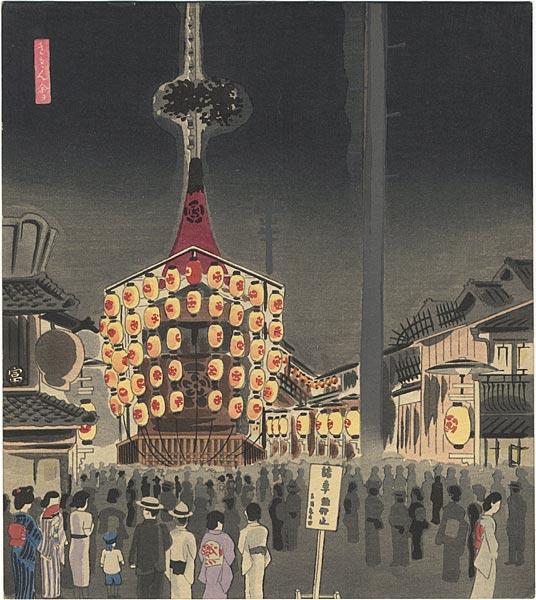
Gion Festival
Woodblock print

July (Gorgeous Procession of Yama-hoko or the Floats at the Gion Festival)
七月 (祇園祭山鉾巡行)
second half 20th century
Woodblock print, ink and color on paper

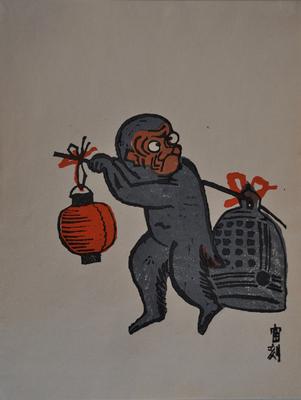
May (The Pagoda of Yasaka near Gion)
五月 (祇園八坂の塔)
second half 20th century
Woodblock print, ink and color on paper
Artists Who Depicted Gion (2)

Frequently Asked Questions
Gion is the principal historic entertainment district of Kyoto, situated on the eastern side of the Kamogawa River along the approach to Yasaka Shrine in present-day Higashiyama Ward. The district developed across the medieval and early Edo periods as a temple-and-shrine support town serving Yasaka and the surrounding Higashiyama temples, and by the seventeenth century it had become one of the principal licensed pleasure quarters of Japan, organized around teahouses (ochaya) and theaters serving Kyoto, traveling merchants, and visiting samurai. Gion functioned as the western counterpart to Edo's Yoshiwara in the cultural geography of the licensed quarters, distinguished by its association with the geiko and maiko professional entertainers trained in classical music, dance, conversation, and the tea ceremony, and by the close integration of the quarter into the surrounding temple and theater district. Gion proper today consists of two main subdivisions, Gion Higashi (Higashi-shinchi) and Gion Kobu, which together constitute one of the five remaining hanamachi (flower-and-willow districts) of Kyoto, alongside Pontocho, Kamishichiken, Miyagawa-cho, and Gion Higashi. The Gion Matsuri, held annually in July and centered on Yasaka Shrine, is one of the oldest and most elaborate festivals in Japan, with documented continuous observance from the late ninth century and including the famous Yamaboko Junko parade of decorated floats. The Hanami-koji street and the surrounding Gion district have been preserved through the Kyoto Preservation District for Groups of Traditional Buildings designation, and the wooden machiya facades, tile roofs, and dark-stained timbers of the historic teahouses remain visible along the principal streets. For Japanese printmaking Gion appears across the meisho-e and bijinga traditions. Utagawa Hiroshige treated the district in his Famous Views of Kyoto issued around 1834, including views of the Gion approach to Yasaka Shrine and the festival, and the bijinga of the late Edo period treated Kyoto teahouse women as a counterpart to the Yoshiwara subjects of Utamaro and Eishi. Hasegawa Sadanobu I and II of the Osaka kamigata school produced Kansai-region sheets that include Gion subjects, and the Meiji-period kaika-e treated the modernizing Gion district under gas lamps and the new electrical infrastructure. The shin-hanga revival brought a sustained engagement with the district, with Kawase Hasui producing celebrated night and snow views of the Gion lanterns, the Hanami-koji street, the Shirakawa stream that runs through the quarter, the Tatsumi Bridge, and the small Tatsumi Daimyojin shrine of the maiko district, and Tsuchiya Koitsu, Asano Takeji, Yoshida Hiroshi, and Tokuriki Tomikichiro contributing further Gion compositions. The bijinga of Ito Shinsui, Kawase Hasui's portraits, and the maiko sheets of Yamakawa Shuho and Iwata Sentaro included Kyoto maiko alongside Tokyo subjects. The visual character of Gion in prints is built on lantern-lit wooden machiya facades, dark willow trees over the Shirakawa, the silhouettes of maiko in seasonal kimono with their distinctive hairstyles and hairpins, the dark wooden lattices and curtained entrances of the teahouses, and frequently rain, snow, or lit windows at dusk providing atmospheric depth. Contemporary Gion preserves substantial portions of its historic streetscape in the Hanami-koji and Shirakawa areas, designated as a Preservation District, with the Yasaka Shrine, the Minamiza kabuki theater, and the Gion Corner cultural performance hall anchoring the district, the Gion Matsuri continuing each July, and the maiko and geiko of the surviving okiya houses appearing on the streets at dusk for engagements at the local teahouses.
Hanga catalogues 4 prints depicting Gion (祇園), by 2 different artists.
Kawase Hasui and Tomikichiro Tokuriki are among the 2 artists who depicted Gion in our collection.
Want to rate prints from Gion?
Sign up to start rating