Yokohama (横浜)
8 prints by 5 artists
About Yokohama
Yokohama is a city on the western shore of Tokyo Bay, the principal city of Kanagawa Prefecture and the second largest city in Japan by population. The city was a small fishing village called Yokohama-mura across the Edo period, with approximately one hundred families, but it was selected in 1858-1859 as the principal foreign treaty port for the Kanto region under the Ansei Treaties (the Japan-United States Treaty of Amity and Commerce of 1858 being the principal document), opening formally on 1 July 1859, and across the subsequent decades it grew rapidly as the principal point of foreign mercantile activity in eastern Japan. The selection of Yokohama, on a fishing-village site adjacent to the larger town of Kanagawa-juku on the Tokaido, was made by the Tokugawa shogunate as a strategy to physically separate the foreign settlement from the existing Japanese town and from the principal east-west traffic on the Tokaido. The original foreign settlement was concentrated in the Kannai district along the harbor, with the Yamate (Bluff) hill to the south occupied by Western-style residences and consulates, and the surrounding districts developing rapidly as a working port and industrial city. Yokohama was one of the principal sources of Yokohama-e, a category of late Edo and early Meiji prints depicting foreigners, foreign ships, foreign architecture, and foreign customs as observed in the new treaty port. The Yokohama-e genre flourished from approximately 1860 to 1880, with Utagawa Yoshikazu, Utagawa Hiroshige III (also known as Andokichi or Shigemasa), Utagawa Yoshitora, Hashimoto Sadahide, Utagawa Yoshitoshi, and Tsukioka Yoshitoshi all producing notable Yokohama subjects. The prints functioned both as documentary records of the new foreign presence and as objects of curiosity for Japanese viewers nationwide, who could see images of Western ships, locomotives, soldiers in uniform, the dress and customs of the foreigners, and exotic foreign animals such as elephants and giraffes only through these woodblock sheets. Hashimoto Sadahide's eight-sheet Yokohama Trade Picture (Yokohama Kaiko Kenmon Shi) of 1862 stands as one of the most ambitious treatments of the new port. Yokohama was substantially destroyed in the 1923 Great Kanto Earthquake, which leveled most of the original Yokohama-e era foreign settlement, and again in the air raids of 1945, with the original Yokohama-e era settlement preserved only in fragments in the present Motomachi and Kannai districts. For Japanese printmaking Yokohama is significant both as the subject of the Yokohama-e genre and as a subject of the later shin-hanga and sosaku-hanga periods. Kawase Hasui produced harbor and city views of Yokohama in his Tokyo-area compositions, and the One Hundred Views of New Tokyo project of 1928-1932 treated Yokohama subjects within its broader survey of the modernizing metropolitan region. The Meiji-period kaika-e of Kobayashi Kiyochika treated Yokohama subjects in his early career. The visual character of Yokohama in prints is built on the harbor with its ships and warehouses, the brick and stone Western-style buildings of the central district, the foreign costume and dress of the original Yokohama-e prints, the wide variety of foreign nationals depicted (including American, British, French, Dutch, Russian, and Chinese figures), the exotic animals brought into the harbor for foreign menageries, and the seasonal and atmospheric phenomena of the maritime climate. The Yokohama-e prints typically arrange foreign subjects in heavily ornamented bordered designs distinct from the conventional Edo print format, often with extensive printed text describing the customs being depicted. Contemporary Yokohama preserves significant portions of the Motomachi shopping street, the Yamate foreign residences (a number of which operate as historical house museums), the Yokohama Customs House, the Aka Renga (Red Brick Warehouse) district, and the surrounding Minato Mirai harbor district as the principal pictorial heritage of the city, with the Kanagawa Prefectural Museum of Cultural History holding significant Yokohama-e collections.
Prints Depicting Yokohama (8)

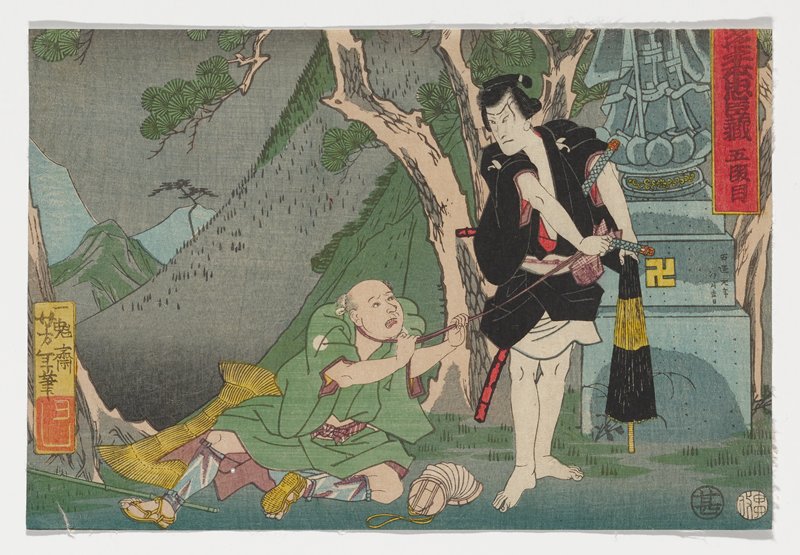
Bushu Yokohama Gankiro 武州横浜岩亀楼 / Shokoku meisho hyakkei 諸国名所百景
Woodblock print
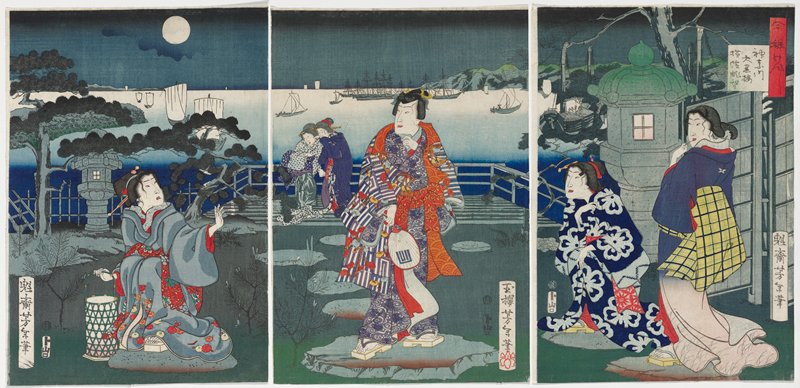
Distant view of Yokohama from the Daikokurō Restaurant at Kanagawa
1864, 5th lunar month
Woodblock print (nishiki-e), ink and color on paper
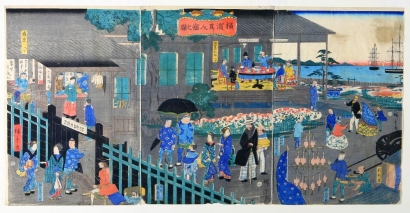
Picture of a Foreign Building in Yokohama, dated 1861
Woodblock print

Picture of a Mercantile Establishment in Yokohama, 1861
Woodblock print
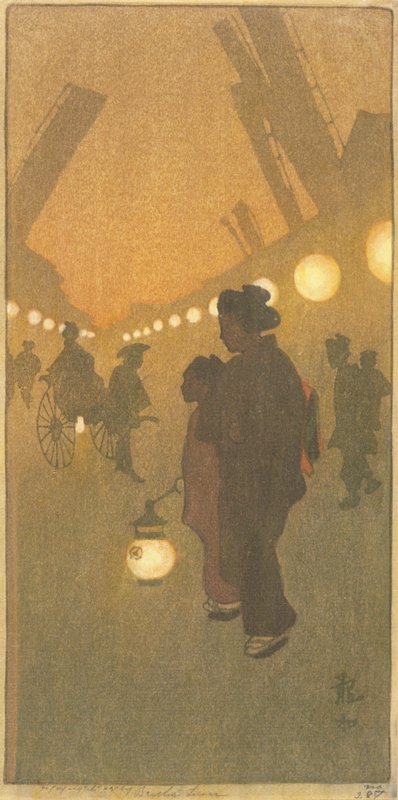
Theatre Street, Yokohama
1909
Color woodcut
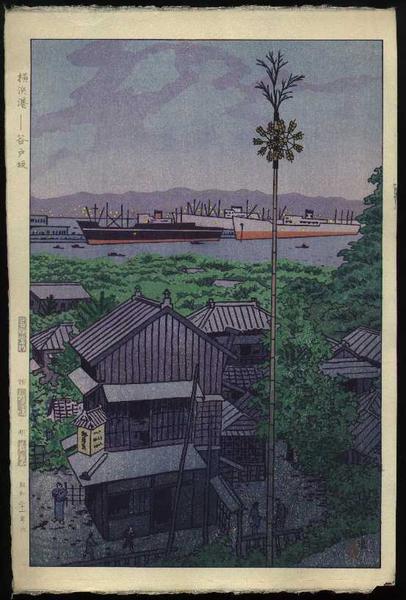
Yatozaka in Yokohama
Woodblock print

Yokohama
1962
Woodblock print, ink and color on paper
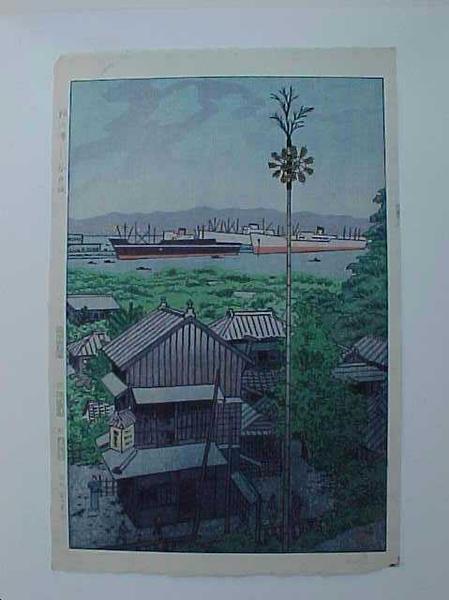
Yokohama Harbor
Woodblock print
Artists Who Depicted Yokohama (5)


Frequently Asked Questions
Yokohama is a city on the western shore of Tokyo Bay, the principal city of Kanagawa Prefecture and the second largest city in Japan by population. The city was a small fishing village called Yokohama-mura across the Edo period, with approximately one hundred families, but it was selected in 1858-1859 as the principal foreign treaty port for the Kanto region under the Ansei Treaties (the Japan-United States Treaty of Amity and Commerce of 1858 being the principal document), opening formally on 1 July 1859, and across the subsequent decades it grew rapidly as the principal point of foreign mercantile activity in eastern Japan. The selection of Yokohama, on a fishing-village site adjacent to the larger town of Kanagawa-juku on the Tokaido, was made by the Tokugawa shogunate as a strategy to physically separate the foreign settlement from the existing Japanese town and from the principal east-west traffic on the Tokaido. The original foreign settlement was concentrated in the Kannai district along the harbor, with the Yamate (Bluff) hill to the south occupied by Western-style residences and consulates, and the surrounding districts developing rapidly as a working port and industrial city. Yokohama was one of the principal sources of Yokohama-e, a category of late Edo and early Meiji prints depicting foreigners, foreign ships, foreign architecture, and foreign customs as observed in the new treaty port. The Yokohama-e genre flourished from approximately 1860 to 1880, with Utagawa Yoshikazu, Utagawa Hiroshige III (also known as Andokichi or Shigemasa), Utagawa Yoshitora, Hashimoto Sadahide, Utagawa Yoshitoshi, and Tsukioka Yoshitoshi all producing notable Yokohama subjects. The prints functioned both as documentary records of the new foreign presence and as objects of curiosity for Japanese viewers nationwide, who could see images of Western ships, locomotives, soldiers in uniform, the dress and customs of the foreigners, and exotic foreign animals such as elephants and giraffes only through these woodblock sheets. Hashimoto Sadahide's eight-sheet Yokohama Trade Picture (Yokohama Kaiko Kenmon Shi) of 1862 stands as one of the most ambitious treatments of the new port. Yokohama was substantially destroyed in the 1923 Great Kanto Earthquake, which leveled most of the original Yokohama-e era foreign settlement, and again in the air raids of 1945, with the original Yokohama-e era settlement preserved only in fragments in the present Motomachi and Kannai districts. For Japanese printmaking Yokohama is significant both as the subject of the Yokohama-e genre and as a subject of the later shin-hanga and sosaku-hanga periods. Kawase Hasui produced harbor and city views of Yokohama in his Tokyo-area compositions, and the One Hundred Views of New Tokyo project of 1928-1932 treated Yokohama subjects within its broader survey of the modernizing metropolitan region. The Meiji-period kaika-e of Kobayashi Kiyochika treated Yokohama subjects in his early career. The visual character of Yokohama in prints is built on the harbor with its ships and warehouses, the brick and stone Western-style buildings of the central district, the foreign costume and dress of the original Yokohama-e prints, the wide variety of foreign nationals depicted (including American, British, French, Dutch, Russian, and Chinese figures), the exotic animals brought into the harbor for foreign menageries, and the seasonal and atmospheric phenomena of the maritime climate. The Yokohama-e prints typically arrange foreign subjects in heavily ornamented bordered designs distinct from the conventional Edo print format, often with extensive printed text describing the customs being depicted. Contemporary Yokohama preserves significant portions of the Motomachi shopping street, the Yamate foreign residences (a number of which operate as historical house museums), the Yokohama Customs House, the Aka Renga (Red Brick Warehouse) district, and the surrounding Minato Mirai harbor district as the principal pictorial heritage of the city, with the Kanagawa Prefectural Museum of Cultural History holding significant Yokohama-e collections.
Hanga catalogues 8 prints depicting Yokohama (横浜), by 5 different artists.
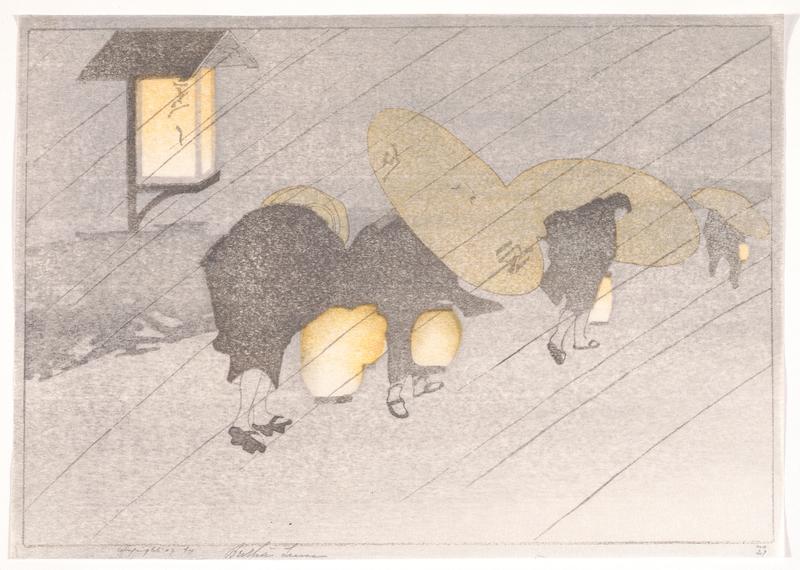
Bertha Lum, Shiro Kasamatsu, and Sumio Kawakami are among the 5 artists who depicted Yokohama in our collection.
Want to rate prints from Yokohama?
Sign up to start rating