Bijin-ga Prints (1084)
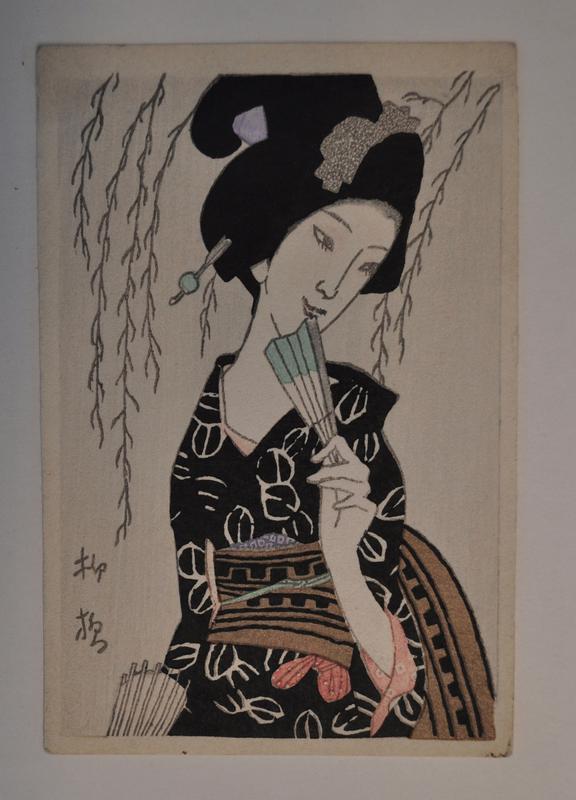
Bijin-ga — literally "pictures of beautiful people" — is one of the foundational genres of Japanese woodblock printmaking. The tradition dates to the earliest days of ukiyo-e, when artists like Hishikawa Moronobu and later Kitagawa Utamaro elevated portrayals of women from simple illustrations to sophisticated studies of beauty, fashion, and personality. Utamaro's bust portraits of the 1790s, which isolated individual faces against plain backgrounds, were revolutionary in their psychological depth and compositional daring. His contemporaries Chobunsai Eishi and Torii Kiyonaga developed complementary approaches, emphasizing graceful full-length figures in elaborate settings. The genre documented the changing ideals of feminine beauty across centuries, from the rounded features favored in the Edo period to the elongated elegance of the Meiji era. The shin-hanga revival of the early twentieth century produced a final flowering of bijin-ga, with artists like Ito Shinsui, Torii Kotondo, and Hashiguchi Goyo creating some of the genre's most refined works. These artists brought Western-influenced light and shadow to traditional subjects, producing prints that are among the most sought-after in the Japanese print market today. Bijin-ga prints are prized for their technical virtuosity, particularly the rendering of fabric patterns, hair arrangements, and subtle skin tones achieved through multiple woodblock impressions.
Artists Known for Bijin-ga

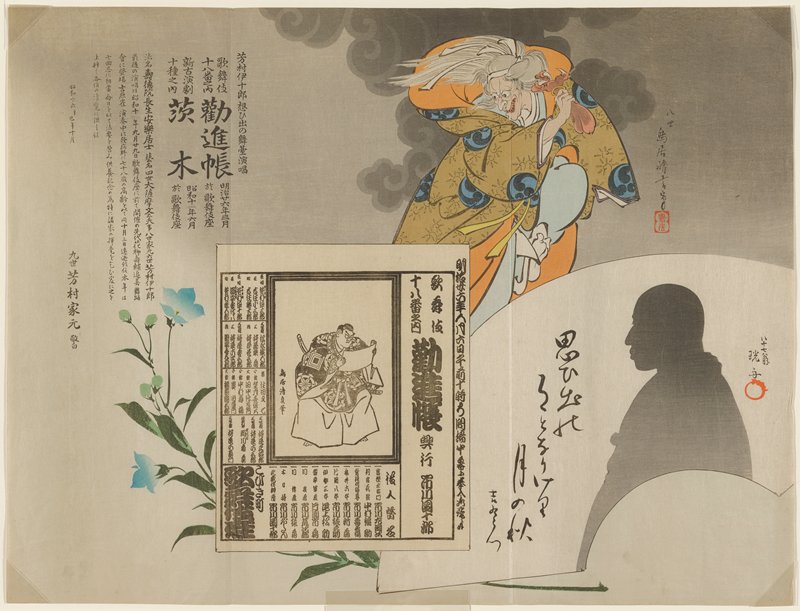


Hidematsu, Yasokichi, Izukiyo of the Otsuya (Otsuya uchi Hidematsu, Yasokichi, Izukiyo), from the series "Female Geisha Section of the Yoshiwara Niwaka Festival (Seiro niwaka onna geisha no bu)"
1783
Color woodblock print; oban
Yūgiri and Izaemon, from the series Tailored Journeys of Couple's Crests (Hiyoku mon michiyuki shitate)
early 19th century
Woodblock print (nishiki-e); ink and color on paper

Geisha Style (geisha fū) from the series Guide to Contemporary Styles (Tōsei fūzoku tsū)
1801
Color woodblock print; oban
Kayoi, from the series Seven Beautiful Women (Fūryū nana komachi)
Late Edo period, late 18th to early 19th century
Ukiyo-e woodblock print in "ōban" format; ink and color on paper, with printed signature reading "Utamaro hitsu"
Related Subjects
Frequently Asked Questions
Bijin-ga — literally "pictures of beautiful people" — is one of the foundational genres of Japanese woodblock printmaking. The tradition dates to the earliest days of ukiyo-e, when artists like Hishikawa Moronobu and later Kitagawa Utamaro elevated portrayals of women from simple illustrations to sophisticated studies of beauty, fashion, and personality.
Hashiguchi Goyo, Torii Kotondo, and Takehisa Yumeji are among the artists most associated with bijin-ga in our collection. Browse the full list of artists who explored this subject above.
Hanga currently catalogues 1084 prints tagged with bijin-ga, spanning ukiyo-e, shin-hanga, and sōsaku-hanga traditions where applicable.