Bijin-ga Prints (1084)
Bijin-ga — literally "pictures of beautiful people" — is one of the foundational genres of Japanese woodblock printmaking. The tradition dates to the earliest days of ukiyo-e, when artists like Hishikawa Moronobu and later Kitagawa Utamaro elevated portrayals of women from simple illustrations to sophisticated studies of beauty, fashion, and personality. Utamaro's bust portraits of the 1790s, which isolated individual faces against plain backgrounds, were revolutionary in their psychological depth and compositional daring. His contemporaries Chobunsai Eishi and Torii Kiyonaga developed complementary approaches, emphasizing graceful full-length figures in elaborate settings. The genre documented the changing ideals of feminine beauty across centuries, from the rounded features favored in the Edo period to the elongated elegance of the Meiji era. The shin-hanga revival of the early twentieth century produced a final flowering of bijin-ga, with artists like Ito Shinsui, Torii Kotondo, and Hashiguchi Goyo creating some of the genre's most refined works. These artists brought Western-influenced light and shadow to traditional subjects, producing prints that are among the most sought-after in the Japanese print market today. Bijin-ga prints are prized for their technical virtuosity, particularly the rendering of fabric patterns, hair arrangements, and subtle skin tones achieved through multiple woodblock impressions.
Artists Known for Bijin-ga



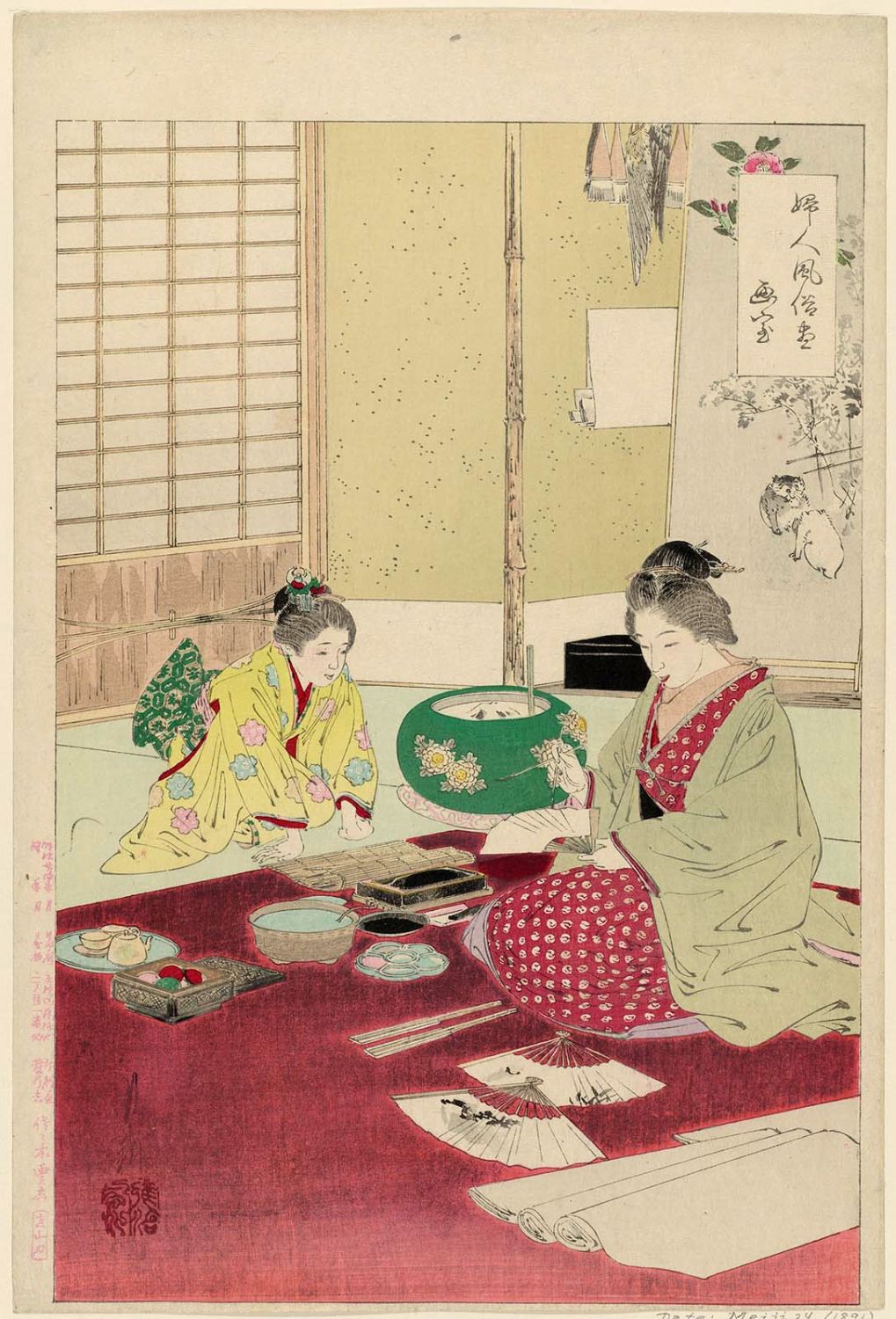
Painting Studio (Gashitsu), from the series Comparison of the Customs of Beauties (Bijin fûzoku awase)
Woodblock print
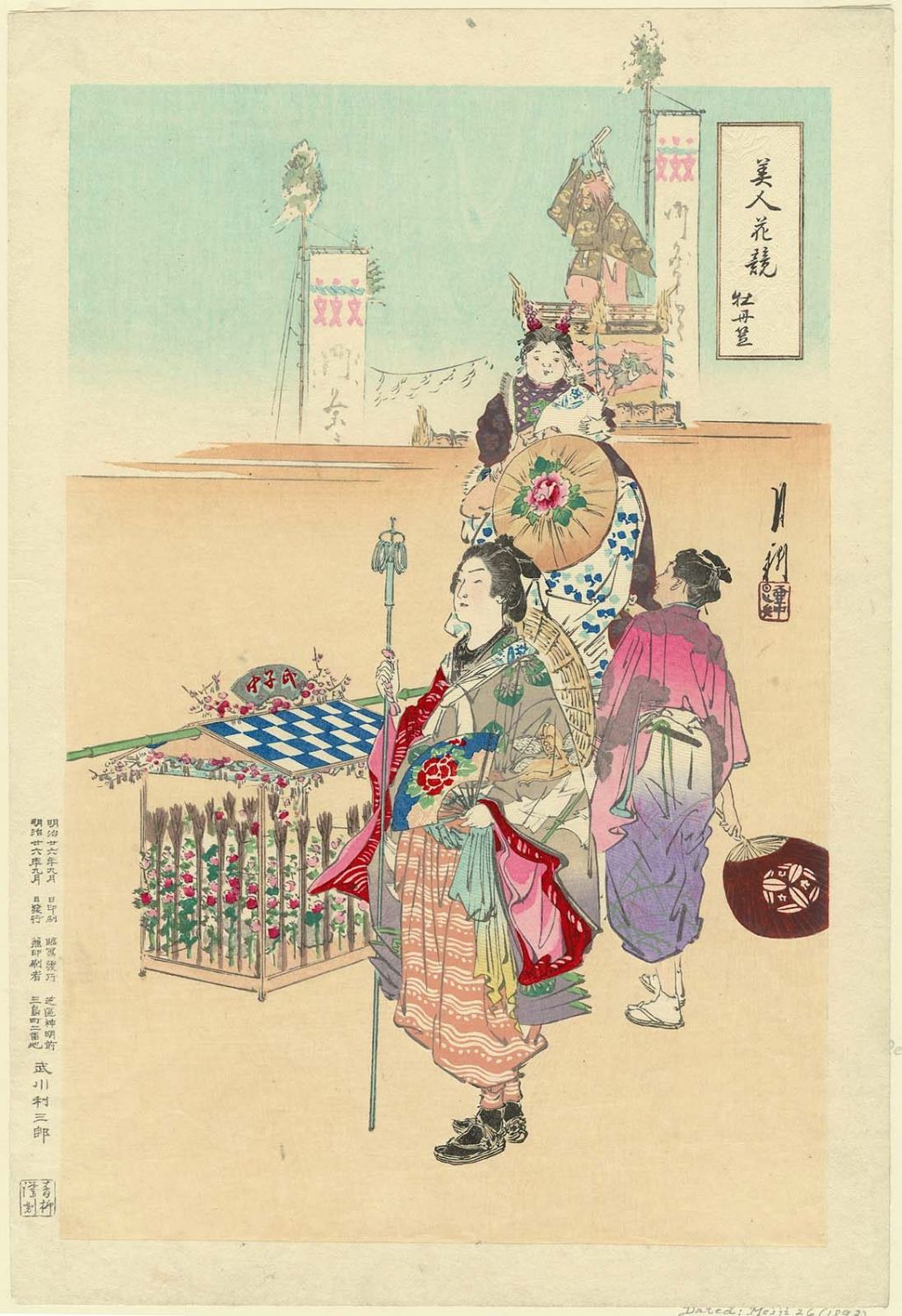
Peony Hat (Botan-gasa), from the series Beauties Matched with Flowers (Bijin hana kurabe)
Woodblock print
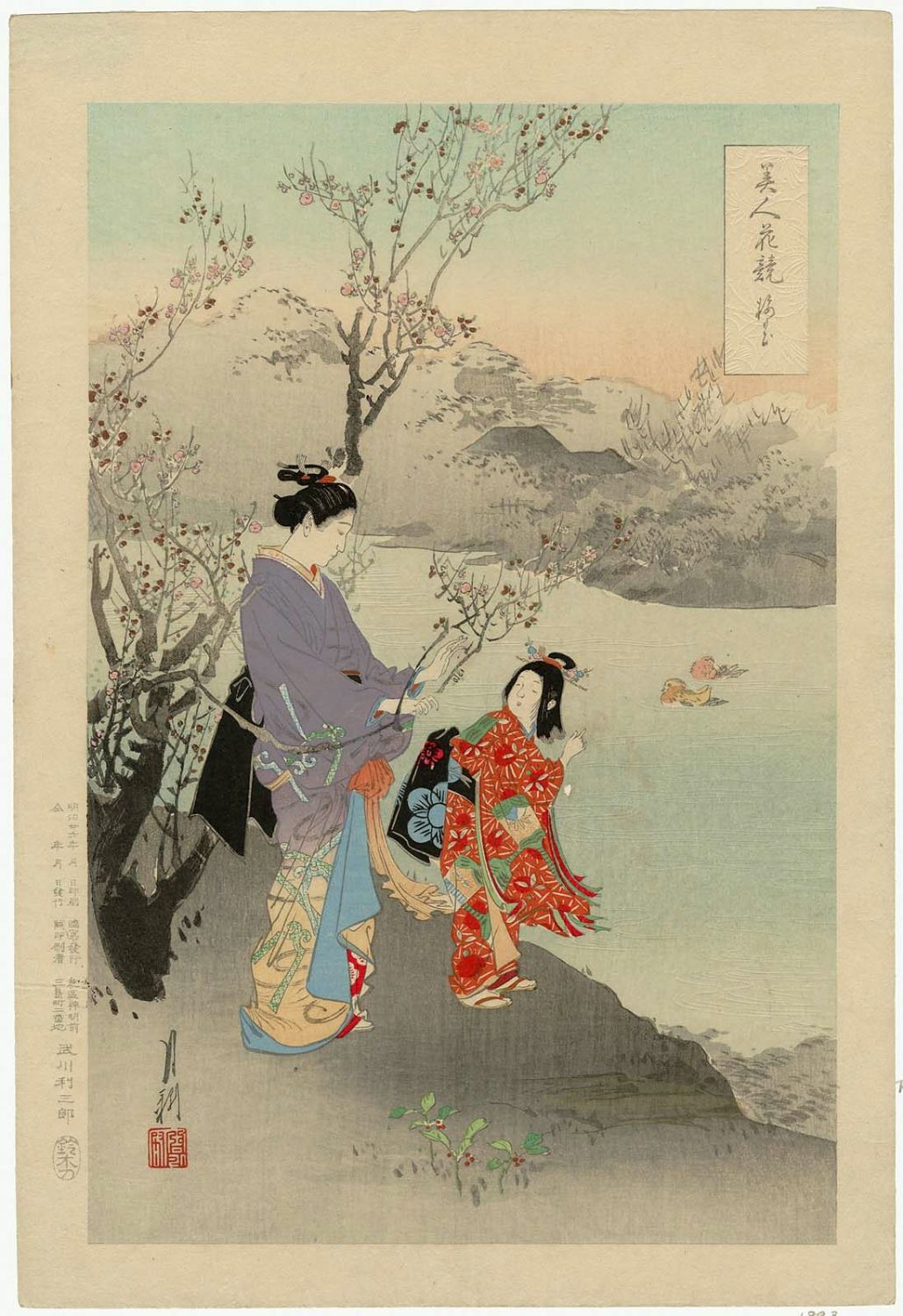
Plum Blossoms (Ume no hana), from the series Beauties Matched with Flowers (Bijin hana kurabe)
Woodblock print
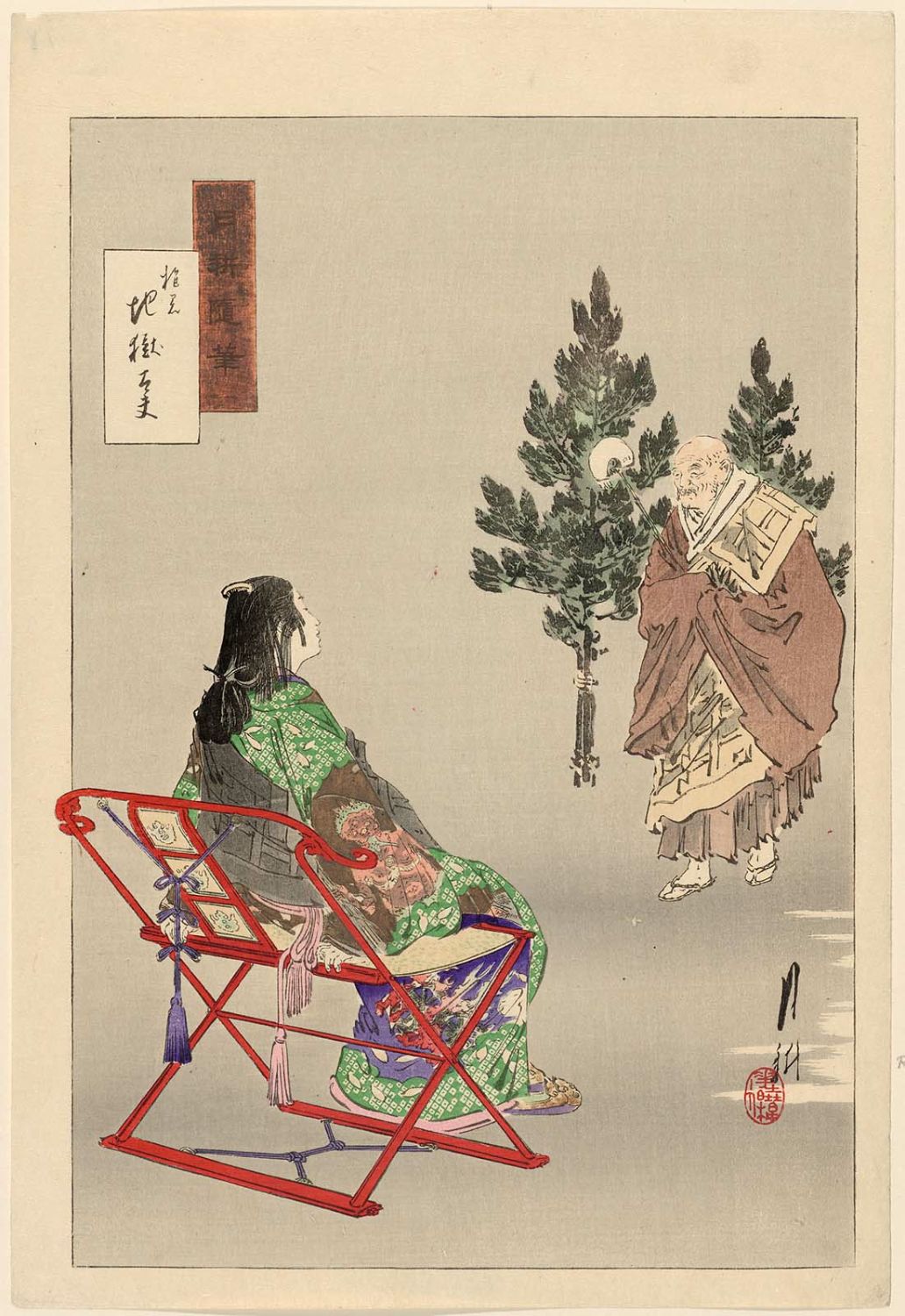
"The Hell Courtesan (Yûkun Jigoku Dayû), from the series Gekkô Zuihitsu (Gekkô's Miscellany)"
Woodblock print
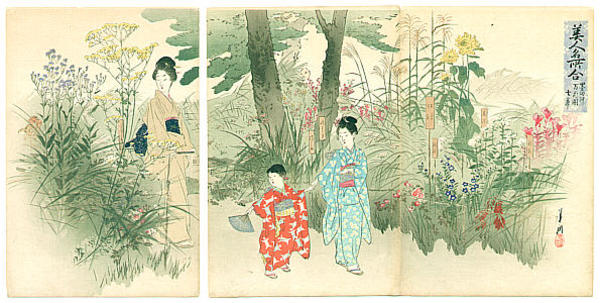
Seven Flowers of Autumn — Bijin meisho awase
Woodblock print
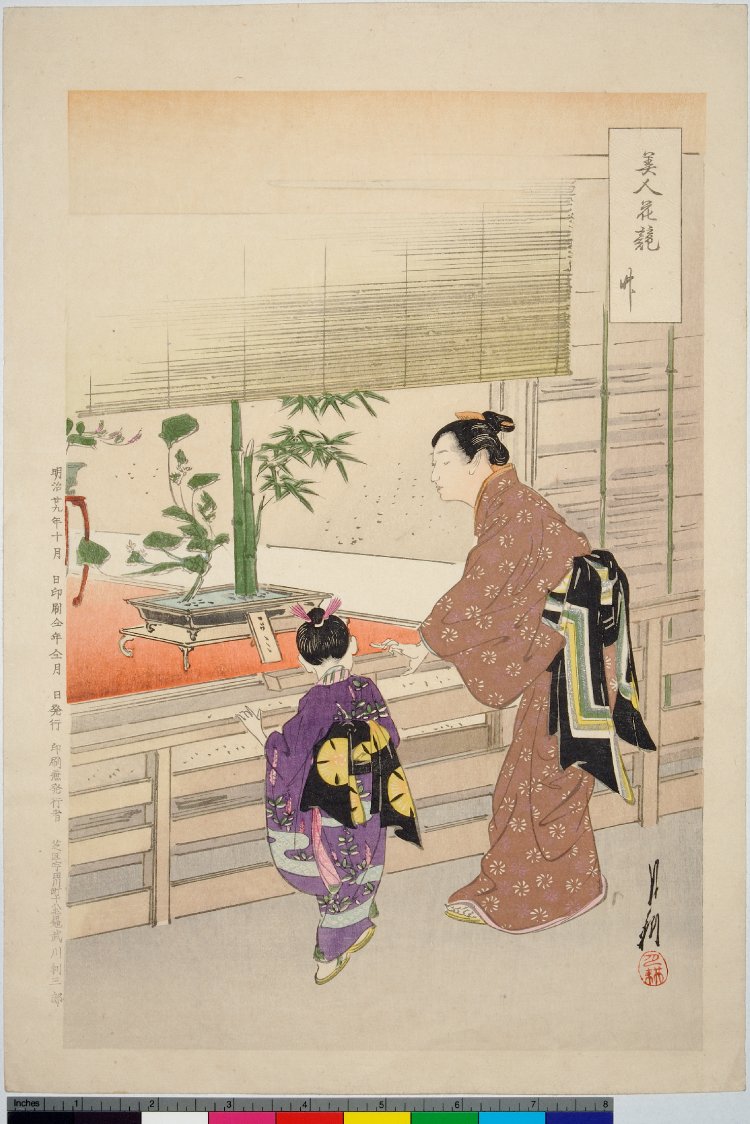
Take 竹 / Bijin hana kurabe 美人花競
Woodblock print
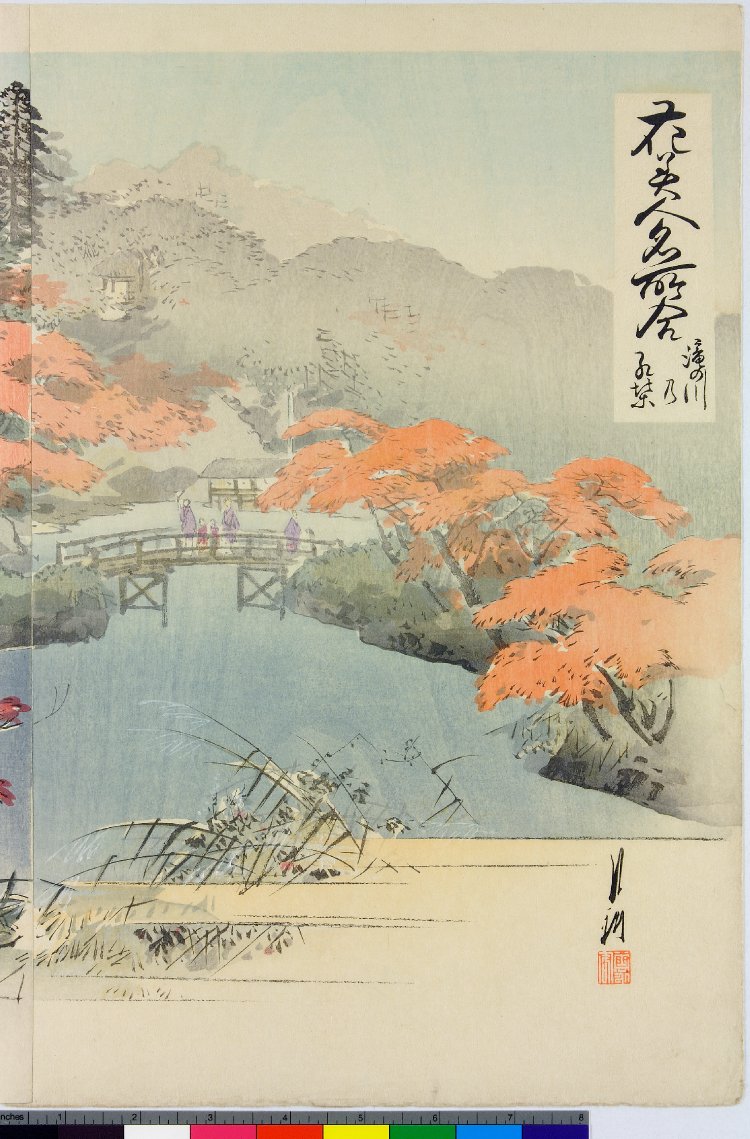
Taki-no-gawa no koyo 滝の川乃紅葉 / Hana bijin meisho awase 花美人名所合
Woodblock print
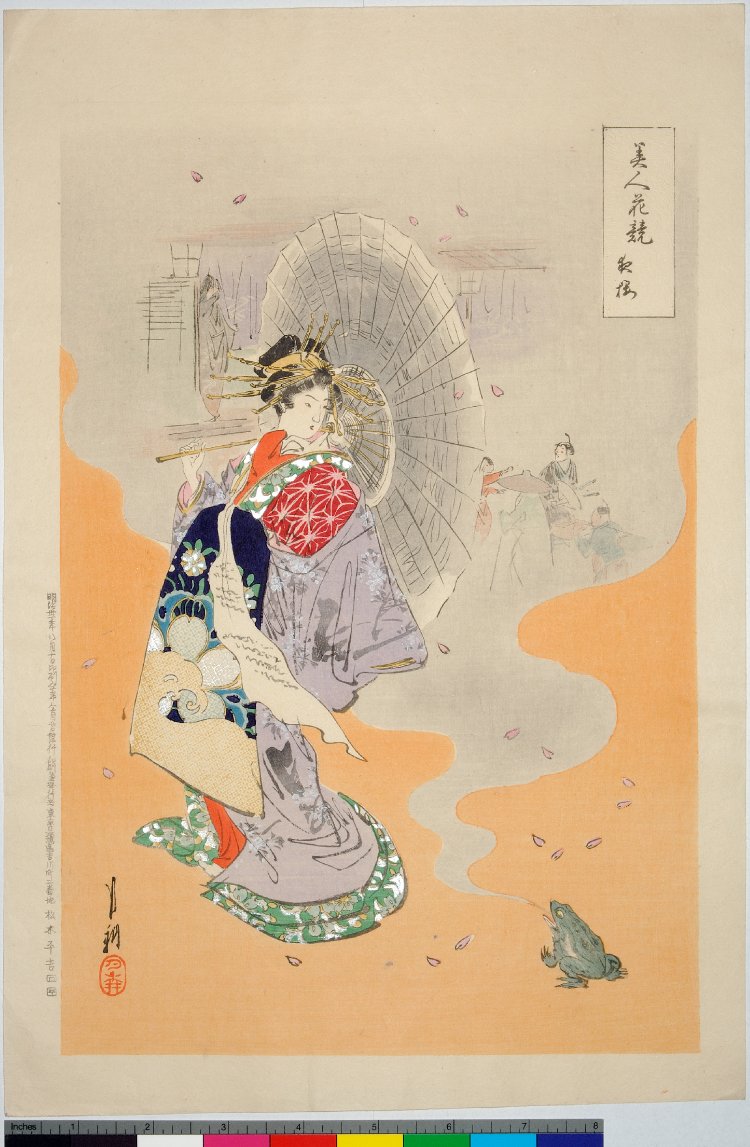
Yo-zakura 夜桜 / Bijin hana kurabe 美人花競
Woodblock print
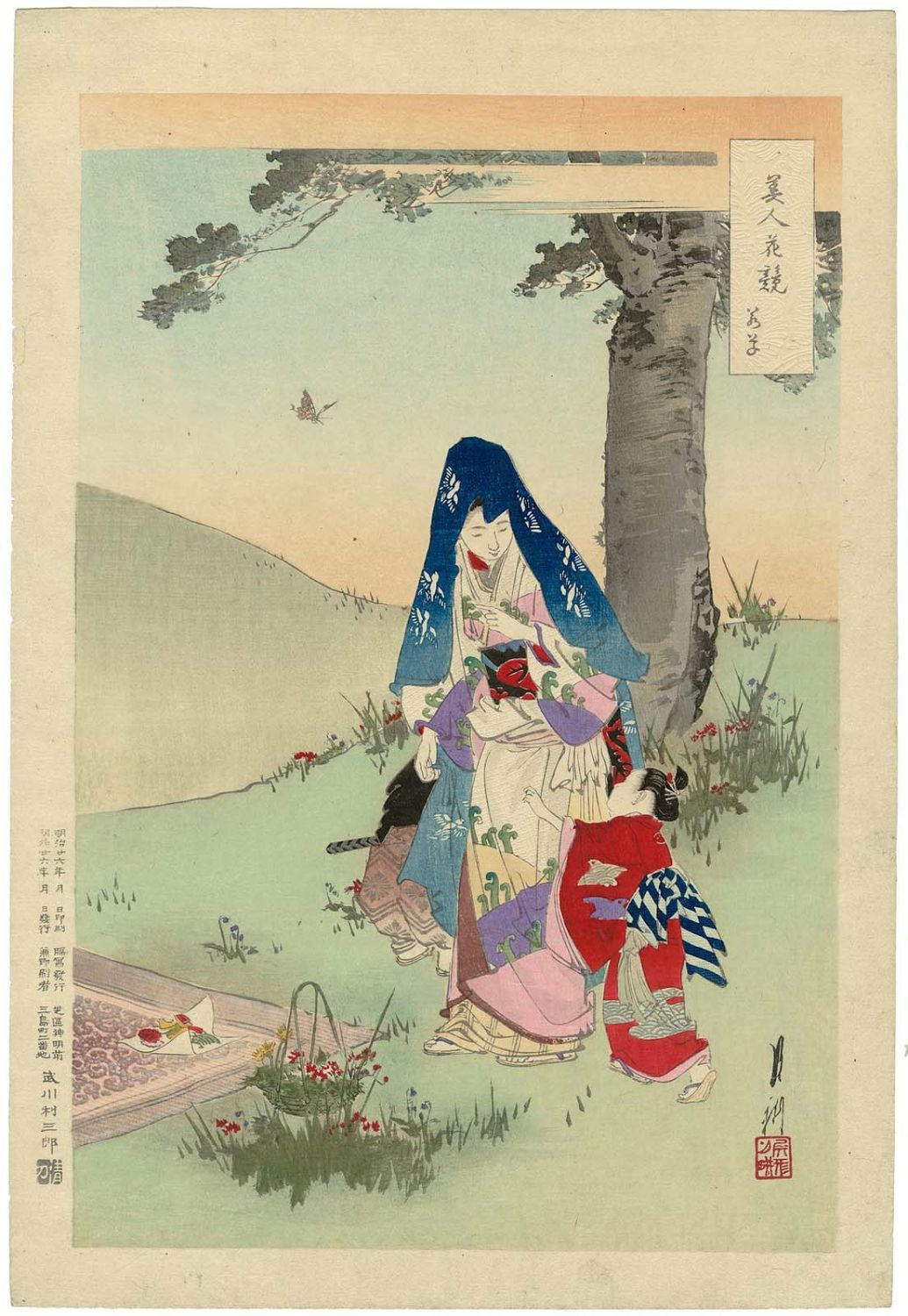
Young Grasses (Wakakusa), from the series Beauties Matched with Flowers (Bijin hana kurabe)
Woodblock print

60th Birthday Kimono
Mokuhanga (Japanese woodblock)

Reclining Beauty
Mokuhanga (Japanese woodblock)

Maiko Admiring the moon
Mokuhanga (Japanese woodblock)

Maiko Admiring the moon
Mokuhanga (Japanese woodblock)

Geisha Hinazo
Mokuhanga (Japanese woodblock)

Ichikawa Shôchô II as the beauty Matsutsuta no Oman
Mokuhanga (Japanese woodblock)

Maiko
Mokuhanga (Japanese woodblock)

Maiko Preparing tea
Mokuhanga (Japanese woodblock)

The tayû (high-ranking courtesan) from "Ninin Wankyu"
Mokuhanga (Japanese woodblock)

Priest Ikkyu meets the courtesan Jigokudayû and her attendants
Mokuhanga (Japanese woodblock)

Looking cool: the appearance of a geisha in the fifth or sixth year of Meiji
Mokuhanga (Japanese woodblock)

Sanô Jirôzaemon murdering a courtesan
Mokuhanga (Japanese woodblock)

Looking cool: the appearance of a geisha in the 5th or 6th year of Meiji (1872-73)
Mokuhanga (Japanese woodblock)

Looking eager to meet someone: the appearance of a courtesan of the Kaei period
Mokuhanga (Japanese woodblock)

Maiko
Mokuhanga (Japanese woodblock)

Kyoto Maiko
Mokuhanga (Japanese woodblock)

Kyo Maiko
Mokuhanga (Japanese woodblock)

Eloquent faces of beauty: Yuge - Steam
Mokuhanga (Japanese woodblock)

Woman In a kimono
Mokuhanga (Japanese woodblock)

Long-sleeves kimono
Mokuhanga (Japanese woodblock)

Miniature Print of a beauty crossing a bridge
Mokuhanga (Japanese woodblock)

Two Japanese women - Short kimono
Mokuhanga (Japanese woodblock)

Maiko
Mokuhanga (Japanese woodblock)

Maiko
Mokuhanga (Japanese woodblock)

Beauty and sadness
Mokuhanga (Japanese woodblock)

September Maiko
Mokuhanga (Japanese woodblock)

Maiko
Mokuhanga (Japanese woodblock)

Geisha
Mokuhanga (Japanese woodblock)

Girl in flower-patterned kimono
Etching

Maiko in front of a light
Mokuhanga (Japanese woodblock)

Maiko
Mokuhanga (Japanese woodblock)

Maiko Beach
Mokuhanga (Japanese woodblock)

Maiko
Mokuhanga (Japanese woodblock)

Malay Beauty
Mokuhanga (Japanese woodblock)

Bijin
Mokuhanga (Japanese woodblock)

Sleeping Beauty
Mokuhanga (Japanese woodblock)

The Geisha Ichimaru
Mokuhanga (Japanese woodblock)

Maiko
Mokuhanga (Japanese woodblock)

Maiko
Mokuhanga (Japanese woodblock)

Maiko
Mokuhanga (Japanese woodblock)

Maiko
Mokuhanga (Japanese woodblock)

Maiko
Mokuhanga (Japanese woodblock)

La Geisha Kiyoka, Tokyo
Mokuhanga (Japanese woodblock)

Beauty in kimono with an actor-fan in her hand
Mokuhanga (Japanese woodblock)

18th Century Beauty
Mokuhanga (Japanese woodblock)

Clock and beauty (II)
Mokuhanga (Japanese woodblock)

Maiko powdering her fac
Mokuhanga (Japanese woodblock)

Advertisement for Goyô's "Beauty in Long Undergarment" print
Mokuhanga (Japanese woodblock)

Crouching Woman Combing Her Hair
April 1932
Woodblock print (oban tate-e), ink and color on paper

Woman Reading a Letter, from the series Ten Classes of Women's Physiognomy (Fujo ninso juppon) (Fumi yomu onna)
c. 1792/93
Color woodblock print; oban
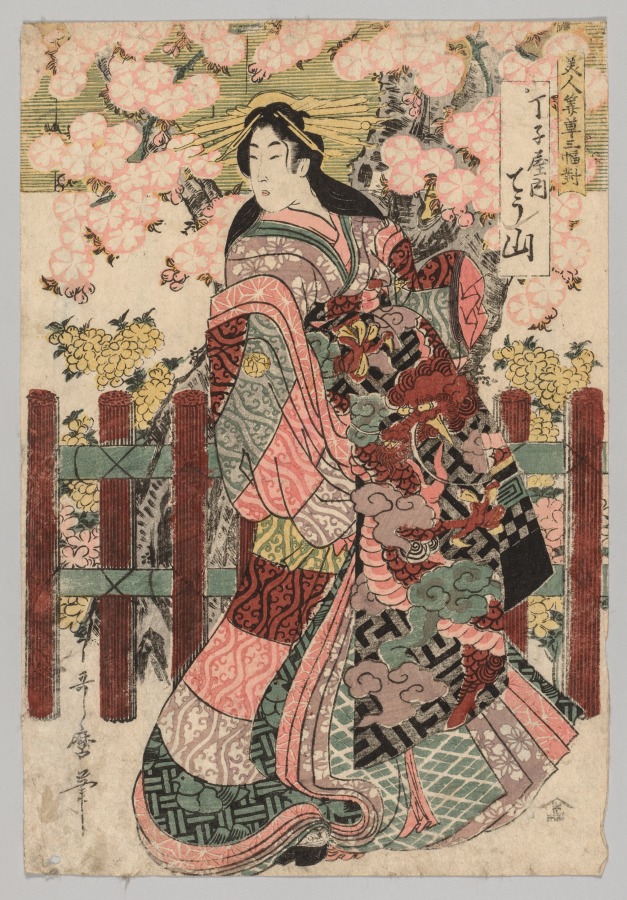
Chōzan of Chōjiya from the series Triptych of Beauties Before Blinds
1753–1806
color woodblock print
Related Subjects
Frequently Asked Questions
Bijin-ga — literally "pictures of beautiful people" — is one of the foundational genres of Japanese woodblock printmaking. The tradition dates to the earliest days of ukiyo-e, when artists like Hishikawa Moronobu and later Kitagawa Utamaro elevated portrayals of women from simple illustrations to sophisticated studies of beauty, fashion, and personality.
Hashiguchi Goyo, Torii Kotondo, and Takehisa Yumeji are among the artists most associated with bijin-ga in our collection. Browse the full list of artists who explored this subject above.
Hanga currently catalogues 1084 prints tagged with bijin-ga, spanning ukiyo-e, shin-hanga, and sōsaku-hanga traditions where applicable.