
Geisha Style (geisha fū) from the series Guide to Contemporary Styles (Tōsei fūzoku tsū)
- Series:
- Guide to Contemporary Styles
- Date:
- 1801
- Medium:
- Color woodblock print; oban
- Source:
- Art Institute of Chicago
Description
Kitagawa Utamaro's Geisha Style (geisha fu), from the series Guide to Contemporary Styles (Tosei fuzoku tsu), is a single-figure ukiyo-e portrait in the Art Institute of Chicago (artwork 60318). The series functions as a visual taxonomy of Edo female fashion, identifying named styles, geisha, townswoman, courtesan, and so on, and providing a representative beauty for each. Utamaro's Edo bijin-ga depended on exactly this kind of typological framework: rather than producing isolated portraits, he and his publishers organized beauties into legible categories that could be sold serially and collected across multiple sheets. In Geisha Style, the chosen type is the geisha of the licensed quarters and Edo machi, a class of professional female entertainers distinct from Yoshiwara courtesans, defined by musical and performance skill rather than rank within a brothel. Utamaro's depiction registers the visual conventions of the geisha: a particular handling of hair, a relatively restrained kimono compared to the lavish brocades of high-ranking courtesans, and an air of poise and craft. The half-length okubi-e composition characteristic of Utamaro's mature ukiyo-e gives full weight to the face and neckline, while the keyblock line and disciplined nishiki-e printing show the high level of technical execution typical of his publishers in this period. The Art Institute of Chicago's holding helps situate the print within Utamaro's broader project of cataloguing the women of Edo, from teahouse staff and Yoshiwara stars to housewives, mothers, and entertainers. For collectors of Edo bijin-ga, the Guide to Contemporary Styles is among the series that most directly link Utamaro to the fashion economy and social typology of late eighteenth-century Japan.
More Prints by Kitagawa Utamaro
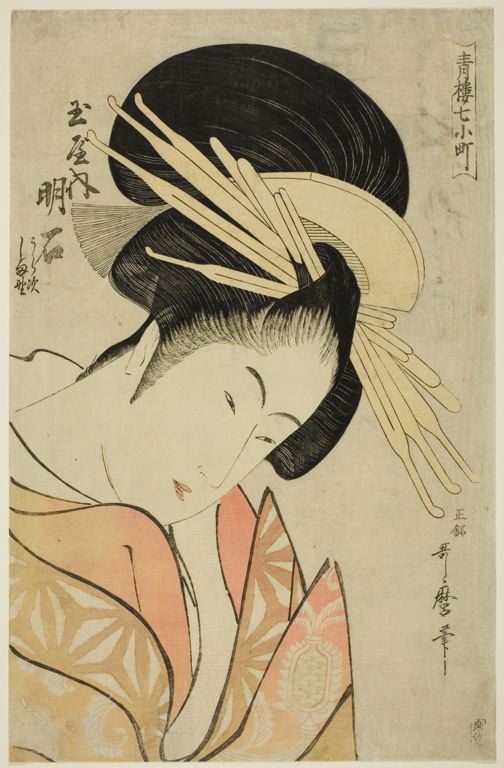
Akashi of the Tamaya, from the series Seven Komachis of Yoshiwara (Seiro nana Komachi) (Tamaya uchi Akashi, Uraji, Shimano)
Woodblock print
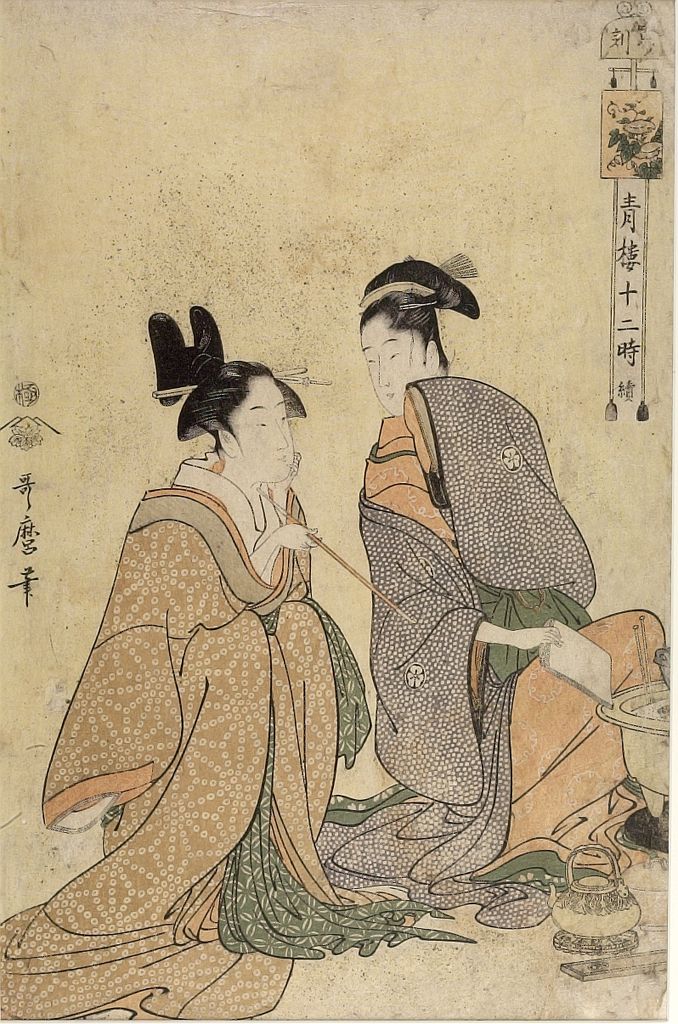
Hour of the Tiger (Tora no koku = 4 AM) from the series Twelve Hours in Yoshiwara (Seirô jûni toki tsuzuki), Late Edo period, circa 1794
Woodblock print
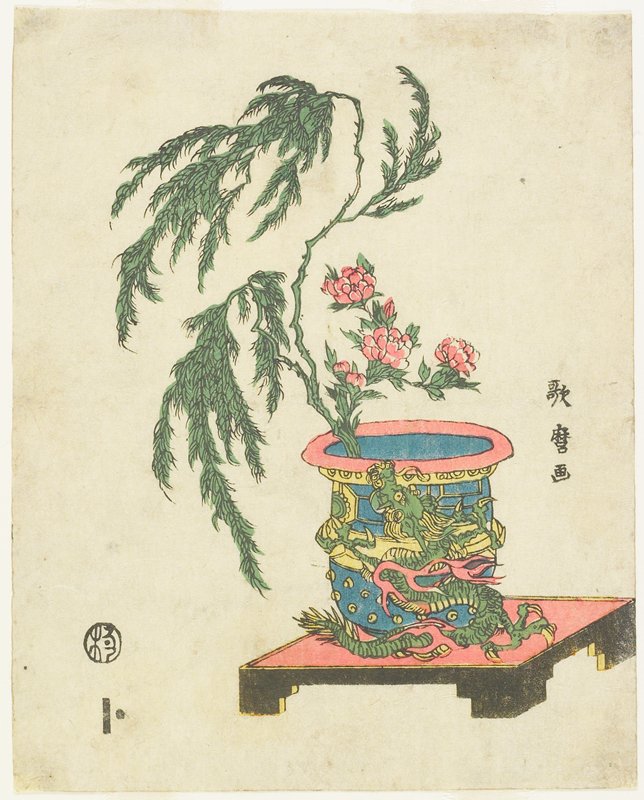
Ikebana arrangement of Peony and Willow in Dragon Pot
1781–1806
Woodblock print (nishiki-e), ink and color on paper
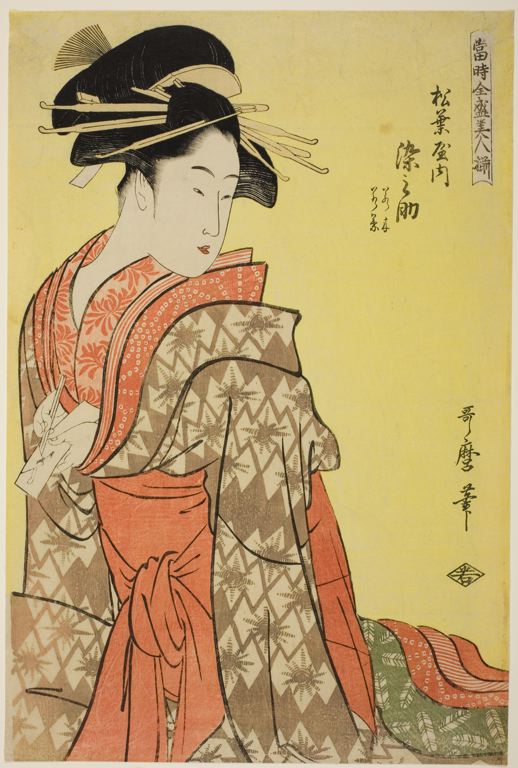
The Greatest Beauties of Our Time (Toji zensei bijin zoroe): Somenosuke of the Matsubaya with Attendants Wakagi and Wakaba
Woodblock print
More Bijin-ga Prints

Featured in Collections
Curated cross-cuts that include this print.
Frequently Asked Questions
Geisha Style (geisha fū) from the series Guide to Contemporary Styles (Tōsei fūzoku tsū) was created by Kitagawa Utamaro (喜多川歌麿) in 1801.
Yes — Geisha Style (geisha fū) from the series Guide to Contemporary Styles (Tōsei fūzoku tsū) is part of the Guide to Contemporary Styles series by Kitagawa Utamaro.
Geisha Style (geisha fū) from the series Guide to Contemporary Styles (Tōsei fūzoku tsū) depicts bijin-ga.