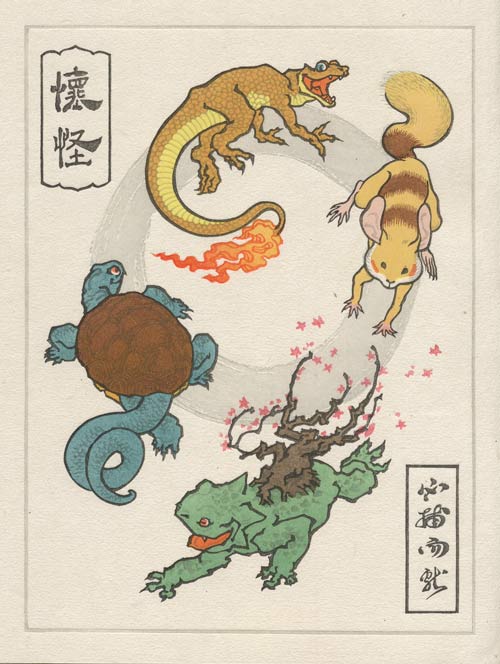
Biography
Jed Henry is an American illustrator and designer whose Ukiyo-e Heroes series has become one of the most successful contemporary woodblock print projects in the world. A lifelong gamer and self-described Japanophile, Henry grew up copying artwork from video game manuals and eventually earned a degree in animation. One of his animated films received a Student Academy Award from the Academy of Motion Picture Arts and Sciences.
Henry spent two years living in Tokyo, where he developed a deep appreciation for traditional Japanese art and culture. He speaks conversational Japanese, though he modestly estimates his proficiency at about a four-year-old's level. His childhood included barefoot summers on the Ohio River and painting trips in the countryside with his mother, experiences that cultivated his artistic sensibility from an early age.
In 2010, Henry first contacted master woodblock printer David Bull to express his interest in Japanese printmaking. Their actual collaboration began in April 2012 when Henry presented Bull with designs reimagining classic video game characters in the ukiyo-e style. Bull immediately recognized the commercial potential and produced their first print, Rickshaw Cart, inspired by Mario Kart. The concept proved enormously popular: a Kickstarter campaign drew over 2,400 backers, who ordered more than 4,000 giclee versions and 1,200 actual woodblock prints.
The Ukiyo-e Heroes series celebrates Japan's contribution to video games by returning beloved characters to the traditional art form that shares their cultural heritage. Each design is created by Henry and then carved on cherry blocks and printed by hand in Bull's Mokuhankan workshop in Asakusa, Tokyo, using traditional techniques on Echizen Hosho paper produced by a Living National Treasure. The series has grown to include the main collection of large-format prints, two sets of portrait-format subscription prints, and a manga series forming a single panoramic composition in the spirit of Hokusai's manga.
Beyond the commercial success, the project has had meaningful impact on the Japanese woodblock printing community. Revenue from print sales has enabled Bull to employ a full workshop of apprentices and seasoned master craftspeople, helping to sustain a traditional art form that had been declining for decades. Henry currently lives in a small town in the Rocky Mountains with his wife and four children, continuing to create new designs for the series alongside his illustration and animation work.
Key Facts
- Nationality
- 🇺🇸United States
- Movement
- Contemporary Mokuhanga
- Works Indexed
- 15
Frequently Asked Questions
Jed Henry is an American illustrator and designer whose Ukiyo-e Heroes series has become one of the most successful contemporary woodblock print projects in the world. A lifelong gamer and self-described Japanophile, Henry grew up copying artwork from video game manuals and eventually earned a degree in animation. One of his animated films received a Student Academy Award from the Academy of Motion Picture Arts and Sciences.
Jed Henry's work was shaped by the Contemporary Mokuhanga tradition in Japanese woodblock printmaking. Contemporary Mokuhanga: Contemporary mokuhanga (literally "wood-block print") encompasses artists working from approximately 1970 to the present who continue or reinvent traditional Japanese woodblock printing techniques.
Woodblock Prints by Jed Henry (15)

Rickshaw Cart
Woodblock print
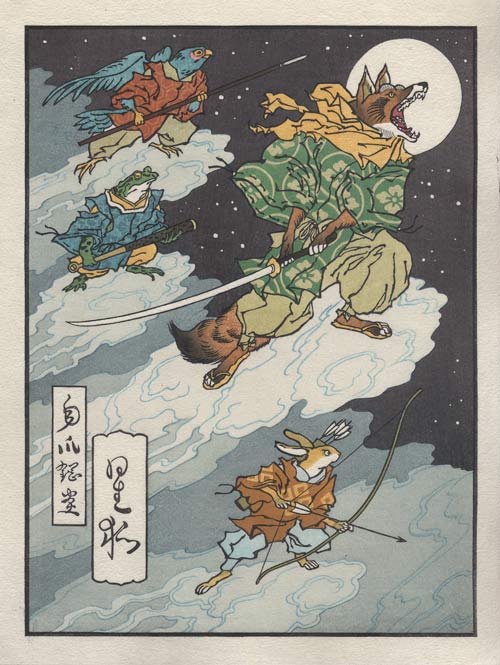
Fox Moon
Woodblock print
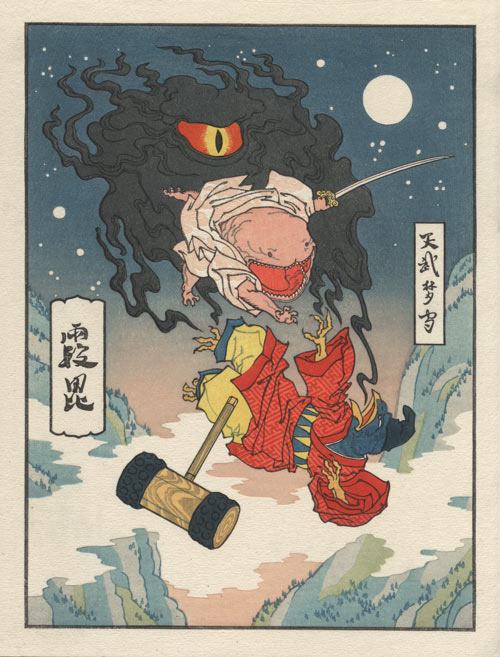
Soul Eater
Woodblock print
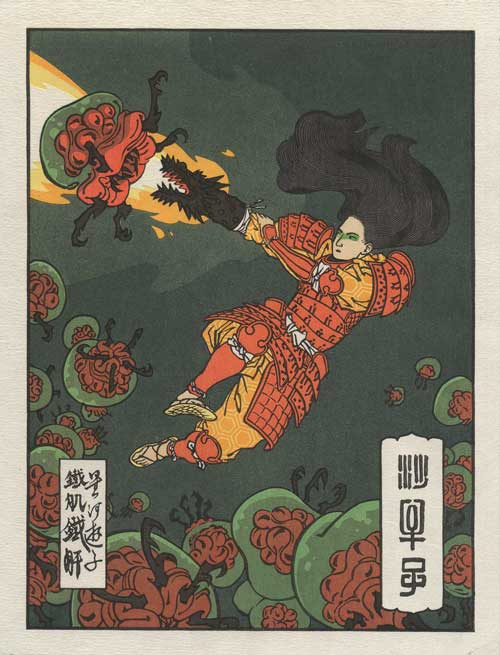
Infestation
Woodblock print
I Choose You
Woodblock print
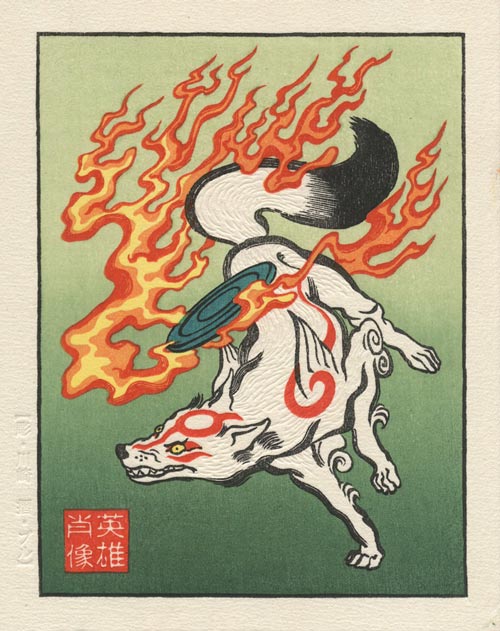
The Wolf Goddess
Woodblock print
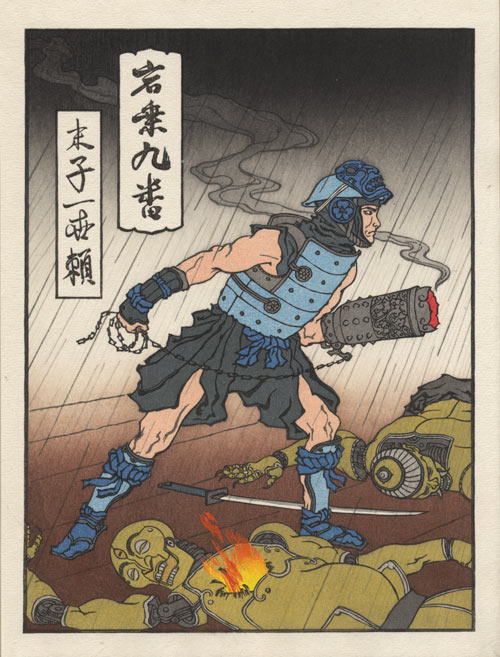
Blue Storm
Woodblock print
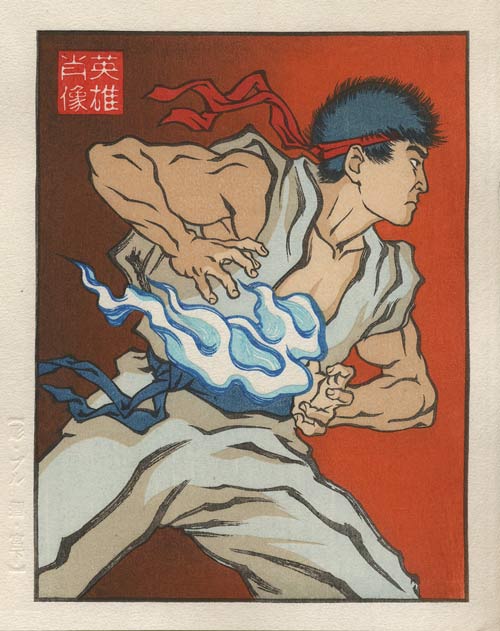
Deep Qi
Woodblock print
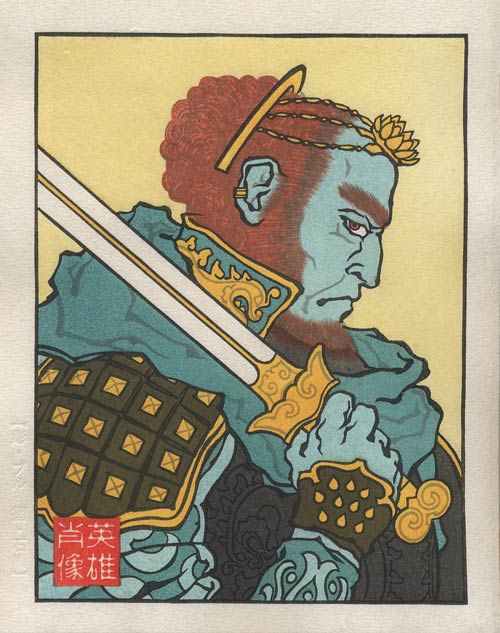
Demon King
Woodblock print
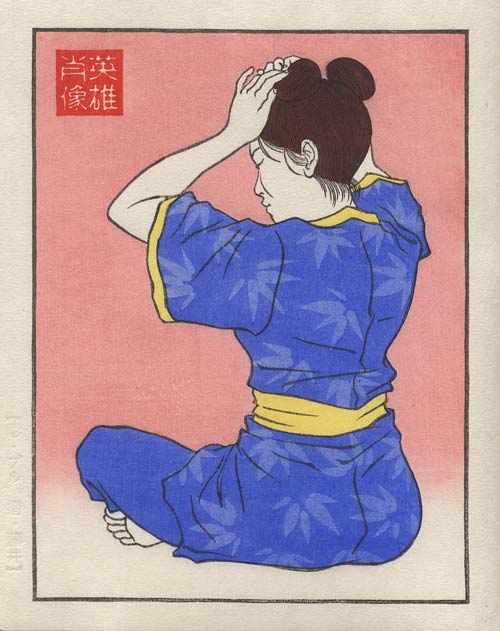
Before the Fight
Woodblock print
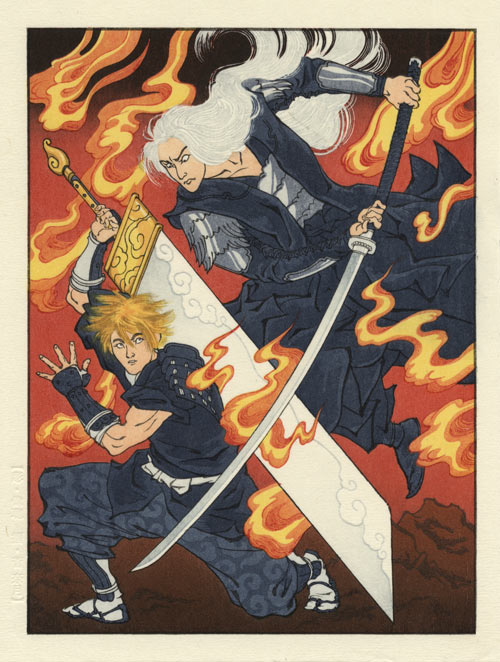
Meteoric Power
Woodblock print

The Serpent Strikes
Woodblock print
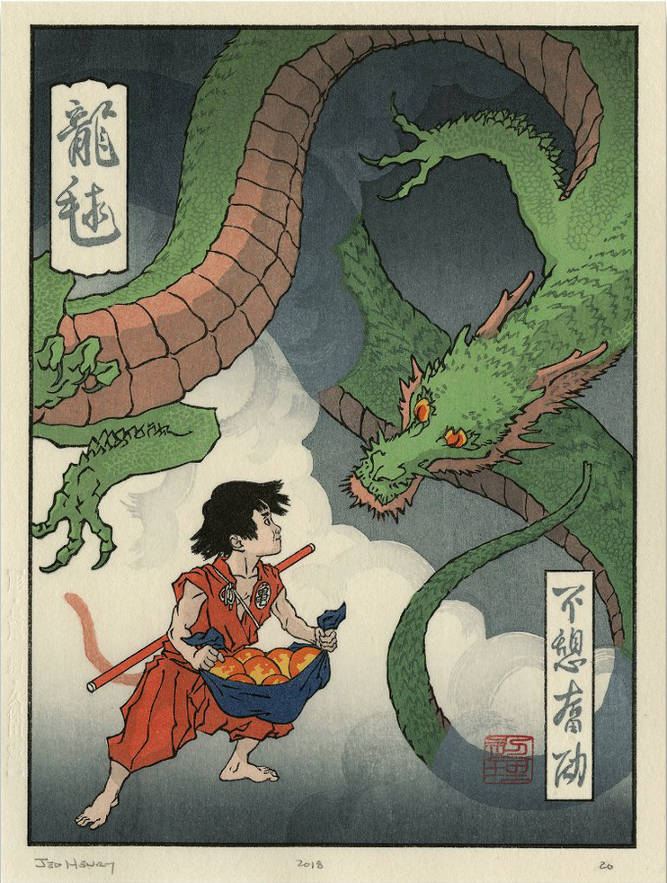
The Dragon's Gift
Woodblock print
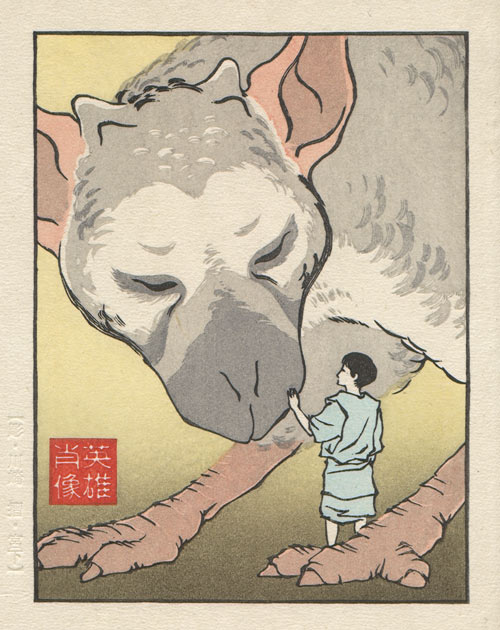
A Perfect Love
Woodblock print
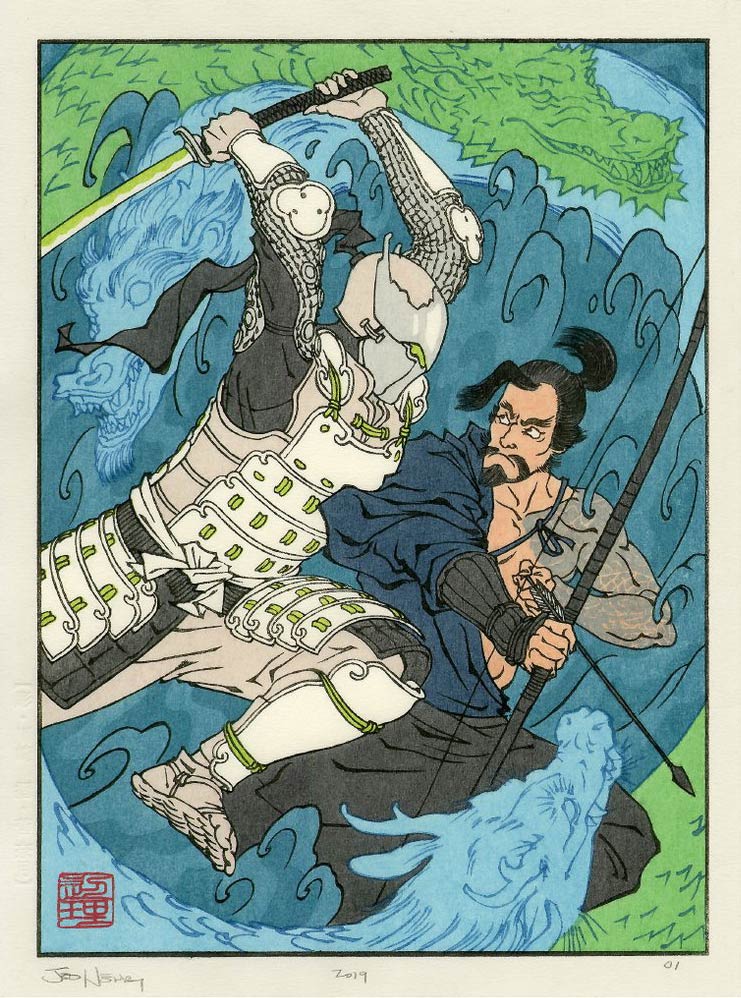
Two Souls Entwined
Woodblock print