Biography
Junichiro Yoshimatsu is a contemporary Japanese printmaker whose woodblock and silkscreen prints draw deeply from the world of Noh theater, translating the ancient performing art's masks, costumes, and dramatic texts into luminous works on paper. Born in 1953 in Yamaguchi Prefecture, he came to printmaking through a cultural inheritance: his father was a Noh actor, and the theater's visual and performative traditions have been the wellspring of his art throughout his career.
Yoshimatsu studied at Tama Art University in Tokyo, one of Japan's foremost institutions for art and design, completing a master's degree. Tama's printmaking department, known for fostering experimentation alongside respect for traditional techniques, provided him with the technical foundation to develop his distinctive approach to woodblock and silkscreen printing.
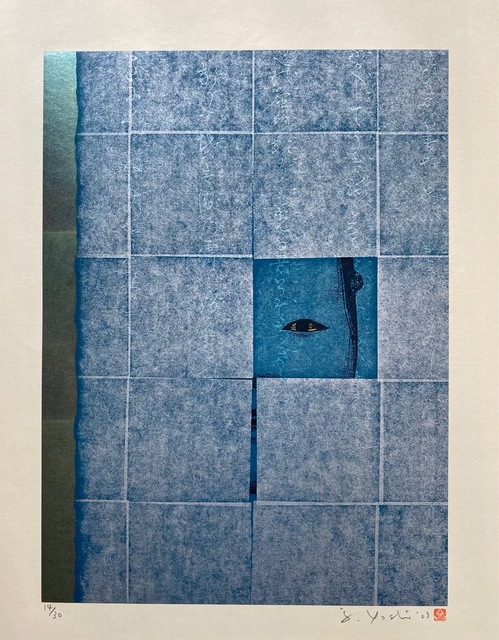
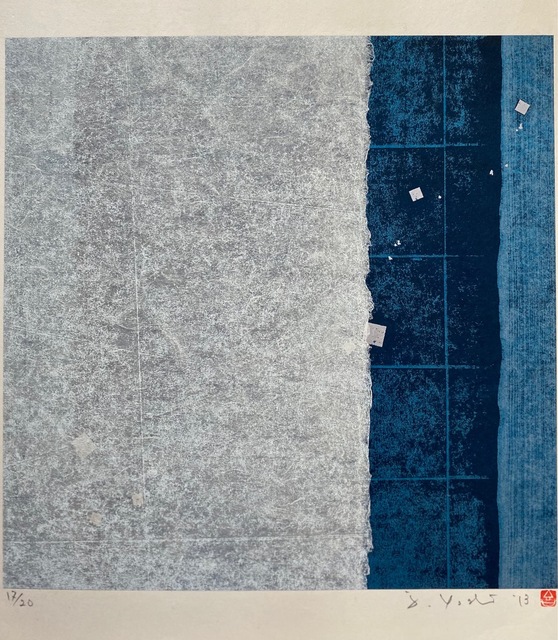
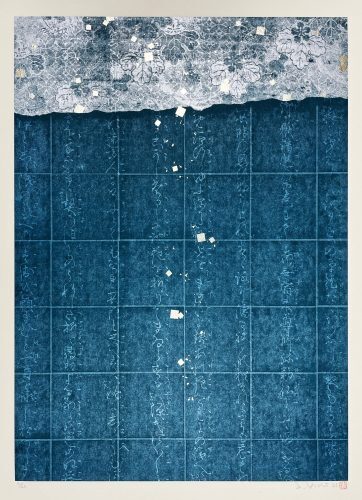
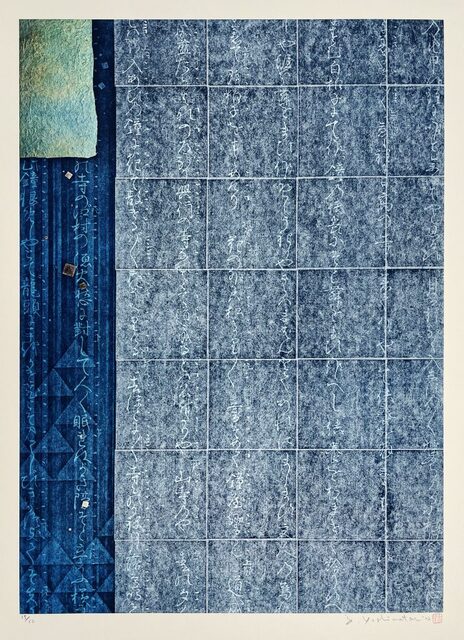
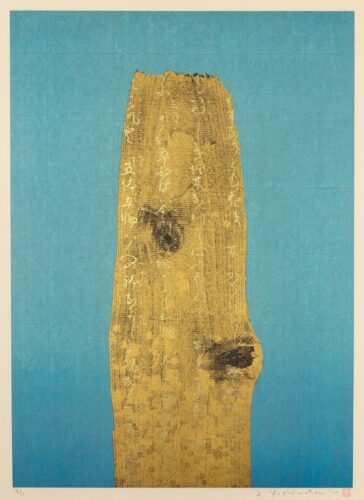
His prints take their titles directly from plays in the Noh repertoire, works with names like Dojoji, Kiyotsune, and Hajitomi that have been performed for centuries. The calligraphic text of these plays sometimes appears as a background layer in his compositions, its flowing characters providing a textural counterpoint to the richly patterned surfaces that evoke the sumptuous brocade costumes worn by Noh performers. The effect is multilayered, both literally and conceptually: the viewer encounters the visual beauty of the print, the presence of the written word, and the echo of a theatrical performance all in a single image.
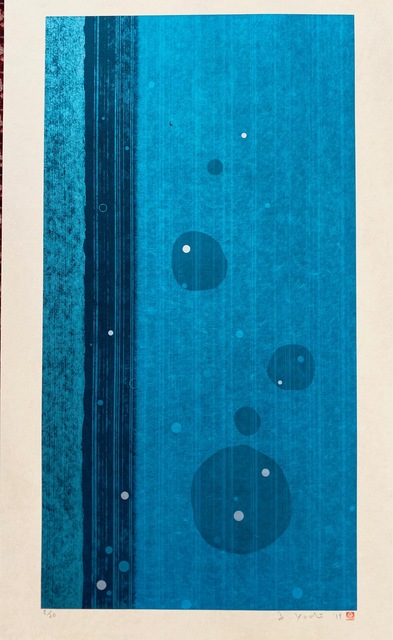
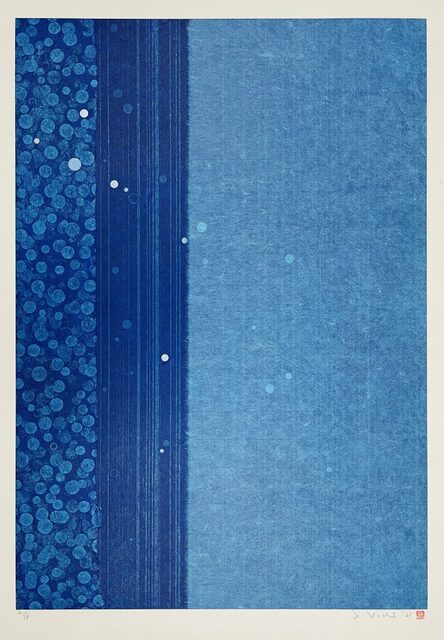
Yoshimatsu's color palette tends toward deep, saturated hues with areas of gold and metallic pigment that recall the shimmer of silk brocade under stage lighting. His compositions balance density and restraint, filling some areas with intricate patterning while leaving others open, creating a visual rhythm that mirrors the slow, deliberate pacing of Noh itself.
His work has been recognized internationally and is held in museum collections including the Los Angeles County Museum of Art, the Library of Congress in Washington, D.C., the Ashmolean Museum in Oxford, the Museum of Contemporary Art of Ibiza in Spain, the Tikotin Museum of Japanese Art in Israel, and the Tama Art University Museum in Tokyo. He is represented by The Tolman Collection, which has published editions of his prints and exhibited his work through their galleries in Tokyo and New York. His prints are also available through The Verne Collection in Cleveland.
Yoshimatsu occupies a distinctive niche in contemporary Japanese printmaking, an artist who uses modern techniques to illuminate one of Japan's oldest and most revered art forms. His work demonstrates that the visual vocabulary of Noh, distilled through the medium of print, retains its power to captivate viewers who may never have seen a live performance.
Key Facts
- Active Period
- 1953
- Nationality
- 🇯🇵Japan
- Movement
- Contemporary Mokuhanga
- Subjects
- Silkscreen
- Works Indexed
- 6
Frequently Asked Questions
Junichiro Yoshimatsu is a contemporary Japanese printmaker whose woodblock and silkscreen prints draw deeply from the world of Noh theater, translating the ancient performing art's masks, costumes, and dramatic texts into luminous works on paper. Born in 1953 in Yamaguchi Prefecture, he came to printmaking through a cultural inheritance: his father was a Noh actor, and the theater's visual and performative traditions have been the wellspring of his art throughout his career.
Junichiro Yoshimatsu was active born in 1953. They were associated with the Contemporary Mokuhanga movement.
Junichiro Yoshimatsu's work was shaped by the Contemporary Mokuhanga tradition in Japanese woodblock printmaking. Contemporary Mokuhanga: Contemporary mokuhanga (literally "wood-block print") encompasses artists working from approximately 1970 to the present who continue or reinvent traditional Japanese woodblock printing techniques.
Junichiro Yoshimatsu's prints frequently feature silkscreen.