Biography
Keiko Minami (南桂子, 1911–2004) created etchings and aquatints of birds, flowers, trees, and fish rendered with such delicacy and silence that they appear to inhabit a world adjacent to ours — familiar in their subjects, otherworldly in their stillness. Working for more than four decades in Paris, she developed a personal iconography so consistent and so immediately recognizable that a single image — a round-bodied bird tilting its head against a luminous, indeterminate ground — can identify her work across a room.
Born in 1911 in the Imizu District of Toyama Prefecture, Minami studied at the School of Fine Arts in Tokyo (now Tokyo University of the Arts) and was active as a writer and illustrator of children's books before a decisive turn toward printmaking. In late 1953 she moved to Paris with her husband, the printmaker Yōzō Hamaguchi, drawn by the city's printmaking culture and its community of expatriate artists. She would remain based in France for most of the rest of her life, though she continued to exhibit in Japan and maintained connections to the Tokyo art world throughout her career, eventually returning to Japan in her later years.
In Paris, Minami studied under Johnny Friedlaender, a leading figure in aquatint etching who ran one of the city's most influential print ateliers. Under his guidance she mastered the intaglio techniques of etching and aquatint on copper plates — methods that allowed her to achieve the fine, tremulous lines and soft tonal washes that defined her mature work. While her sōsaku-hanga contemporaries in Japan overwhelmingly favored the woodblock, Minami found in the copper plate an instrument perfectly matched to her sensibility: capable of hairline precision, of gradations so subtle they suggest light itself changing, and of the kind of surface texture that makes each pulled impression feel hand-breathed rather than mechanically reproduced.
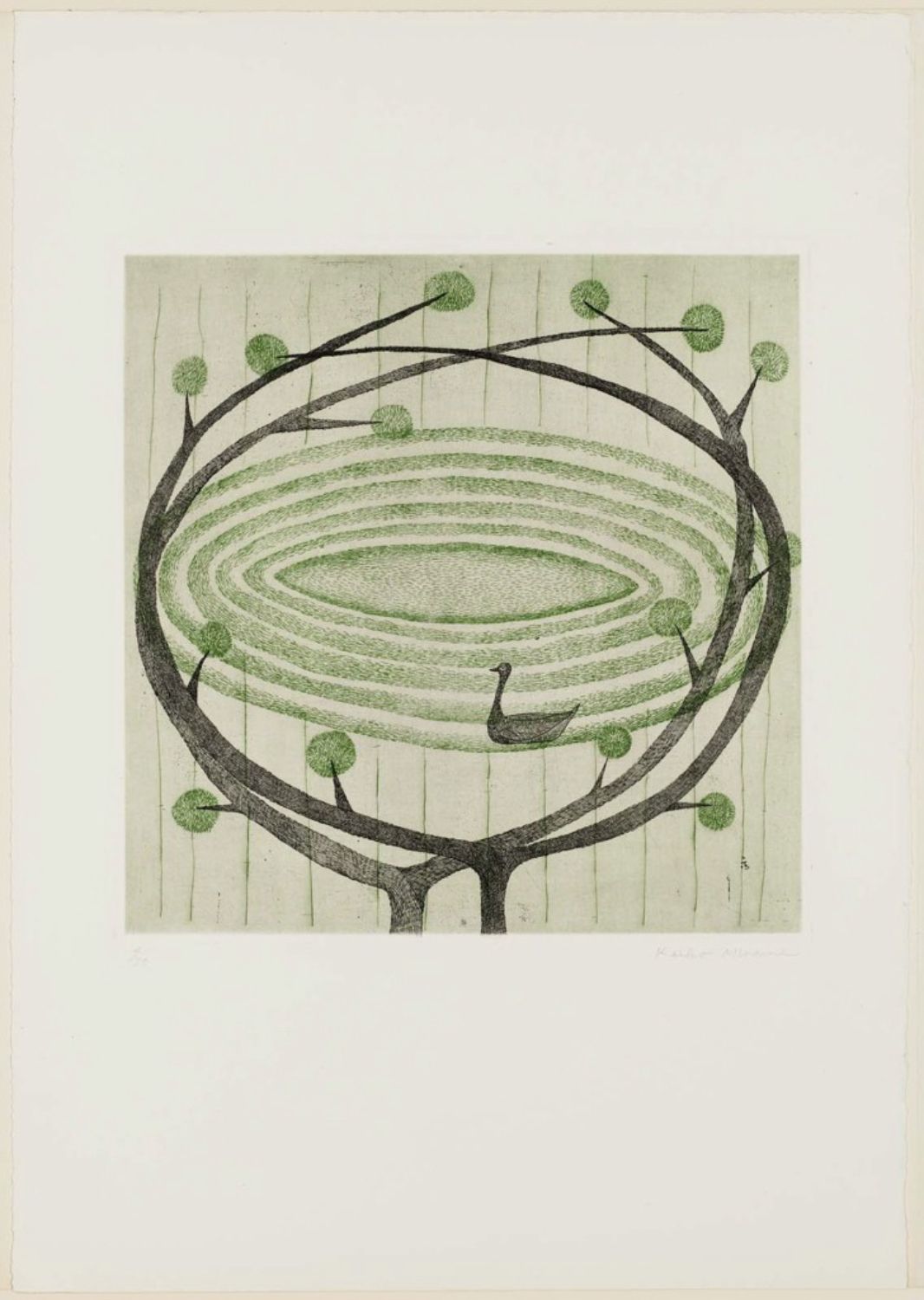
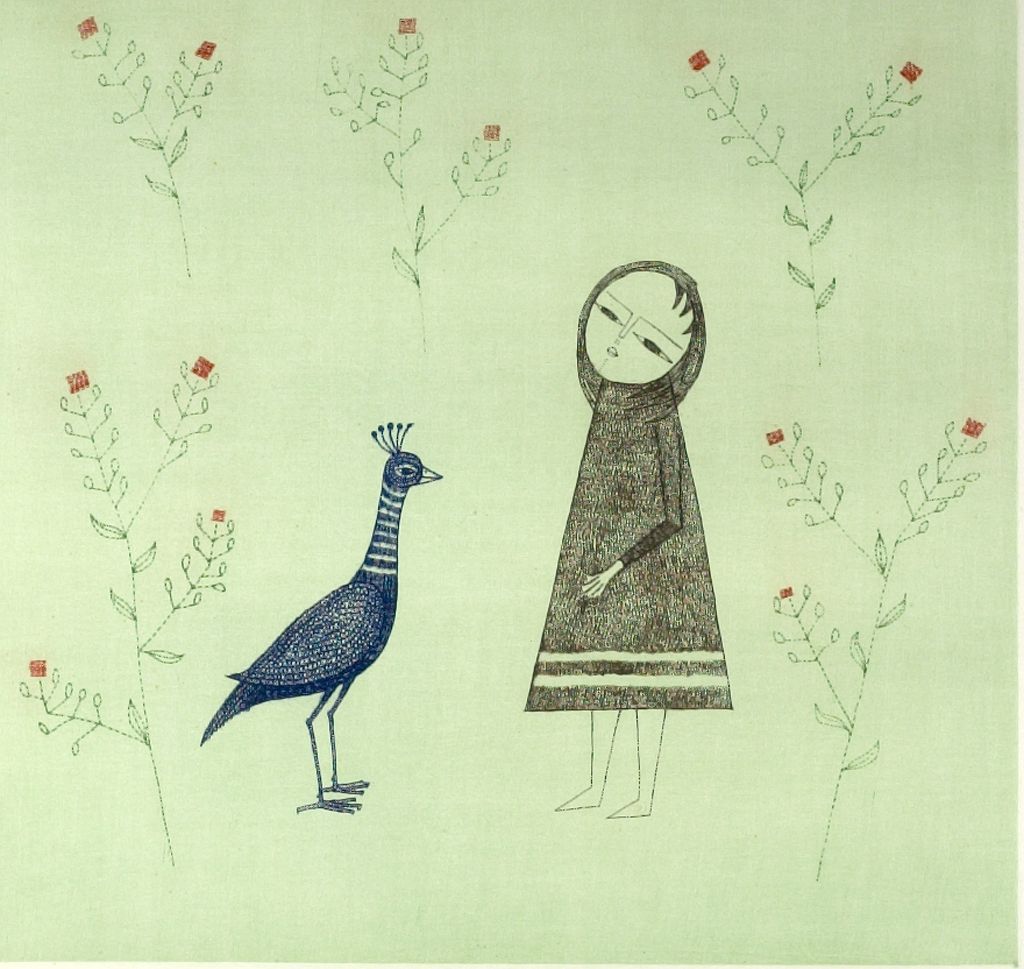
Minami's mature imagery returned obsessively to a small repertoire of motifs: solitary birds, clusters of wildflowers, schools of small fish, lone trees with sparse foliage. These figures float in undefined space, unmoored from ground lines, perspective, or narrative context. A bird stands on nothing; flowers grow from nowhere; fish swim through a luminous emptiness that is neither sky nor water but pure atmosphere. The color palette reinforces this sense of suspension — soft blues, muted greens, faded ochres, and the palest pinks, applied through the aquatint process in gradations so fine they seem to dissolve at their edges. The effect is meditative, almost liturgical: each print a small altar to the act of quiet looking.
Her marriage to Yōzō Hamaguchi, himself a master printmaker renowned for his color mezzotints, created one of the most distinguished artistic partnerships in postwar Japanese art. The couple lived and worked in Paris, each pursuing an entirely individual vision while sharing a devotion to the highest standards of intaglio craftsmanship. Hamaguchi's mezzotints — dense, velvety, saturated with color — and Minami's etchings — airy, translucent, barely there — represented complementary poles of what the copper plate could achieve.
Minami exhibited widely in Paris, Tokyo, and New York and took part in international print biennials. Her imagery reached a broad public through commissions such as greeting cards for the Museum of Modern Art and UNICEF, and her work entered public collections including the Museum of Modern Art in New York and the National Museum of Modern Art in Tokyo. She died in 2004 at the age of ninety-three, having spent nearly half a century refining a vision so distilled that it needed only a bird, a flower, and an expanse of silent color to say everything she intended.
Key Facts
- Active Period
- 1911–2004
- Nationality
- 🇯🇵Japan
- Movement
- Sōsaku-hanga
- Works Indexed
- 29
Frequently Asked Questions
Keiko Minami (南桂子, 1911–2004) created etchings and aquatints of birds, flowers, trees, and fish rendered with such delicacy and silence that they appear to inhabit a world adjacent to ours — familiar in their subjects, otherworldly in their stillness. Working for more than four decades in Paris, she developed a personal iconography so consistent and so immediately recognizable that a single image — a round-bodied bird tilting its head against a luminous, indeterminate ground — can identify her work across a room.
Keiko Minami was active from 1911 to 2004. They were associated with the Sōsaku-hanga movement.
Keiko Minami's work was shaped by the Sōsaku-hanga tradition in Japanese woodblock printmaking. Sōsaku-hanga: ## What is sōsaku-hanga? Sōsaku-hanga (創作版画, "creative prints") was a twentieth-century Japanese print movement defined by a single commitment: the artist must design, carve, and print every work alone.
Keiko Minami's prints frequently feature etching, abstract, animals, birds & flowers, castles, seascapes.
Original prints by Keiko Minami can be found in collections including Harvard Art Museums, Museum of Fine Arts, Harvard Art Museum, Minneapolis Institute of Art.
Woodblock Prints by Keiko Minami (29)
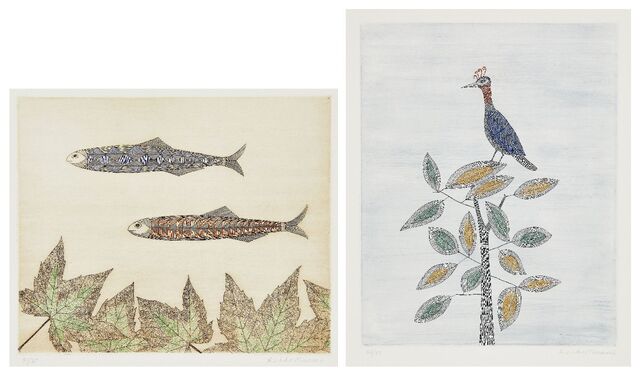
Aigrette and Two Fish
977
Two etchings with aquatint in colours on BFK Rives wove
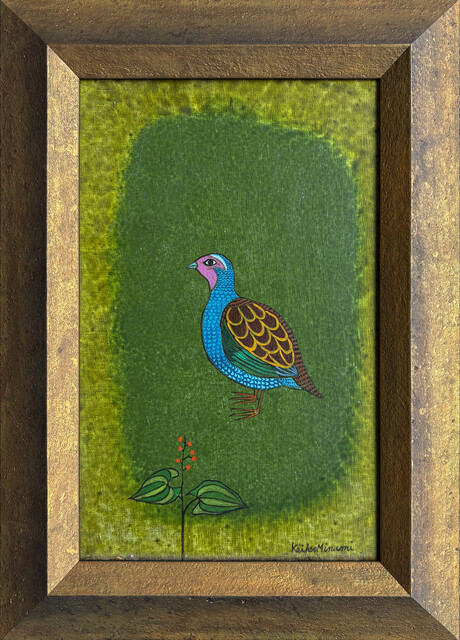
Untitled
1955
Oil on canvas
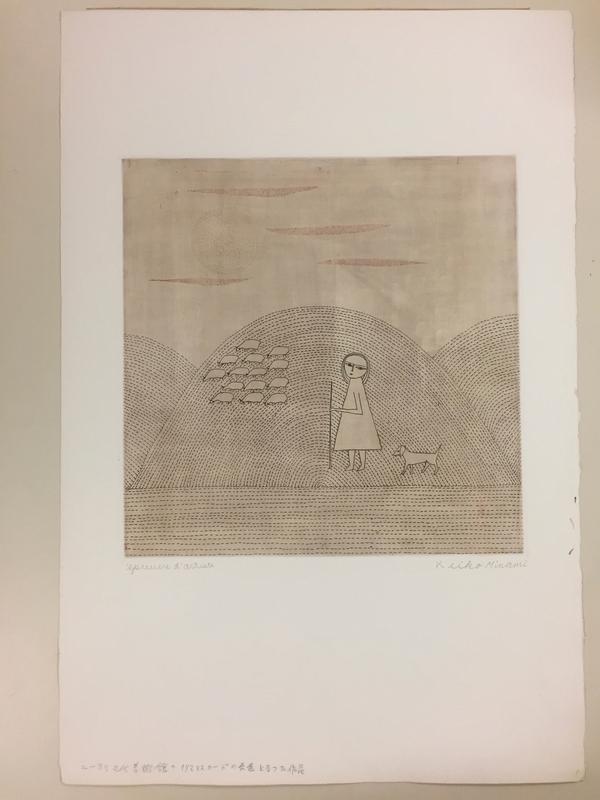
La petite bergère (Young shepherdess)
1957
Etching with aquatint, ink and color on paper

Poissons et feuilles mortes (Fish and dead leaves)
1960
Etching with aquatint, ink and color on paper

Mouton devant un village (Sheep in front of a village)
1960s
Etching with aquatint, ink and color on paper

Mer (Sea)
1961
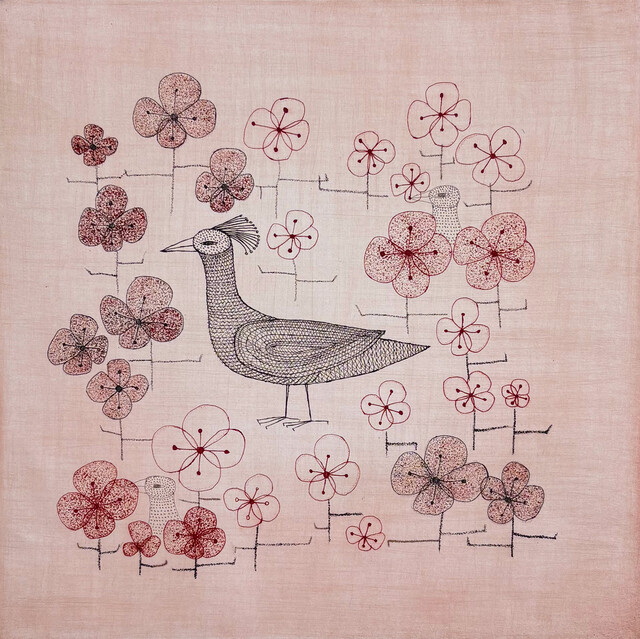
Oiseau Dans Les Fleurs
1962
Etching with color
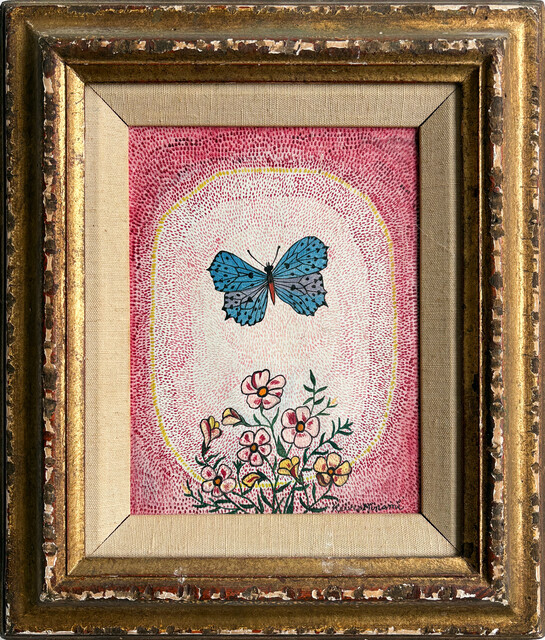
Butterfly
1965
Oil on canvas

City Gate
1967
Etching with aquatint, ink and color on paper
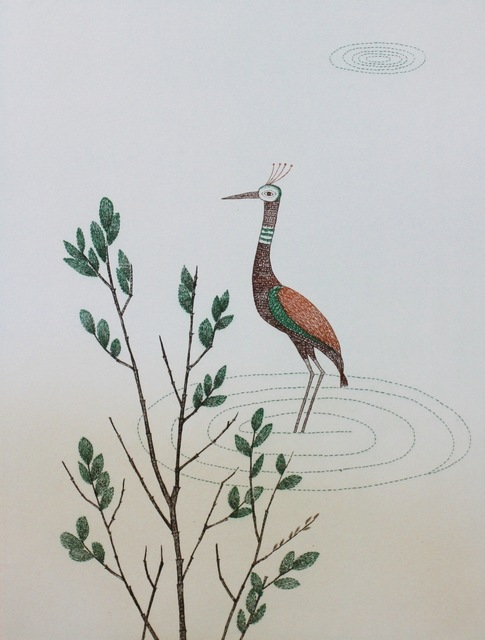
Peacock (oiseau dans l'eau)
1968
Etching
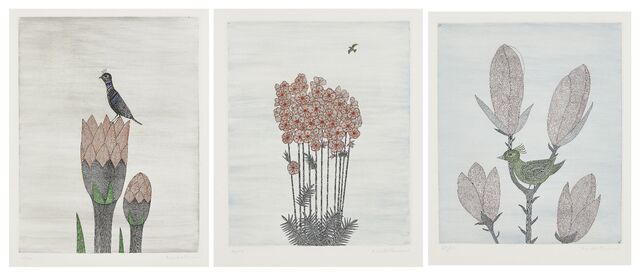
Japanese Brushwood
1977
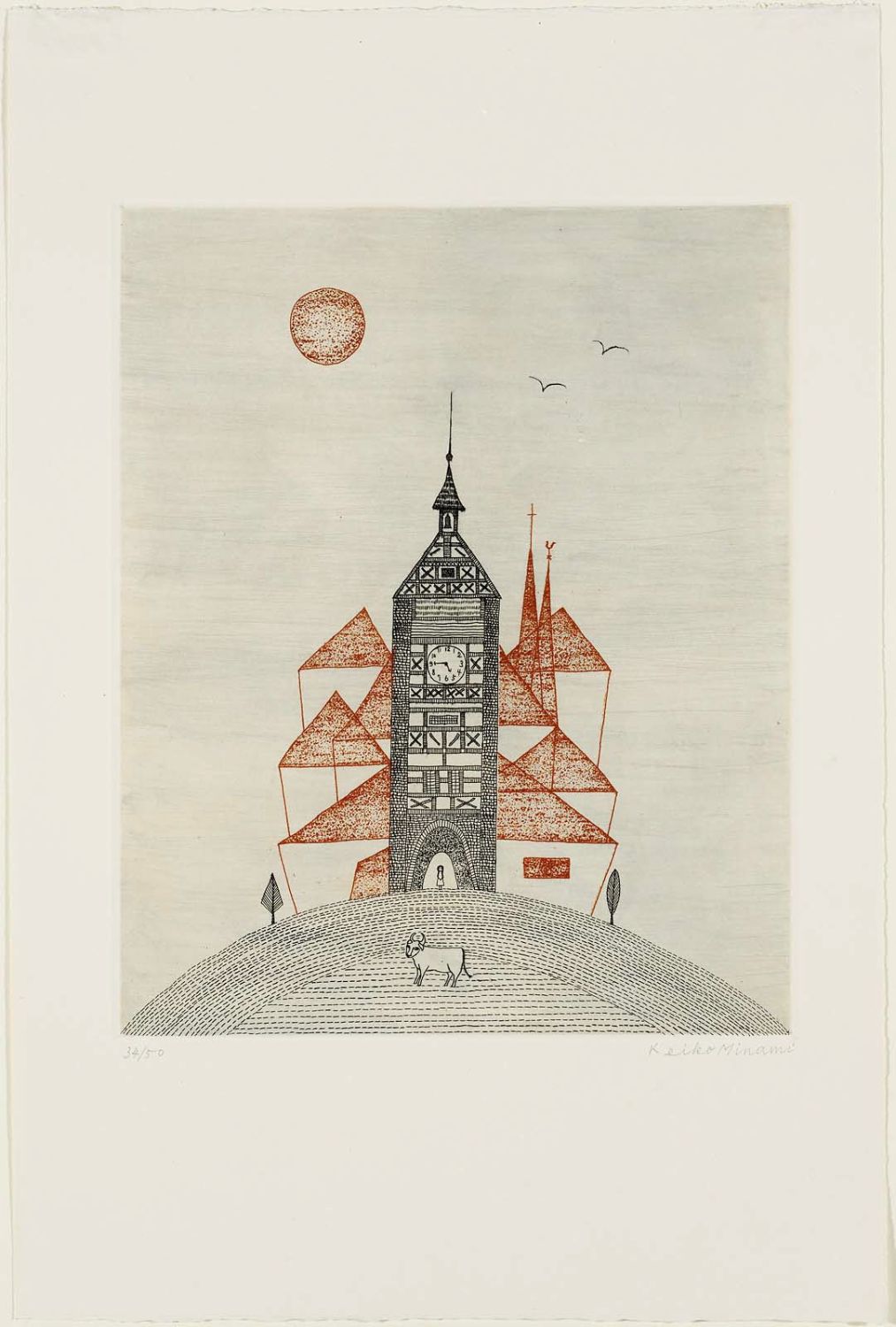
Etching in colours, signed and numbered 34/50 in pencil; together with two further etchings in colours on BFK Rives wove
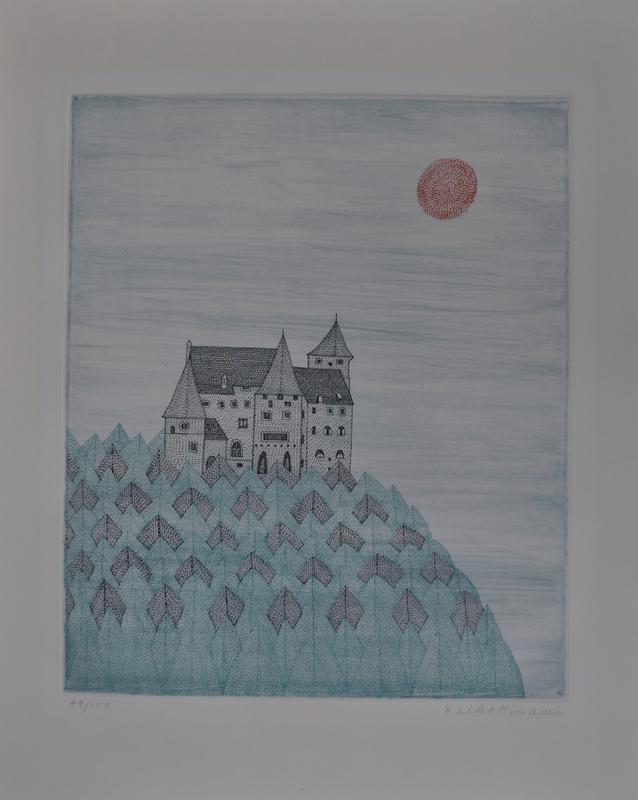
Forêt et château (Forest and castle)
1978
Etching with aquatint, ink and color on paper
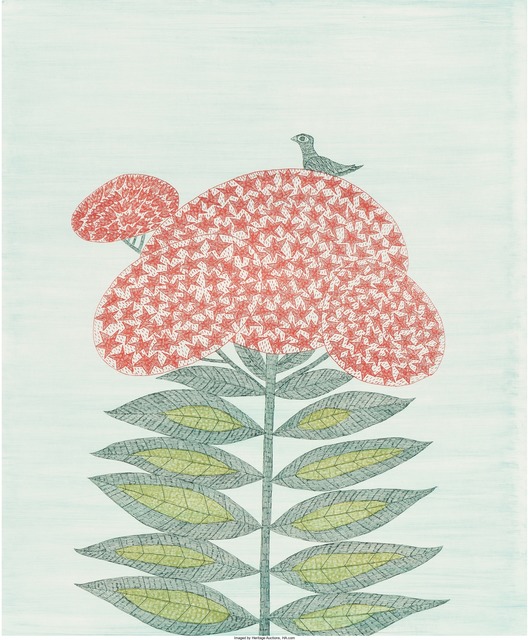
Bird on Flower
1985
Aquatint etching
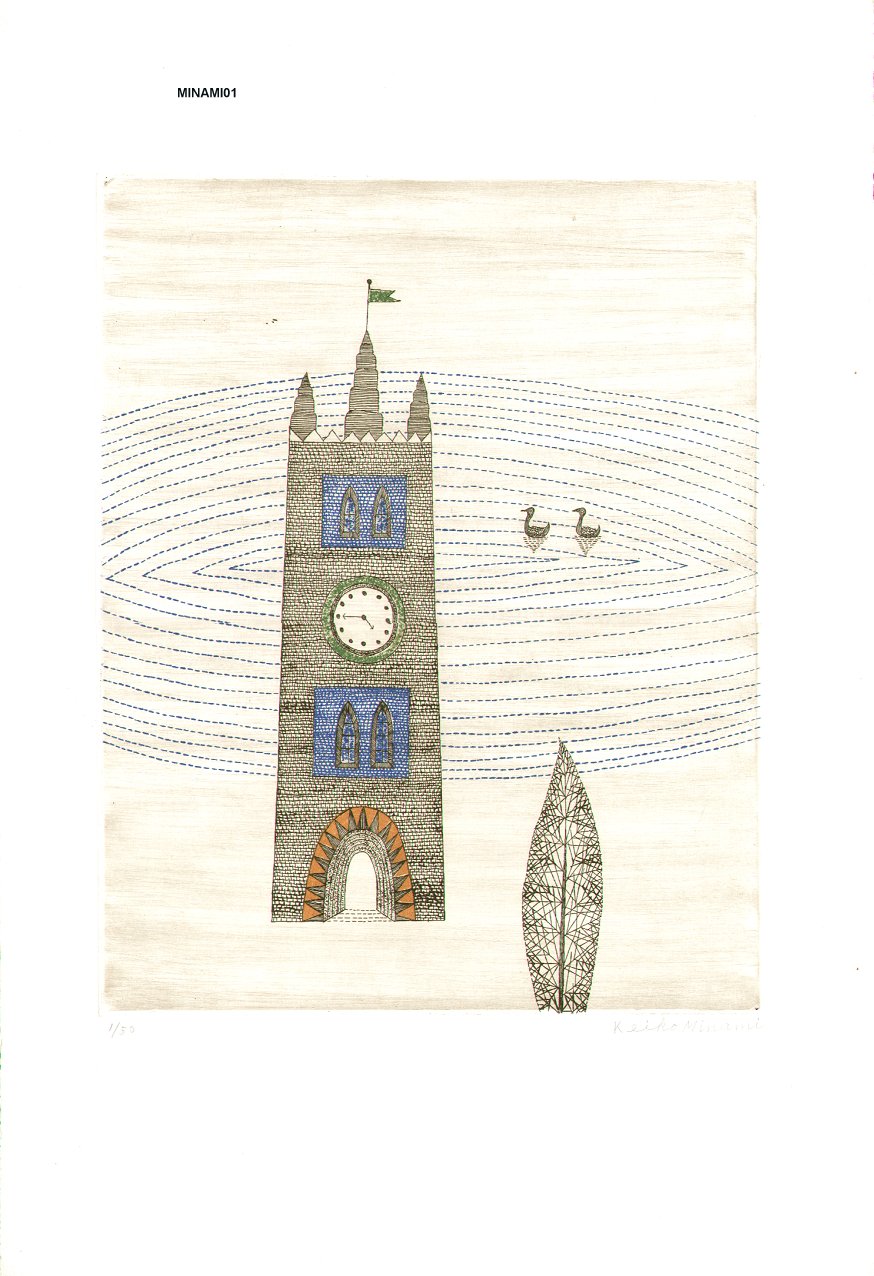
Bell tower
Woodblock print
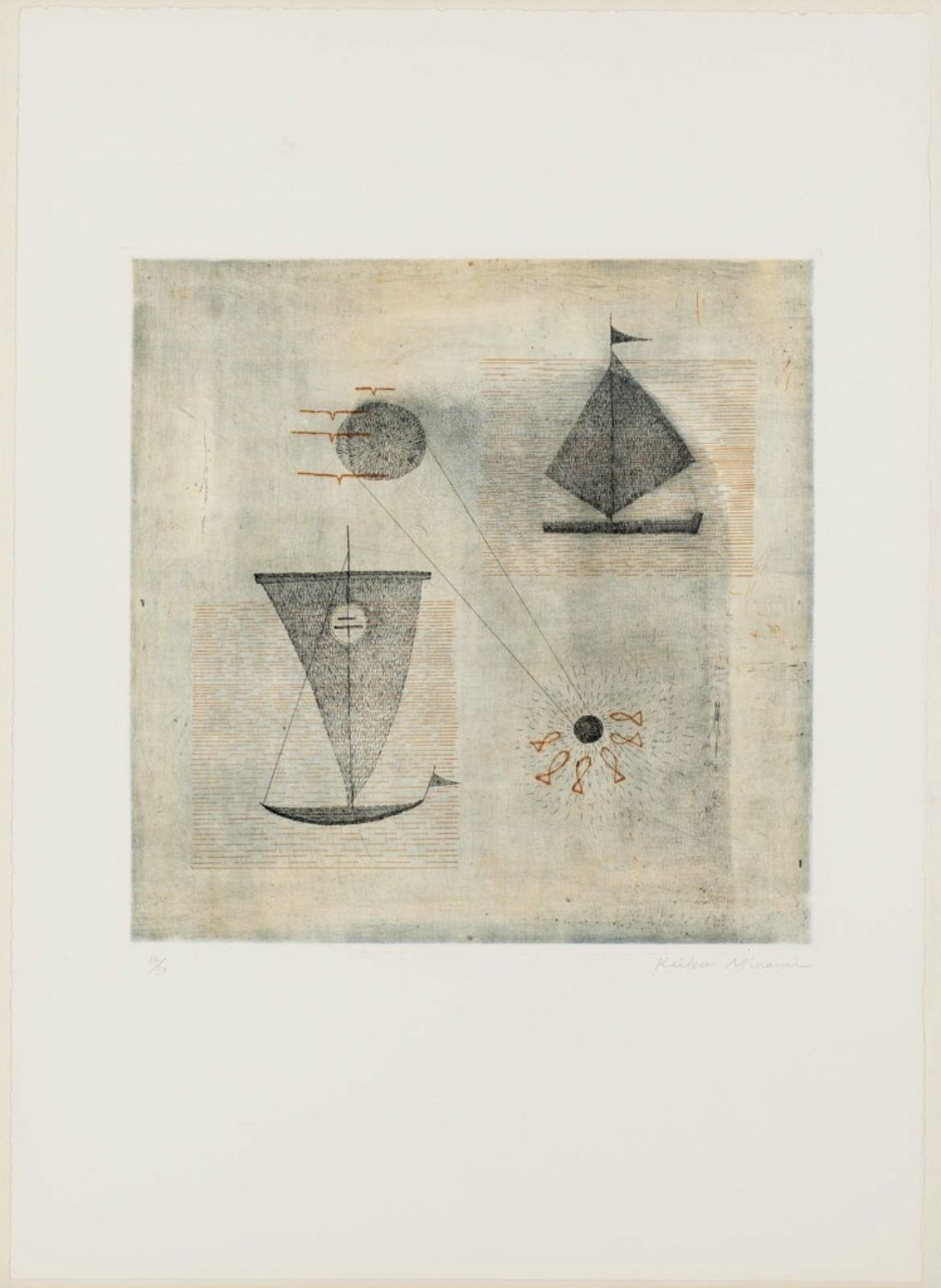
Sails
Woodblock print
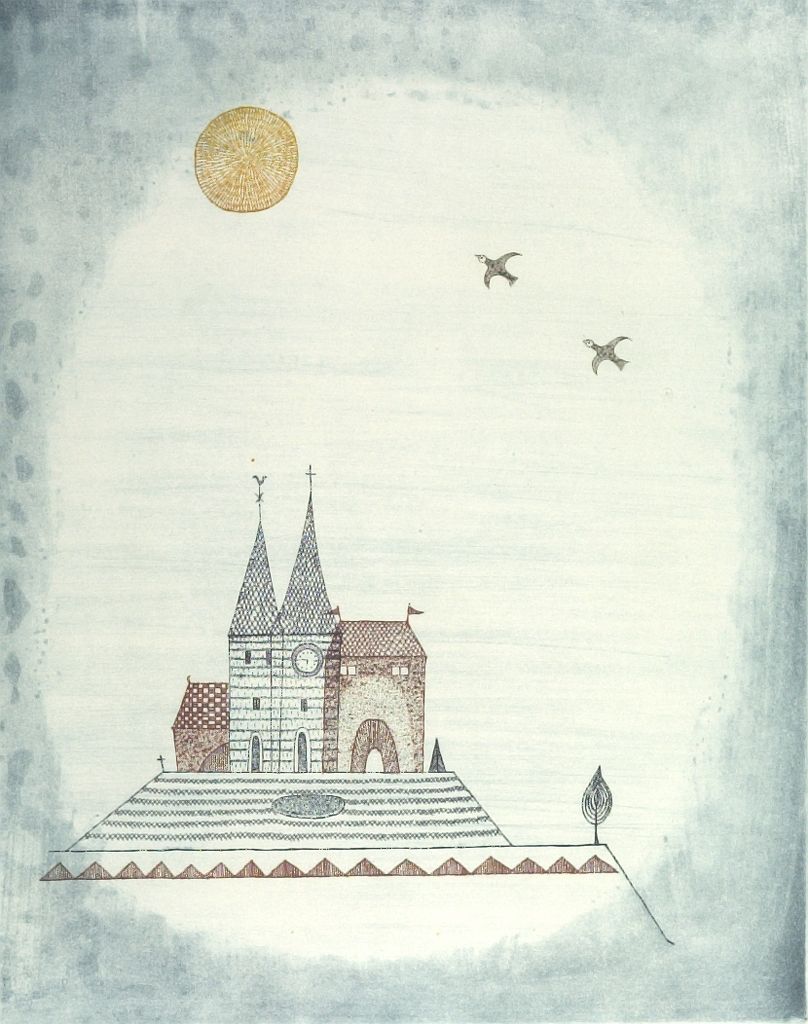
Untitled (keiko-minami)
Woodblock print

Castle, Moon & Birds
The Black Swan
Woodblock print
"Castle, Moon & Birds"
Woodblock print
Minami Keiko
Woodblock print
Cinq heures moins le quart
Woodblock print
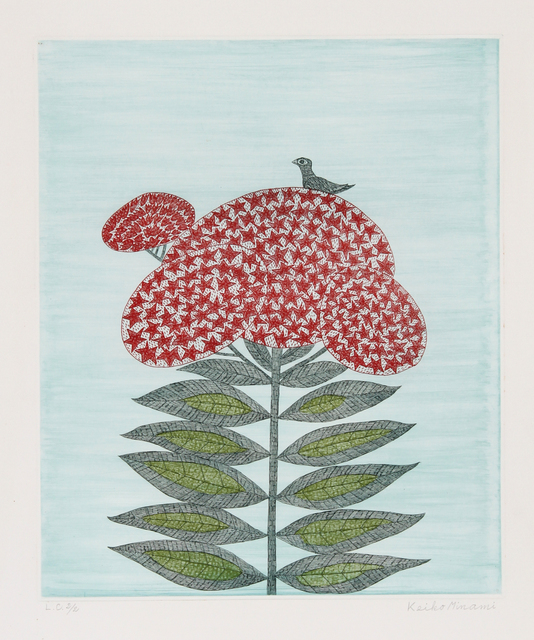
Bird on Flower
Etching with Aquatint, signed and numbered in pencil
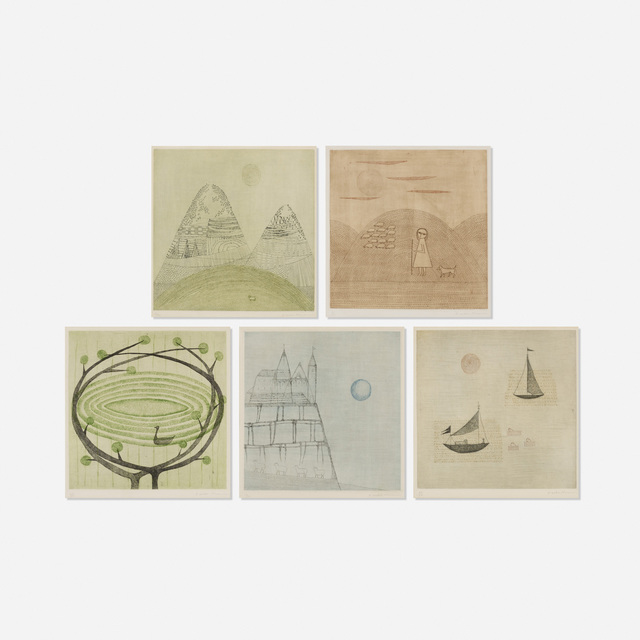
collection of five works
Engraving with aquatint on paper
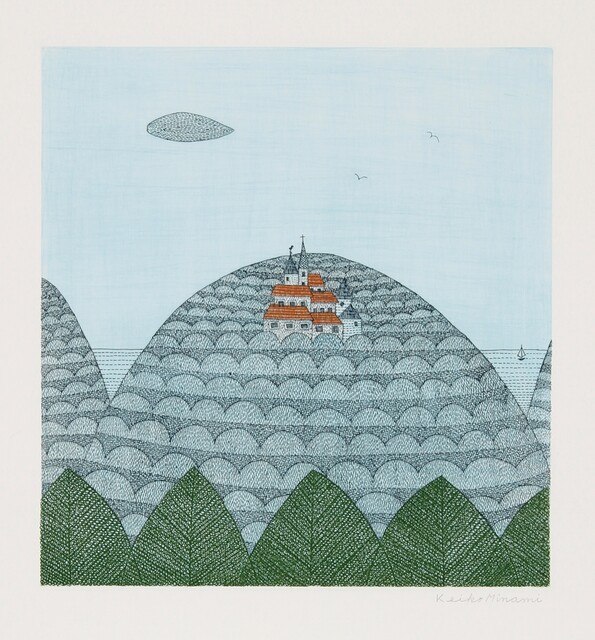
Castle
Aquatint Etching