Biography
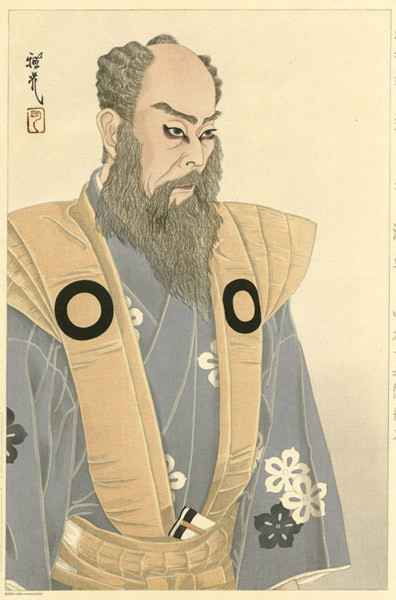
Ota Masamitsu (太田雅光, 1892-1975) — whose name is sometimes read Ota Gako — built his career around a single consuming subject: the kabuki theater. As one of the shin-hanga movement's specialists in the actor portrait, he produced woodblock images of kabuki performers in character that emphasized the individual personality of each actor. Where the movement's landscape specialists preserved views of traditional Japan, Ota preserved the living art of kabuki, capturing celebrated performers of the Showa era in the roles that defined their reputations.
A painter and print designer with a strong focus on kabuki, Ota also contributed illustrations to books in the genre, and he began producing woodblock prints in earnest only after World War II. His two most important sets of actor prints — 'Showa Butai Sugata' (Figures of the Showa Stage, around 1950) and 'Gendai Butai Geika' (Figures of the Modern Stage, around 1955), twelve prints each — were published by the Banchoro studio. In this collaborative production the blocks were carved chiefly by Ito Susumi and printed by Ito Shuntaro. Their craft rendered the rich palette of kabuki — deep reds, bold blacks, and intricate textile patterns — while Ota's designs used fine gradation printing (bokashi), a realistic rendering of the texture of the actors' costumes, and a sparing, deliberate use of mica to achieve a strikingly lifelike, three-dimensional impression.
Ota depicted many of the leading kabuki actors of the mid-twentieth century, among them Ichikawa Ebizo IX — whose grimacing, clench-fisted portrayal of Moritsuna is one of his best-known designs — as well as Nakamura Utaemon VI, renowned for the onnagata female roles, and Matsumoto Koshiro, Onoe Shoroku, Ichimura Uzaemon XV, and Onoe Kikugoro. Each portrait aimed to capture not just likeness but characterization — the specific way a given actor inhabited a given role. Beyond his stage portraits, Ota created designs documenting kumadori, the bold painted makeup of kabuki, and illustrated books in the field, including the 1931 'Kabuki Juhachiban' and the 1966 English-language volume 'Kabuki Costume.'
Unlike the yakusha-e artists of the Edo period, who often worked from conventions and stock poses, Ota built his images around the individual features and personality of specific living performers, giving his prints a documentary quality that theater historians value alongside their artistic merit. The actors and performance traditions he recorded constitute a visual archive of Showa-era kabuki that complements the photographic and written record.
Key Facts
- Active Period
- 1892–1975
- Nationality
- 🇯🇵Japan
- Movement
- Shin-hanga
- Works Indexed
- 55
Frequently Asked Questions
Ota Masamitsu (太田雅光, 1892-1975) — whose name is sometimes read Ota Gako — built his career around a single consuming subject: the kabuki theater. As one of the shin-hanga movement's specialists in the actor portrait, he produced woodblock images of kabuki performers in character that emphasized the individual personality of each actor. Where the movement's landscape specialists preserved views of traditional Japan, Ota preserved the living art of kabuki, capturing celebrated performers of the Showa era in the roles that defined their reputations.
Ota Masamitsu was active from 1892 to 1975. They were associated with the Shin-hanga movement.
Ota Masamitsu's work was shaped by the Shin-hanga tradition in Japanese woodblock printmaking. Shin-hanga: ## What is Shin-hanga? Shin-hanga (新版画), literally "new prints," is the early twentieth-century revival of the collaborative Japanese woodblock workshop, organized between roughly 1915 and 1960 by the Tokyo publisher Watanabe Shōzaburō (1885–1962) and a handful of competing houses.
Ota Masamitsu's prints frequently feature kabuki, figures, theater, portraits, warriors, bijin-ga.
Original prints by Ota Masamitsu can be found in collections including Japanese Art Open Database, Minneapolis Institute of Art, robynbuntin, ukiyo-e.org.
Woodblock Prints by Ota Masamitsu (55)
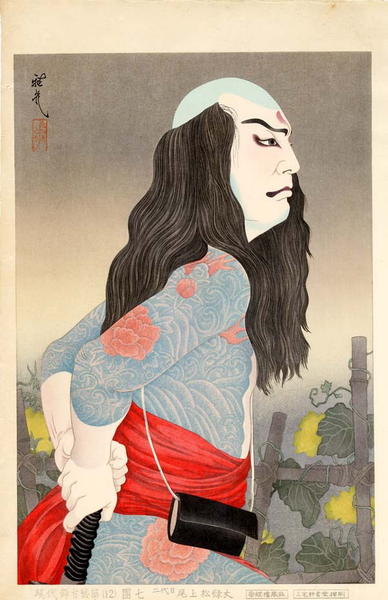
Onoe Shoroku II as the tattooed villain Danshichi
1955
Woodblock print
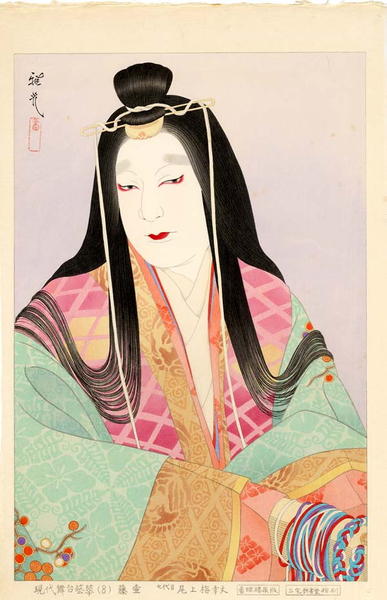
Untitled (ota-masamitsu)
c. 1920–1975
Woodblock print
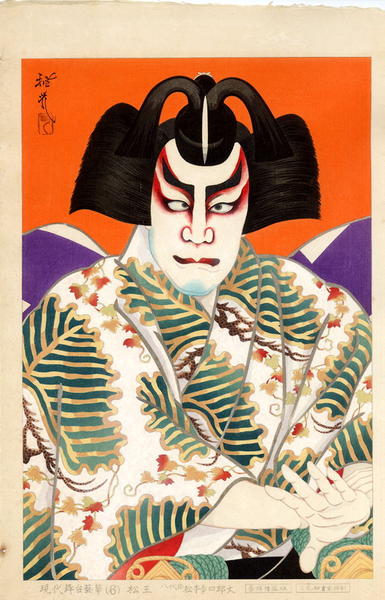
Matsumoto Koshiro VIII as Matsuomaru
Not set
Woodblock print

Nakamura Kichiemon as Kiyomasa

The actor Nakamura Utaemon V playing the role of nanny Masaoka in the play Meiboku Sendai Hagi
Mokuhanga (Japanese woodblock)

18 great plays by the Ichikawa Danjurô line of actors
Mokuhanga (Japanese woodblock)
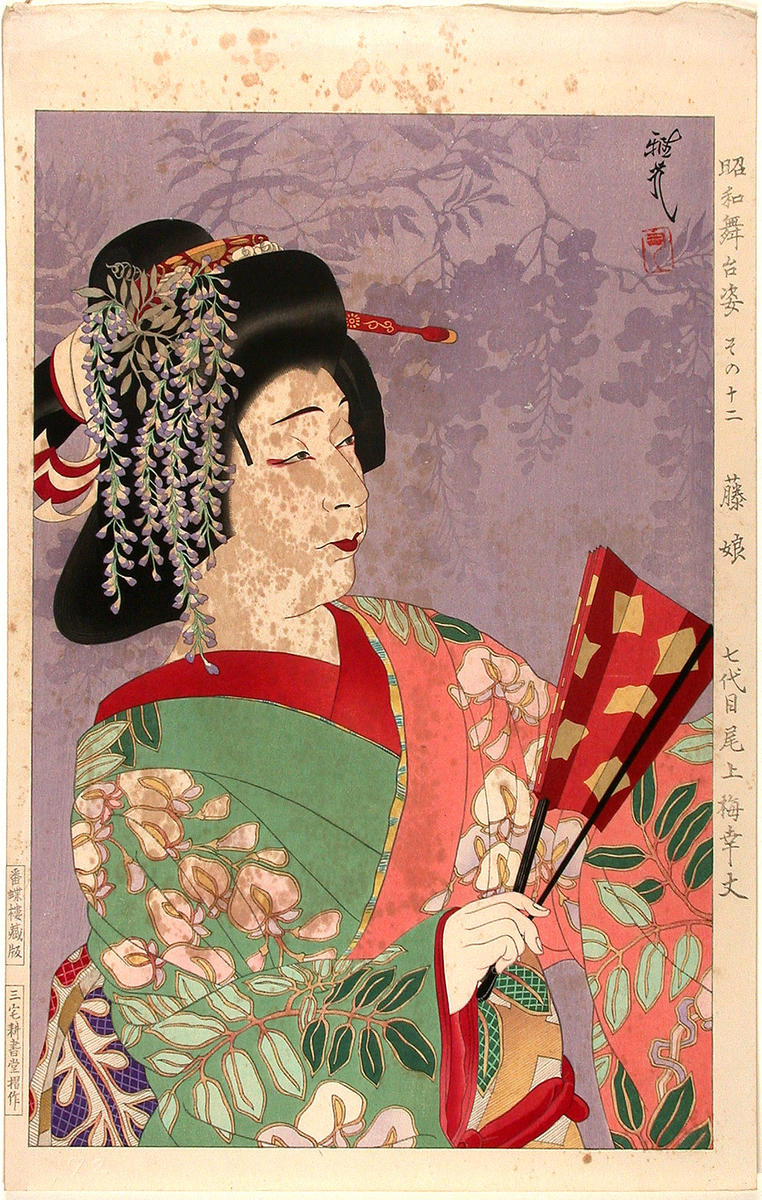
Onoe Baiko VII- Wisteria maiden
Not set
Woodblock print
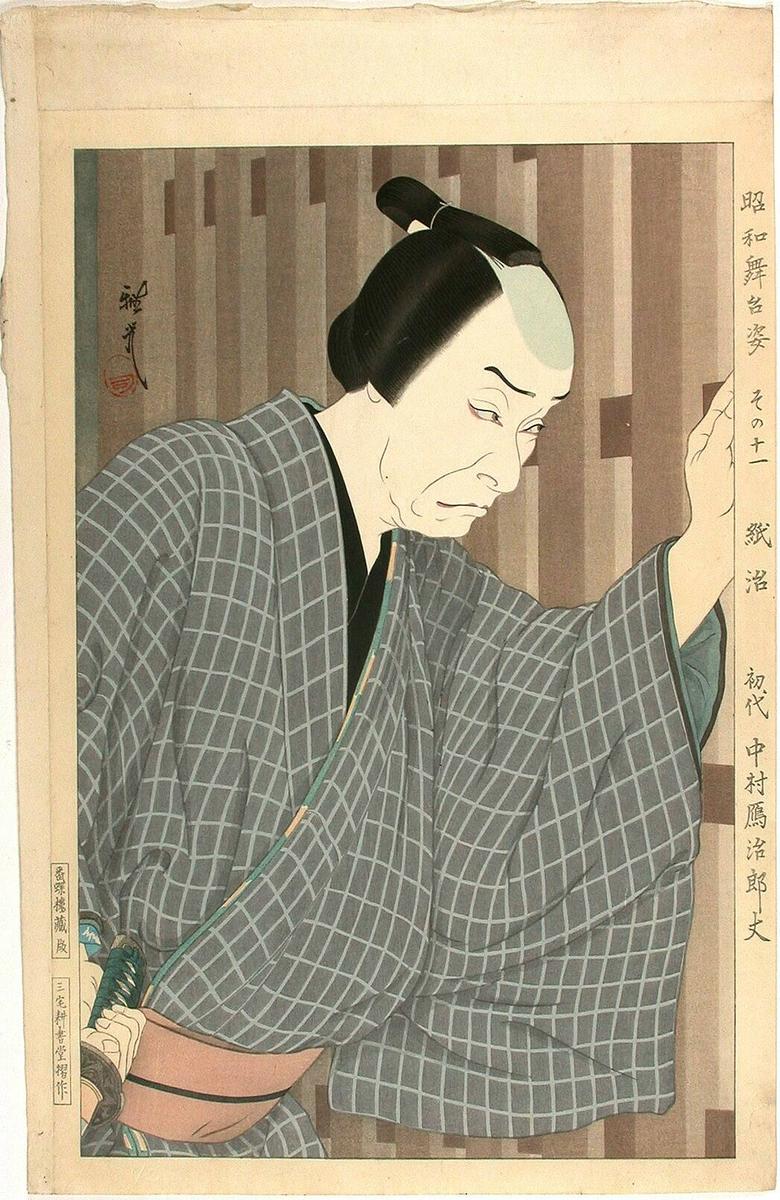
Masamitsu Ohta (1892?-1975) - see Ohta, Masamitsu
Not set
Woodblock print
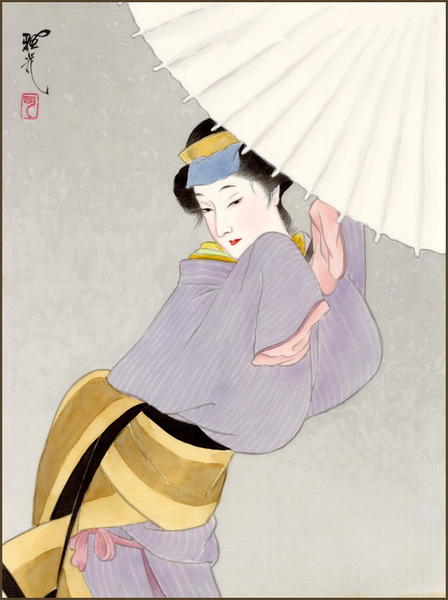
Bijin in the Snow- silk painting
Not set
Woodblock print

Two small envelops with actor portraits
Mokuhanga (Japanese woodblock)

The actor Onoe Kikugoro VI playing the role of Kosho in Kagami Jishi
Mokuhanga (Japanese woodblock)

The actor Nakamura Utaemon VI playing the role of the shirabyôshi Hanako in the famous dance Musume Dôjôji
Mokuhanga (Japanese woodblock)

The actor Ichimura Uzaemon XV in the role of fireman Megumi Tatsugorô
Mokuhanga (Japanese woodblock)

Onoe Shoroku in the role of the tattooed Danshichi
Mokuhanga (Japanese woodblock)

The actor Kitamura Ryokurô in the role of Otsuta
Mokuhanga (Japanese woodblock)

Ichikawa Sadanji III as Oboshi Yuranosuke in the drama "Kanadehon Chûshingura
Mokuhanga (Japanese woodblock)

Ichikawa Jukai III as Shirai Gonpachi
Mokuhanga (Japanese woodblock)

Ichikawa Ennosuke II in the role of Akutaro
Mokuhanga (Japanese woodblock)

Ichimura Uzaemon XV in the role of fireman Megumi Tatsugorô
Mokuhanga (Japanese woodblock)

Matsumoto Kô shirô VII as Benkei in the play Kanjinchô
Mokuhanga (Japanese woodblock)

Nakamura Kanzaburô XVII as Miuranosuke in the play Kamakura Sandaiki
Mokuhanga (Japanese woodblock)
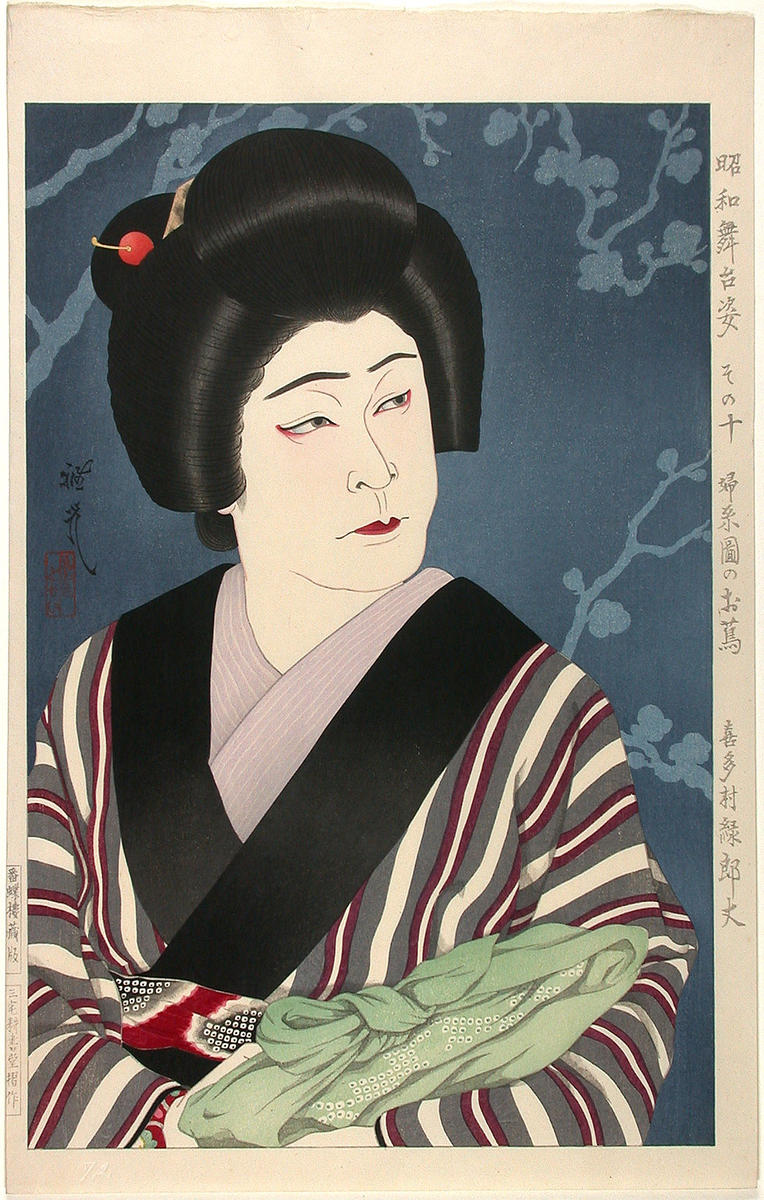
Kitamura Rokuro as Otsuta in Fukeizu
Not set
Woodblock print

Unidentified actor in the role of a Geisha
