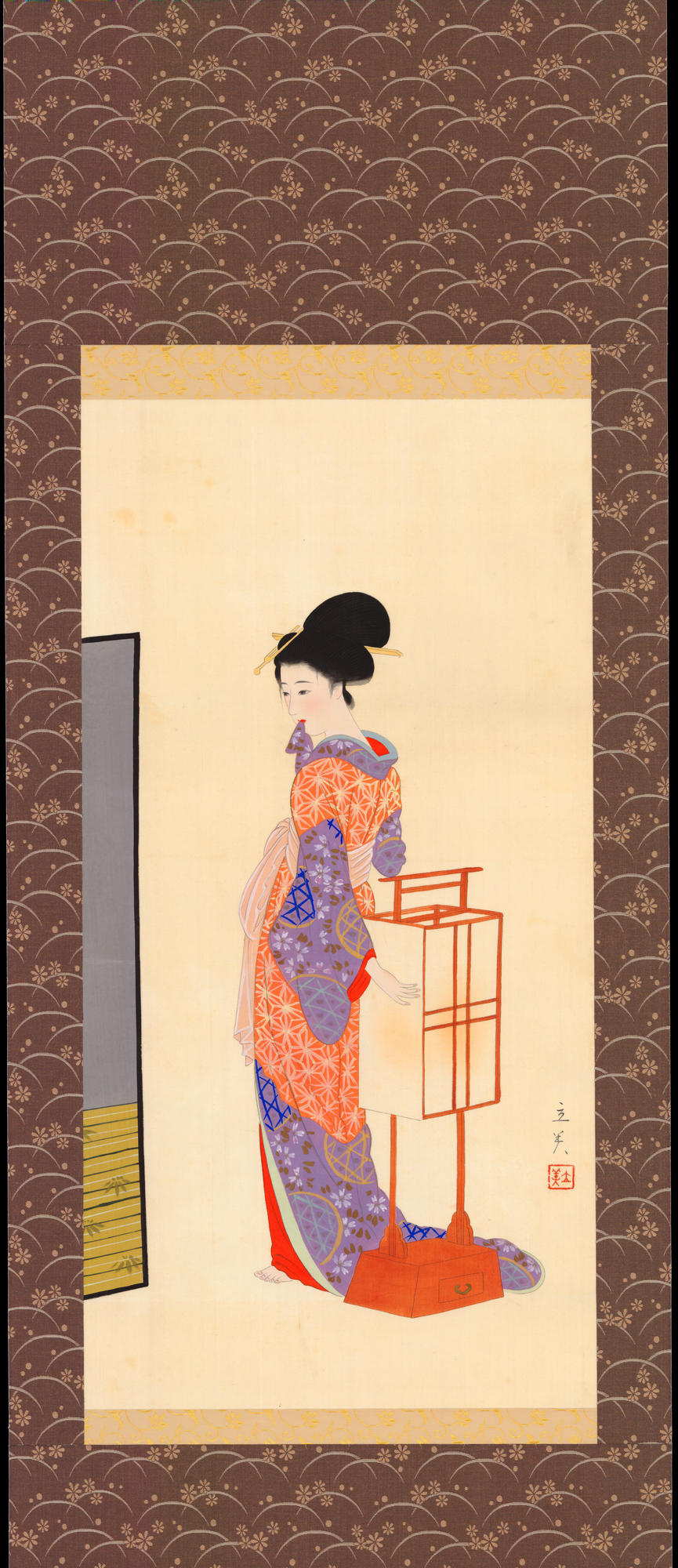
Biography
Shimura Tatsumi (志村立美, 1907–1980) was a Japanese artist renowned for his bijin-ga (beautiful women) prints and paintings that depicted kimono-clad women with a serene, timeless elegance. Over a career spanning five decades, Shimura evolved from a commercial illustrator and shin-hanga print designer into an independent artist who produced some of the most graceful and psychologically nuanced images of Japanese women in the postwar period.
Born in 1907 in Takasaki, Gunma Prefecture, northwest of Tokyo, under the given name Sentaro, Shimura moved to the capital to pursue an artistic career. He studied traditional Japanese painting under Yamakawa Shuho, himself a leading pupil of Kaburagi Kiyokata, which placed Shimura within the distinguished lineage that produced so many of the shin-hanga movement's foremost bijin-ga artists. This training gave him a thorough command of nihonga painting technique and the conventions of the bijin-ga genre, both of which informed his entire career.
In his early years, Shimura earned his living as an illustrator for newspapers and magazines — most notably the women's lifestyle magazine Fujokai — producing cover art and story illustrations for a wide popular audience. This commercial work honed his ability to create images of women that were immediately appealing and emotionally engaging while maintaining high artistic standards. During the 1930s and 1940s he also produced woodblock print designs in the shin-hanga collaborative model, his designs carved and printed by professional craftsmen under the direction of publishers; among these was a contribution to the 1932 collaborative series Dai Tokyo Hyakkei (One Hundred Views of Great Tokyo).
Shimura's shin-hanga prints depict women in traditional kimono engaged in quiet, contemplative activities — arranging flowers, reading, gazing into mirrors, or simply sitting in repose. His style is notable for its refined simplicity and the warmth of his characterizations. Unlike the more idealized beauties of Shinsui or the bold modernists of Kobayakawa, Shimura's women possess an approachable, gentle beauty that suggests real personality beneath the elegant surface.
In the postwar decades Shimura devoted himself increasingly to woodblock printmaking. During the late 1940s and early 1950s he designed several prints of beauties, and in 1953 he collaborated with the Japanese Institute of Prints on the series Gendai Bijin Fuzoku Gotai (Five Figures of Modern Beauties), issued in editions of 200. This later body of work is characterized by a more personal and expressive approach to the bijin-ga tradition: the women are rendered with greater psychological depth and a subtler palette, their poses and expressions suggesting inner states of thought and feeling.
Shimura exhibited regularly at major Japanese art exhibitions and was recognized as one of the leading postwar bijin-ga artists, while his magazine and book illustration brought his images of beautiful women to a broad popular audience in Japan. He died in 1980, leaving a body of work that spans the transition from the collaborative shin-hanga era to the more individualistic artistic climate of postwar Japan. His prints are held in collections including the Honolulu Museum of Art and the British Museum.
Key Facts
- Active Period
- 1907–1980
- Nationality
- 🇯🇵Japan
- Movement
- Shin-hanga
- Works Indexed
- 69
Frequently Asked Questions
Shimura Tatsumi (志村立美, 1907–1980) was a Japanese artist renowned for his bijin-ga (beautiful women) prints and paintings that depicted kimono-clad women with a serene, timeless elegance. Over a career spanning five decades, Shimura evolved from a commercial illustrator and shin-hanga print designer into an independent artist who produced some of the most graceful and psychologically nuanced images of Japanese women in the postwar period.
Shimura Tatsumi was active from 1907 to 1980. They were associated with the Shin-hanga movement.
Shimura Tatsumi's work was shaped by the Shin-hanga tradition in Japanese woodblock printmaking. Shin-hanga: ## What is Shin-hanga? Shin-hanga (新版画), literally "new prints," is the early twentieth-century revival of the collaborative Japanese woodblock workshop, organized between roughly 1915 and 1960 by the Tokyo publisher Watanabe Shōzaburō (1885–1962) and a handful of competing houses.
Shimura Tatsumi's prints frequently feature bijin-ga, figures, snow scenes, music, summer, cherry blossoms.
Original prints by Shimura Tatsumi can be found in collections including Japanese Art Open Database, Ohmi Gallery, Scholten Japanese Art.
Woodblock Prints by Shimura Tatsumi (69)
Lantern - 行燈
1940
Woodblock print
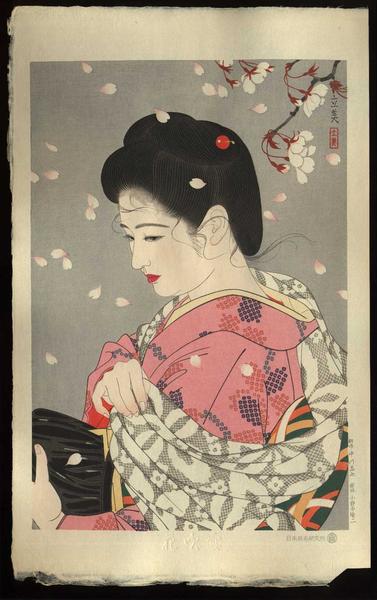
Hanafubuki (Falling Cherry Blossoms) — 花吹雪
1953
Woodblock print
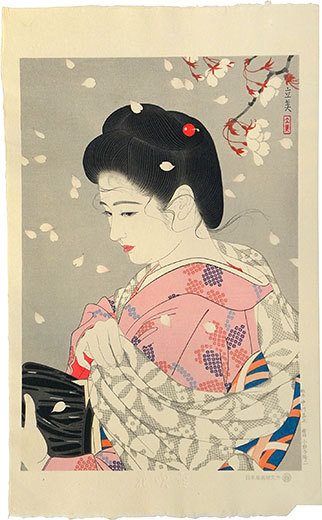
Five Figures of Modern Beauties: Cherry Blossoms Blizzard (Gendai Bijin Fuzoku Gotai: Hana Fubuki)
1953
Woodblock print

Reflection in a Mirror- Marumage — Marumage (Natsu)
1953
Woodblock print
![Five Figures of Modern Beauties: Playing Battledore and Shuttlecock (Gendai Bijin Fuzoku Gotai: Oibane [hagoita?]) by Shimura Tatsumi](https://data.ukiyo-e.org/scholten/images/2f5ba4099713181f9c0b7569fd92899f.jpg)
Five Figures of Modern Beauties: Playing Battledore and Shuttlecock (Gendai Bijin Fuzoku Gotai: Oibane [hagoita?])
1953
Woodblock print
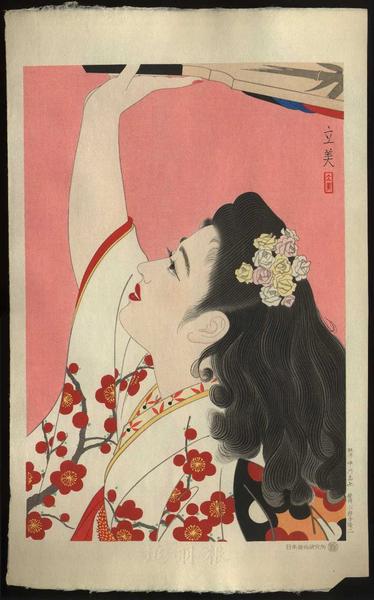
Oibane, Playing Battledore and Shuttlecock — 追羽根
1953
Woodblock print
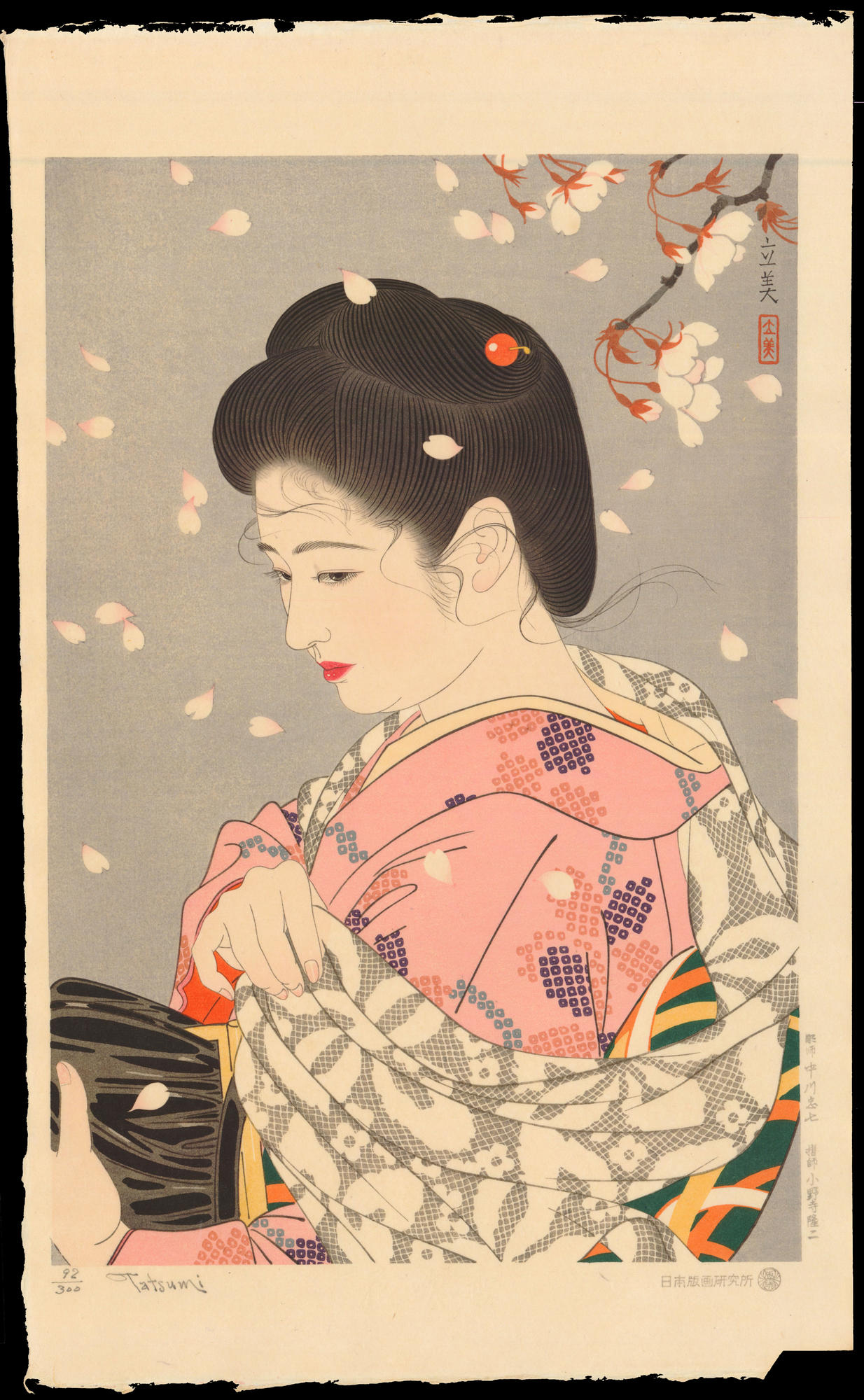
Tatsumi, Shimura
1953
Woodblock print
Falling Cherry Blossoms (Hanafubuki)
1953
Woodblock Print
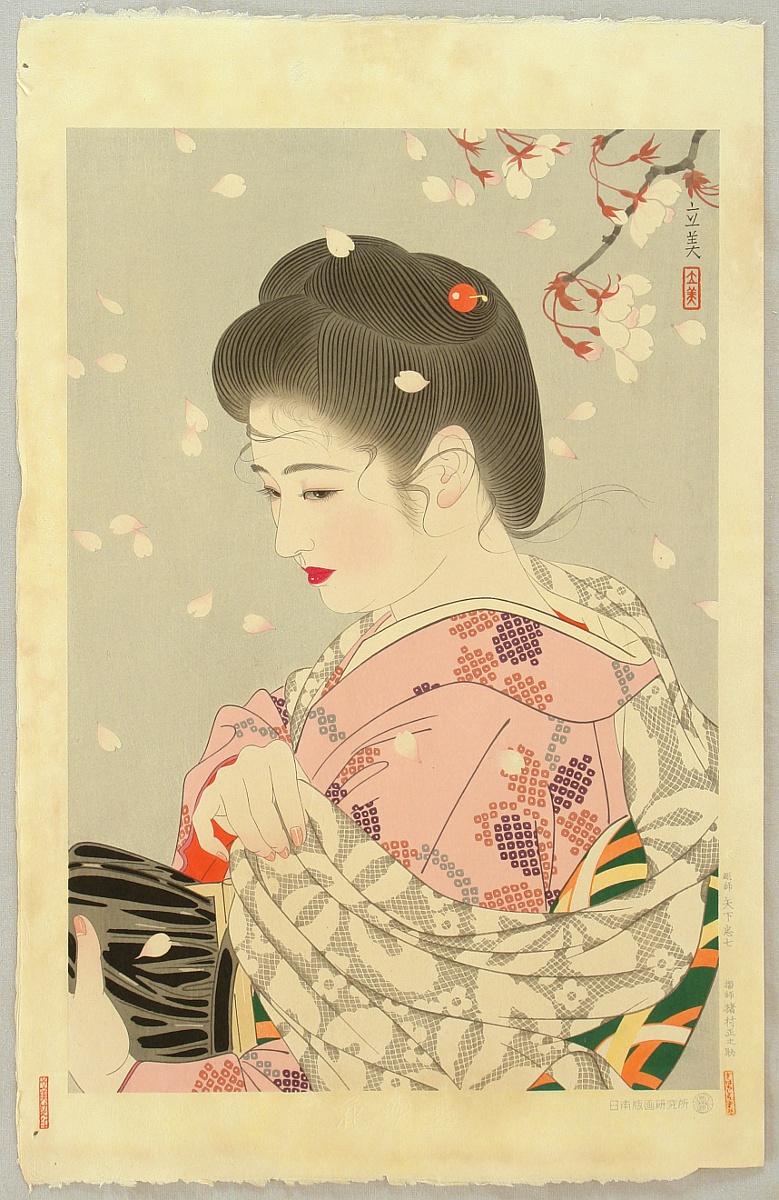
TotalCount
1953
Woodblock print
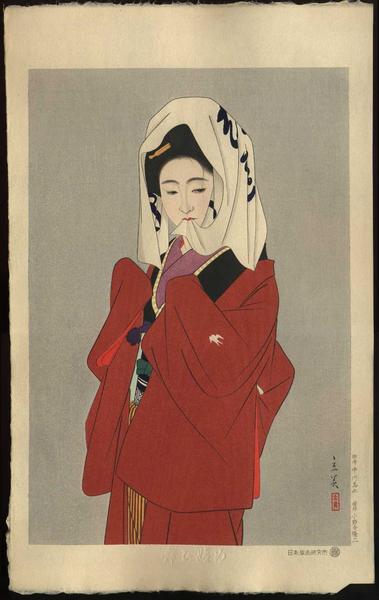
Maihime (Dancing Girl)
1953
Woodblock print
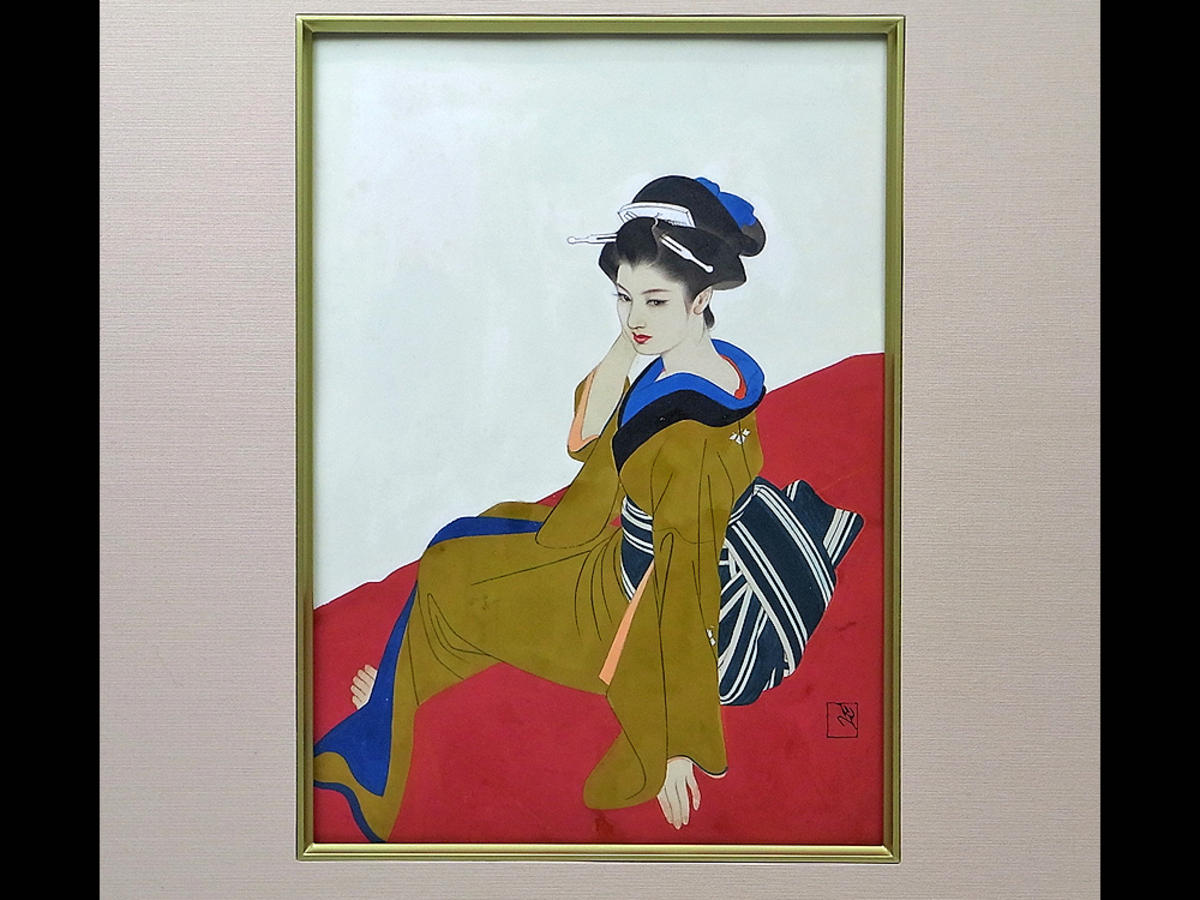
Bijin on red seat
1960
Woodblock print
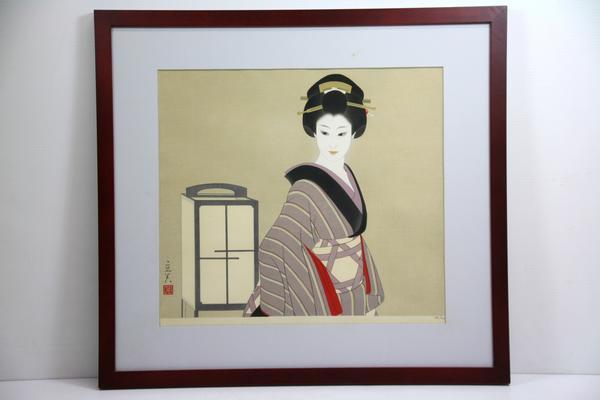
Illumination — あかり
circa 1970-1990
Woodblock print
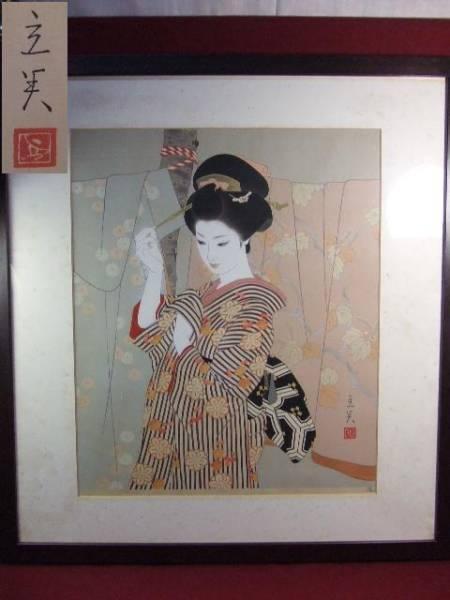
Short Sleeve Kimono — 小袖幕
1970
Woodblock print
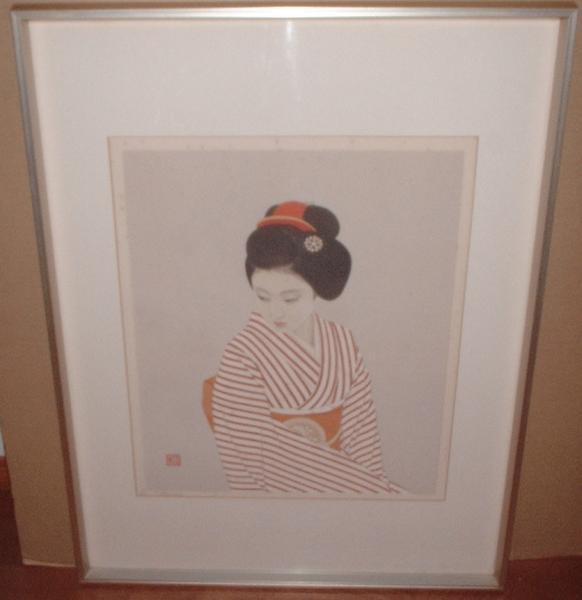
Maiko
1977
Woodblock print
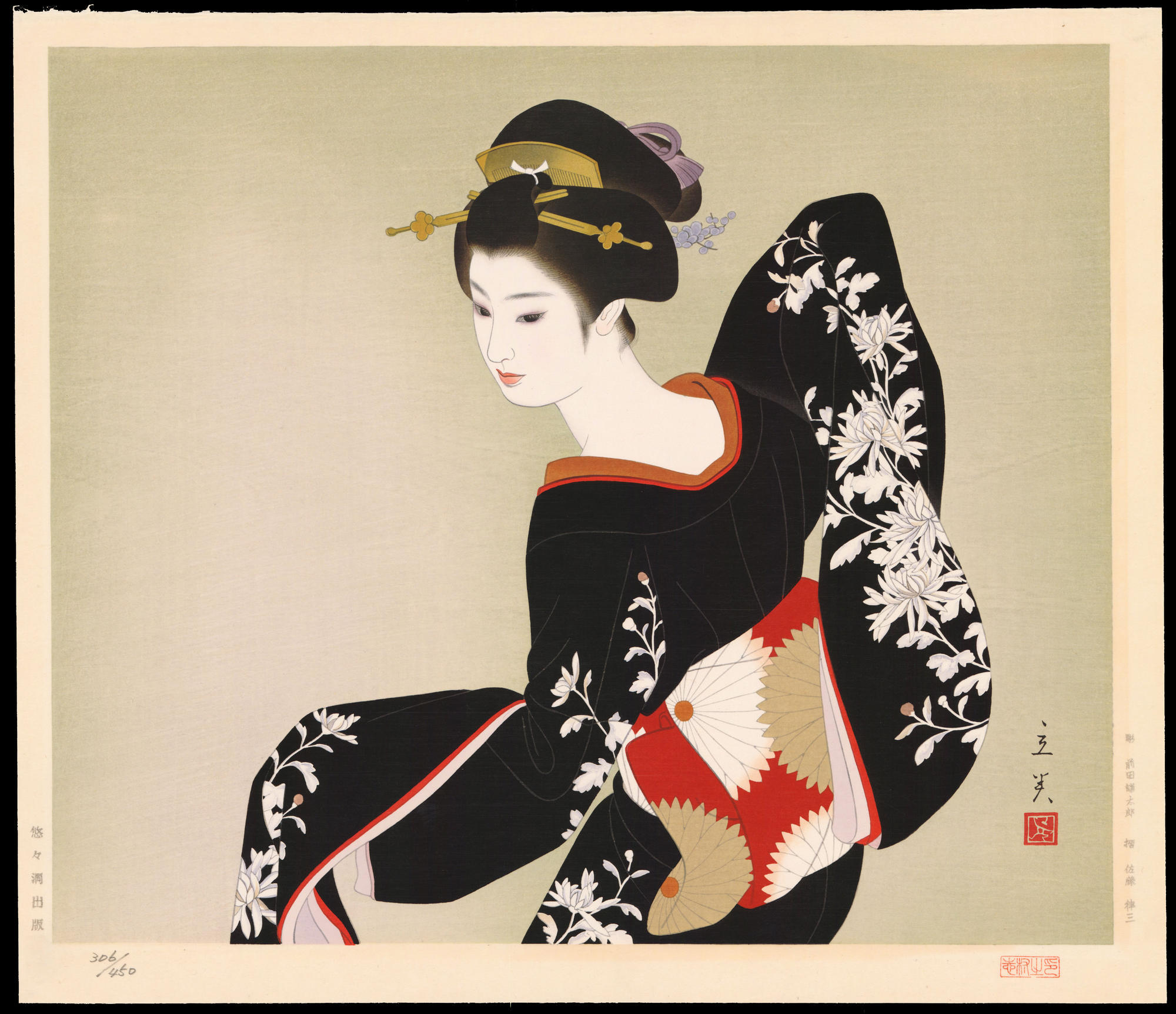
Gesture - しぐさ
c. 1980 (this item: First edition)
Woodblock print
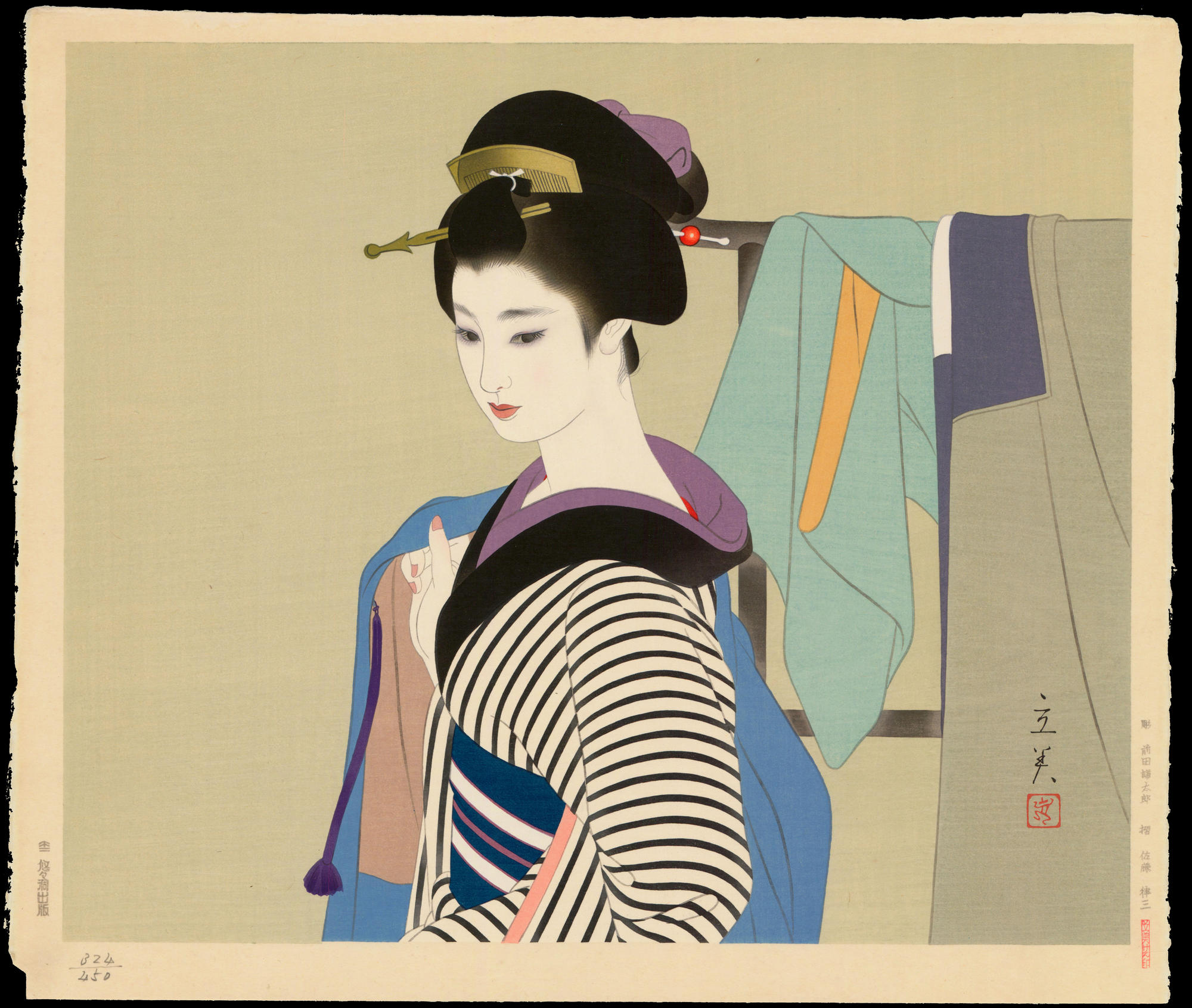
Haori - はおり
c. 1980 (this item: First edition)
Woodblock print
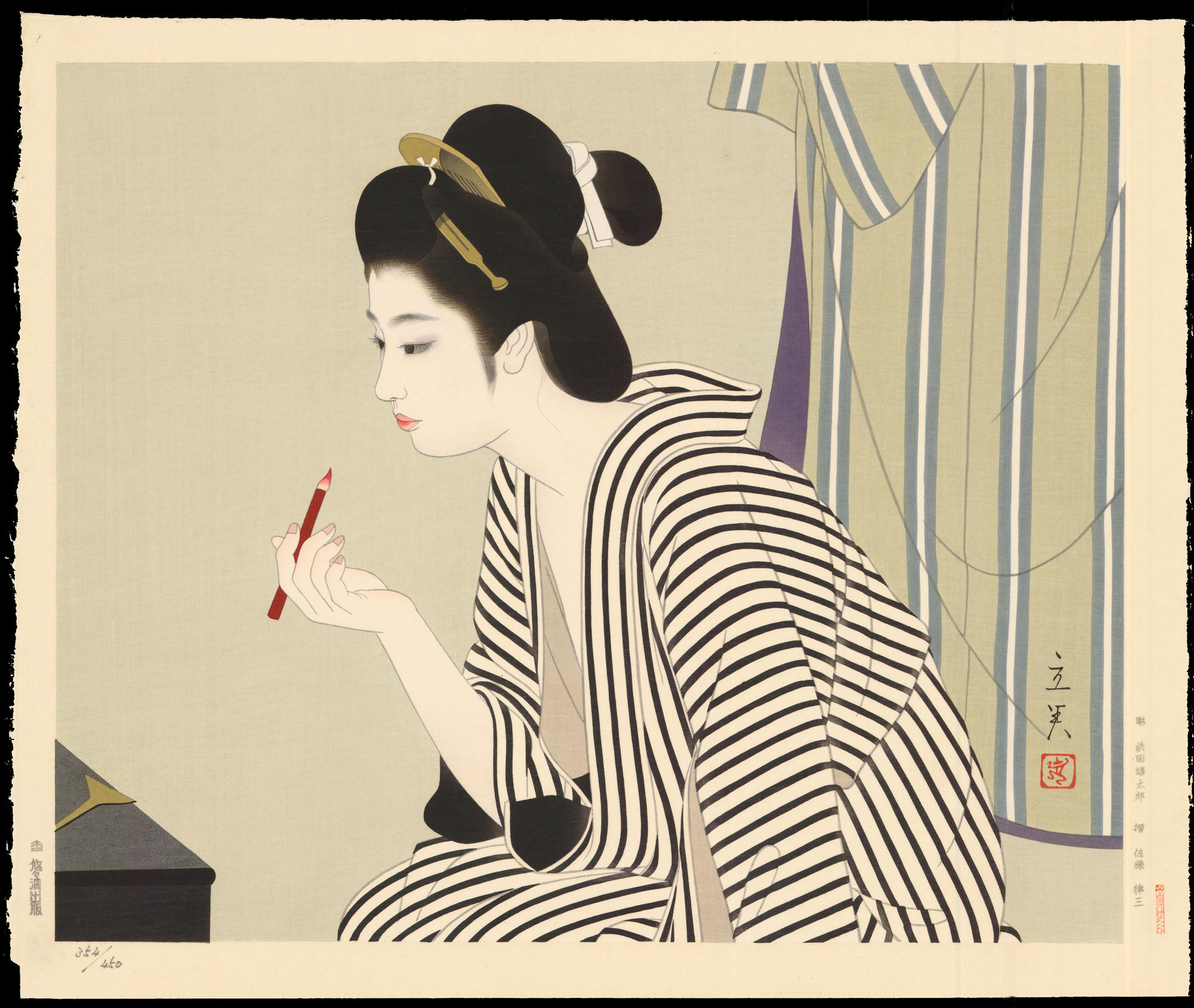
Lipstick - 口紅
c. 1980 (this item: First edition)
Woodblock print
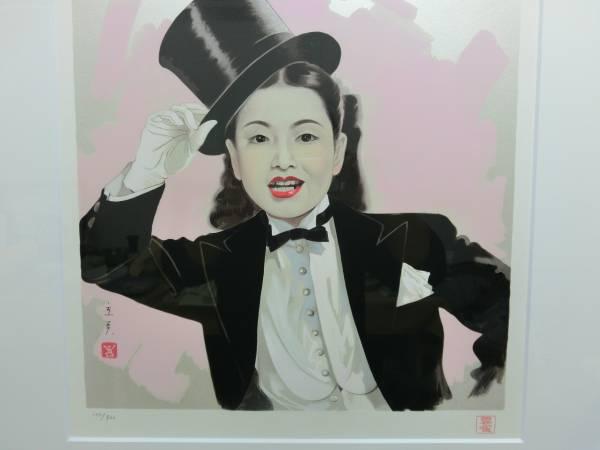
Sad Whistle — 悲しき口笛
1996
Woodblock print
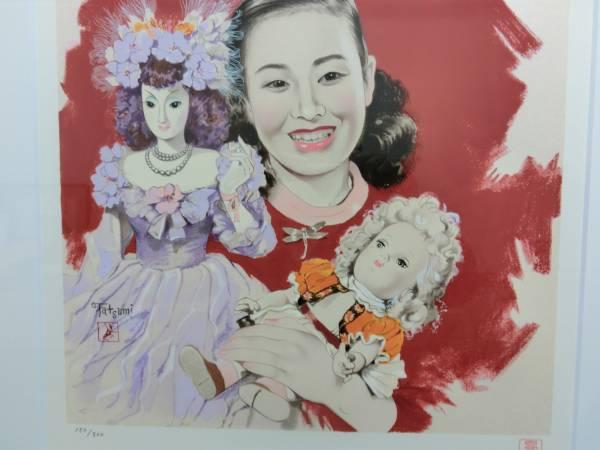
Two Pair of Eyes — 二人の瞳
1996
Woodblock print
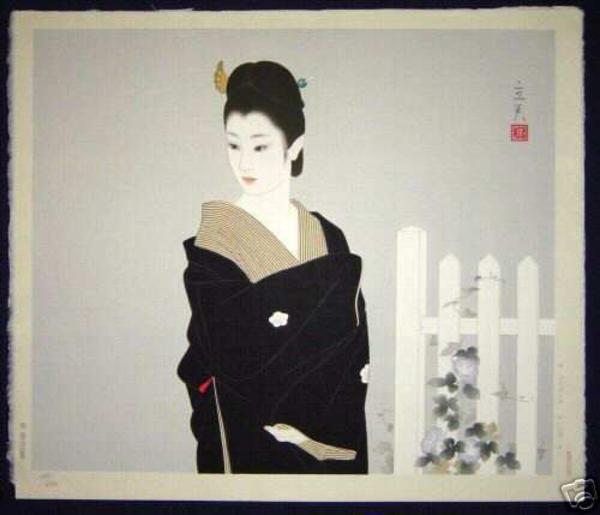
Garden Corner
Not set
Woodblock print

Ikio
Not set
Woodblock print
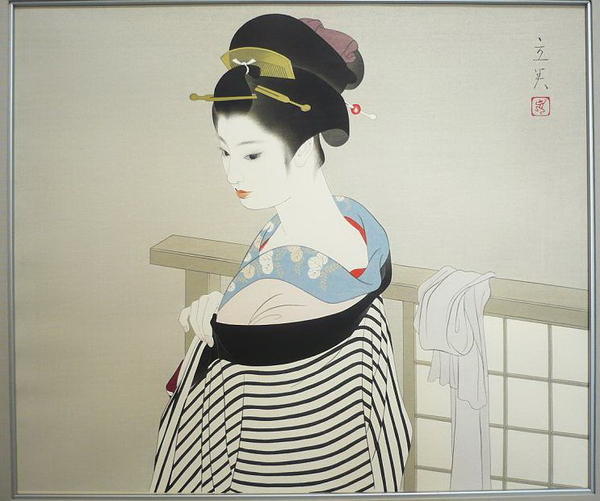
Preparation — 仕度
Not set
Woodblock print

Lion dance
Mokuhanga (Japanese woodblock)
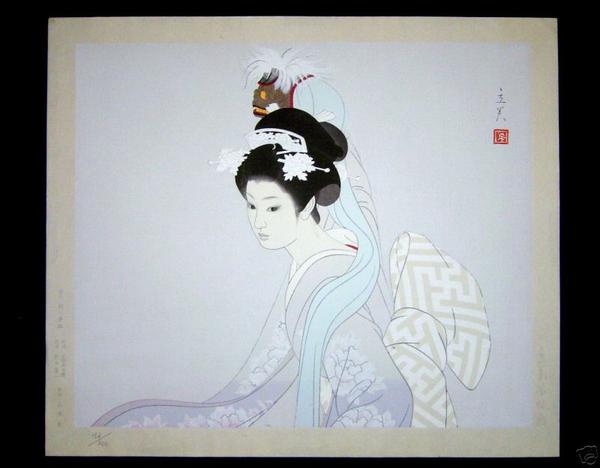
Kagami-Jishi
Not set
Woodblock print