Biography
Shinohara Kiyooki (篠原清興, active circa 1894-1904) was a late-Meiji woodblock-print designer whose surviving body of work is concentrated in the senso-e (war prints) of Japan's two foundational modern conflicts: the First Sino-Japanese War of 1894-1895 and the Russo-Japanese War of 1904-1905. He is documented only by the prints themselves, which carry his name and a sequence of war-news triptychs issued by Tokyo publishers across that decade. No biographical record of his birth, death, training, or studio affiliation has emerged in the standard print reference literature, and he belongs to a class of late-Utagawa-tradition Meiji designers who supplied the brief, intense market for senso-e during the 1890s and early 1900s and then disappeared from view as photography and lithography overtook the woodblock as the dominant medium for news imagery.
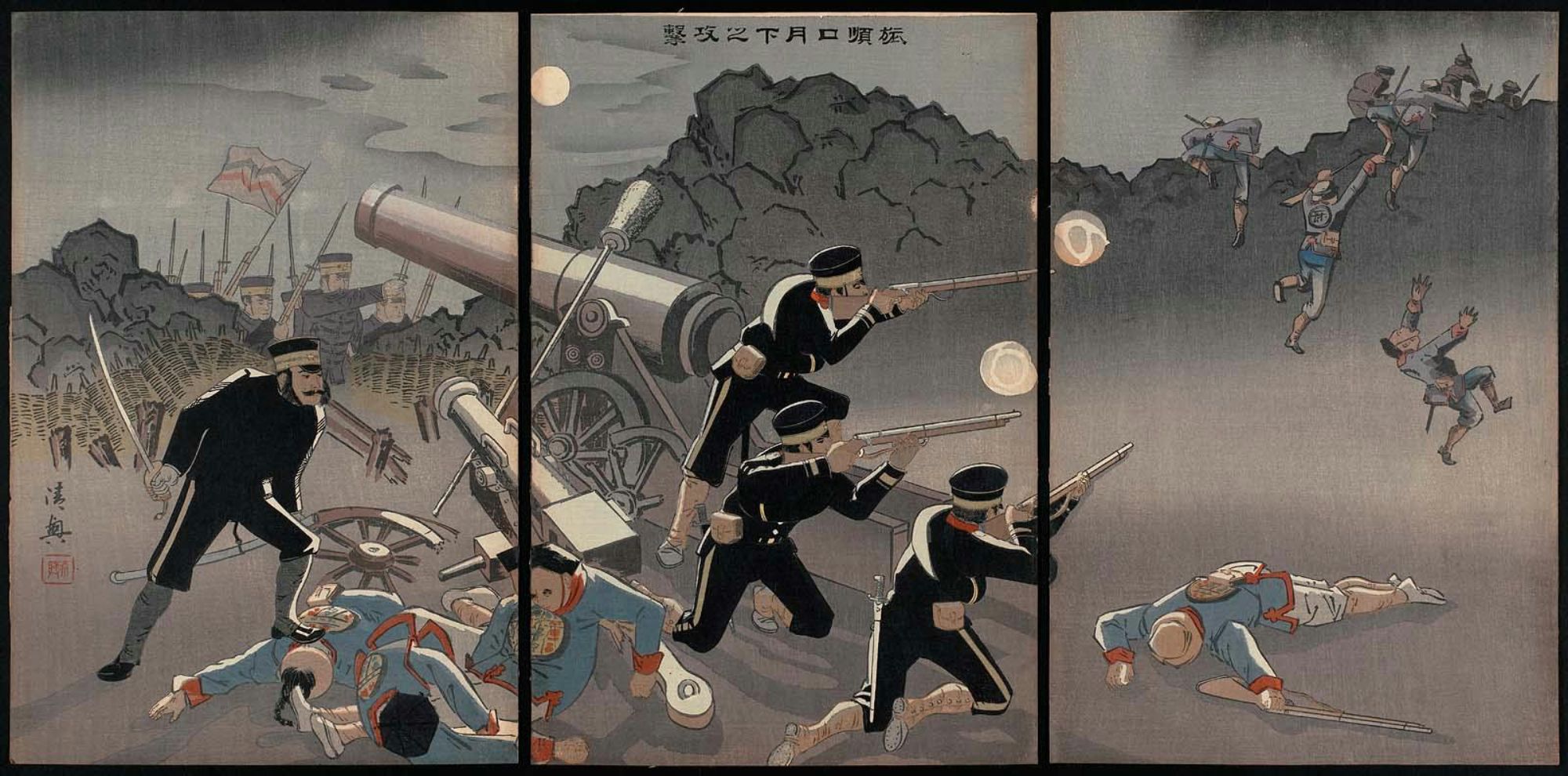
His Sino-Japanese War prints, dated 1894-1895, treat the major naval and amphibious engagements of the conflict in the panoramic triptych format that defined the genre. Three sheets at the Museum of Fine Arts, Boston, document this group: the night Attack on Port Arthur in the Moonlight (Ryōjunkō gekka no kōgeki) of 1894, the Bivouac after Landing at Yungcheng Bay (Eijōwan jōrikugo no roei) of 1895 (Yungcheng / Rongcheng Bay being the staging point for the Japanese landing that led to the Battle of Weihaiwei), and the Illustration of Bombardment at Weihaiwei (Ikaiei Nittō hōgeki no zu), also 1895, which depicts the decisive naval action that ended Chinese resistance and brought the Beiyang Fleet to surrender. Together these sheets trace the closing campaign of the war from the night raid through the amphibious landing to the final naval engagement, and they exemplify the way Meiji senso-e served as both reportage and patriotic spectacle for an audience hungry for visual coverage of a war that vaulted Japan into the company of modern imperial powers.
Kiyooki's fourth Sino-Japanese War sheet at the MFA, The Grand Festival at Yasukuni Shrine (Yasukuni jinja daisai no zu) of 1895, captures the war's commemorative dimension: the great festival held at Tokyo's Yasukuni Shrine in 1895 to honor the war dead and to consecrate the conflict as a foundational moment in modern Japanese nationhood. The print belongs to a sub-genre of late-Meiji senso-e that turned from battle imagery to memorial ceremony, and Kiyooki's treatment of the crowded shrine precinct, with imperial standards, processions, and assembled veterans rendered in the bright aniline reds of the Meiji color register, places the print squarely within the visual culture of state Shintō and the cult of the war dead that would dominate Japanese public life through the first half of the twentieth century.
Nine years later, Kiyooki returned to the senso-e format for the Russo-Japanese War. A Righteous War to Chastise the Russians: The Destroyer Force's Night Attack (Chō Ro gisen, kichiku tai yashū) of 1904, also at the MFA, depicts the opening engagement of the war: the surprise torpedo-boat attack on the Russian Pacific Fleet at Port Arthur on the night of 8-9 February 1904, which preceded the formal declaration of hostilities and inflicted significant damage on three Russian capital ships. The Japanese phrase chō Ro gisen ("the righteous war to chastise Russia") and the epithet kichiku ("demonic brute") applied to the Russian forces situate the print within the heightened nationalist rhetoric of 1904, and the design's return to the night-attack subject that Kiyooki had treated a decade earlier in his Port Arthur in the Moonlight reflects the Russo-Japanese War's deliberate evocation of Sino-Japanese War iconography. The print also marks the latest dated work in his known corpus, suggesting that he continued working at least into 1904 but leaving open the question of whether his career extended beyond the Russo-Japanese War years.
Kiyooki's surviving prints are now held by the Museum of Fine Arts, Boston — where the Jean S. and Frederic A. Sharf Collection of Meiji-era prints includes five of his sheets — and circulate among specialist dealers of Japanese prints, with his Sino-Japanese War triptychs appearing periodically on the Meiji-print market. His work is a representative example of the senso-e genre that briefly flourished in the 1890s and early 1900s, when the woodblock print served as Japan's principal popular medium for visualizing the foundational wars of its modernization, before photography and the rotogravure press displaced the woodblock from the news-illustration market in the early twentieth century.
Key Facts
- Nationality
- 🇯🇵Japan
- Movement
- Meiji/Taishō Prints
- Subjects
- Moonlight
- Works Indexed
- 5
Frequently Asked Questions
Shinohara Kiyooki (篠原清興, active circa 1894-1904) was a late-Meiji woodblock-print designer whose surviving body of work is concentrated in the senso-e (war prints) of Japan's two foundational modern conflicts: the First Sino-Japanese War of 1894-1895 and the Russo-Japanese War of 1904-1905. He is documented only by the prints themselves, which carry his name and a sequence of war-news triptychs issued by Tokyo publishers across that decade. No biographical record of his birth, death, training, or studio affiliation has emerged in the standard print reference literature, and he belongs to a class of late-Utagawa-tradition Meiji designers who supplied the brief, intense market for senso-e during the 1890s and early 1900s and then disappeared from view as photography and lithography overtook the woodblock as the dominant medium for news imagery.
Shinohara Kiyooki's work was shaped by the Meiji/Taishō Prints tradition in Japanese woodblock printmaking. Meiji/Taishō Prints: Meiji and Taishō era prints (1868–1926) bridge the transition from traditional ukiyo-e to the modern shin-hanga and sosaku-hanga movements.
Shinohara Kiyooki's prints frequently feature moonlight.
Original prints by Shinohara Kiyooki can be found in collections including Museum of Fine Arts, Boston.
Woodblock Prints by Shinohara Kiyooki (5)
Attack on Port Arthur in the Moonlight (Ryōjunkō gekka no kōgeki)
旅順港月下之攻撃
1894
Color woodblock print triptych
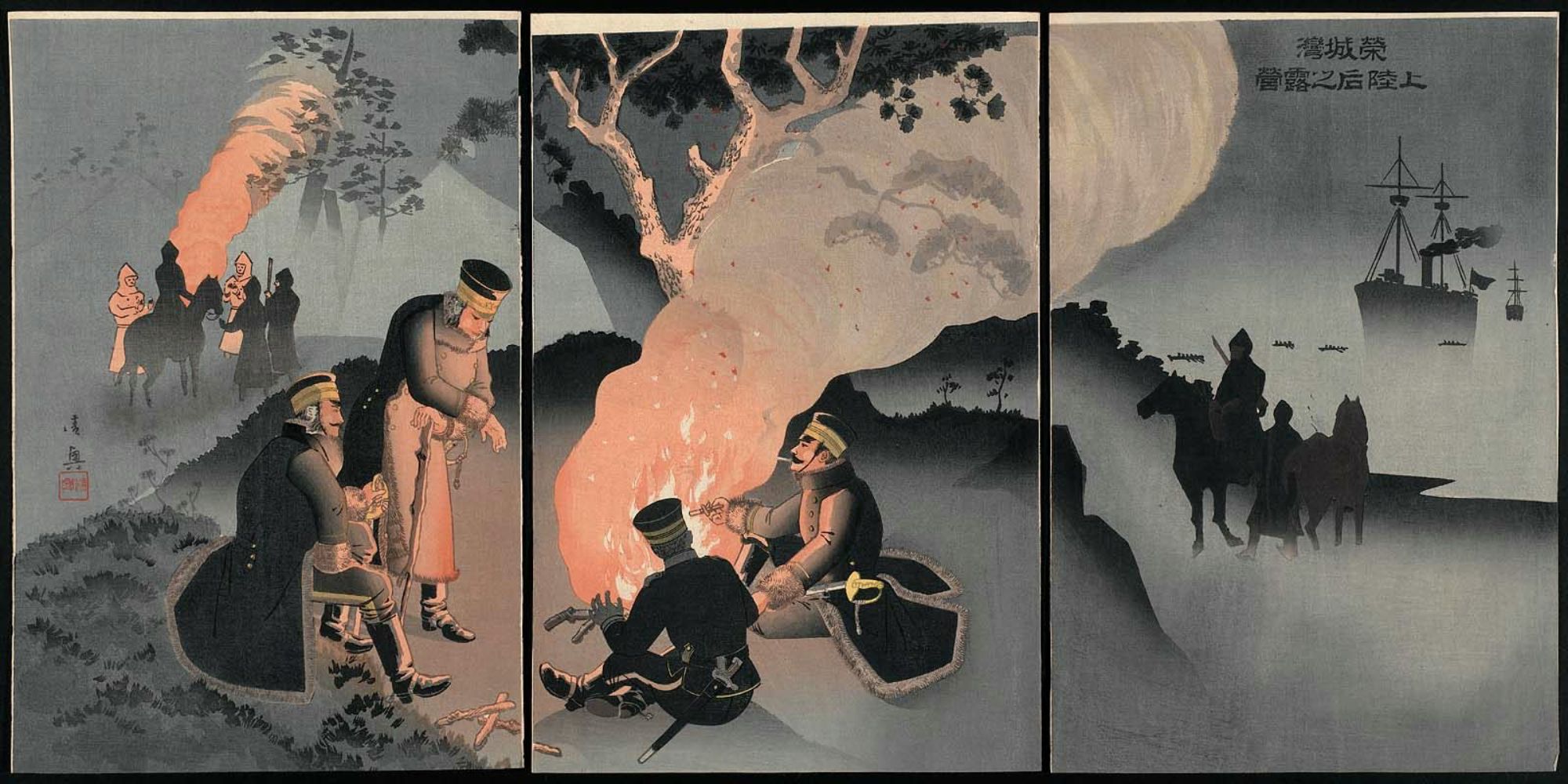
Bivouac after Landing at Yungcheng Bay (Eijōwan jōrikugo no roei)
栄城湾上陸後之露営
1895
Color woodblock print triptych
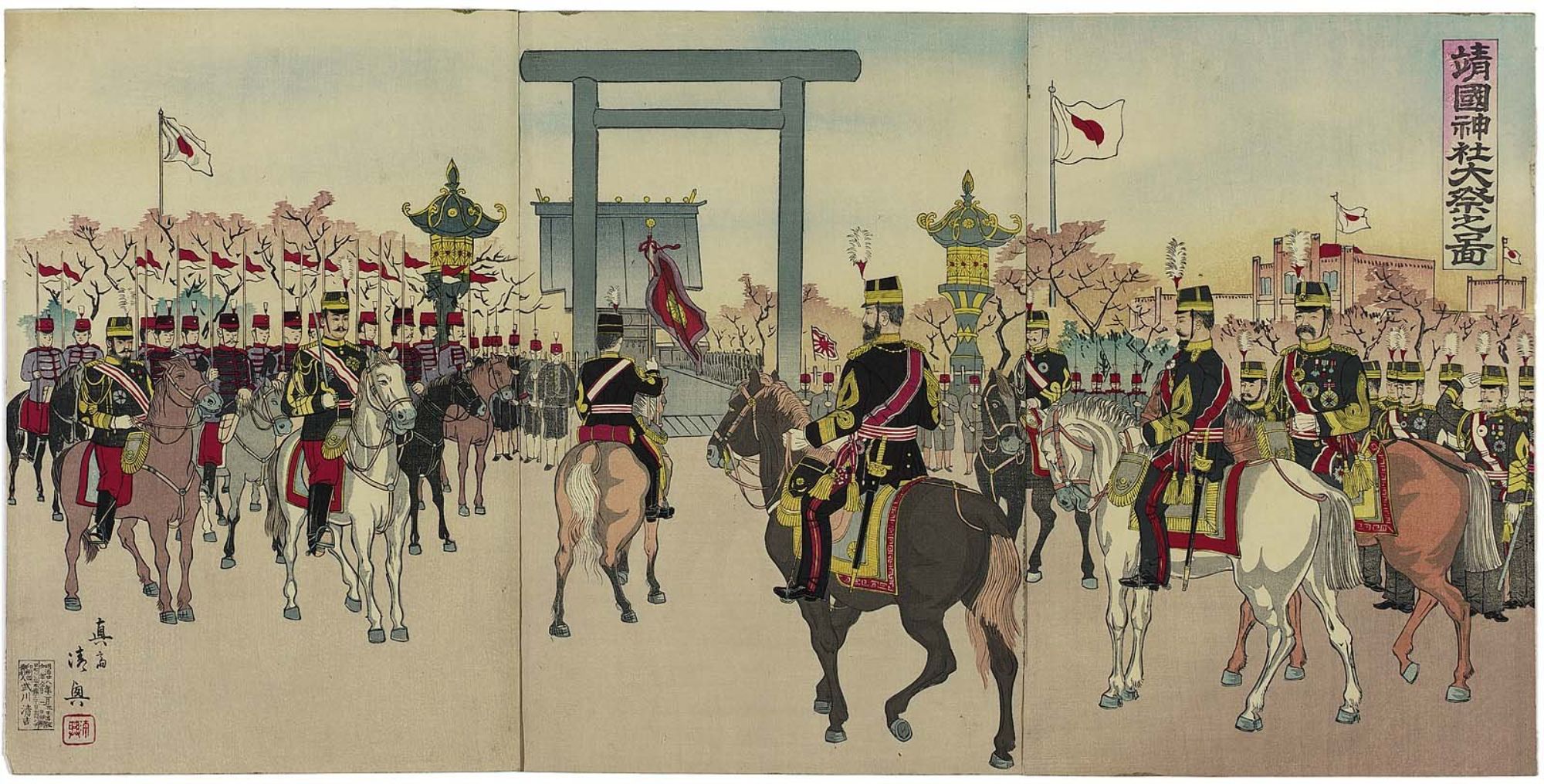
The Grand Festival at Yasukuni Shrine (Yasukuni jinja daisai no zu)
靖国神社大祭之図
1895
Color woodblock print triptych
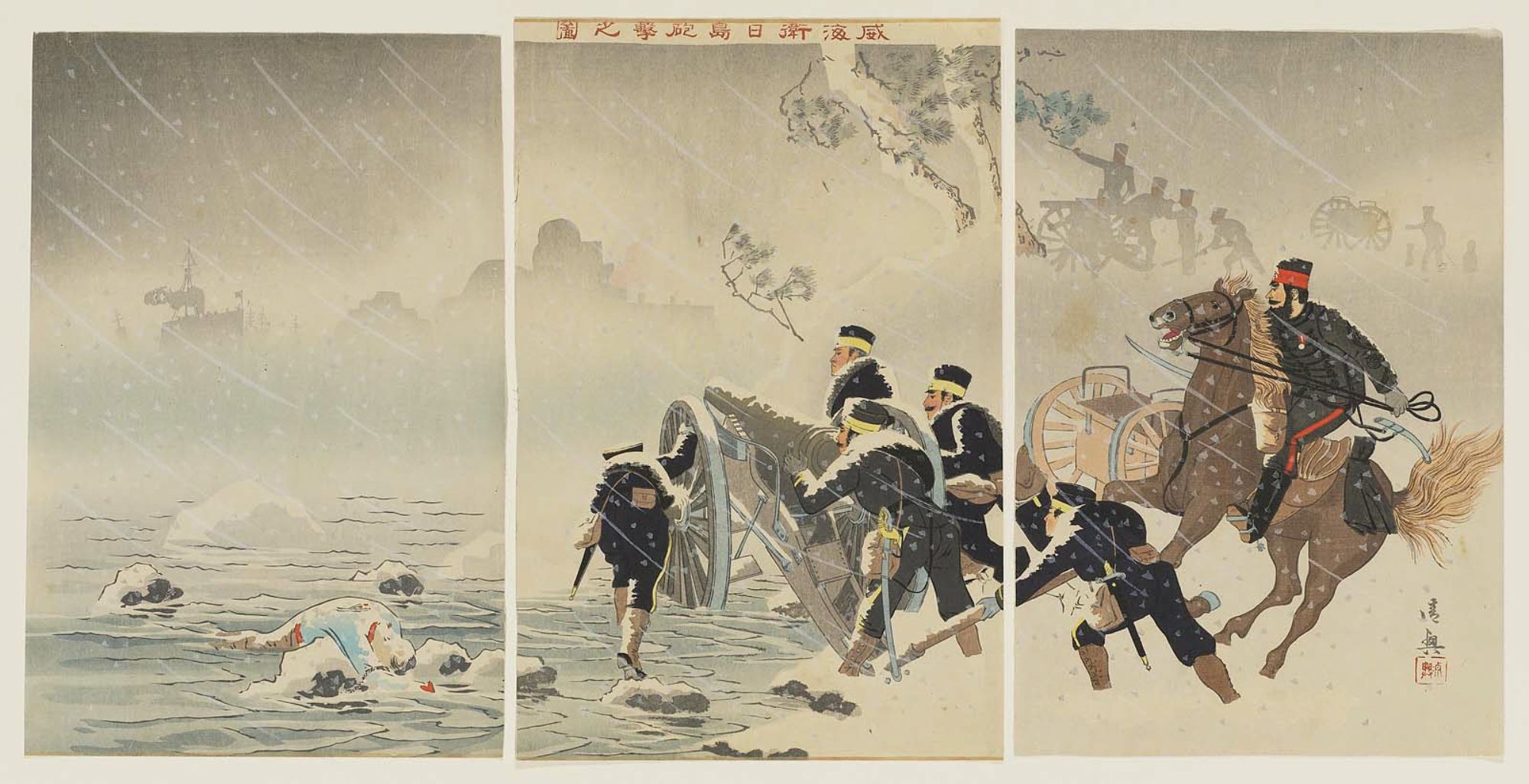
Illustration of Bombardment at Weihaiwei (Ikaiei Nittō hōgeki no zu)
威海衛日東砲撃之図
1895
Color woodblock print triptych
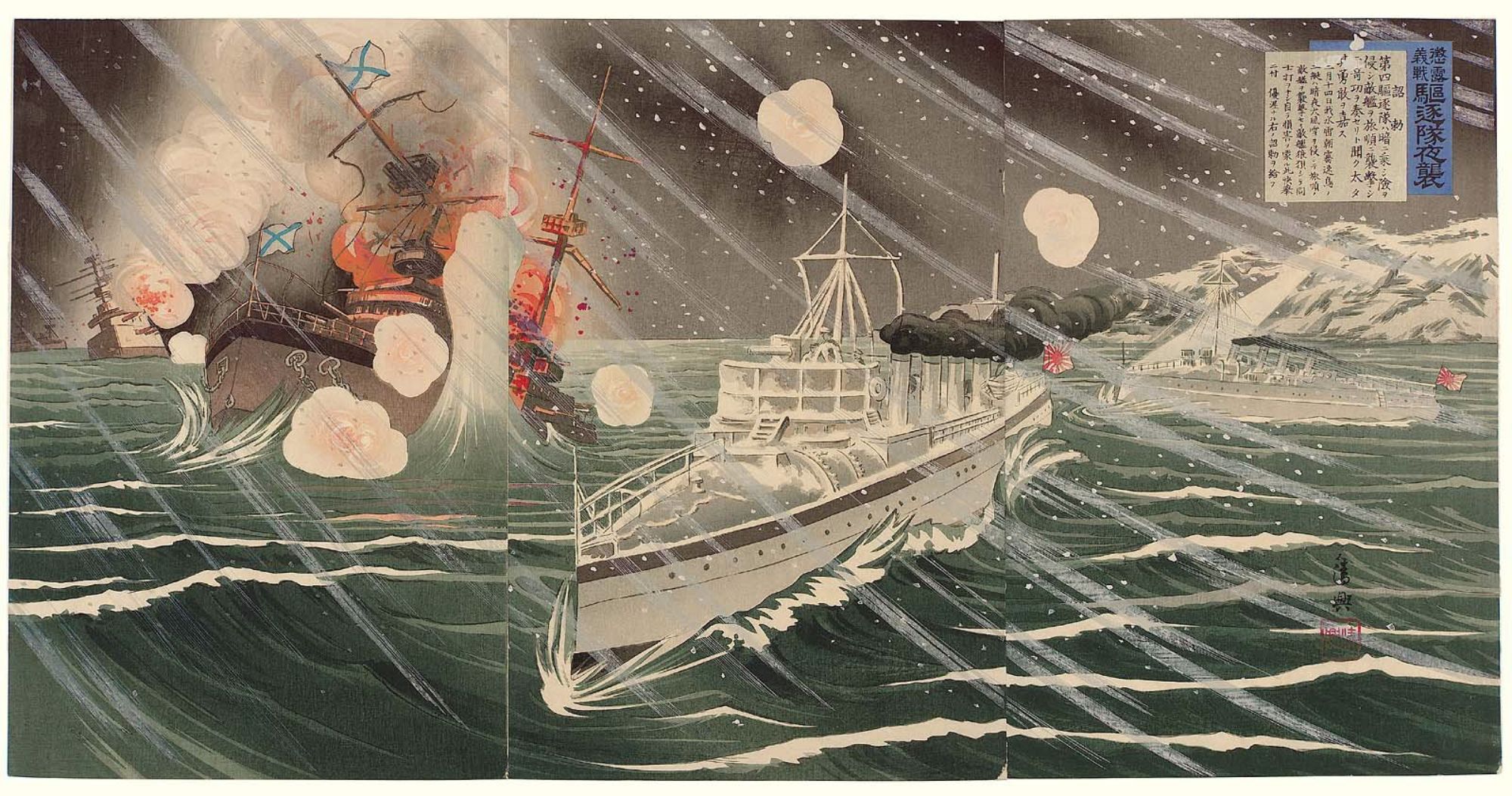
A Righteous War to Chastise the Russians: The Destroyer Force's Night Attack (Chō Ro gisen, kichiku tai yashū)
懲露義戦 鬼畜隊夜襲
1904
Color woodblock print triptych