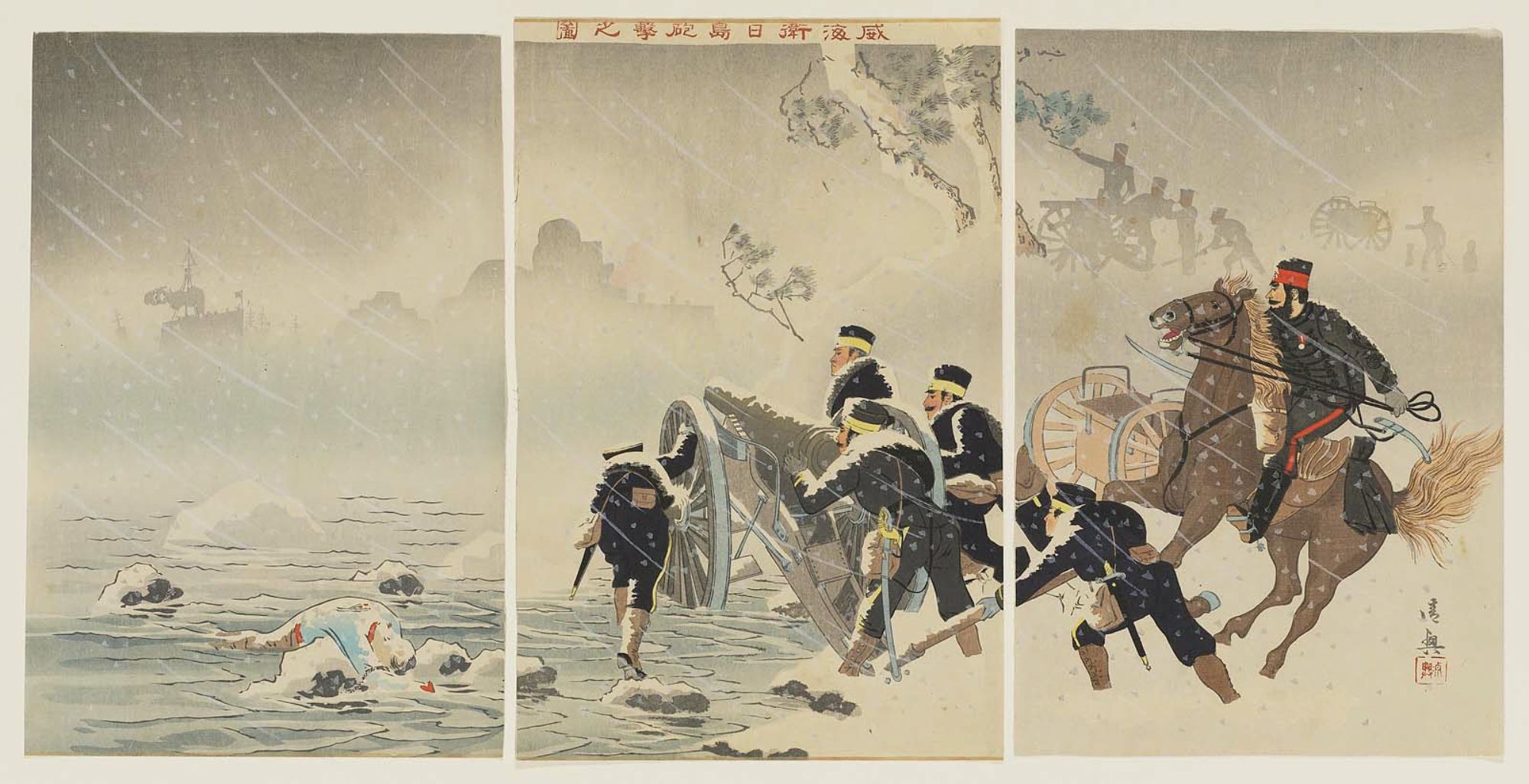
Illustration of Bombardment at Weihaiwei (Ikaiei Nittō hōgeki no zu)
威海衛日東砲撃之図
- Date:
- 1895
- Medium:
- Color woodblock print triptych
- Source:
- Museum of Fine Arts, Boston
Description
This 1895 triptych by Shinohara Kiyooki, held by the Museum of Fine Arts, Boston (accession sc220233, object 129951), depicts the Japanese naval bombardment of Weihaiwei, the decisive engagement of the First Sino-Japanese War that took place between January and February 1895. The Japanese title Ikaiei Nittō hōgeki no zu ("illustration of the Japanese bombardment at Weihaiwei") frames the action in the documentary mode characteristic of late-Meiji senso-e: the print functions as a visual news report of a specific military operation, with the Japanese fleet shelling the Chinese Beiyang Fleet trapped in the harbor and the surrounding fortifications. The Battle of Weihaiwei ended with the surrender of the Beiyang Fleet on 12 February 1895 and the suicide of its commander Admiral Ding Ruchang, an event that effectively concluded the war and led to the Treaty of Shimonoseki two months later. Kiyooki's panoramic triptych composition uses the bright aniline reds of gunfire and signal lamps against the cooler tonal field of sea and sky, in the visual register that defined the genre at its mid-1890s peak. The print is one of his most historically significant Sino-Japanese War sheets and a key record of Japan's first modern imperial victory.
More Prints by Shinohara Kiyooki
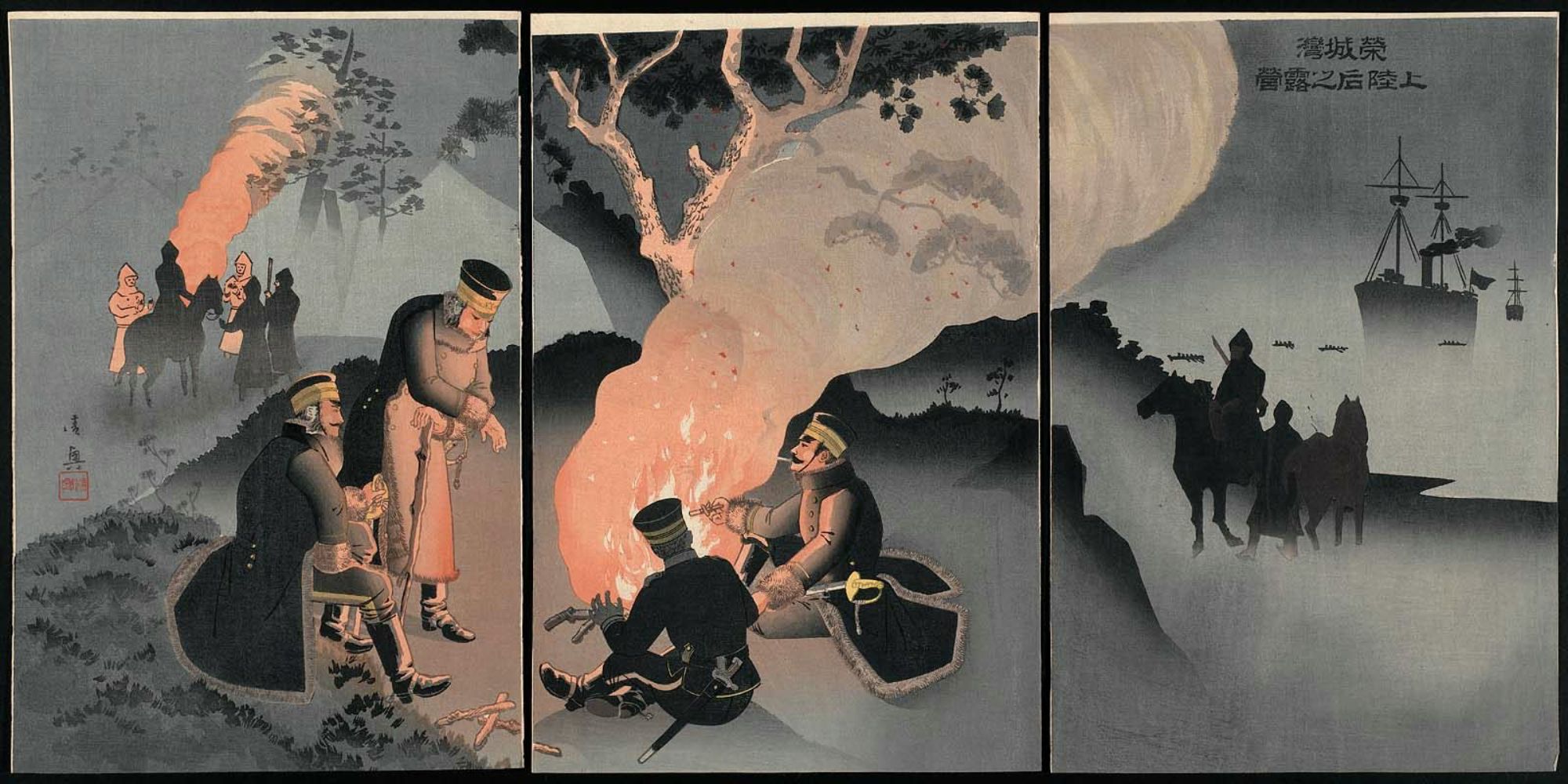
Bivouac after Landing at Yungcheng Bay (Eijōwan jōrikugo no roei)
栄城湾上陸後之露営
1895
Color woodblock print triptych
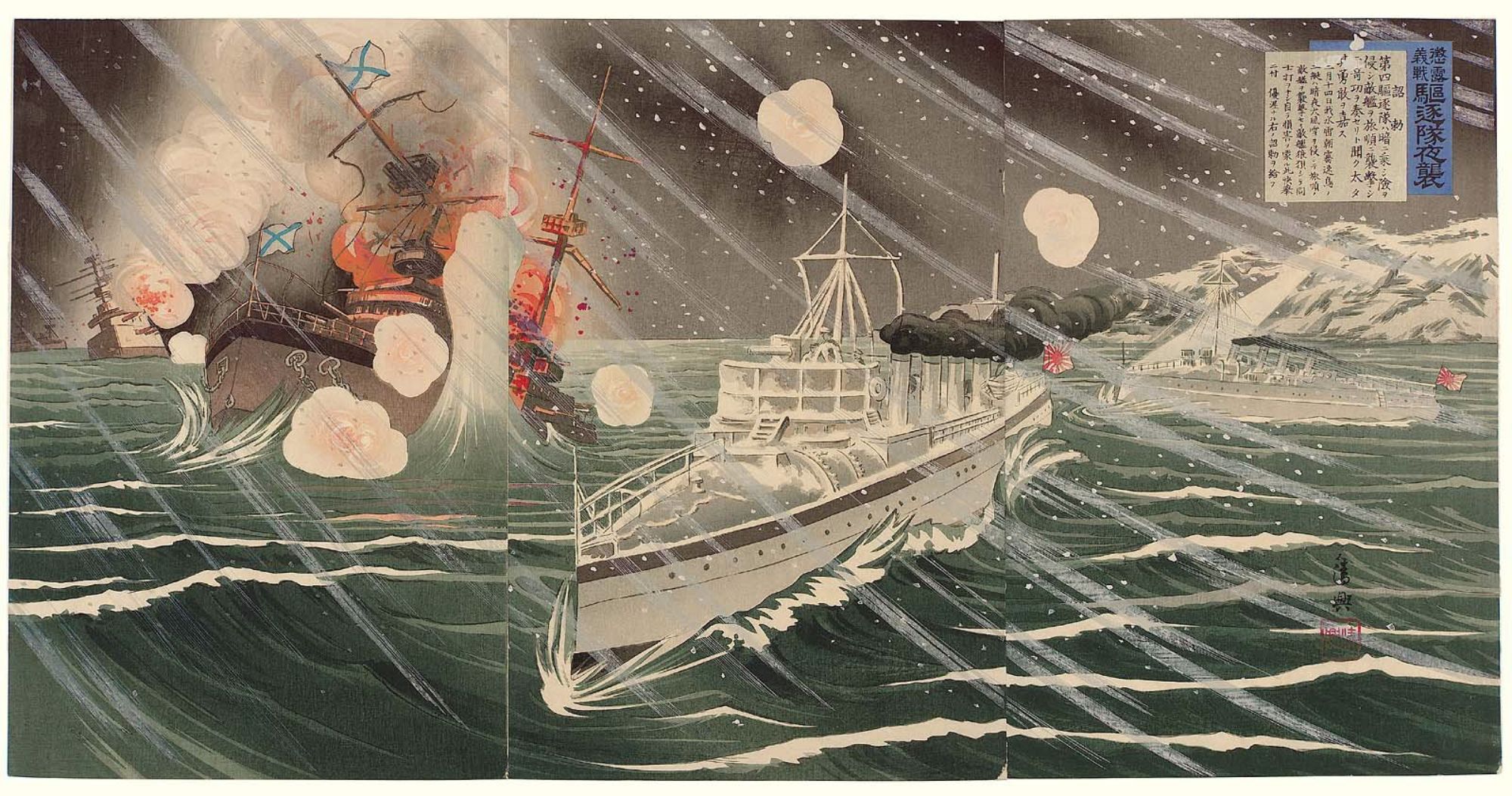
A Righteous War to Chastise the Russians: The Destroyer Force's Night Attack (Chō Ro gisen, kichiku tai yashū)
懲露義戦 鬼畜隊夜襲
1904
Color woodblock print triptych
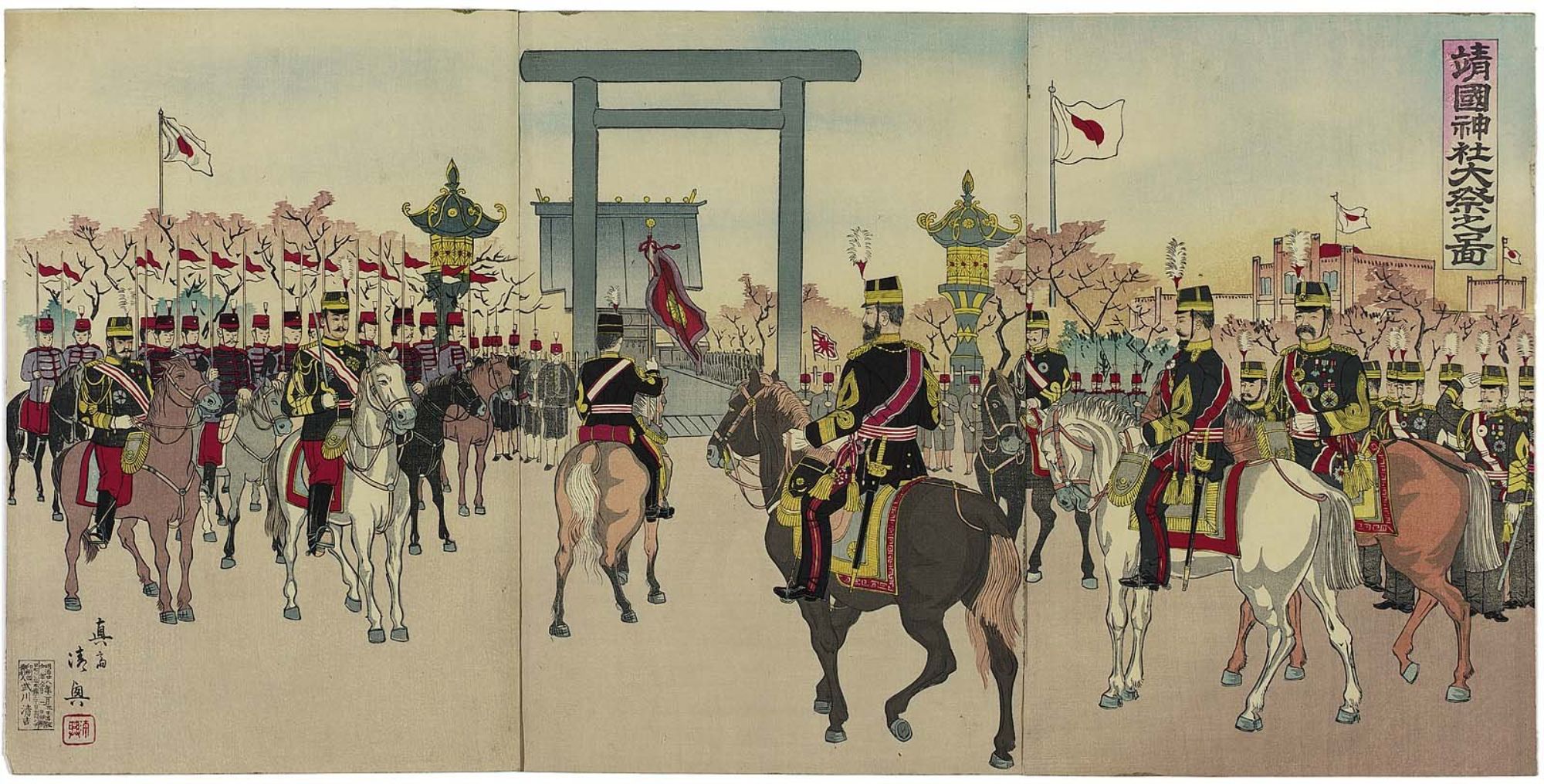
The Grand Festival at Yasukuni Shrine (Yasukuni jinja daisai no zu)
靖国神社大祭之図
1895
Color woodblock print triptych
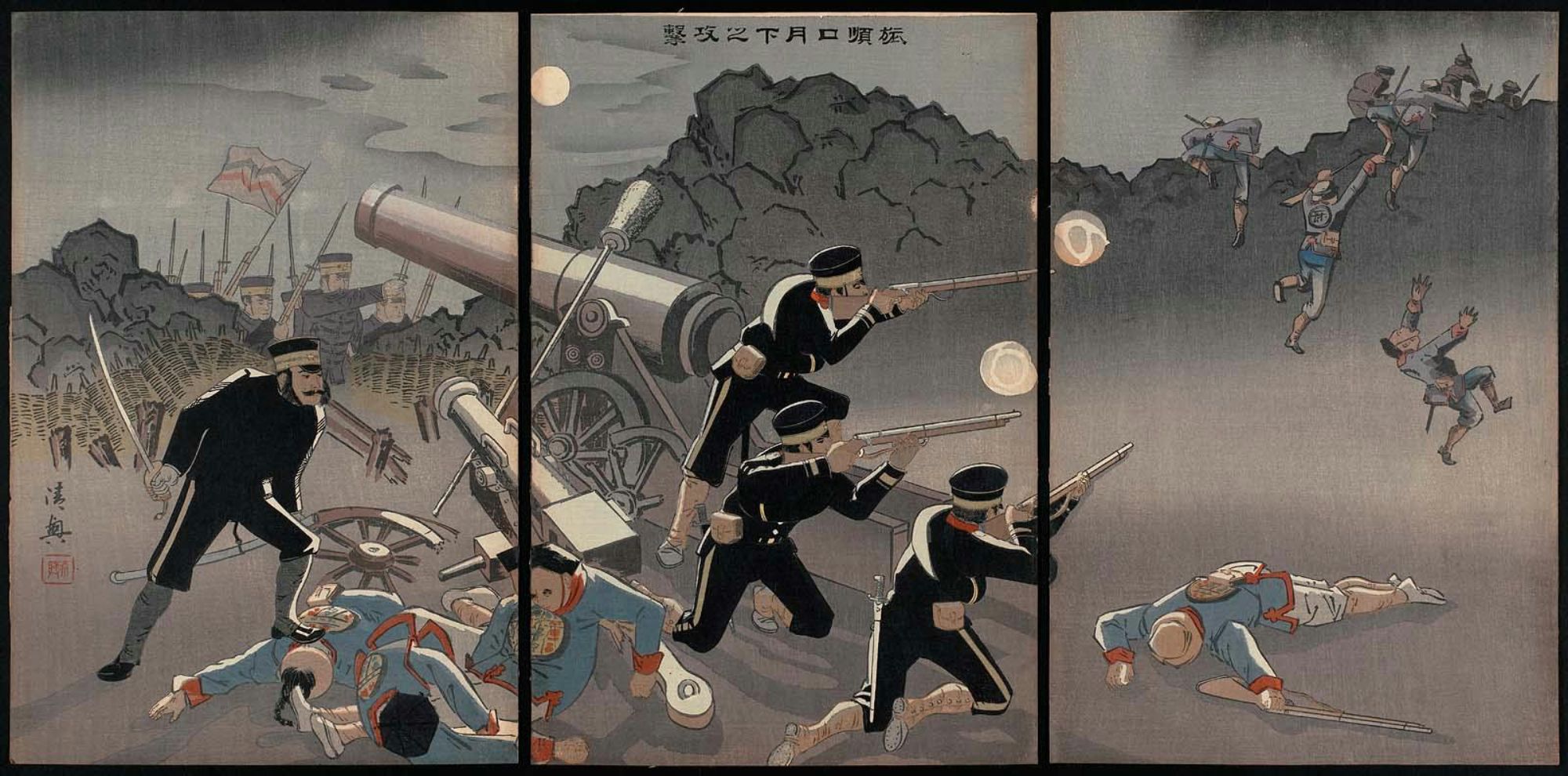
Attack on Port Arthur in the Moonlight (Ryōjunkō gekka no kōgeki)
旅順港月下之攻撃
1894
Color woodblock print triptych
Frequently Asked Questions
Illustration of Bombardment at Weihaiwei (Ikaiei Nittō hōgeki no zu) (威海衛日東砲撃之図) was created by Shinohara Kiyooki (篠原清興) in 1895.