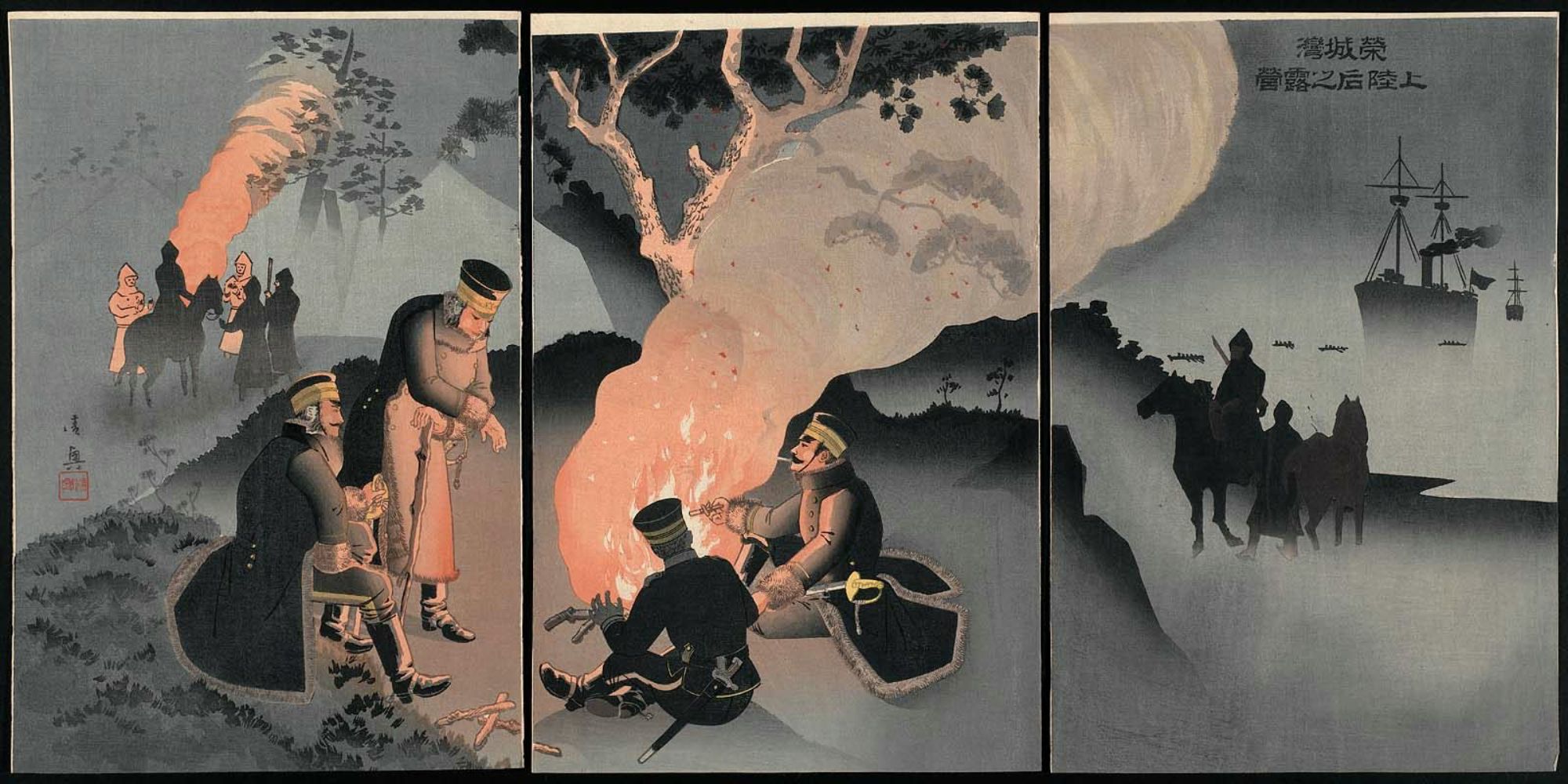
Bivouac after Landing at Yungcheng Bay (Eijōwan jōrikugo no roei)
栄城湾上陸後之露営
- Date:
- 1895
- Medium:
- Color woodblock print triptych
- Source:
- Museum of Fine Arts, Boston
Description
A triptych rendered mostly in muted grey and black with touches of orange, tan, and red, depicting Japanese army officers in fur-trimmed greatcoats and peaked caps encamped on a hillside at night. In the left and center panels officers stand, sit on rocks, and warm themselves around a bonfire beneath a large pine tree, its smoke and firelight rising in soft orange plumes against the dark sky, while mounted soldiers pass along a ridge in the background; the right panel shows a mounted officer and foot soldiers on a shoreline overlooking a steamship and rowboats in the misty bay, with vertical title cartouches reading "榮城灣" and "上陸后之露營" in the upper corner. Shinohara Kiyooki, 1895.
More Prints by Shinohara Kiyooki
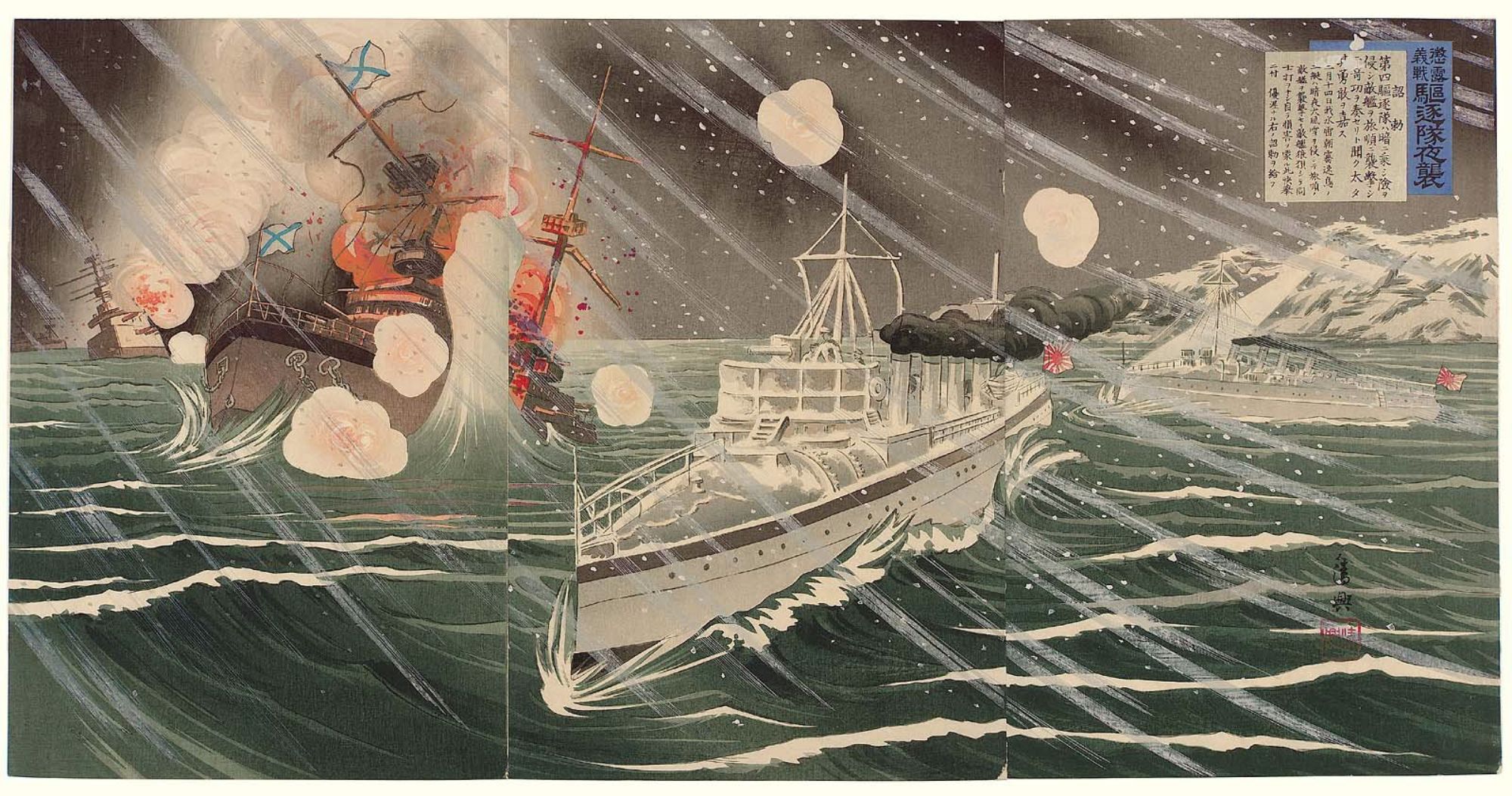
A Righteous War to Chastise the Russians: The Destroyer Force's Night Attack (Chō Ro gisen, kichiku tai yashū)
懲露義戦 鬼畜隊夜襲
1904
Color woodblock print triptych
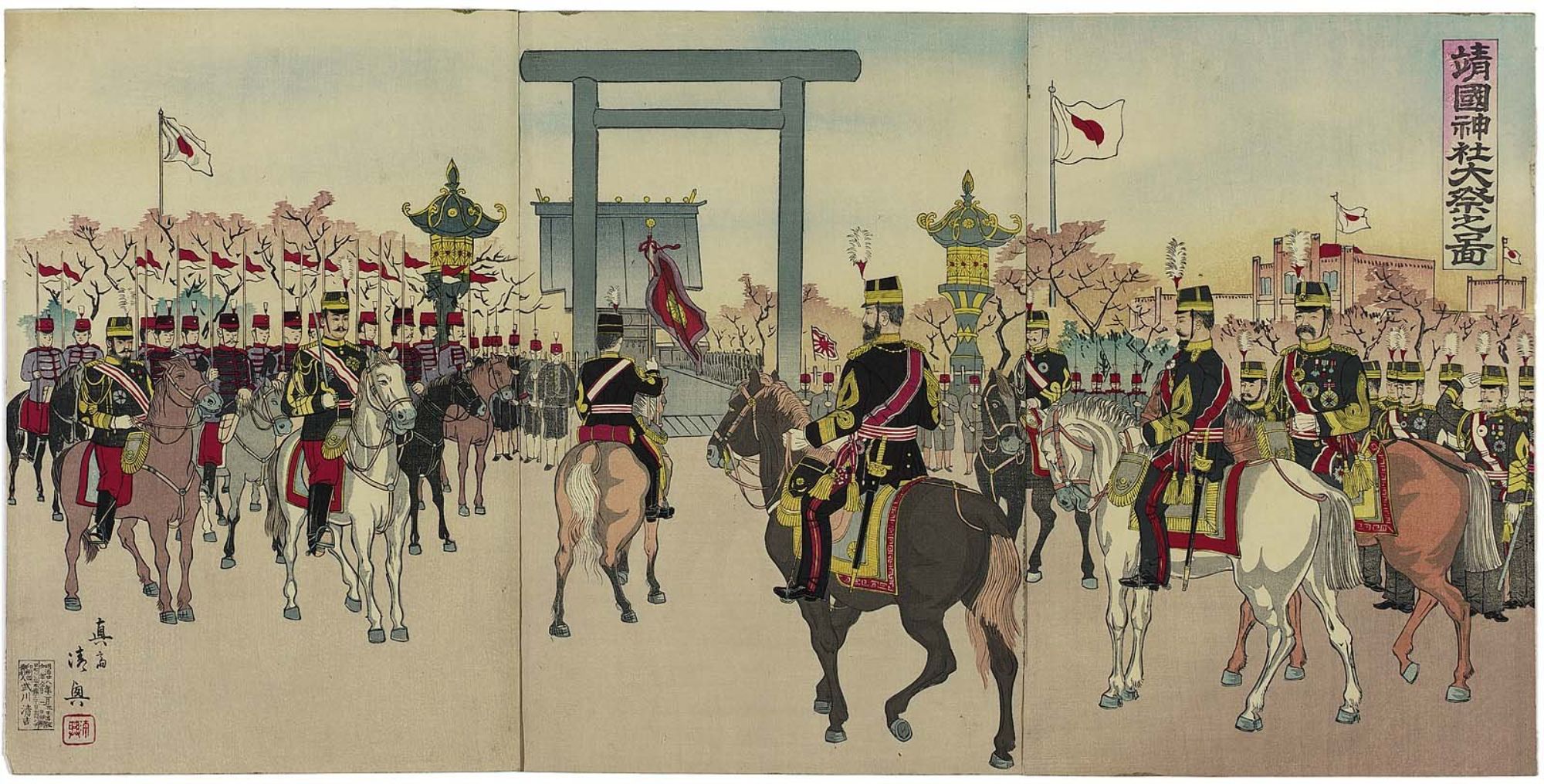
The Grand Festival at Yasukuni Shrine (Yasukuni jinja daisai no zu)
靖国神社大祭之図
1895
Color woodblock print triptych
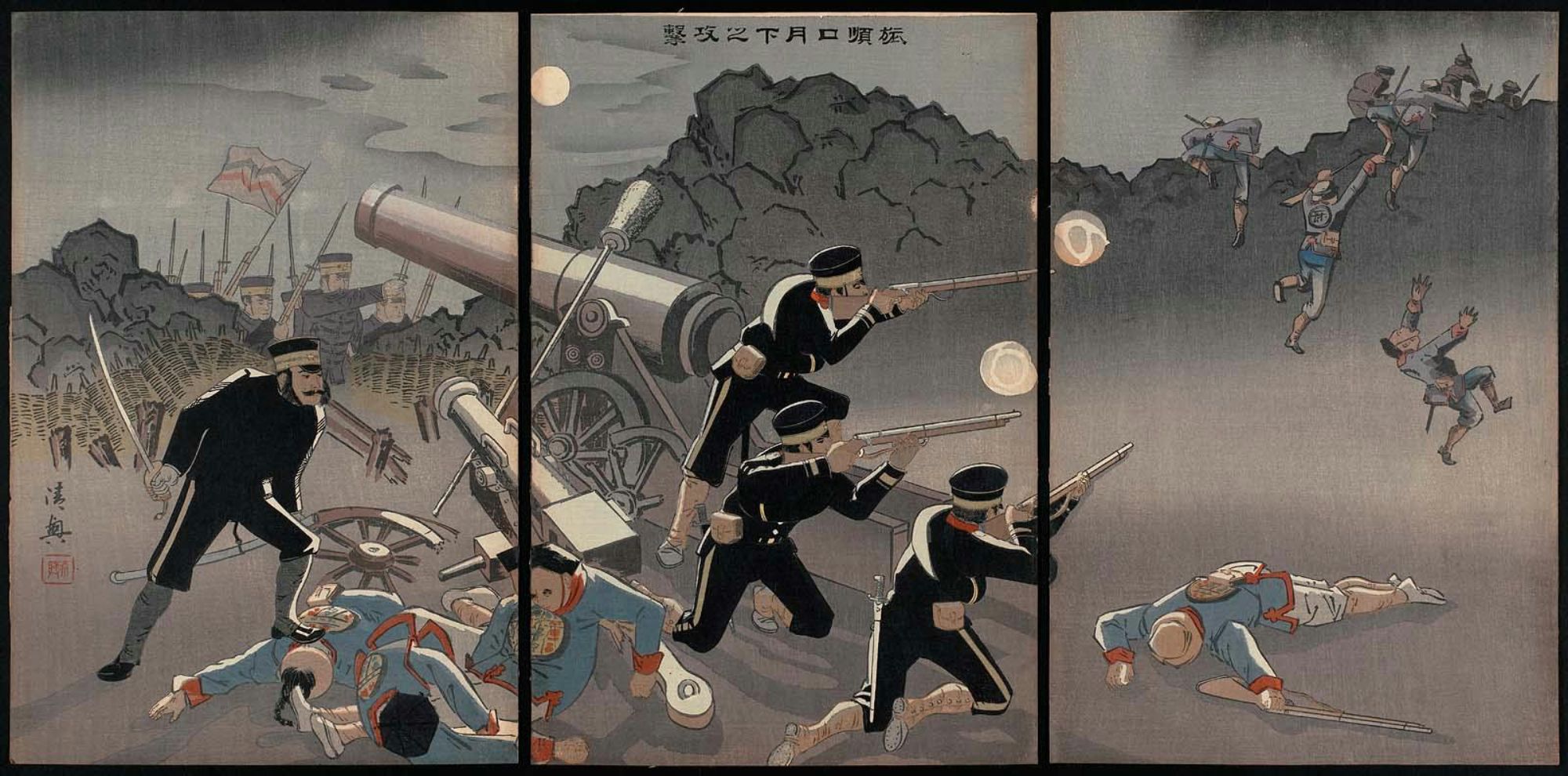
Attack on Port Arthur in the Moonlight (Ryōjunkō gekka no kōgeki)
旅順港月下之攻撃
1894
Color woodblock print triptych
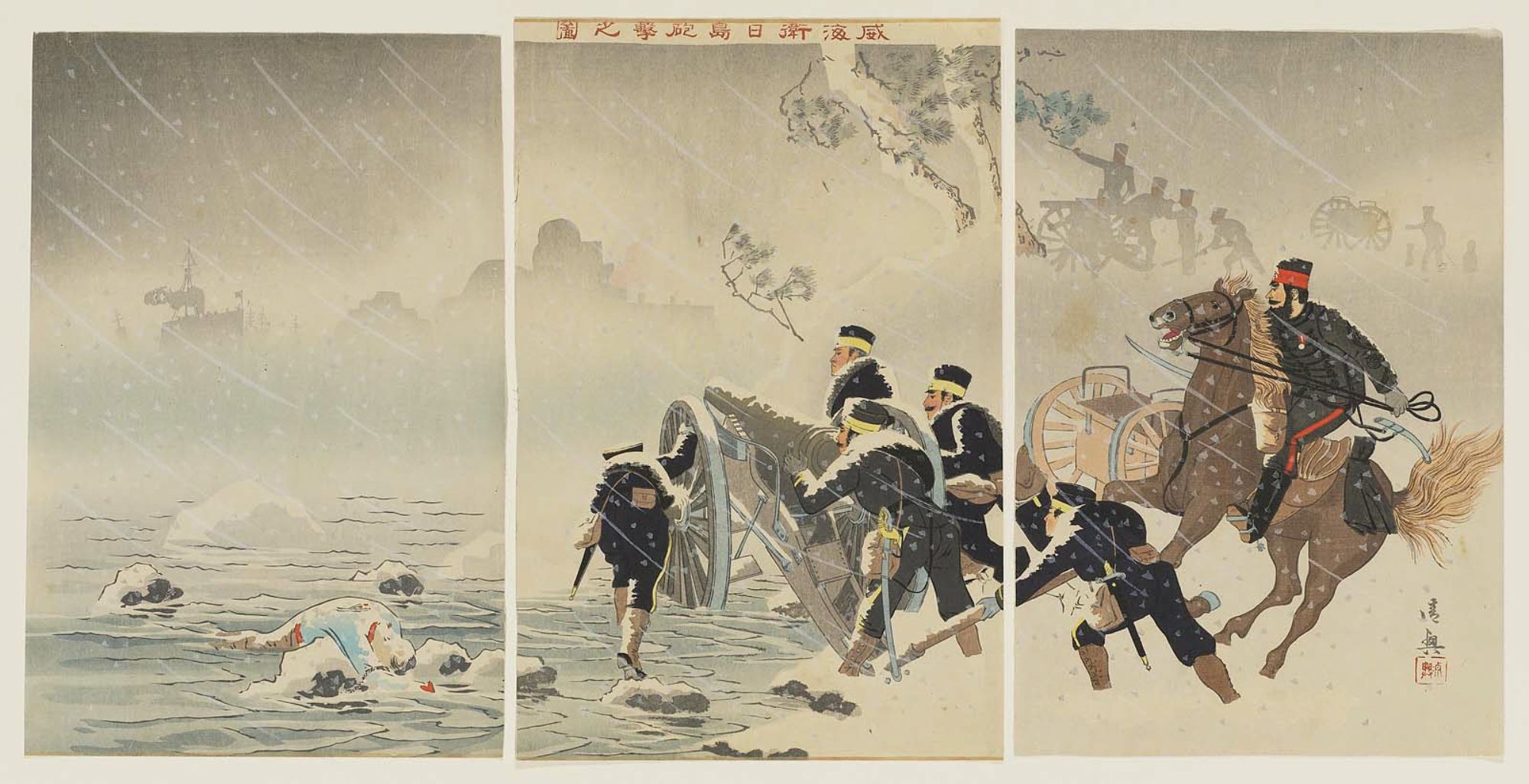
Illustration of Bombardment at Weihaiwei (Ikaiei Nittō hōgeki no zu)
威海衛日東砲撃之図
1895
Color woodblock print triptych
Frequently Asked Questions
Bivouac after Landing at Yungcheng Bay (Eijōwan jōrikugo no roei) (栄城湾上陸後之露営) was created by Shinohara Kiyooki (篠原清興) in 1895.