Biography
Shoichi Hasegawa was one of the most important Japanese printmakers of the twentieth century, celebrated for his luminous color etchings that bridged Eastern aesthetics with Western abstraction. Born in 1929 in Yaizu, Shizuoka Prefecture, Japan, Hasegawa studied drawing and painting at the Kokuga Institute in Kyoto, where he developed an early appreciation for both Japanese artistic traditions and the lyrical abstractions of American artists such as Jackson Pollock, Franz Kline, Mark Rothko, and Morris Graves.
In 1961, Hasegawa made the pivotal decision to move to Paris, where he began studying with Stanley William Hayter at the legendary Atelier 17 — one of the most influential printmaking workshops of the twentieth century. Under Hayter's guidance, Hasegawa mastered a wide range of intaglio techniques and discovered the color etching methods pioneered at the atelier. He expanded beyond classical aquatint processes to develop his own distinctive approach using varnishes and acids, mixing a variety of tools and chemicals to obtain rich textures on his copper plates.
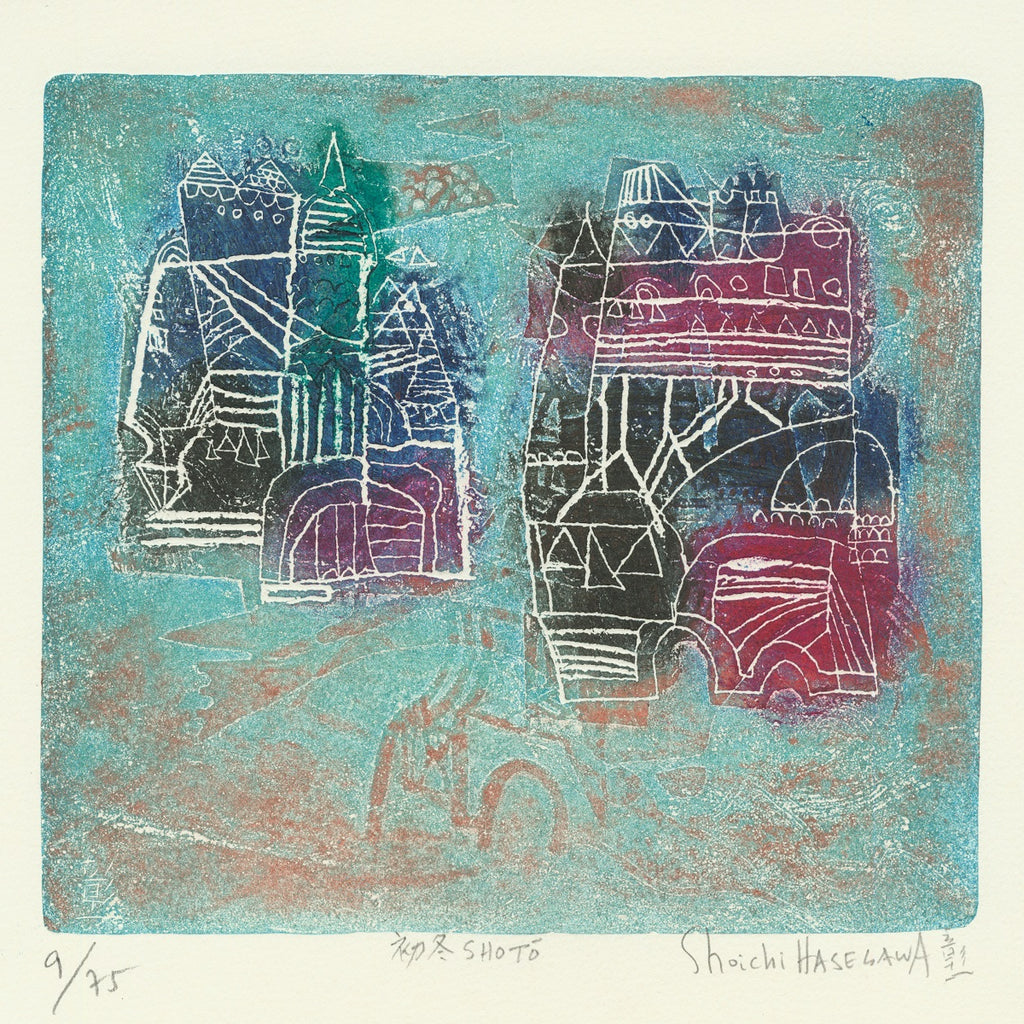
Hasegawa's signature technique involves printing with inks of different viscosity, a method that produces the vibrant, layered color tapestries for which he became renowned. His abstract compositions synthesize Far Eastern calligraphy, traditional symbolism of forms and colors, and Western modes of expression, with engraved decorative graphic motifs in white on colored backgrounds that echo the tradition of popular Japanese imagery. His works suggest places and atmospheres, often evoked with white or light-colored lines floating above abstracted color fields — landscapes of the mind rendered in jewel-like tones.
Hasegawa's work was soon included in major collective exhibitions, including the Salon des Jeunes Peintres, the Salon des Realites Nouvelles, the International Biennale of Engraving in Ljubljana, and the Biennale of Engraving in Cracow. Over his long career, he held more than sixty solo exhibitions beginning in 1957.
Considered one of the major printmakers of his time, Hasegawa's works are held in the permanent collections of the Bibliotheque nationale de France in Paris, the Museum of Modern Art in New York, the Victoria and Albert Museum in London, the Norrkopings Museum of Art in Sweden, the Museum of Modern Art in Ljubljana, the Lowe Museum in Coral Gables, the Oklahoma Art Center, the Art Museum of South Texas, and the Museum Fuji in Tokyo. Through his watercolors and engravings, Hasegawa built a harmonious bridge between Japanese and Western aesthetics that influenced generations of printmakers. He died in 2023 at the age of 94.
Key Facts
- Active Period
- 1929–2023
- Nationality
- 🇯🇵Japan
- Movement
- Contemporary Mokuhanga
- Subjects
- EtchingAbstractCalligraphy
- Works Indexed
- 14
Frequently Asked Questions
Shoichi Hasegawa was one of the most important Japanese printmakers of the twentieth century, celebrated for his luminous color etchings that bridged Eastern aesthetics with Western abstraction. Born in 1929 in Yaizu, Shizuoka Prefecture, Japan, Hasegawa studied drawing and painting at the Kokuga Institute in Kyoto, where he developed an early appreciation for both Japanese artistic traditions and the lyrical abstractions of American artists such as Jackson Pollock, Franz Kline, Mark Rothko, and Morris Graves.
Shoichi Hasegawa was active from 1929 to 2023. They were associated with the Contemporary Mokuhanga movement.
Shoichi Hasegawa's work was shaped by the Contemporary Mokuhanga tradition in Japanese woodblock printmaking. Contemporary Mokuhanga: Contemporary mokuhanga (literally "wood-block print") encompasses artists working from approximately 1970 to the present who continue or reinvent traditional Japanese woodblock printing techniques.
Shoichi Hasegawa's prints frequently feature etching, abstract, calligraphy.
Woodblock Prints by Shoichi Hasegawa (14)

Sentier de Printemps
Etching

Aube sur le bois
Etching

Aube Douce
Etching

Dialogue
Etching
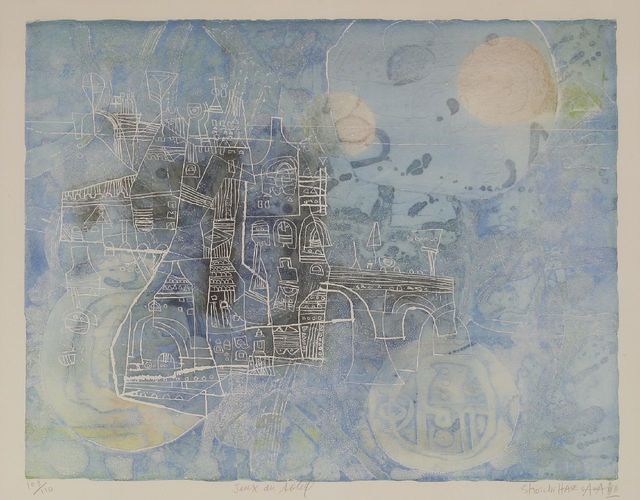
Jeux Du Soleil; Navires En Mer Egée
Two etchings with aquatint and engraving printed in colours
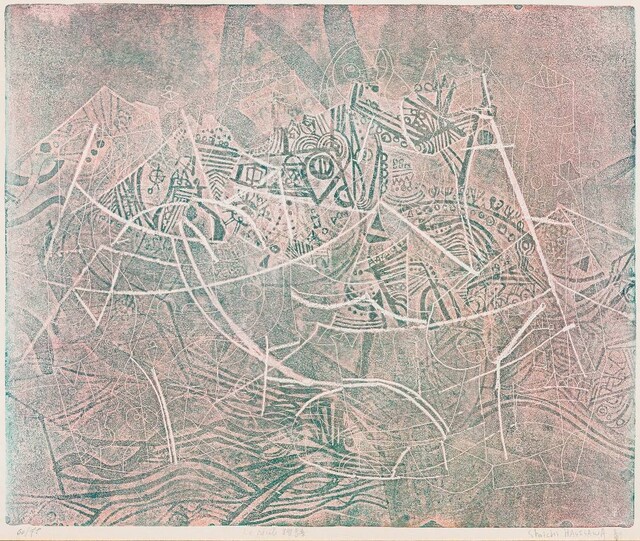
Le Nuit
Etching and aquatint in colours on wove
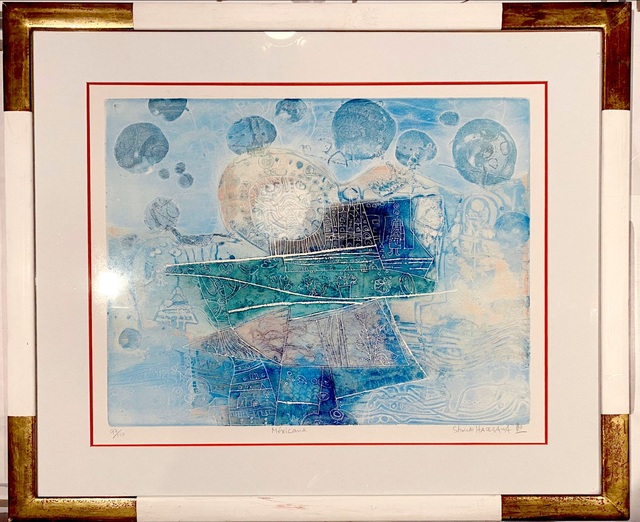
Mexicana
Original etching on wove paper
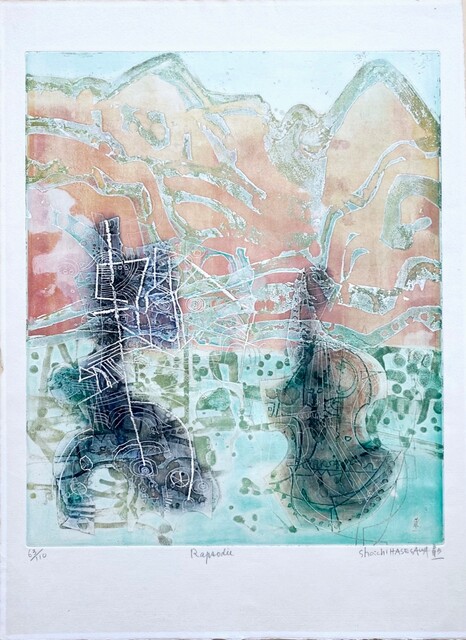
Rapsodie
Original etching and aquatint on Moulin du Gué wove paper
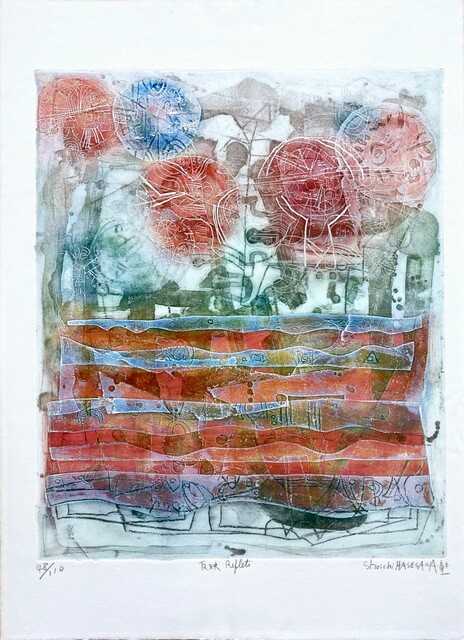
Reflets
Original etching and aquatint on Moulin du Gué wove paper
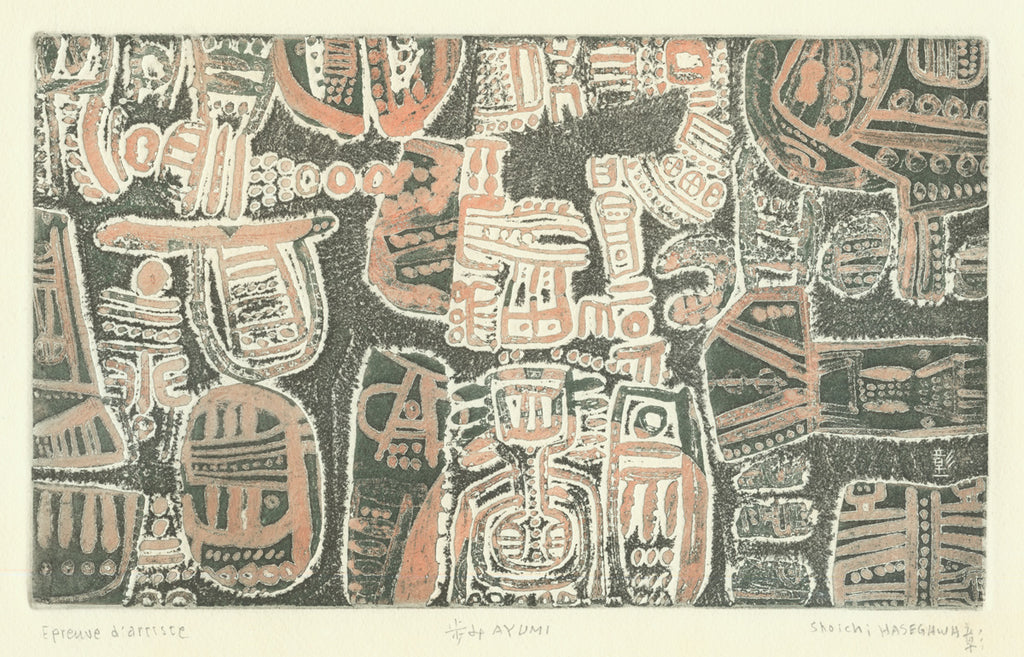
Ayumi
Color etching printed on BFK Rives wove paper

Espoir I
Etching

Elle et lui
Etching

Paleur lunaire
Etching
Shoto
Intaglio printed in color on Arches wove paper