
Biography
Shōsai Ikkei (昇斎一景, active circa 1870-1874) was a Meiji-period ukiyo-e print designer whose brief but intensely productive career left one of the most coherent visual records of Tokyo in the years immediately following the Meiji Restoration of 1868. His birth and death dates are unknown, his given name and personal biography unrecorded, and his surviving oeuvre is comparatively small, concentrated in a handful of series produced in the early 1870s — yet within that narrow window he created the 'Forty-Eight Famous Views of Tokyo' (東京名所四十八景, Tōkyō meisho shijūhakkei), a topographic series that ranks among the principal pictorial documents of the early Meiji capital and one of the clearest case studies of ukiyo-e's transitional encounter with modernization.
Ikkei worked in Tokyo at the moment when the city was being remade. The shogunal capital of Edo had been renamed Tokyo ('Eastern Capital') in 1868, and through the early 1870s the new imperial government oversaw a rapid program of infrastructural and symbolic transformation: gas lamps, brick buildings, foreign hotels, the first railway between Shimbashi and Yokohama in 1872, the establishment of new public parks, and the gradual conversion of former daimyō estates and shogunal precincts to government use. The traditional ukiyo-e meisho ('famous places') genre, which under Hiroshige and Hiroshige II had produced great series of views of Edo, was being asked to incorporate subjects that did not yet exist in 1860: steam trains, telegraph poles, Western-style hotels, military parade grounds. Ikkei's work belongs to this transitional moment and is best understood as a record of it.
References to Ikkei's training are scarce, but the most reliable secondary sources identify him as a pupil of Utagawa Hiroshige III (1842-1894), whose own Meiji-era prints of a modernizing Tokyo closely parallel Ikkei's subject matter. His artist name (gō) 'Shōsai' (昇斎, 'ascending studio') was paired with the personal name 'Ikkei' (一景, 'one view'), the latter a programmatic choice that aligned him with the meisho landscape tradition. His prints of the early 1870s are signed 'Shōsai Ikkei,' and several of them were issued by the Tokyo publisher Yorozuya Magobei. His brief span of activity overlaps with the careers of Kobayashi Kiyochika (1847-1915), Inoue Yasuji (1864-1889), and Adachi Ginkō (active 1874-1897), the other principal designers of early Meiji Tokyo views, though Ikkei seems to have begun and ended slightly earlier than the rest of that cohort.
The 'Forty-Eight Famous Views of Tokyo' is Ikkei's principal surviving work and the basis of his historical reputation. The series consists of forty-eight individual sheets and was probably published in installments in the early 1870s, around 1871. It follows the established conventions of the Edo-period meisho genre — a sheet per location, organized loosely by Tokyo's principal districts, with the place name and series title in a cartouche in the upper margin — but the iconography belongs unmistakably to the early Meiji. Sheets depict the new Tsukiji Hotel (Tsukiji Hoteru-kan), which had opened in 1868 as the city's principal accommodation for foreign visitors and which burned down in the 1872 Great Fire of Ginza; the bustling commercial intersections at Nihonbashi and Kyōbashi; the market and shrine precincts of Kanda Myōjin and Asakusa Kannon; the festival grounds of Ryōgoku in fireworks season; the irises of Horikiri in early summer rain; the seasonal pleasures of cherry-blossom viewing at Ueno, lotus-harvesting at Shinobazu, shellfish-gathering at Susaki, and snow-watching at Asakusa; the suburban excursion destinations of Asukayama, Oji, Meguro, and Atago Hill; and the parade grounds of Kudanzaka, where the Shōkonsha (the predecessor of Yasukuni Shrine) had been established in 1869 to commemorate Restoration war dead.
The visual character of the series sets it apart from both its Edo predecessors and its later Meiji successors. Ikkei's palette is dominated by the synthetic aniline reds, purples, and pinks that flooded the Japanese print market after about 1864, when imported European pigments transformed the chromatic vocabulary of ukiyo-e and produced the saturated, sometimes harsh color schemes characteristic of late Edo and early Meiji prints. Compositions tend to be flatter and more graphic than those of Hiroshige, with a tendency to crop architectural and figural elements close to the edges of the sheet and to organize foreground figures in clear silhouette against more lightly worked middle and background passages. The figures themselves — merchants, kimono-clad women with new Meiji parasols, children, occasional foreigners — are rendered with the somewhat stylized, large-headed proportions of late ukiyo-e bijin-ga, and the overall effect of the series is one of cheerful crowded animation rather than the elegiac atmospheric naturalism of Hiroshige's earlier 'One Hundred Views of Edo' (1856-58).
Beyond the 'Forty-Eight Famous Views,' Ikkei produced several other documented series and individual prints during the early 1870s. The 'Thirty-six Views of Tokyo' (東京三十六景), the 'Thirty-six Amusing Views of Famous Places in Tokyo,' and a group of sheets featuring the new Takanawa railway and steam-train subjects continued his engagement with Meiji-era topographic and modernization themes. A triptych now in the Metropolitan Museum of Art, a gift of Lincoln Kirstein in 1959, depicts an early-Meiji railway scene and belongs to the body of prints documenting Japan's encounter with Western technology and infrastructure. His prints are held by a range of public collections, including the Edo-Tokyo Museum, the British Museum, the Metropolitan Museum of Art, the Museum of Fine Arts, Boston, and the Art Gallery of Greater Victoria.
Ikkei seems to have stopped working around 1874, and the circumstances and date of his death are unrecorded. He left no documented students, no surviving writings, and no further series. His historical reputation rests largely on the 'Forty-Eight Famous Views,' which has consistently appeared in scholarly literature on Meiji visual culture and early Tokyo urbanism. The series has since been widely exhibited and reproduced, and it belongs to the standard repertoire of Meiji-era topographic ukiyo-e alongside the work of Kiyochika, Yasuji, and Adachi Ginkō. For students and collectors of the period, Ikkei occupies a precise and important niche: among the last designers to work entirely within the inherited Edo-period meisho convention while documenting a city that, within the very years he was working, was being remade into something the old convention had not been designed to describe.
Key Facts
- Nationality
- 🇯🇵Japan
- Movements
- Meiji/Taishō PrintsUkiyo-e
- Works Indexed
- 12
Frequently Asked Questions
Shōsai Ikkei (昇斎一景, active circa 1870-1874) was a Meiji-period ukiyo-e print designer whose brief but intensely productive career left one of the most coherent visual records of Tokyo in the years immediately following the Meiji Restoration of 1868. His birth and death dates are unknown, his given name and personal biography unrecorded, and his surviving oeuvre is comparatively small, concentrated in a handful of series produced in the early 1870s — yet within that narrow window he created the 'Forty-Eight Famous Views of Tokyo' (東京名所四十八景, Tōkyō meisho shijūhakkei), a topographic series that ranks among the principal pictorial documents of the early Meiji capital and one of the clearest case studies of ukiyo-e's transitional encounter with modernization.
Shōsai Ikkei's work was shaped by the Meiji/Taishō Prints and Ukiyo-e traditions in Japanese woodblock printmaking. Meiji/Taishō Prints: Meiji and Taishō era prints (1868–1926) bridge the transition from traditional ukiyo-e to the modern shin-hanga and sosaku-hanga movements. Ukiyo-e: ## What is ukiyo-e? Ukiyo-e ([浮世絵](/glossary/ukiyo-e)) — literally "pictures of the floating world" — is the Edo-period Japanese print and painting tradition that flourished from roughly 1660 to 1868, depicting the pleasures of urban life in Edo (modern Tokyo): courtesans, kabuki actors, sumo wrestlers, famous landscapes, and seasonal beauties.
Shōsai Ikkei's prints frequently feature landscapes, rain, winter, bridges, birds & flowers, fish.
Original prints by Shōsai Ikkei can be found in collections including Edo-Tokyo Museum, The Metropolitan Museum of Art (JP3228), Fine Arts Museums of San Francisco (Legion of Honor), Equine Museum of Japan.
Woodblock Prints by Shōsai Ikkei (12)

Railway Station Triptych (Sheet from JP3227)
鉄道駅図三枚続
c. 1870
Color woodblock triptych (nishiki-e); ink and color on paper

Horse Racing at the Shōkonsha in Tokyo
東京於招魂社境馬図
1870 (Meiji 3)
Color woodblock print (nishiki-e); ink and color on paper
Print (Sheet of a Triptych, JP3228)
錦絵三枚続
c. 1870
Color woodblock print (nishiki-e); ink and color on paper
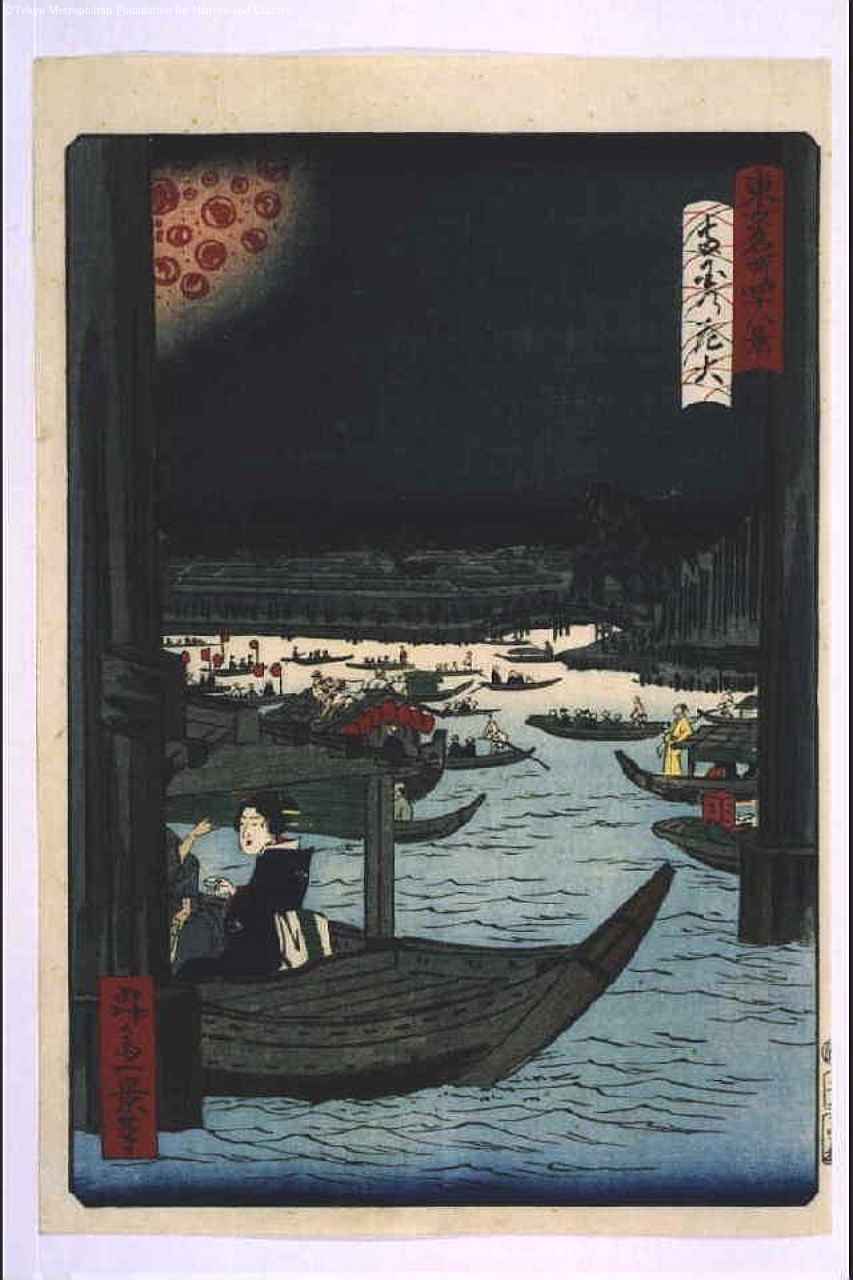
Forty-Eight Famous Views of Tokyo: Fireworks at Ryogoku
東京名所四十八景 両国乃花火
c. 1871
Color woodblock print (nishiki-e); ink and color on paper
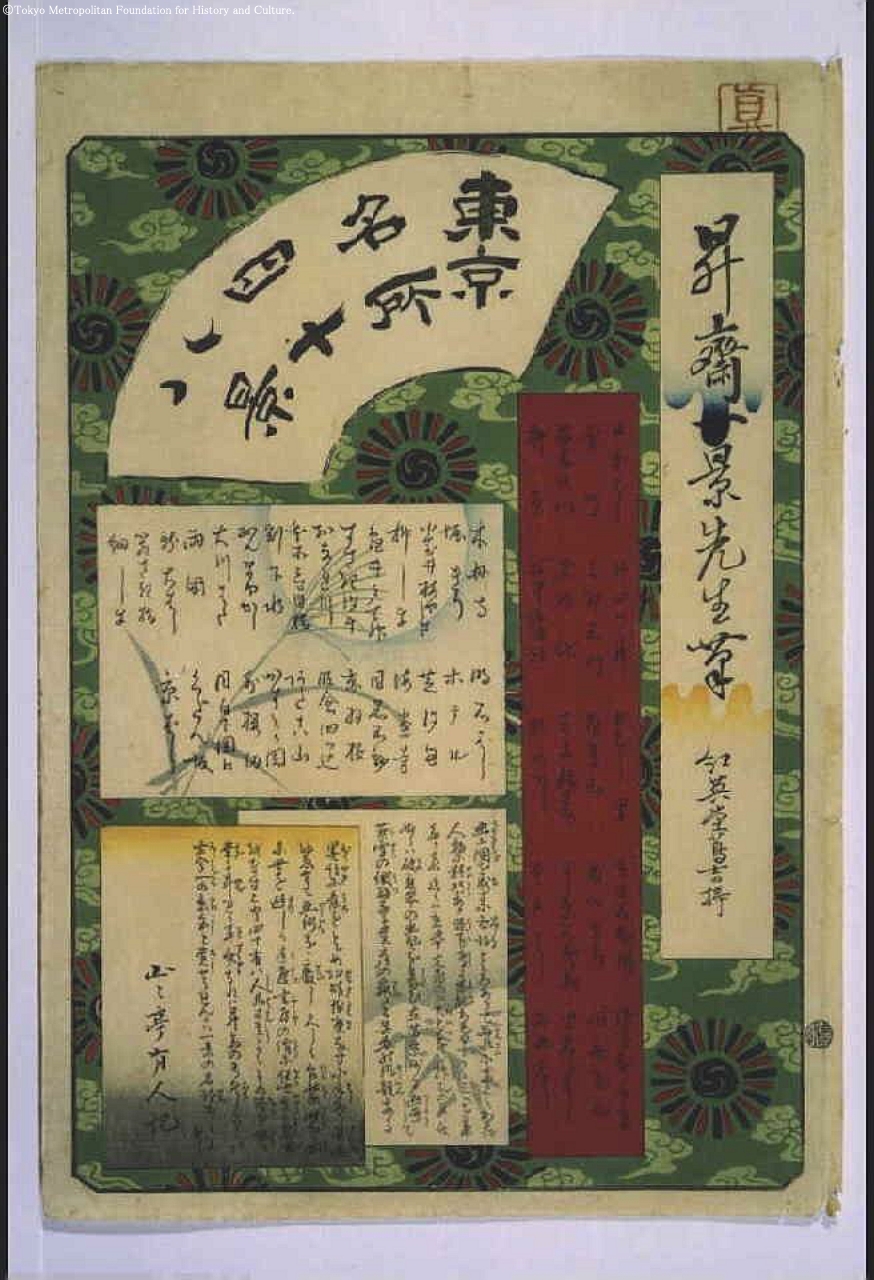
Forty-Eight Famous Views of Tokyo: Title Page (Mokuroku)
東京名所四十八景 目録
c. 1871
Color woodblock print (nishiki-e); ink and color on paper
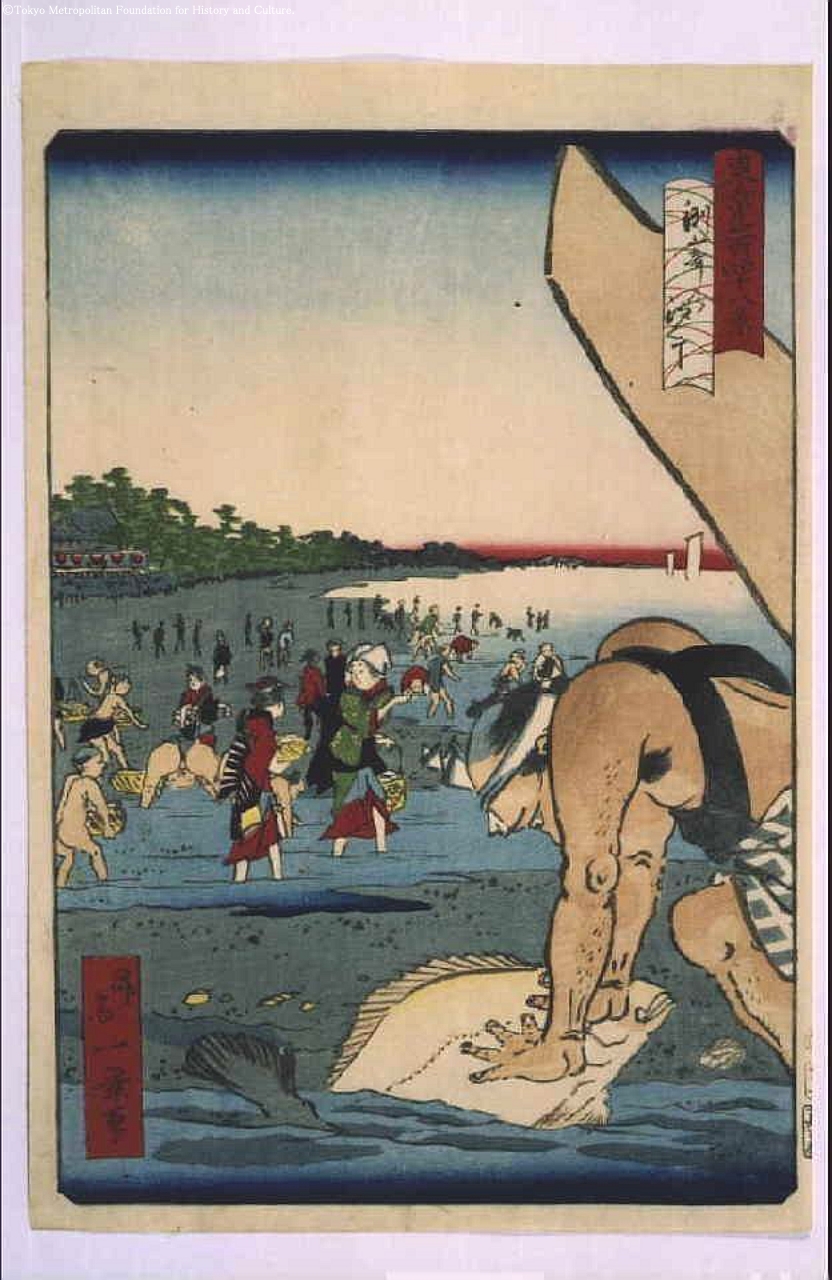
Forty-Eight Famous Views of Tokyo: Gathering Shellfish at Susaki
東京名所四十八景 洲崎乃汐干
c. 1871
Color woodblock print (nishiki-e); ink and color on paper
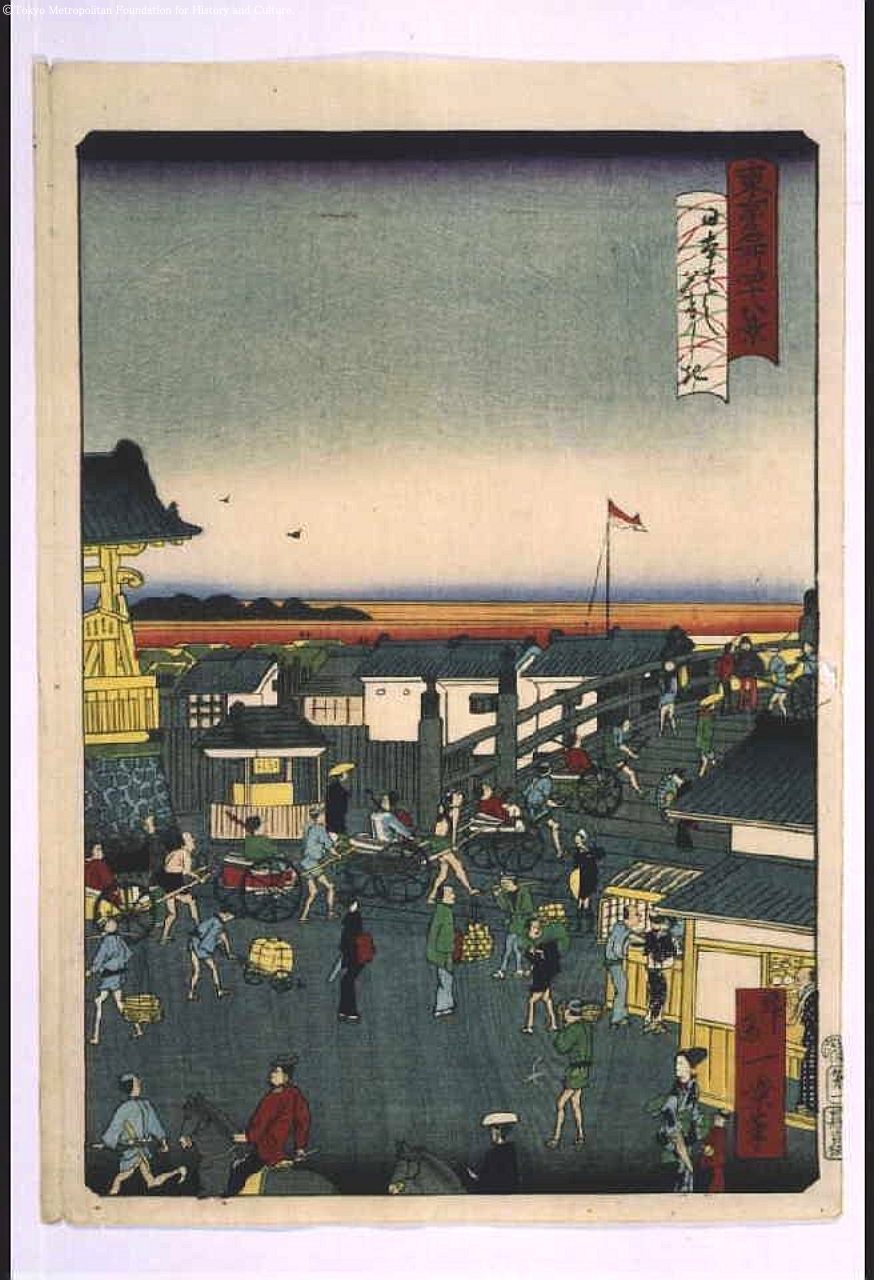
Forty-Eight Famous Views of Tokyo: Evening View of Nihonbashi Bridge
東京名所四十八景 日本はし夕けしき
c. 1871
Color woodblock print (nishiki-e); ink and color on paper
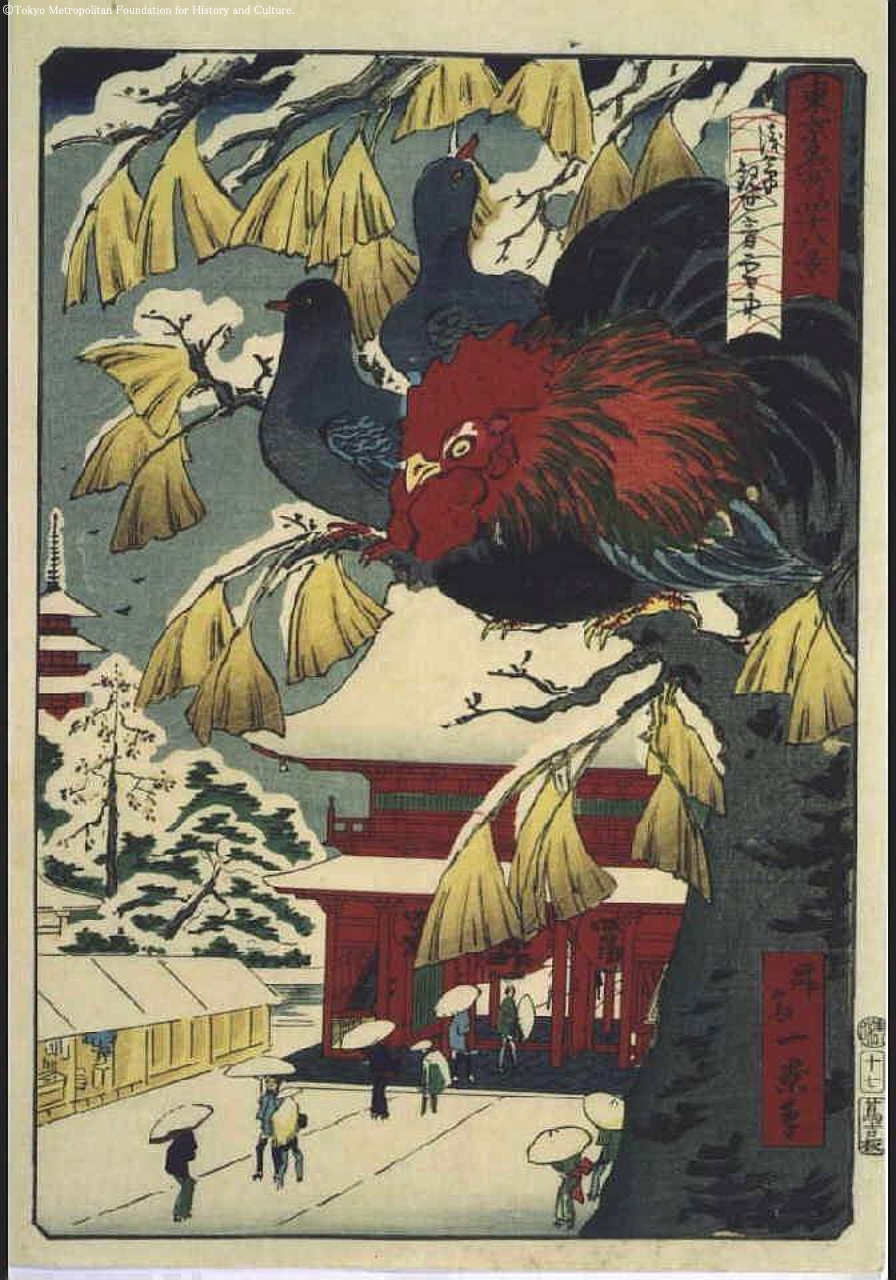
Forty-Eight Famous Views of Tokyo: Asakusa Kanzeon Temple in the Snow
東京名所四十八景 浅草観世音雪中
c. 1871
Color woodblock print (nishiki-e); ink and color on paper
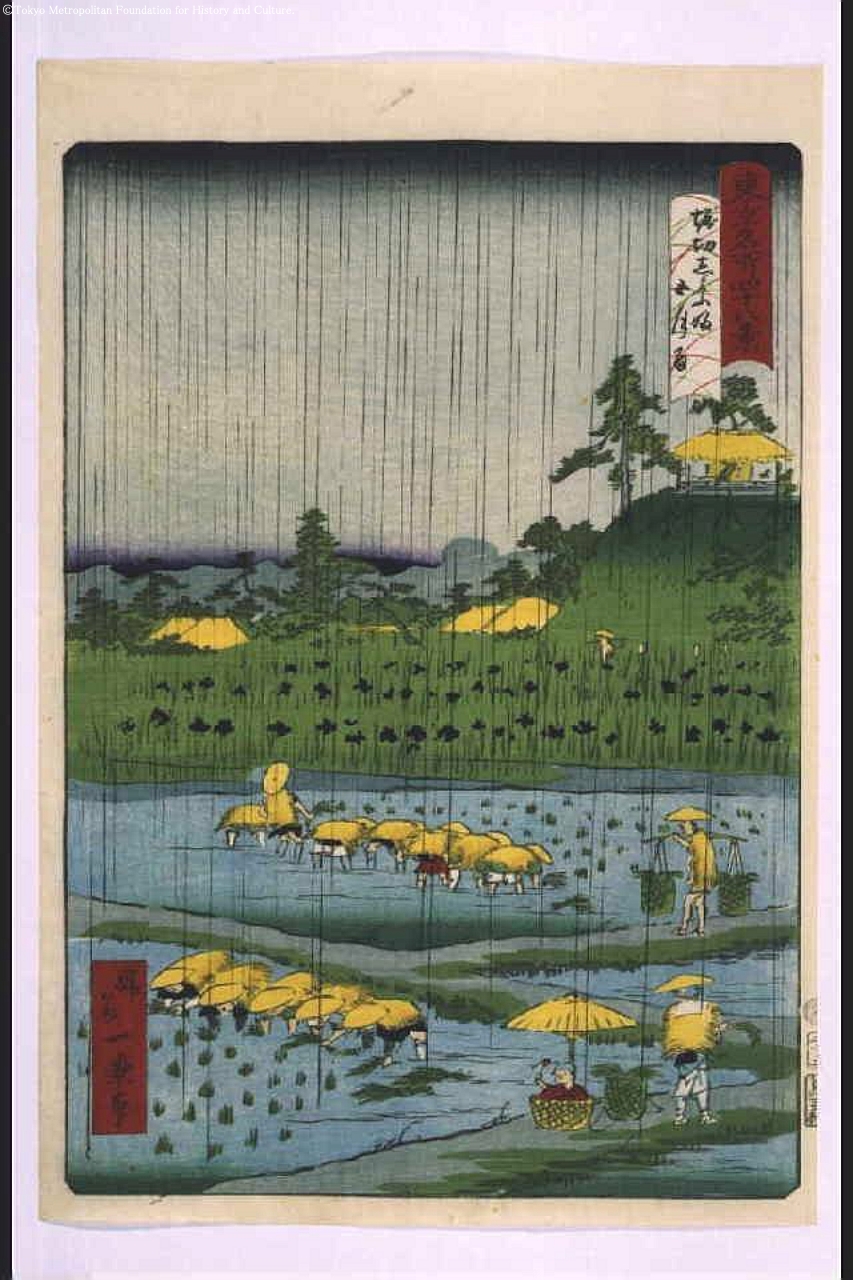
Forty-Eight Famous Views of Tokyo: Irises at Horikiri During Rainy Season
東京名所四十八景 堀切しょうぶ五月雨
c. 1871
Color woodblock print (nishiki-e); ink and color on paper
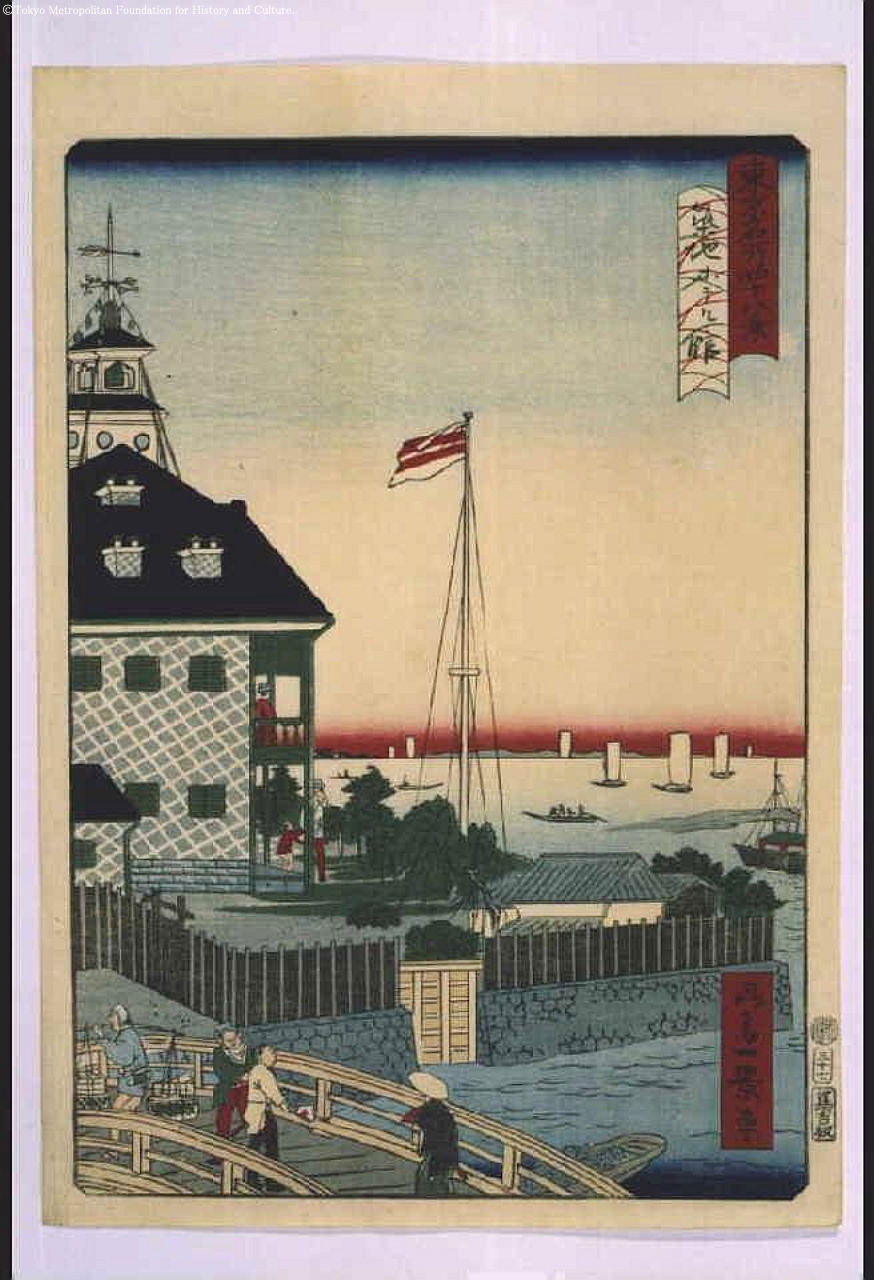
Forty-Eight Famous Views of Tokyo: Tsukiji Hotel
東京名所四十八景 築地ホテル
c. 1871
Color woodblock print (nishiki-e); ink and color on paper
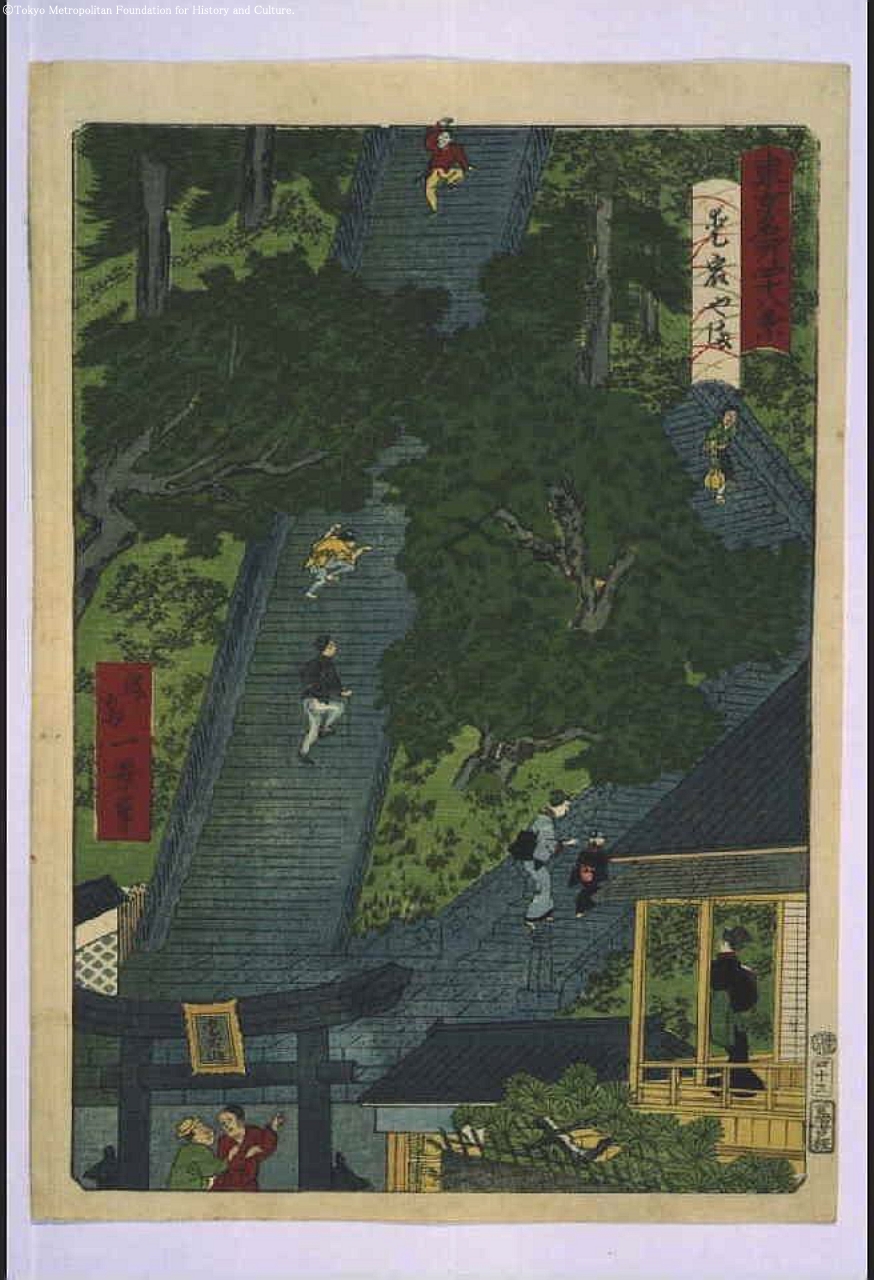
Forty-Eight Famous Views of Tokyo: Atago Hill
東京名所四十八景 愛宕やま
c. 1871
Color woodblock print (nishiki-e); ink and color on paper

Steam Train at Takanawa in Tokyo
東京高輪蒸気車
1872
Color woodblock triptych (nishiki-e); ink and color on paper