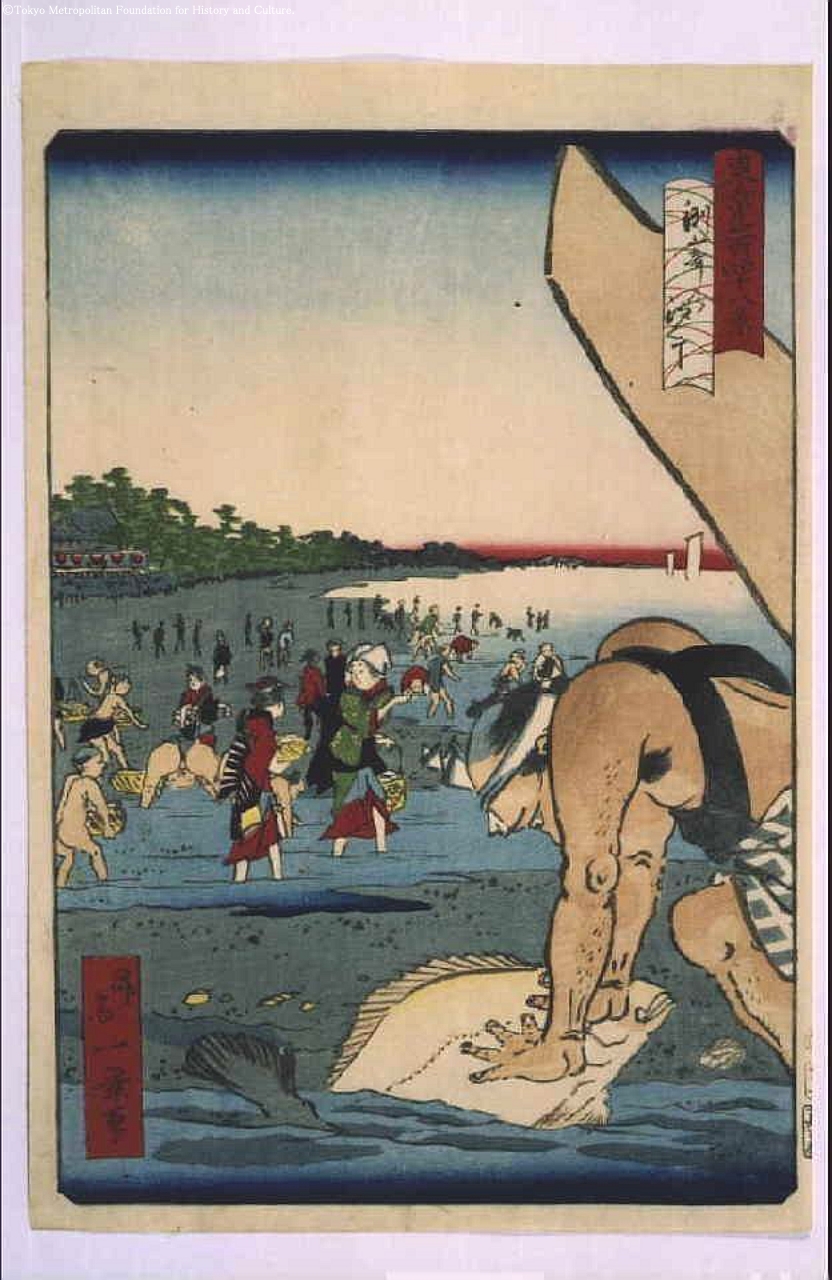
Forty-Eight Famous Views of Tokyo: Gathering Shellfish at Susaki
東京名所四十八景 洲崎乃汐干
by Shōsai Ikkei
- Date:
- c. 1871
- Medium:
- Color woodblock print (nishiki-e); ink and color on paper
- Source:
- Edo-Tokyo Museum
Description
This view of shellfish-gathering at Susaki, from Ikkei's 'Forty-Eight Famous Views of Tokyo' series of around 1871, depicts the spring low-tide custom (shiohi-gari) at the tidal flats of Susaki, then on the eastern edge of Tokyo Bay. The annual shiohi-gari at the spring equinox was one of the most cheerful of the Edo seasonal customs: townspeople walked out onto the exposed mud flats at low tide to dig clams, mussels, and other shellfish, often making a full day's family outing of the trip. Ikkei renders the receding tide as a broad pale band across the middle distance, with the figures of clam-diggers — women in tucked-up kimono, men with reed baskets, children running — dotted across the flats in careful spatial recession. The composition uses the wide horizontal expanse to convey the openness of the tidal estuary, with the distant sail-rigged fishing boats placed on the horizon for additional depth. The print belongs to the Edo-Tokyo Museum's holdings and is one of the clearest surviving depictions of the Tokyo Bay shellfish-gathering custom before the great reclamation projects of the late Meiji and Taishō decades transformed the bay's shoreline beyond recognition.
More Prints by Shōsai Ikkei
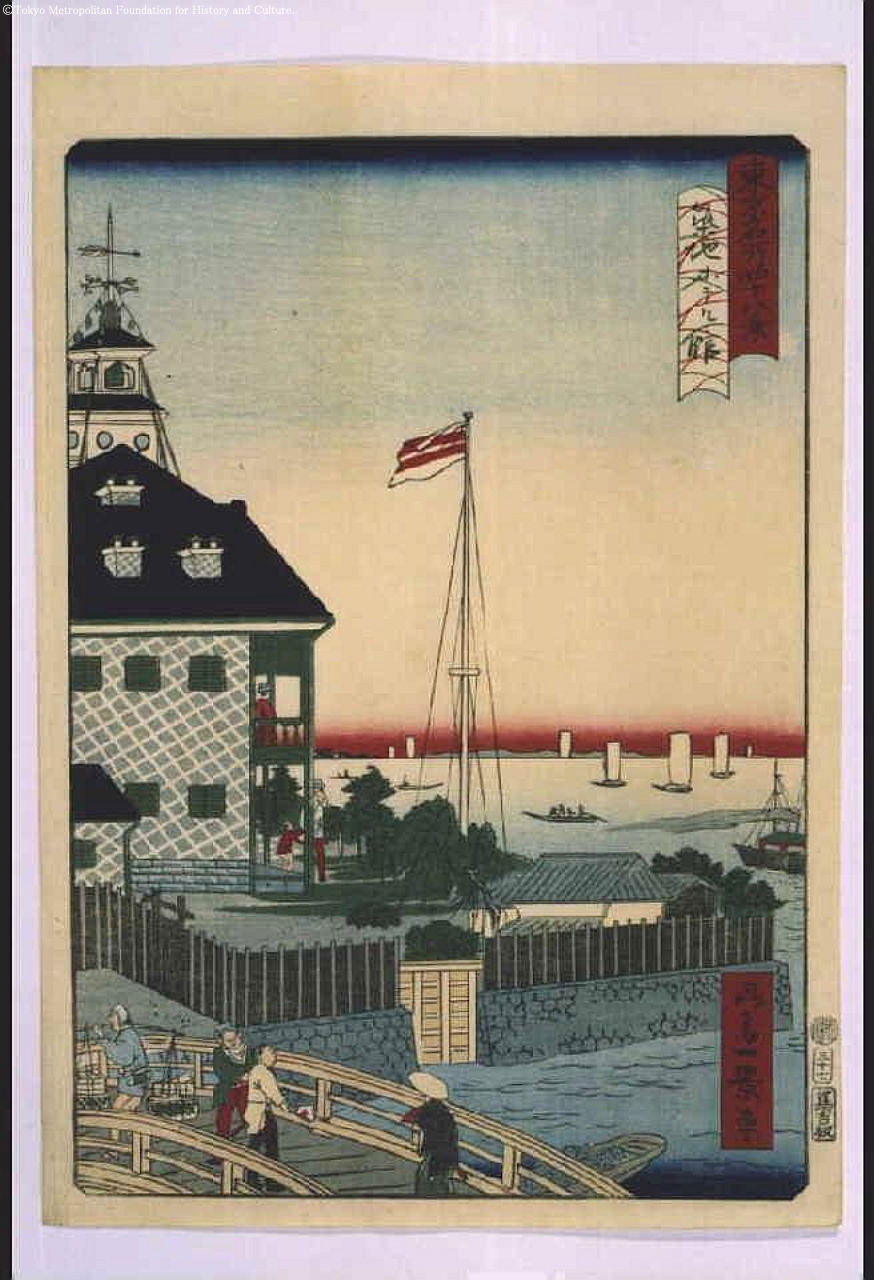
Forty-Eight Famous Views of Tokyo: Tsukiji Hotel
東京名所四十八景 築地ホテル
c. 1871
Color woodblock print (nishiki-e); ink and color on paper

Print (Sheet of a Triptych, JP3228)
錦絵三枚続
c. 1870
Color woodblock print (nishiki-e); ink and color on paper
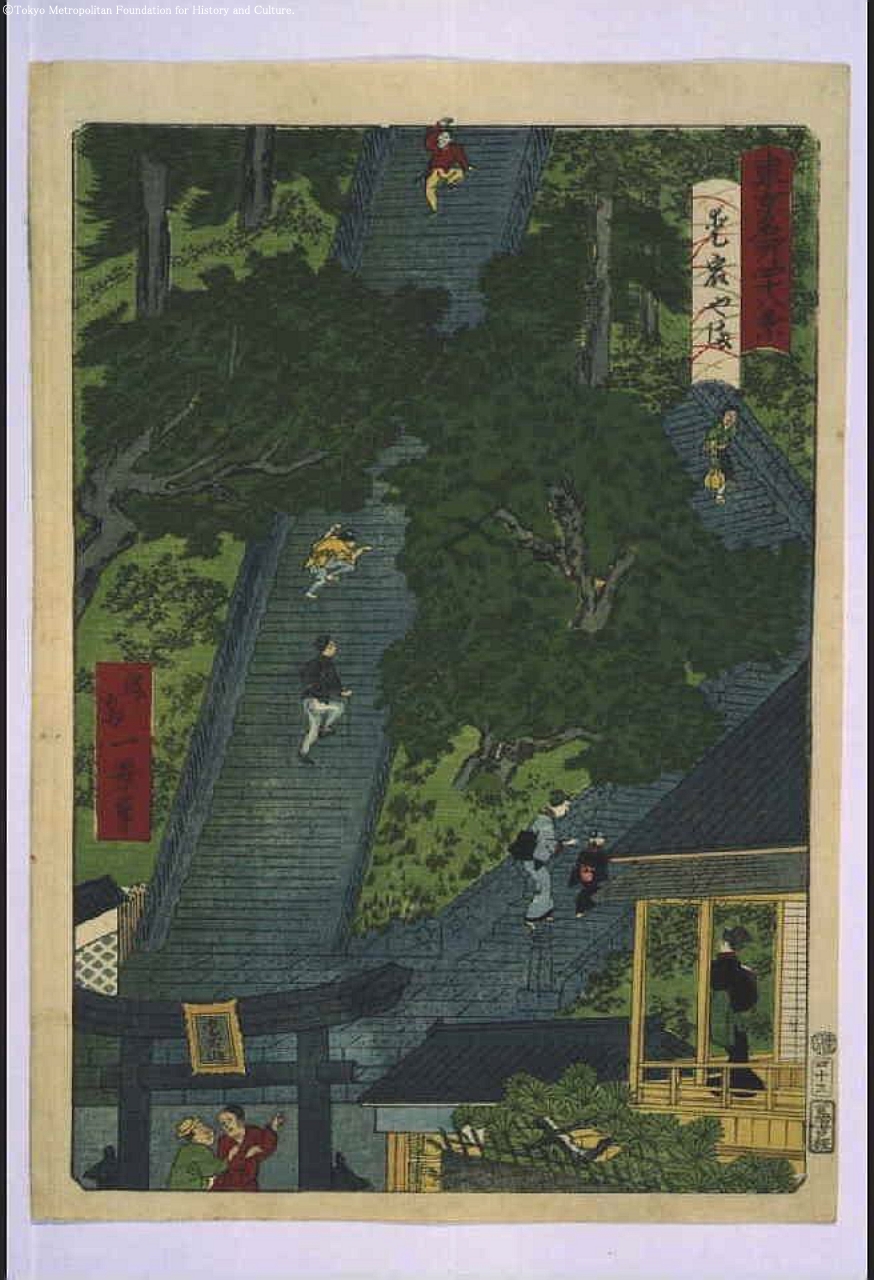
Forty-Eight Famous Views of Tokyo: Atago Hill
東京名所四十八景 愛宕やま
c. 1871
Color woodblock print (nishiki-e); ink and color on paper
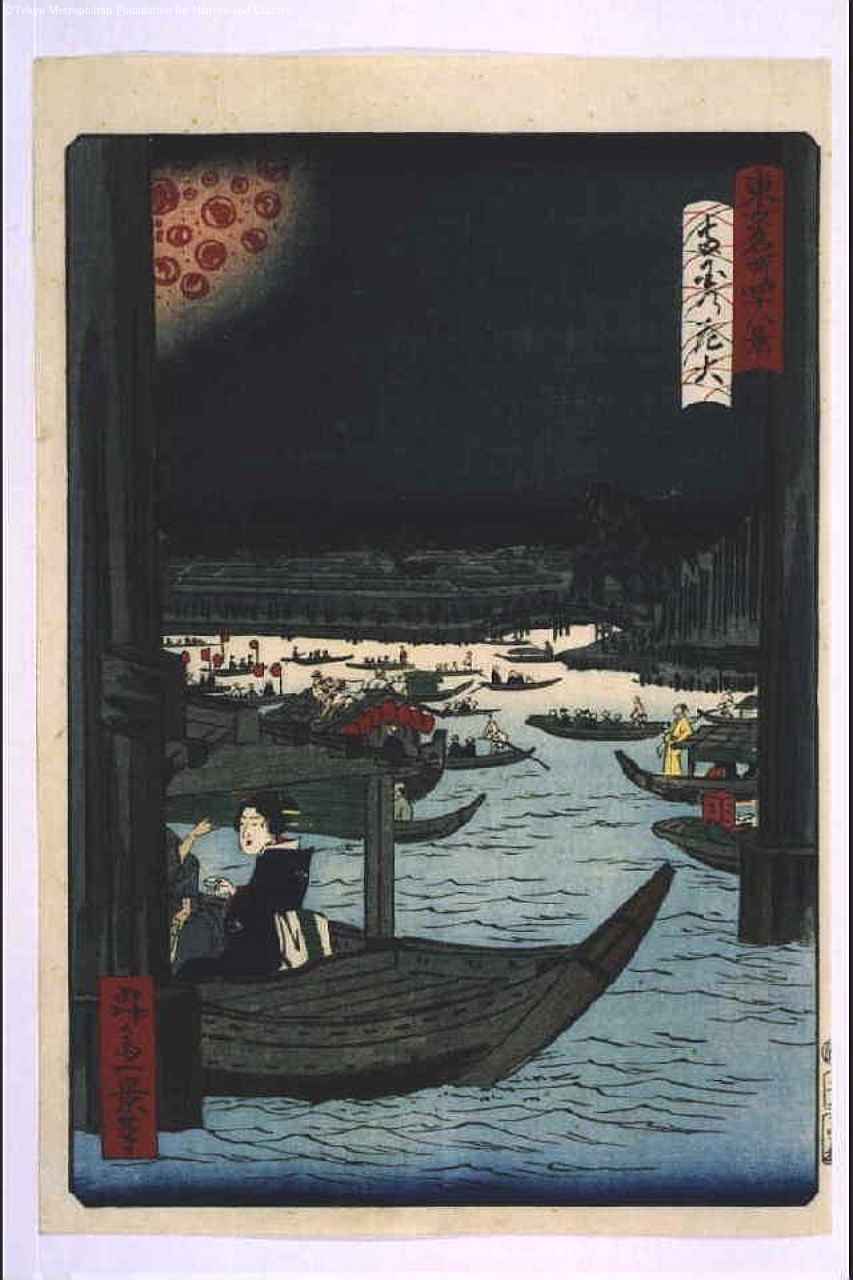
Forty-Eight Famous Views of Tokyo: Fireworks at Ryogoku
東京名所四十八景 両国乃花火
c. 1871
Color woodblock print (nishiki-e); ink and color on paper
More Landscapes Prints

Lake Kugushi in Wakasa Province (Wakasa Kugushiko), from the series Souvenirs of Travel I (Tabi miyage dai isshu)"
Wakasa Kugushiko
1920
Color woodblock print; oban
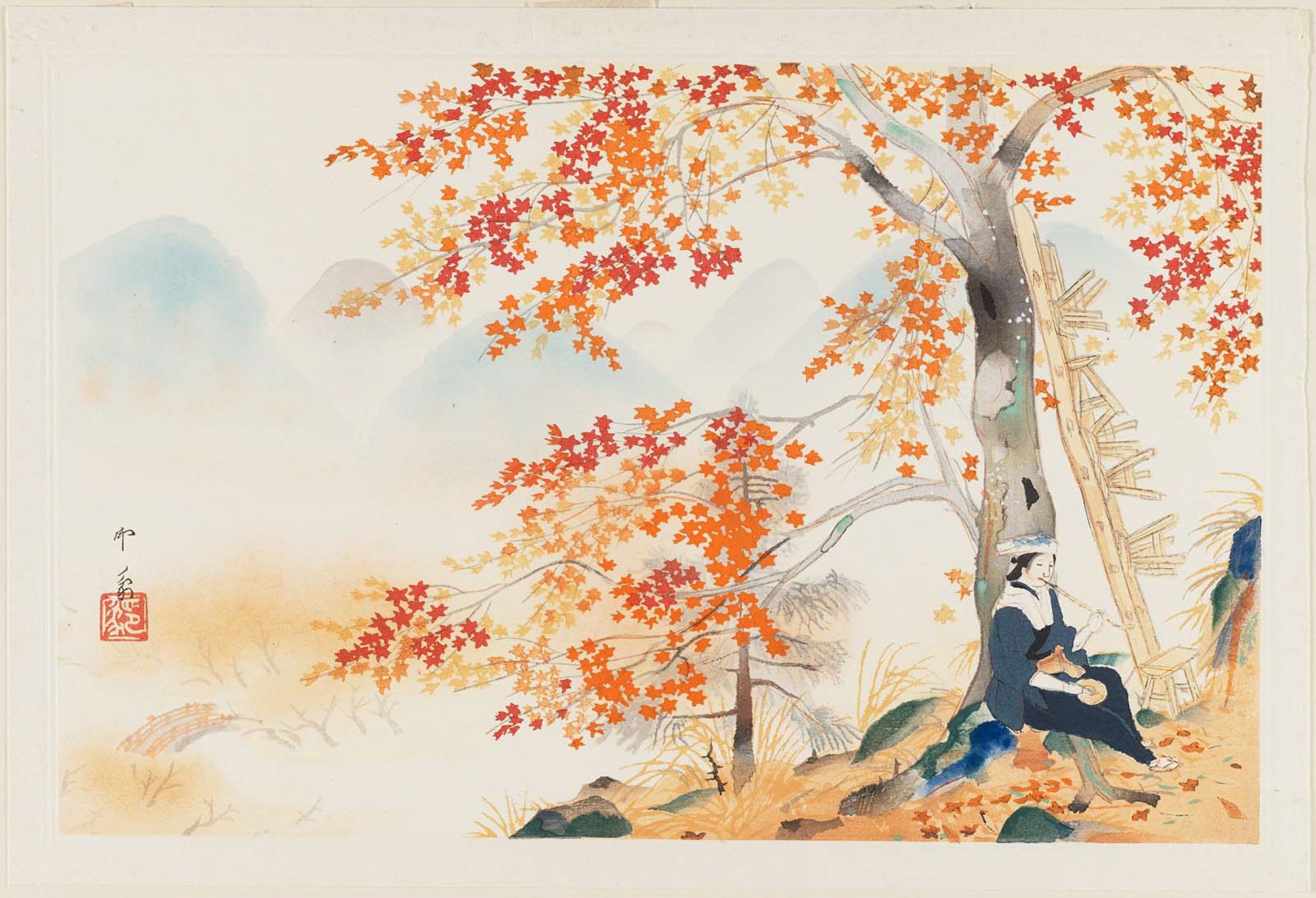
Autumn Maple Leaves at Takao, from the album Eight Views of Kyoto (Kyôto hakkei)
Woodblock print

The Beach at Kaiganji in Sanuki Province (Sanuki Kaiganji no hama), from the series "Collection of Views of Japan II, Kansai Edition (Nihon fukei shu II Kansai hen)"
1934
Color woodblock print; oban

Tea Kettle, section of a sheet from the series "Mirror of Stone Rubbings of Views of the Provinces" (Kohon meihitsu ishizuri kagami)
n.d.
Woodblock print; ishizuri-e, section of harimaze sheet
Featured in Collections
Curated cross-cuts that include this print.
Frequently Asked Questions
Forty-Eight Famous Views of Tokyo: Gathering Shellfish at Susaki (東京名所四十八景 洲崎乃汐干) was created by Shōsai Ikkei (昇斎一景) in c. 1871.
Forty-Eight Famous Views of Tokyo: Gathering Shellfish at Susaki depicts landscapes and fish.