
Biography
Takuji Hamanaka (浜中拓司) is a Japanese-born printmaker who lives and works in Brooklyn, New York. Born in 1968 in Hokkaido, he trained from 1986 to 1989 at the Adachi Institute of Woodcut Prints (Adachi Hanga Kenkyūjo) in Tokyo, the workshop long known for producing reproductions of Edo-period ukiyo-e and for training carvers and printers in the traditional method. His three years there, spent reproducing works by Hiroshige and other Edo masters, gave him a thorough grounding as a printer rather than a designer. He relocated to New York in the early 1990s and joined Watanabe Studio Ltd. in Brooklyn, the workshop run by the master printer Jo Watanabe — Sol LeWitt's longtime printer — where he worked on woodcut editions for LeWitt among other projects. He eventually established his own Brooklyn studio to concentrate on his own original work, and his current practice combines that long career as a master printer with an independent body of art. The signature register of his recent work is a hybrid of mokuhanga and collage: he carves and prints multiple-block woodcuts on extremely thin Japanese gampi tissue, then cuts the printed sheets into hundreds of small, repeating shapes that are reassembled and adhered onto a larger paper support. The result is a layered, biomorphic image whose color is built up additively from translucent overlay rather than from the saturation of a single block, preserving the matte, brush-applied surface of traditional mokuhanga while extending it into a contemporary collage idiom. His work has been shown with Owen James Gallery and Kristen Lorello in New York, and exhibition venues include the Print Center New York (formerly the International Print Center New York), Whitman College in Walla Walla, the National Academy of Fine Arts in India, the Royal Scottish Academy in Edinburgh, and Powerhouse Arts in Brooklyn. His awards and residencies include New York Foundation for the Arts (NYFA) Fellowships in printmaking (2011 and 2017), a Kala Art Institute Fellowship in Berkeley, a Barbara and Thomas Putnam Fellowship at the MacDowell Colony, an Open Studios residency at the Museum of Arts and Design, and a residency at Haystack Mountain School of Crafts. He teaches mokuhanga at institutions across the New York metropolitan area. Hamanaka's career is a clear example of a printmaker first trained in the Edo-derived workshop discipline of the Adachi Institute, who put that training to work as a master printer for senior contemporary artists in New York and only then turned the same technical apparatus to the production of an independent body of work.
Key Facts
- Active Period
- 1968
- Nationality
- 🇯🇵Japan
- Movement
- Contemporary Mokuhanga
- Works Indexed
- 8
Frequently Asked Questions
Takuji Hamanaka (浜中拓司) is a Japanese-born printmaker who lives and works in Brooklyn, New York. Born in 1968 in Hokkaido, he trained from 1986 to 1989 at the Adachi Institute of Woodcut Prints (Adachi Hanga Kenkyūjo) in Tokyo, the workshop long known for producing reproductions of Edo-period ukiyo-e and for training carvers and printers in the traditional method. His three years there, spent reproducing works by Hiroshige and other Edo masters, gave him a thorough grounding as a printer rather than a designer. He relocated to New York in the early 1990s and joined Watanabe Studio Ltd. in Brooklyn, the workshop run by the master printer Jo Watanabe — Sol LeWitt's longtime printer — where he worked on woodcut editions for LeWitt among other projects. He eventually established his own Brooklyn studio to concentrate on his own original work, and his current practice combines that long career as a master printer with an independent body of art. The signature register of his recent work is a hybrid of mokuhanga and collage: he carves and prints multiple-block woodcuts on extremely thin Japanese gampi tissue, then cuts the printed sheets into hundreds of small, repeating shapes that are reassembled and adhered onto a larger paper support. The result is a layered, biomorphic image whose color is built up additively from translucent overlay rather than from the saturation of a single block, preserving the matte, brush-applied surface of traditional mokuhanga while extending it into a contemporary collage idiom. His work has been shown with Owen James Gallery and Kristen Lorello in New York, and exhibition venues include the Print Center New York (formerly the International Print Center New York), Whitman College in Walla Walla, the National Academy of Fine Arts in India, the Royal Scottish Academy in Edinburgh, and Powerhouse Arts in Brooklyn. His awards and residencies include New York Foundation for the Arts (NYFA) Fellowships in printmaking (2011 and 2017), a Kala Art Institute Fellowship in Berkeley, a Barbara and Thomas Putnam Fellowship at the MacDowell Colony, an Open Studios residency at the Museum of Arts and Design, and a residency at Haystack Mountain School of Crafts. He teaches mokuhanga at institutions across the New York metropolitan area. Hamanaka's career is a clear example of a printmaker first trained in the Edo-derived workshop discipline of the Adachi Institute, who put that training to work as a master printer for senior contemporary artists in New York and only then turned the same technical apparatus to the production of an independent body of work.
Takuji Hamanaka was active born in 1968. They were associated with the Contemporary Mokuhanga movement.
Takuji Hamanaka's work was shaped by the Contemporary Mokuhanga tradition in Japanese woodblock printmaking. Contemporary Mokuhanga: Contemporary mokuhanga (literally "wood-block print") encompasses artists working from approximately 1970 to the present who continue or reinvent traditional Japanese woodblock printing techniques.
Takuji Hamanaka's prints frequently feature abstract, summer, moonlight.
Woodblock Prints by Takuji Hamanaka (8)
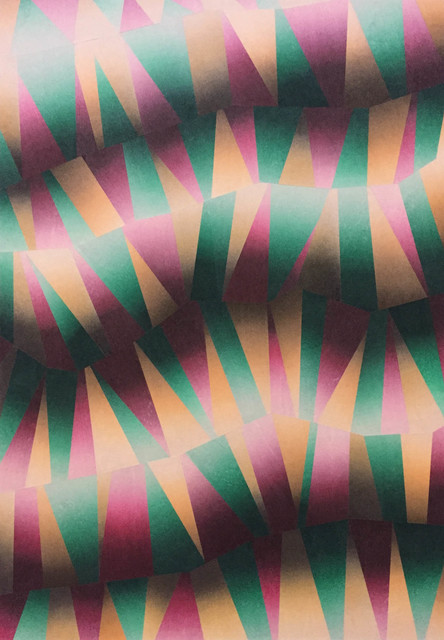
zigzag
2017
Woodcut on gampi paper
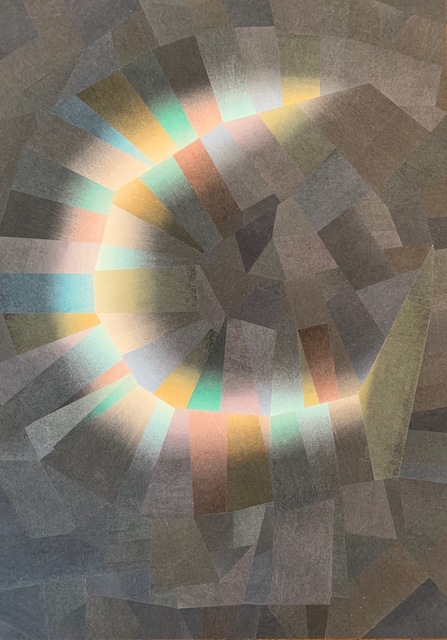
Crescent
2017
Collaged woodcut on museum board
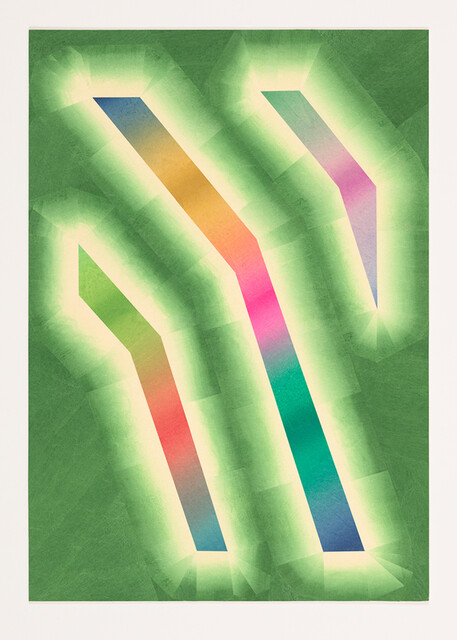
Fragment
2021
Cut and pasted woodblock printed papers mounted on museum board
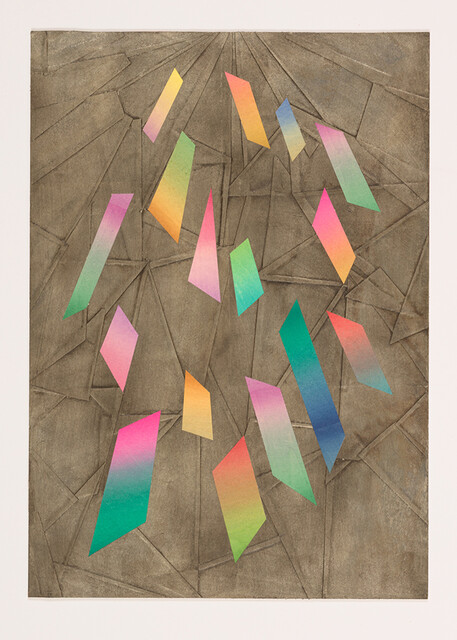
Seeker
2021
Cut and pasted woodblock printed papers mounted on museum board
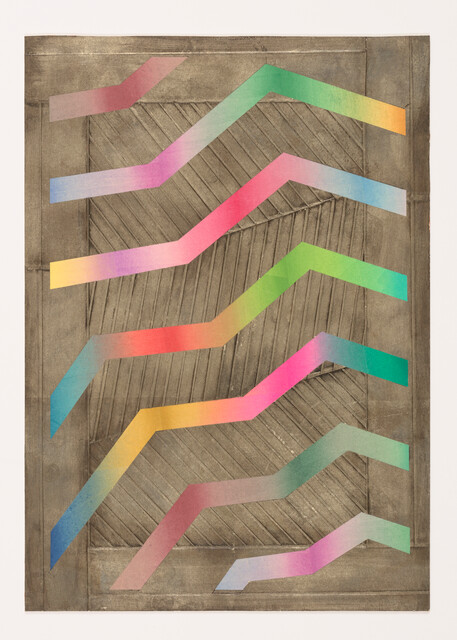
Slow-motion
2021
Cut and pasted woodblock printed papers and metallic foil, mounted on museum board
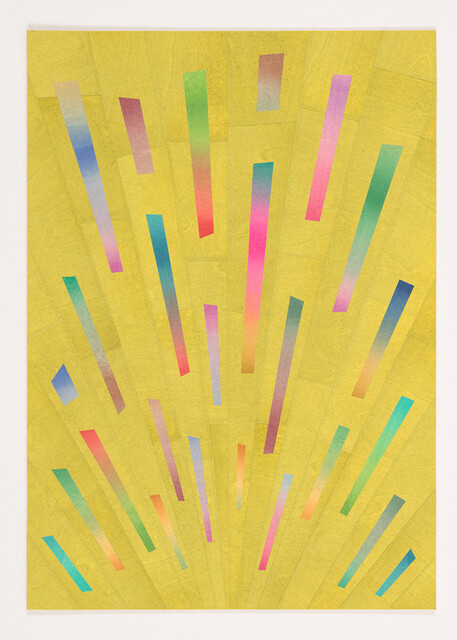
Uprise
2021
Cut and pasted woodblock printed papers mounted on museum board

The Star Festival
Collaged mokuhanga prints on paper
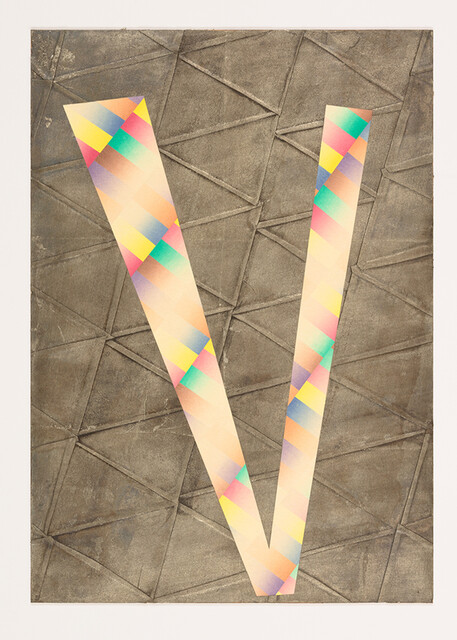
Fulcrum
2022
Collaged woodcut, metalic foil on museum board