Biography
Tsuchiya Koitsu (土屋光逸, 1870–1949) was a shin-hanga landscape artist whose moonlit temples, rain-soaked streets, and snow-covered villages rank among the most atmospheric prints of the movement. He was born in Hamamatsu, Shizuoka Prefecture, in 1870, and trained under the ukiyo-e master Kobayashi Kiyochika, whose innovative "light prints" depicting Tokyo by gaslight and moonlight exerted a lasting influence on the young student. From Kiyochika, Koitsu absorbed a fascination with the play of artificial and natural light on architecture and landscape that would define his mature work.
Koitsu worked for many years as a painter and illustrator, and his career as a woodblock-print designer did not begin in earnest until around 1931, when he was already about sixty. He began producing designs for the publisher Watanabe Shōzaburō, and later also worked with the Doi publishing house and several smaller publishers. Through the 1930s and into the 1940s he created the body of landscape prints for which he is now celebrated — a substantial and remarkably consistent output of night scenes and weather effects.
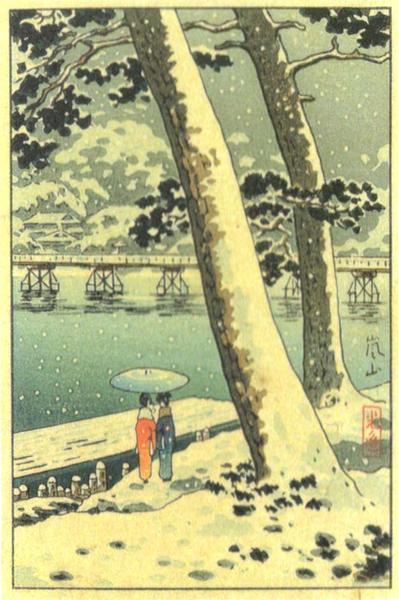
Koitsu's prints overwhelmingly depict nocturnal scenes and weather. His Benkei Bridge shows the span under snow, warm light glowing against the cold; Ueno Kiyomizu-dō and the Yomeimon Gate at Nikkō render temple architecture at twilight, their luminosity built up through careful bokashi gradation and the layering of translucent pigments. His compositions frequently include a single figure — a woman with an umbrella, a pilgrim on a temple path — whose small presence intensifies the vastness of the surrounding landscape.
The artistic debt to his teacher Kiyochika is unmistakable in Koitsu's light effects, but his prints are technically products of the shin-hanga system: designed by the artist, then carved and printed by specialist artisans under the publisher's direction. The craftsmanship is evident in the subtle gradations of sky and water that his designs demanded. His best prints achieve a stillness and melancholy that distinguishes them from the crisper, sunlit landscapes of contemporaries like Kawase Hasui.
He died in 1949 at the age of seventy-nine. His work is held by public collections including the Museum of Fine Arts, Boston, the Art Institute of Chicago, and the Cleveland Museum of Art.
Key Facts
- Active Period
- 1870–1949
- Nationality
- 🇯🇵Japan
- Movement
- Shin-hanga
- Works Indexed
- 93
Frequently Asked Questions
Tsuchiya Koitsu (土屋光逸, 1870–1949) was a shin-hanga landscape artist whose moonlit temples, rain-soaked streets, and snow-covered villages rank among the most atmospheric prints of the movement. He was born in Hamamatsu, Shizuoka Prefecture, in 1870, and trained under the ukiyo-e master Kobayashi Kiyochika, whose innovative "light prints" depicting Tokyo by gaslight and moonlight exerted a lasting influence on the young student. From Kiyochika, Koitsu absorbed a fascination with the play of artificial and natural light on architecture and landscape that would define his mature work.
Tsuchiya Koitsu was active from 1870 to 1949. They were associated with the Shin-hanga movement.
Tsuchiya Koitsu's work was shaped by the Shin-hanga tradition in Japanese woodblock printmaking. Shin-hanga: ## What is Shin-hanga? Shin-hanga (新版画), literally "new prints," is the early twentieth-century revival of the collaborative Japanese woodblock workshop, organized between roughly 1915 and 1960 by the Tokyo publisher Watanabe Shōzaburō (1885–1962) and a handful of competing houses.
Tsuchiya Koitsu's prints frequently feature bokashi, landscapes, temples & shrines, night scenes, seascapes, snow scenes.
Original prints by Tsuchiya Koitsu can be found in collections including Japanese Art Open Database, Minneapolis Institute of Art, Art Institute of Chicago, harashobo.
Based on 1387 recorded auction sales from 2009–2025, most Tsuchiya Koitsu prints sold in the $200–$450 range, with a median around $300. Top results exceeded $650. Actual prices vary widely with edition, condition, and subject.
Series by Tsuchiya Koitsu
Woodblock Prints by Tsuchiya Koitsu (93)
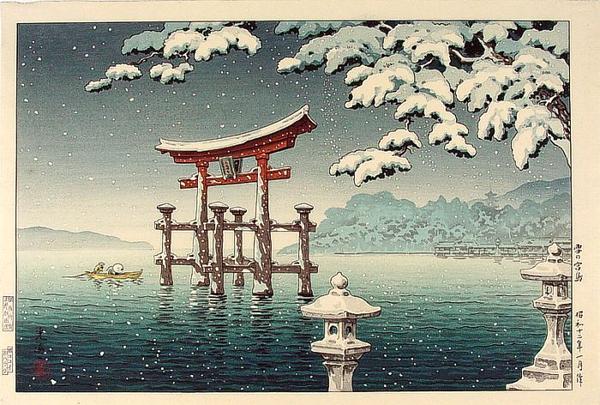
Snow at Miyajima
Woodblock print
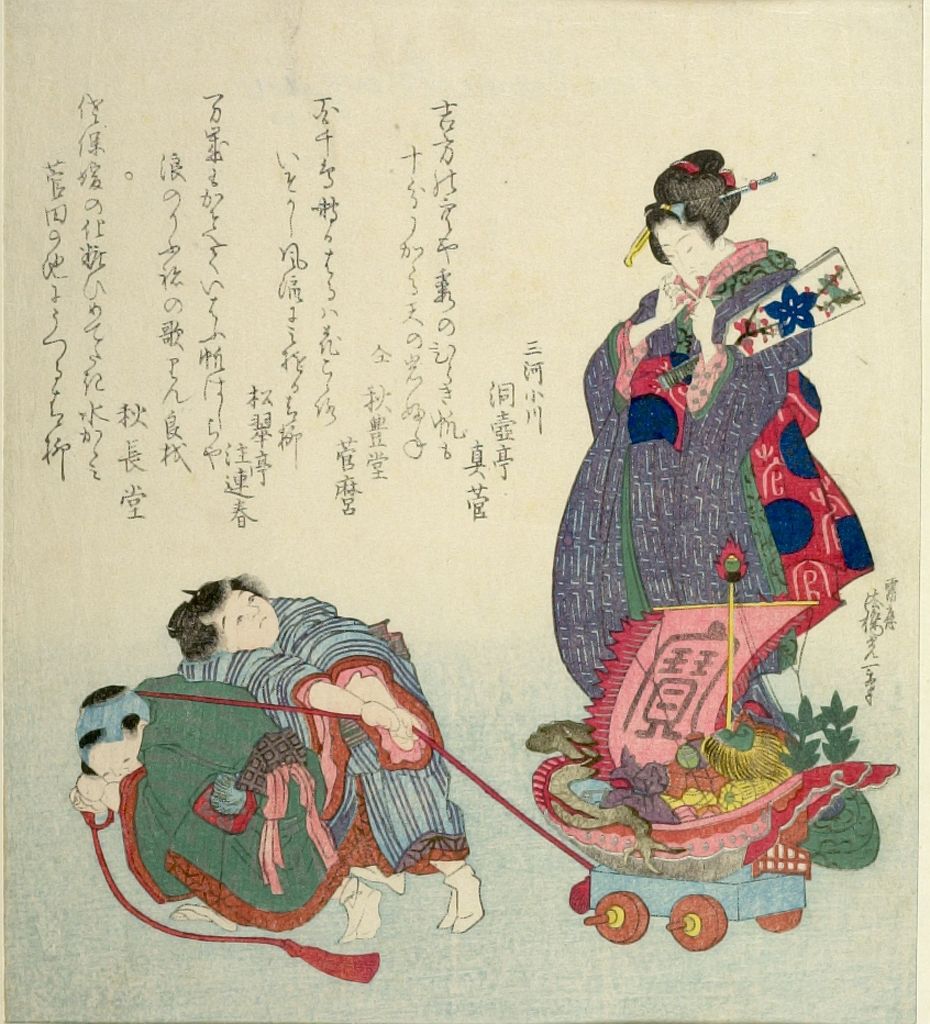
BOYS PULLING TOY SHIP
Woodblock print
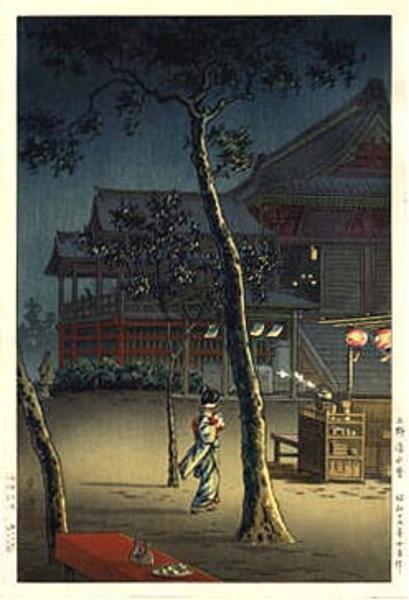
Kiyomizudo In Ueno — 上野清水道
Woodblock print
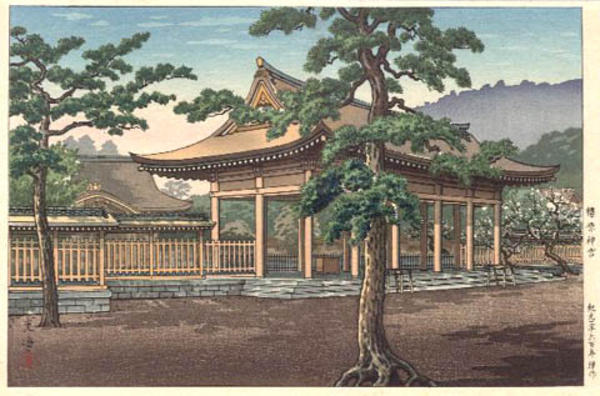
Kashiwara Shrine
Woodblock print
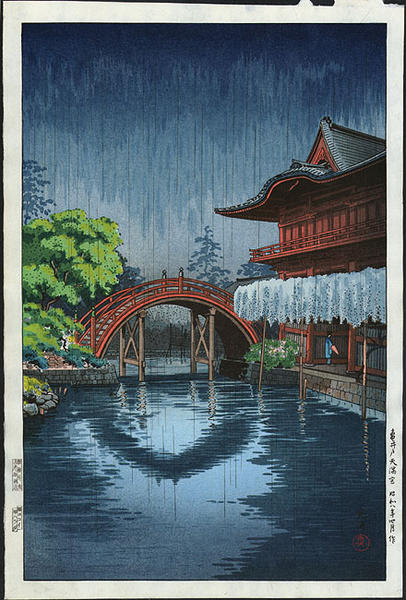
Kameido Bridge or Shrine
Woodblock print
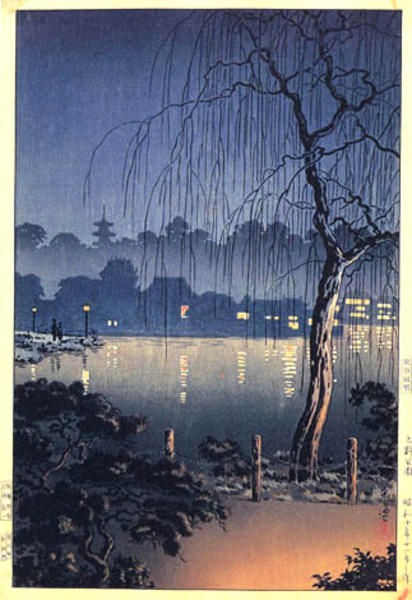
Evening at Ueno Park
Woodblock print
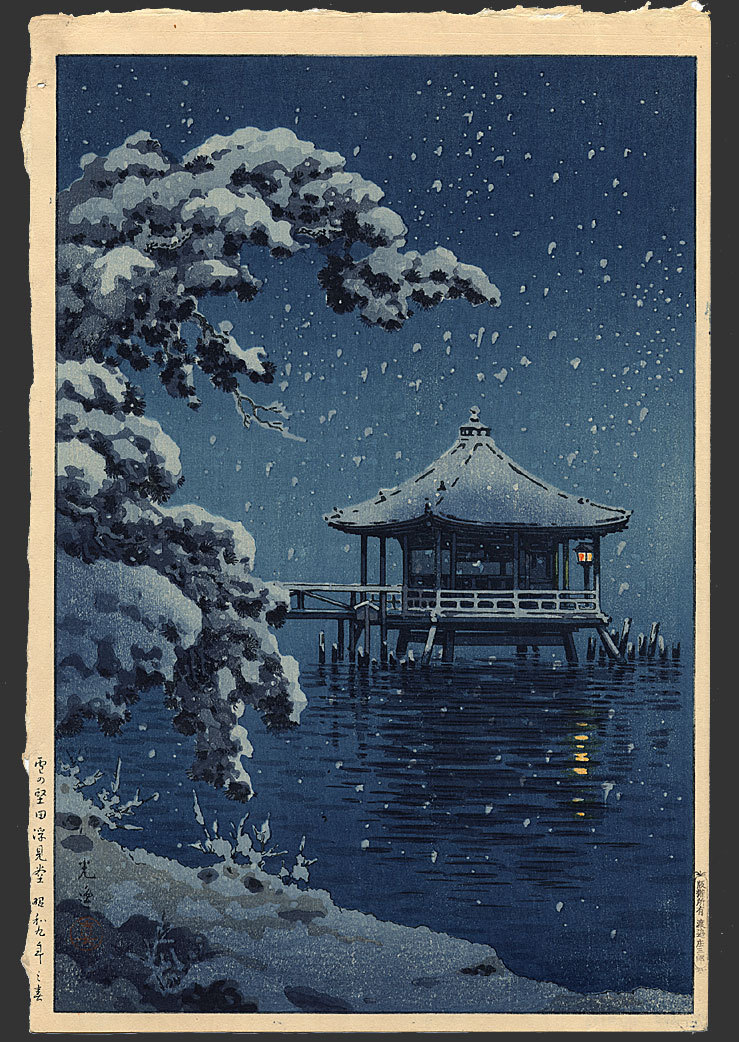
Snow over Ukimido Shrine at Katada
Woodblock print
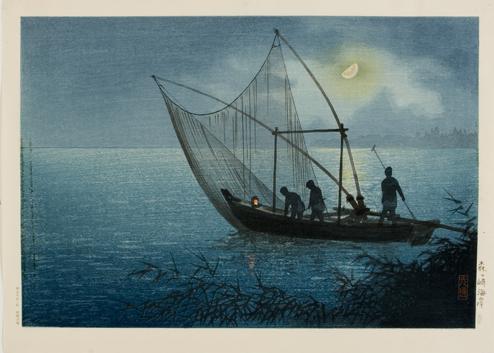
Morigasaki Night Fishing
Woodblock print
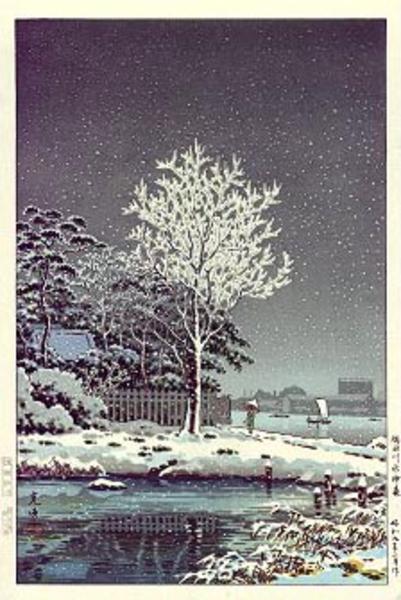
Snow on Sumida River
Woodblock print
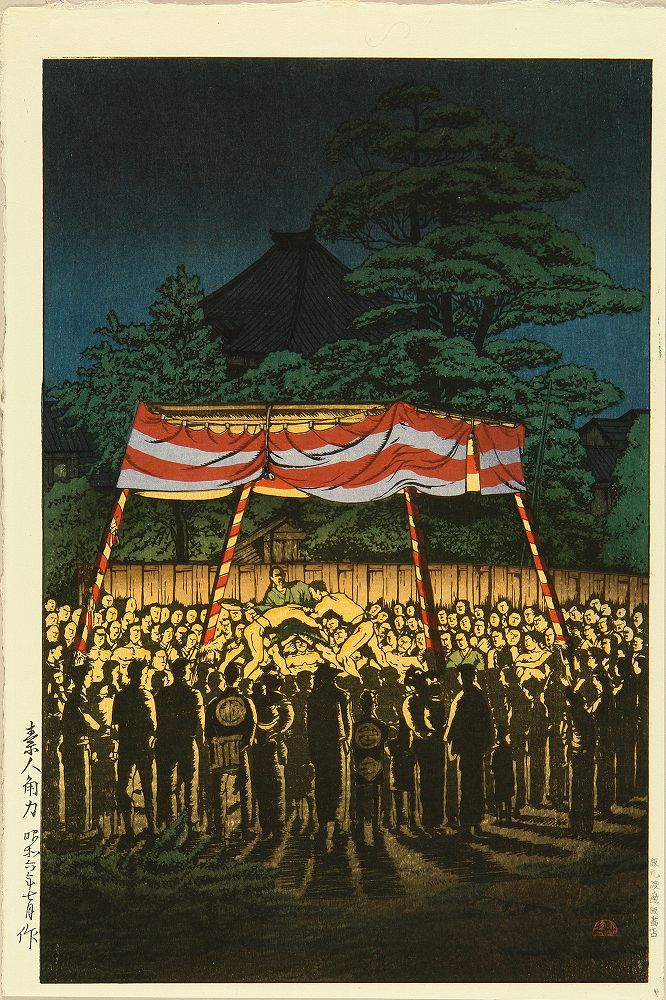
Hara Shobō
Woodblock print
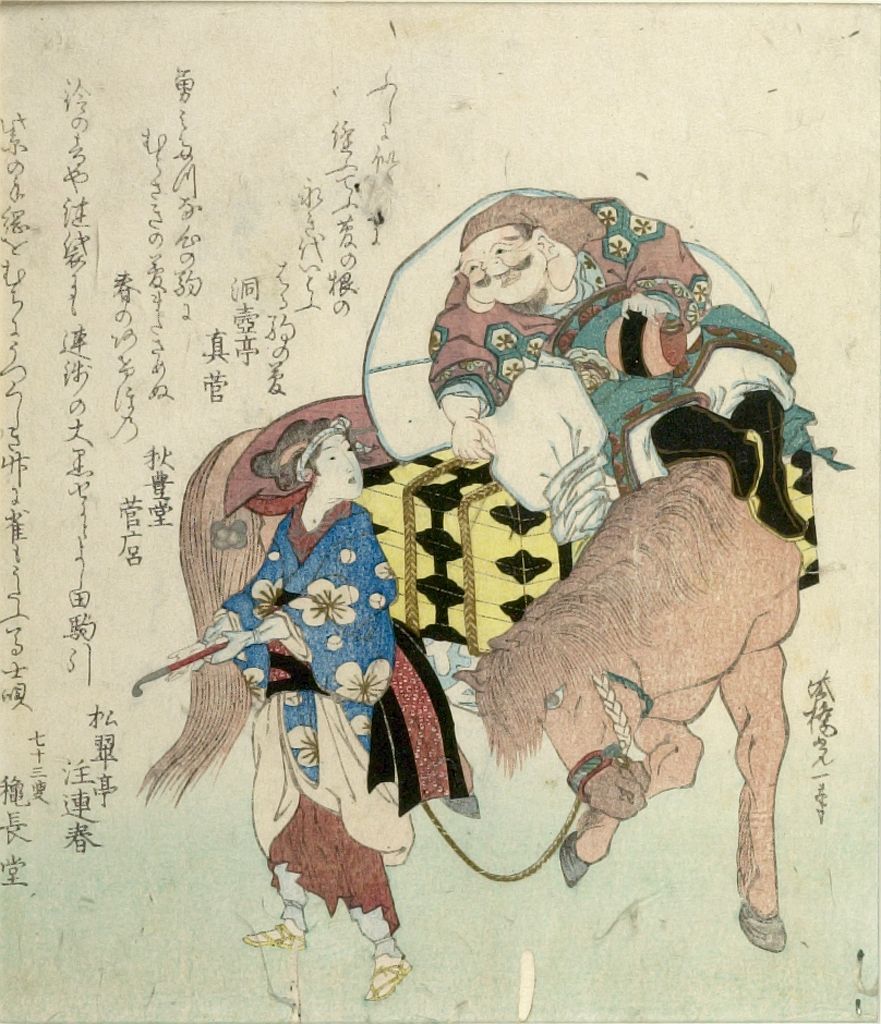
EBISU ON HORSEBACK
Woodblock print
Great Hit! Said the Children, after Seeing Popular Picture Books, and They Imitate the Subjects for TheirPlay, Calligraphy, and Painting (Yodo iu koitsu wa Nippon, Ezoshi wo mite yori sono gwai wo asobu)

(untitled)

Nara Kofuku Temple
Woodblock print
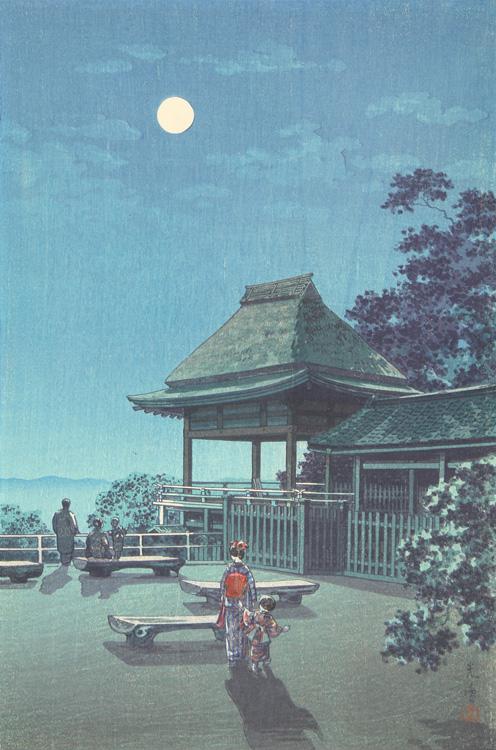
Autumn Moon at Ishiyamadera
Woodblock print
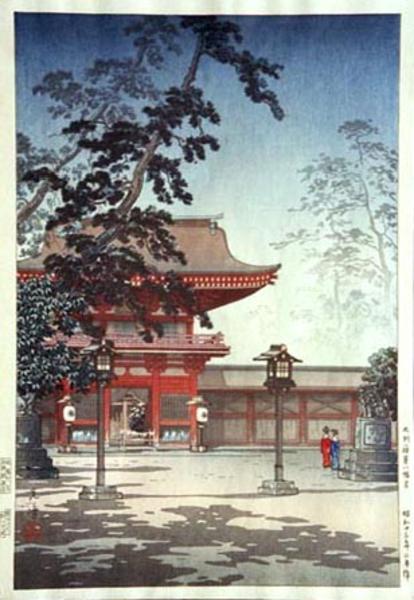
Hakozaki Hachimangu Temple, Kyushu
Woodblock print
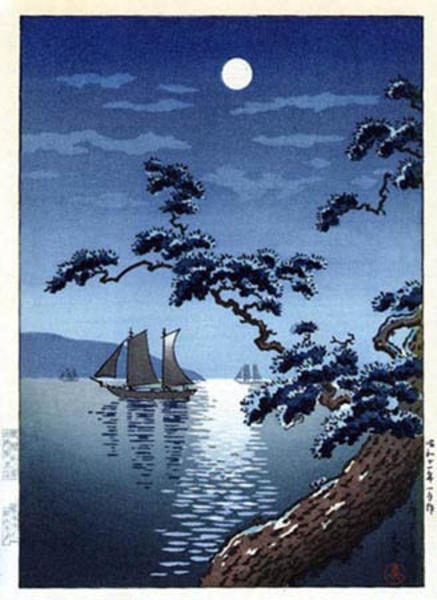
Maiko Sea Shore or Sailboats at Sunset
Woodblock print
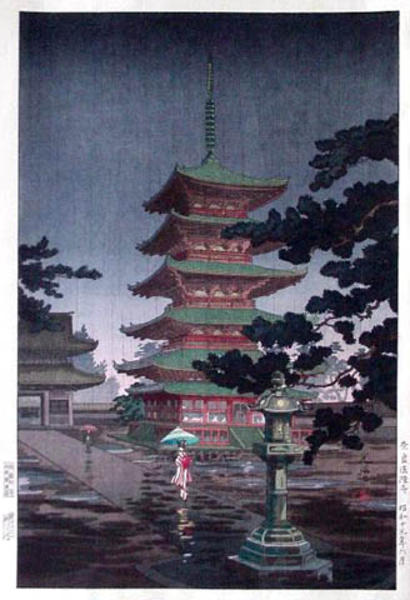
Rain at Horyuji Temple, Nara
Woodblock print
Untitled (tsuchiya-koitsu)
Woodblock print
Arashiyama
Woodblock print
Morning Rain at Hakone
Woodblock print
Nikko 5 Story Pagoda
Woodblock print
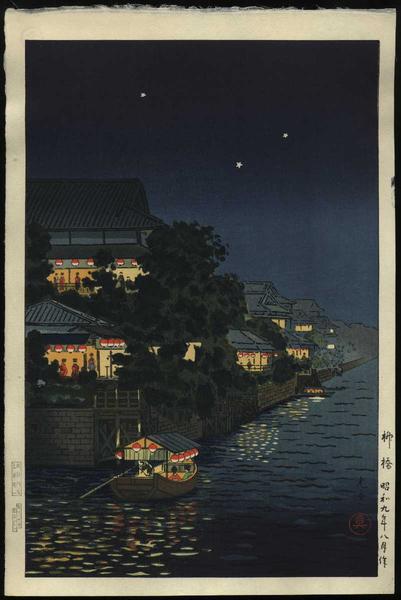
Ryuhashi at Night- Yanagibashi- postwar
Woodblock print
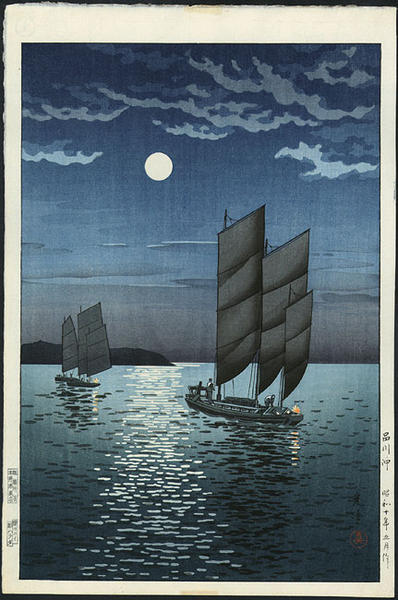
Boats at Shinagawa, Night
Woodblock print
Signature Techniques
Mokuhanga techniques most associated with Tsuchiya Koitsu.